 TripMyChinaJOURNEYS THROUGH REAL CHINA✦ AI Trip✦ Plan My Trip
English
简体中文
繁體中文
日本語
한국어
ไทย
Tiếng Việt
Bahasa Indonesia
Italiano
Español
العربية
Русский
Deutsch
Français
Bahasa Malaysia
TripMyChinaJOURNEYS THROUGH REAL CHINA✦ AI Trip✦ Plan My TripJinan · Attractions
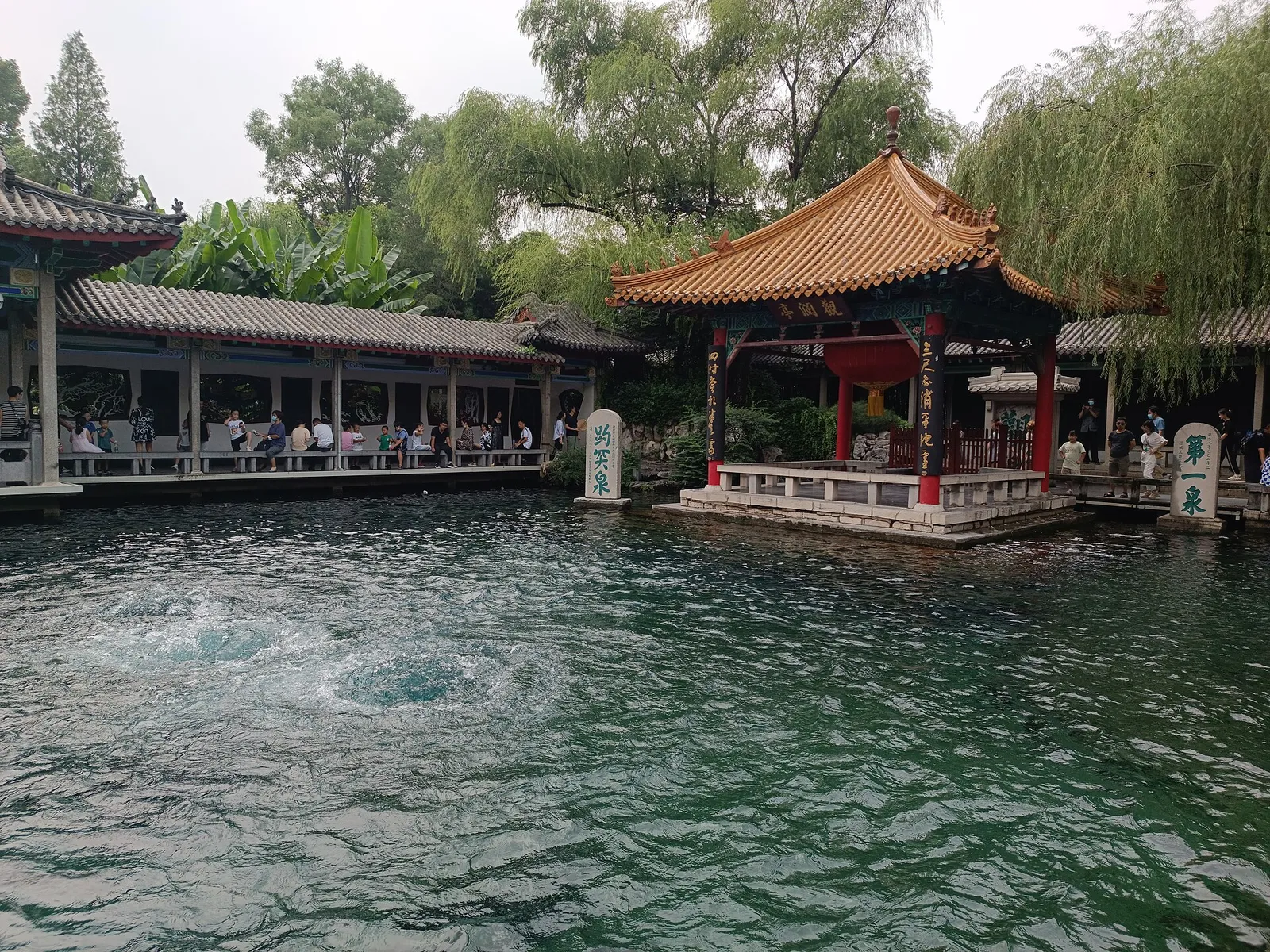
Baotu Spring is the beating heart of Jinan, the City of Springs — three columns of groundwater that have surged from limestone fissures for centuries, celebrated by poets since the Tang dynasty. Set in a classical garden of pavilions, stone bridges and weeping willows just south of the old city center, the spring park gathers several named springs, memorial halls and teahouses around its famous pool. Watching the jets breathe in and out with the water table is oddly hypnotic, and a cup of tea brewed with spring water at a pavilion table is the definitive Jinan experience.
Jinan sits above a natural water system in which rain falling on the southern limestone hills percolates underground and resurfaces in the city as artesian springs — more than 70 of them, with Baotu Spring the most celebrated. Its three main jets can reach knee height in wet years and shrink or pause in droughts, which is why locals track the water table like weather. The site has been a literati landmark for over a millennium; emperors, poets and scholars left inscriptions, and the Qing writer Pu Songling among others praised its waters in prose.
The modern park is bigger than the spring itself: a pleasant classical garden containing the Wangxue Tower viewing pavilion, the Luo Shen Fu memorial to the Song poet Li Qingzhao, carp-filled pools and quieter springs hidden along side paths. The park sits directly opposite the Baotu Spring East Gate from Quancheng Square, making it the anchor of the classic Jinan walking day that continues to the city moat, Daming Lake and the Black Tiger Spring promenade.
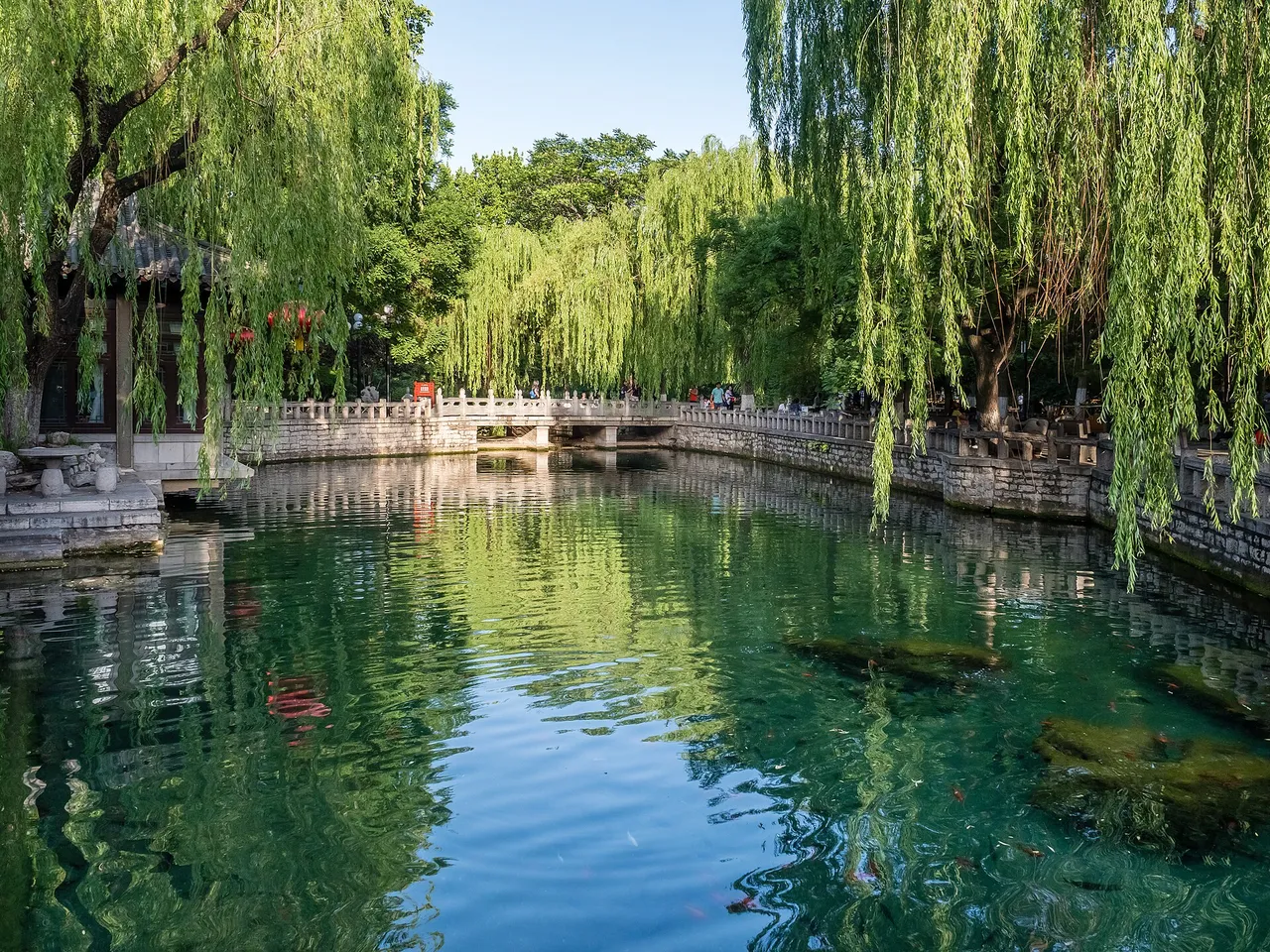
Baotu Spring is a ticketed park, historically priced in the tens of yuan, with higher rates during festival periods such as the Spring Festival lantern fair; exact prices change, so confirm at the gate or via the park's official channels on the day. Hours run roughly from early morning to evening year-round, with extended hours during lantern events. Inside, the teahouses and boat rides on the moat link charge separately. Come before 9 am for the calmest water and fewest tour groups; the jets photograph best in the morning when the sun reaches the pool and the carp are most active.
Baotu Spring sits at the center of Jinan, a few minutes' walk south of Quancheng Square and about 10-15 minutes by taxi from Jinan Railway Station. The city's metro does not yet serve the old core directly, so visitors arrive on foot from nearby hotels, by taxi or DiDi, or by city bus to the Baotu Spring stops on Baotu Spring South Road and Quancheng Road. The park's east gate faces Quancheng Square across the road, and the north gate opens toward the city moat, from where the Hucheng River promenade runs to Daming Lake — ideal for a self-guided springs walking loop that takes in Black Tiger Spring and the old city gates along the way.
Spring water is a year-round show, but the jets are at their strongest after the summer rainy season — September and October typically offer the most dramatic surges, while late spring droughts can weaken or pause them. Autumn adds golden ginkgo trees to the garden, and the Spring Festival lantern fair turns the park into Jinan's brightest night scene. Summer mornings are pleasant; midday summer heat is not. In winter, mist rises off the relatively warm spring water on cold mornings, giving the pool a dreamlike look and photographers a unique angle. Any season, aim for early morning before the tour buses.
It is the most celebrated of Jinan's 72 artesian springs and has been praised in Chinese poetry for over a thousand years. Its three persistent jets of groundwater, rare for an inland city, made Jinan the City of Springs and the spring its emblem.
It can. The jets depend on the groundwater table, which falls in dry years and heavy-pumping periods; at low levels the surges shrink to a simmer or stop. After rainy summers the table rebounds — locals and local news track this closely, so check current conditions before visiting in spring.
One hour covers the main pool, the Li Qingzhao hall and the main side springs; 90 minutes lets you slow down for tea. Serious spring hunters can add the quieter pools in the park's corners for another half hour.
The park serves it safely at its teahouses, where water is boiled for tea — that is the recommended way to taste it. Do not drink untreated water from the pools; public taps and dispensers in some Jinan parks mark where dipping is officially allowed.
 Full day · 8–10 hours
The city of springs in one walkable day, all of it within 3 kilometres
View details → Full day · 8–10 hours
The lake after dark, then skewers in Kuanhouli
View details → Full day · 8–10 hours
Four things you should not leave Jinan without eating
View details → 2 days · 1 night · private
Two compact days covering Jinan's essentials. Watch Baotu Spring's thr
View details → 3 days · 2 nights · private
Three days covering Jinan's full register. Read Baotu Spring and the F
View details →We booked a private guide for one day and it was worth every yuan. He took us from Baotu Spring over to Heihu Spring, where a woman was filling up old oil jugs with water and waved us over to try some. My kids still talk about that more than the springs themselves.
Took the kids up Thousand Buddha Mountain in the morning like everyone advised, and glad we did — by midday it was roasting. The view from the top over the whole city is worth the climb. Only gripe: the signage in English is patchy, we wandered off the main path twice.
Private car & driver, day trips and multi-day routes from Jinan. · Free consultation · reply within 12h