 TripMyChinaJOURNEYS THROUGH REAL CHINA✦ AI Trip✦ Plan My Trip
English
简体中文
繁體中文
日本語
한국어
ไทย
Tiếng Việt
Bahasa Indonesia
Italiano
Español
العربية
Русский
Deutsch
Français
Bahasa Malaysia
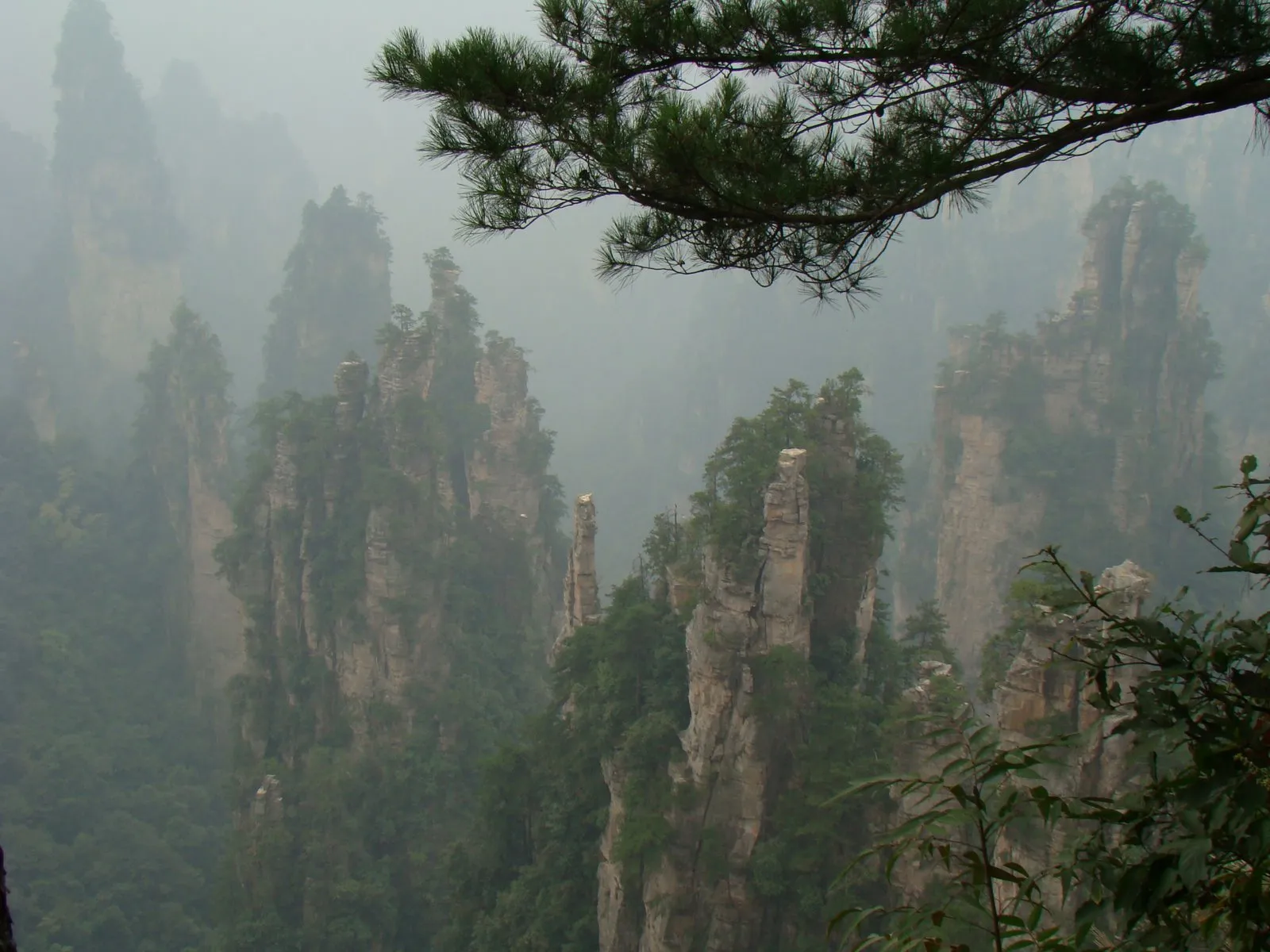
TripMyChinaJOURNEYS THROUGH REAL CHINA✦ AI Trip✦ Plan My TripThe sandstone pillars of Zhangjiajie inspired Avatar's floating mountains, and hiking among them feels suitably otherworldly. Walk the glass bridge, ride cliff-hugging cable cars, and descend Yuanjiajie's misty valleys. A must for hikers, photographers, and fantasy-film fans with moderate fitness.
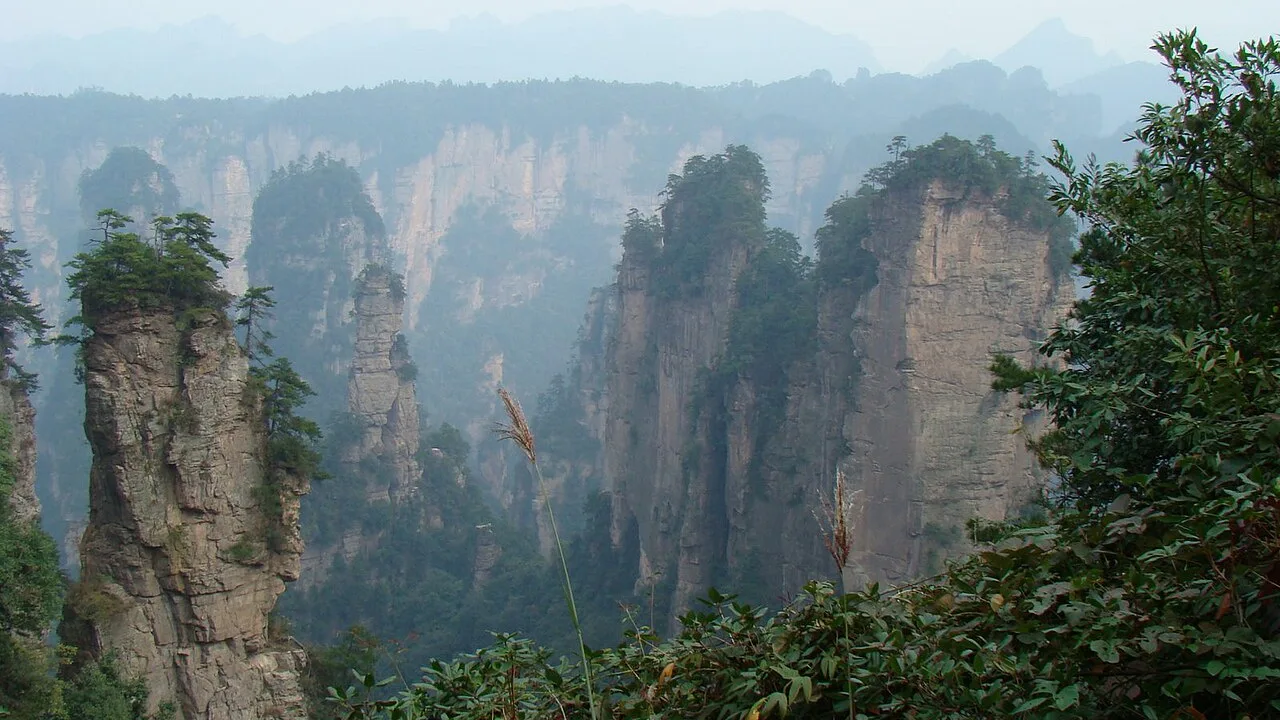
Zhangjiajie, in northwestern Hunan Province, is a city born of stone. Its name means 'Zhang family boundary', recalling a Ming-dynasty garrison, but the world knows it for the quartz-sandstone pillars that rise like a forest of giants from the Wulingyuan Scenic Area. These formations, some over 200 meters tall, were shaped by water and wind over 300 million years and became China's first national forest park in 1982. In 1992 UNESCO inscribed Wulingyuan on the World Heritage List, and in 2004 it joined the Global Geoparks Network. The city itself is young, established in 1988 as Dayong and renamed Zhangjiajie in 1994, but its landscapes are ancient beyond measure.
Zhangjiajie is administratively a prefecture-level city covering 9,516 square kilometers, with two urban districts—Yongding and Wulingyuan—and two counties, Cili and Sangzhi. Yongding is the transport and hotel hub, where the airport, railway station and most restaurants cluster. Wulingyuan District is the gateway to the national park, a small town of guesthouses and ticket gates. Between them, a 40-minute drive or shuttle links city life to the stone forest. The core scenic area is further divided into Zhangjiajie National Forest Park, Suoxi Valley, Tianzi Mountain and Yangjiajie, each with its own character and cable cars.
For travelers, Zhangjiajie is a place of vertigo and wonder. You ride the Bailong Elevator—a glass lift bolted to a cliff—up 326 meters in under two minutes. You walk the Avatar Hallelujah Mountain trail, where mist coils around pillars that inspired the film's floating peaks. You cross the glass bridge over the Grand Canyon, 300 meters above the gorge floor. And you climb Tianmen Mountain's 999 steps to Heaven's Gate, a natural arch pierced through the sky. Every turn offers a new angle on the same impossible landscape, and every evening the Tujia and Miao minority cultures offer song, dance and spicy smoke from street grills.
Zhangjiajie covers 9,516 km² in northwestern Hunan and has a population of about 1.5 million. It administers two districts (Yongding, Wulingyuan) and two counties (Cili, Sangzhi). Its defining feature is the Wulingyuan Scenic Area, a UNESCO World Heritage Site since 1992 and a Global Geopark, home to over 3,000 quartz-sandstone pillars, including the 1,074-meter Avatar Hallelujah Mountain.
World-class, national and global recognition earned over the decades.
Wulingyuan Scenic Area was inscribed in 1992 for its 3,000 quartz-sandstone pillars — the landscape that inspired Avatar's floating mountains.
Designated in 2004 as one of China's first UNESCO Global Geoparks.
Zhangjiajie National Forest Park was established in 1982 — the first in the country.
Zhangjiajie Grand Canyon Glass Bridge opened in 2016 — 430 m long, 300 m above the canyon floor.
Wulingyuan has been a national scenic area since 1988.
Home to Tujia and Miao communities whose villages and crafts survive inside the park's buffer zone.

The moments that shaped the city — and the stories its people still tell.
The Ming established a garrison town here; 'Dayong' remained the name until 1994.
A state forest farm became China's first national forest park, opening the area to visitors.
Wulingyuan was inscribed by UNESCO, putting its quartz-sandstone pillars on the world map.
Dayong was renamed Zhangjiajie City to match the park's growing fame.
The film's floating Hallelujah Mountains were modelled on the park's pillars — a global tourism boost.
The Grand Canyon glass bridge opened, adding a second headline attraction.
Legend says the Tujia leader Xiang Dakun declared himself 'Tianzi' (Son of Heaven) and fought the Ming here; the mountain is named for him and his generals became the peaks.
The 131-metre arch in Tianmen Mountain is said to have been punched through by a thunderbolt sent to punish a defiant local deity.
Three paces, one city — every route built from places we actually operate.
Weather, crowds and the best months for what you want to see.
Mist and green — the pillars emerge from cloud, the classic Chinese-painting look.
The clearest skies of the year — best for photography and long hikes.
Hot and crowded; afternoon storms are common, mornings are best.
Snow on the pillars and very few visitors — spectacular if you can take the cold.
What this city is known for — the things worth planning your day around.
The places worth building a day around.
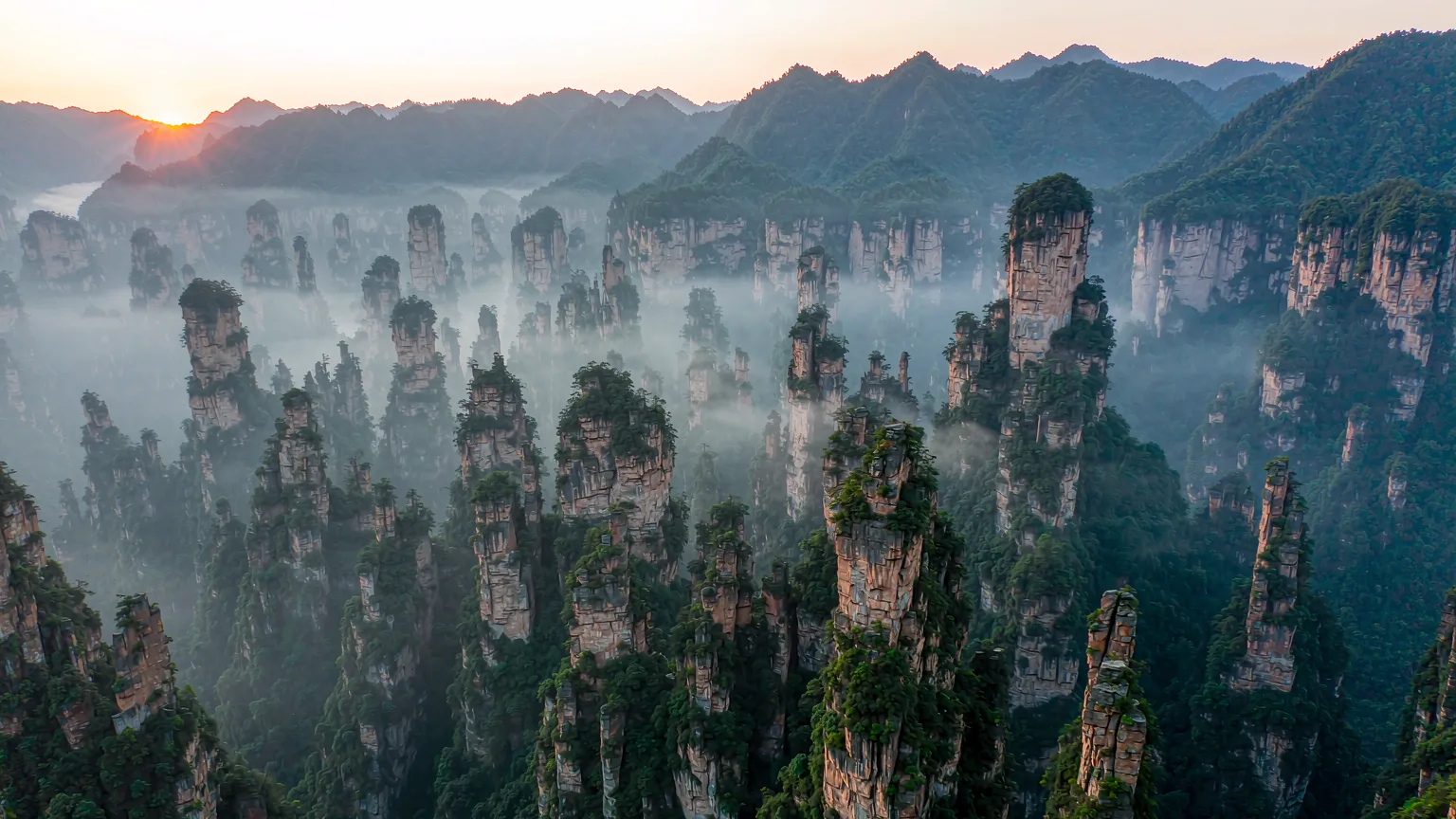
Wulingyuan is 264 square kilometres of sandstone pillars, more than 3,000 of them, some 200 metres tall and only a few metres across. It became China'
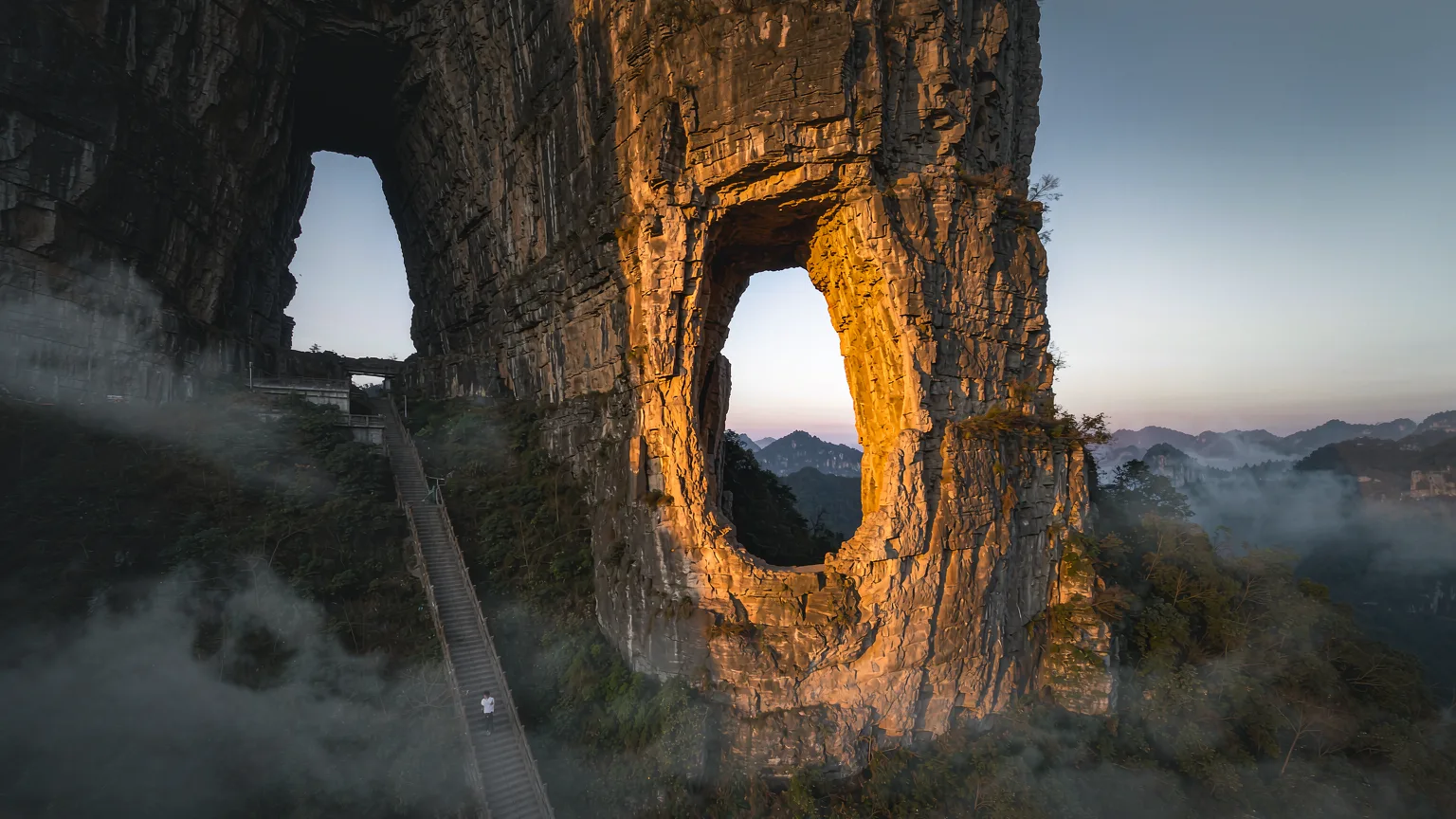
Tianmen Mountain is 1,518 metres of cliff directly behind Zhangjiajie city, reached by a 7,455-metre cable car that is the longest in the world. The h
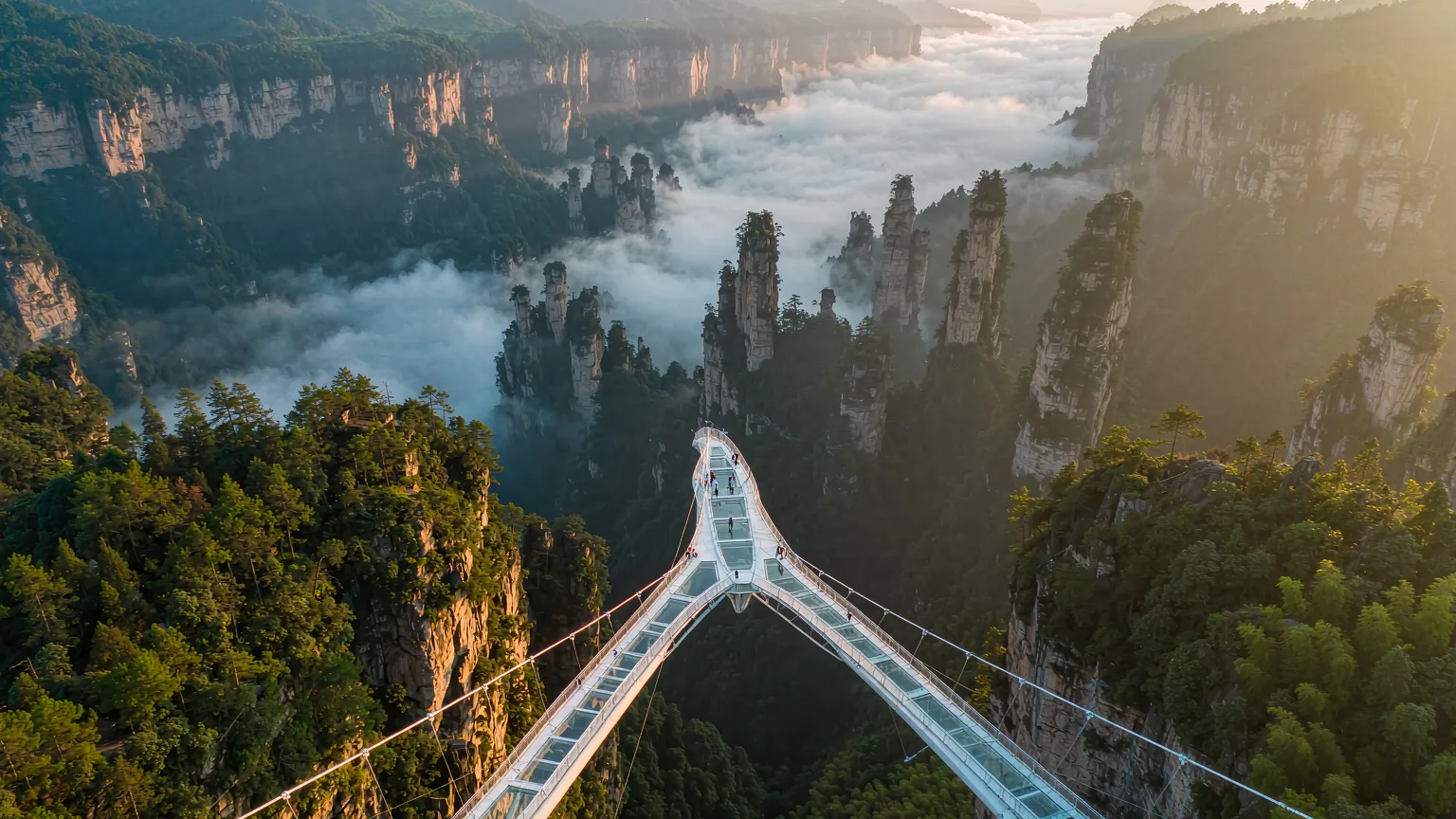
The Zhangjiajie Grand Canyon Glass Bridge is 430 metres long, 6 metres wide and 300 metres above the valley floor. It opened in 2016, closed for repai
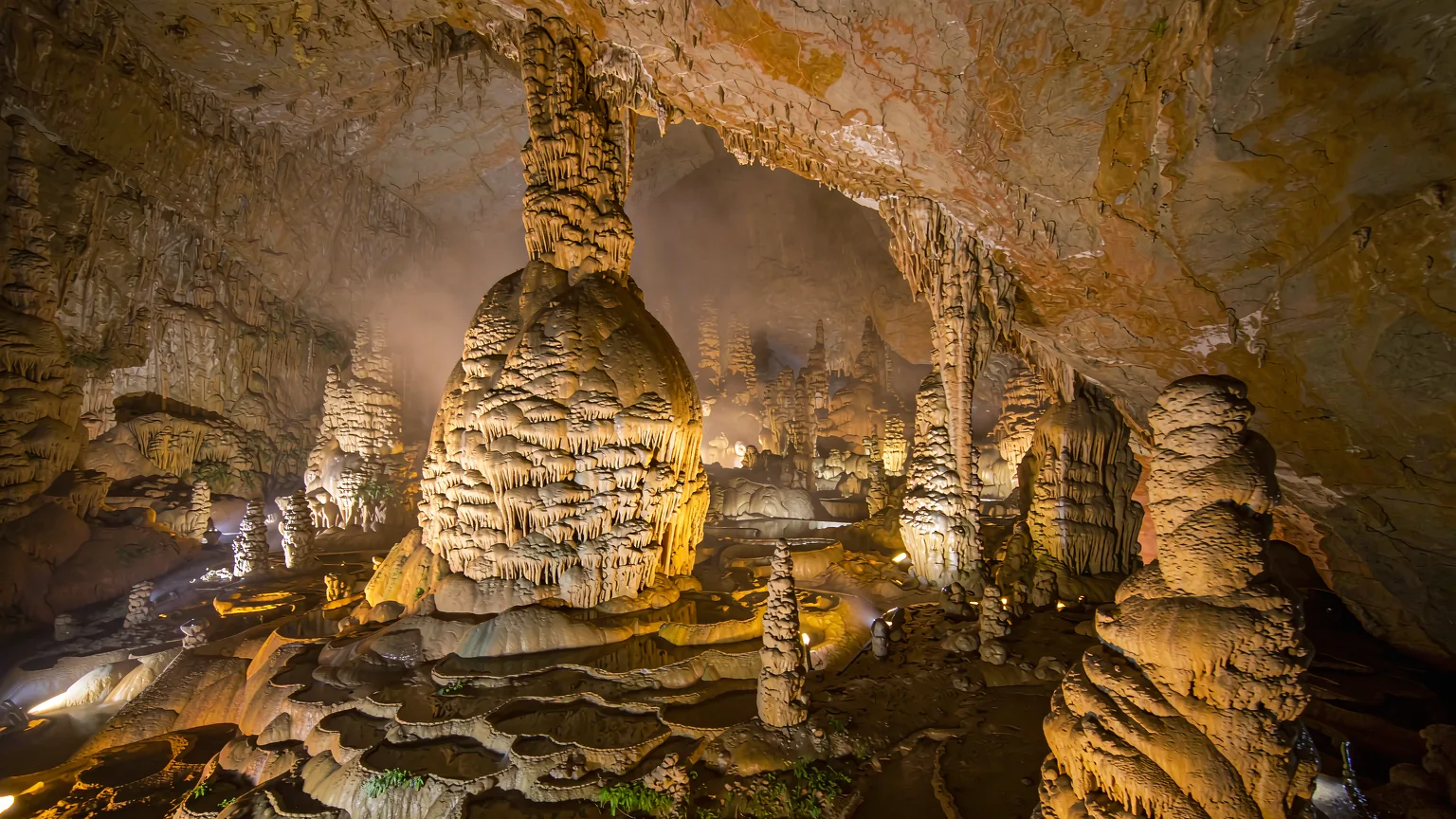
Huanglong Cave is 7.5 km of passages through a hill, with a 19.2-metre stalagmite called the Sea-Supporting Pillar that is insured for 100 million yua
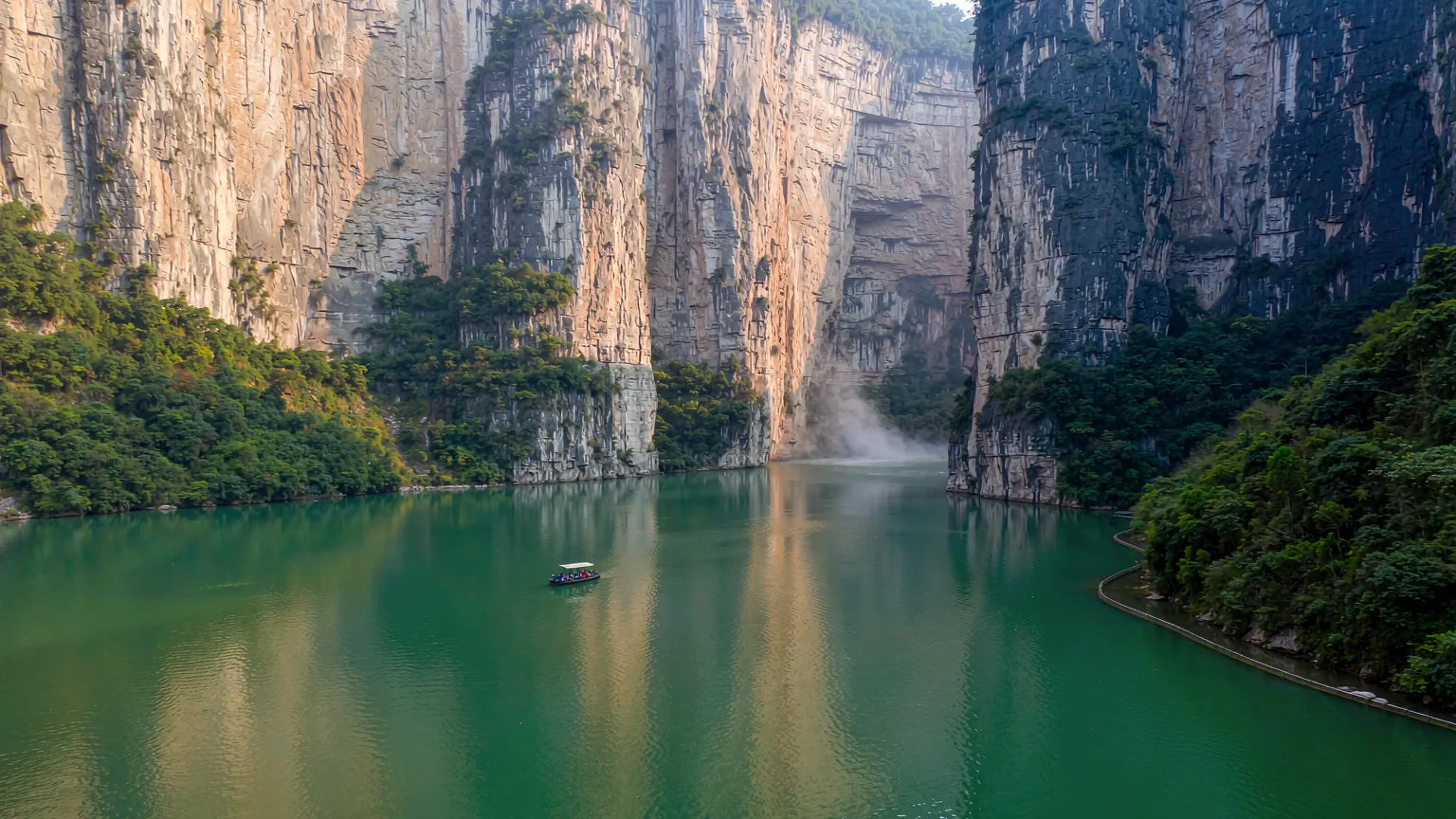
Baofeng Lake is a reservoir 2.5 km long, held between two cliffs 100 metres apart and 80 metres high, with a boat that runs the length and back in 40
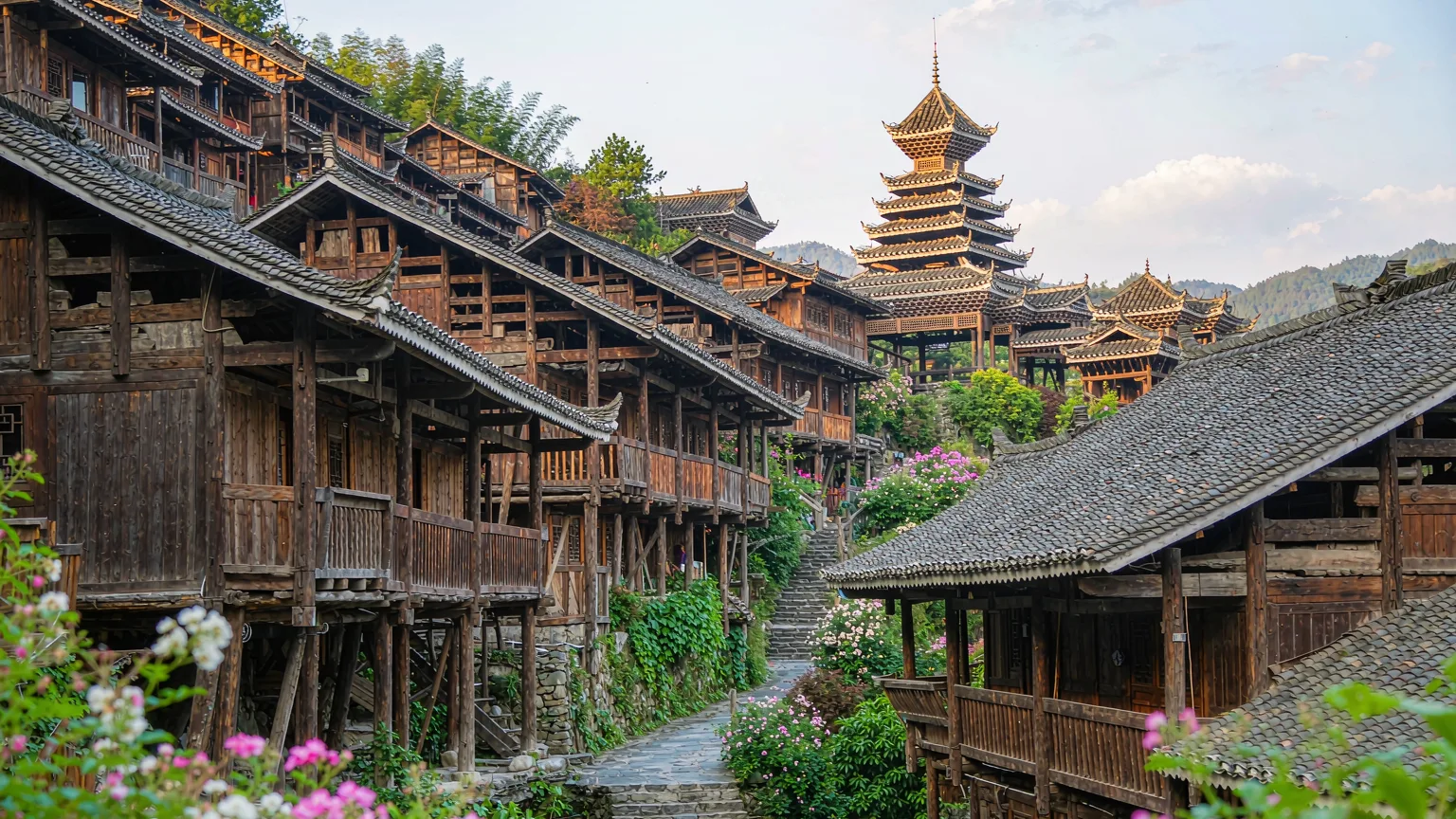
The Tujia Folk Custom Park is a rebuilt Tujia fortress with a 48-metre wooden tower, built in 2002, and it is the most convenient place to see Tujia a
A little further out, for a spare half-day.
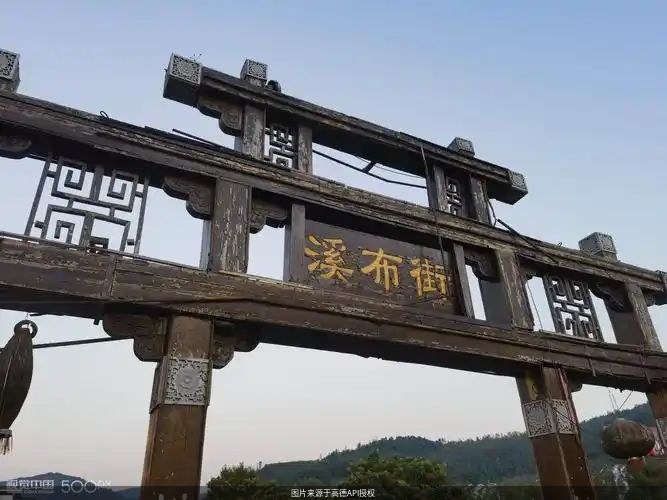
A folk-culture street beside Wulingyuan's landmark gate, lined with Tujia stilt houses offering snacks…
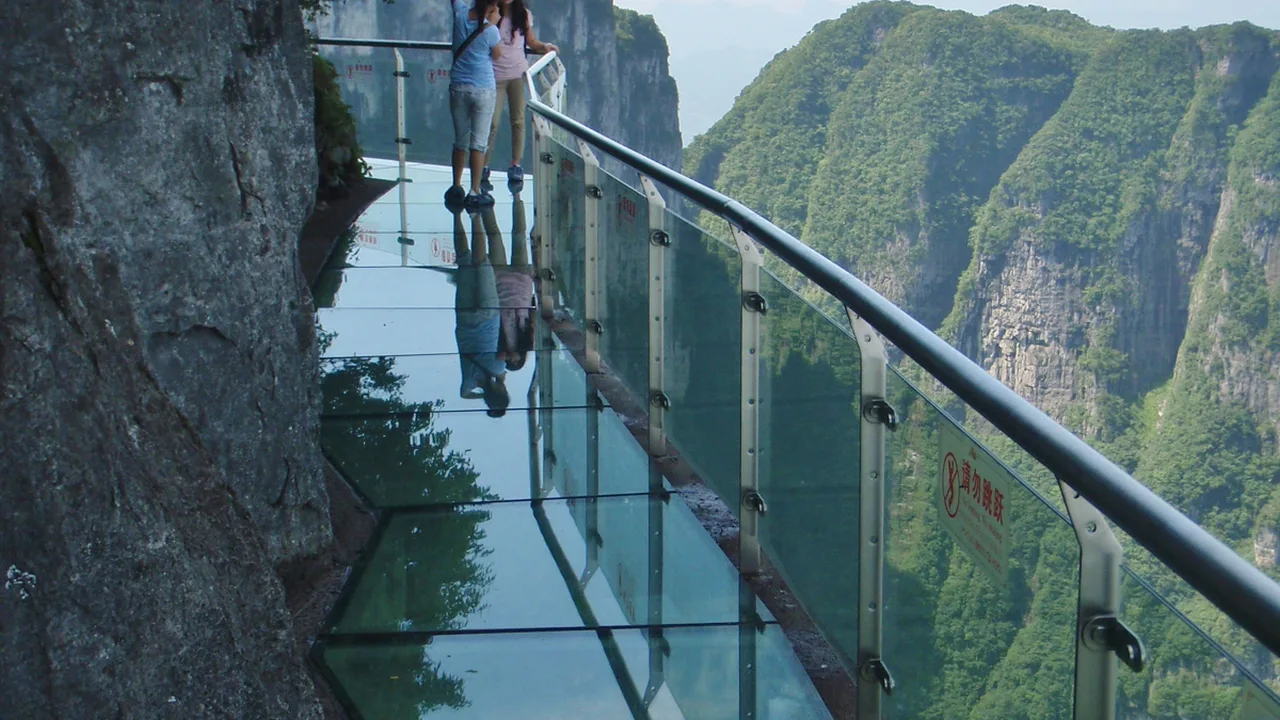
A glass walkway suspended on the west cliffs of Tianmen Mountain, with a sheer drop beneath your feet.…
A bustling food street in downtown Zhangjiajie packed with barbecue, snacks and western-Hunan flavors. A…
A night-market street in Wulingyuan town lined with stalls serving 'sanxiaguo', barbecue and local snacks…
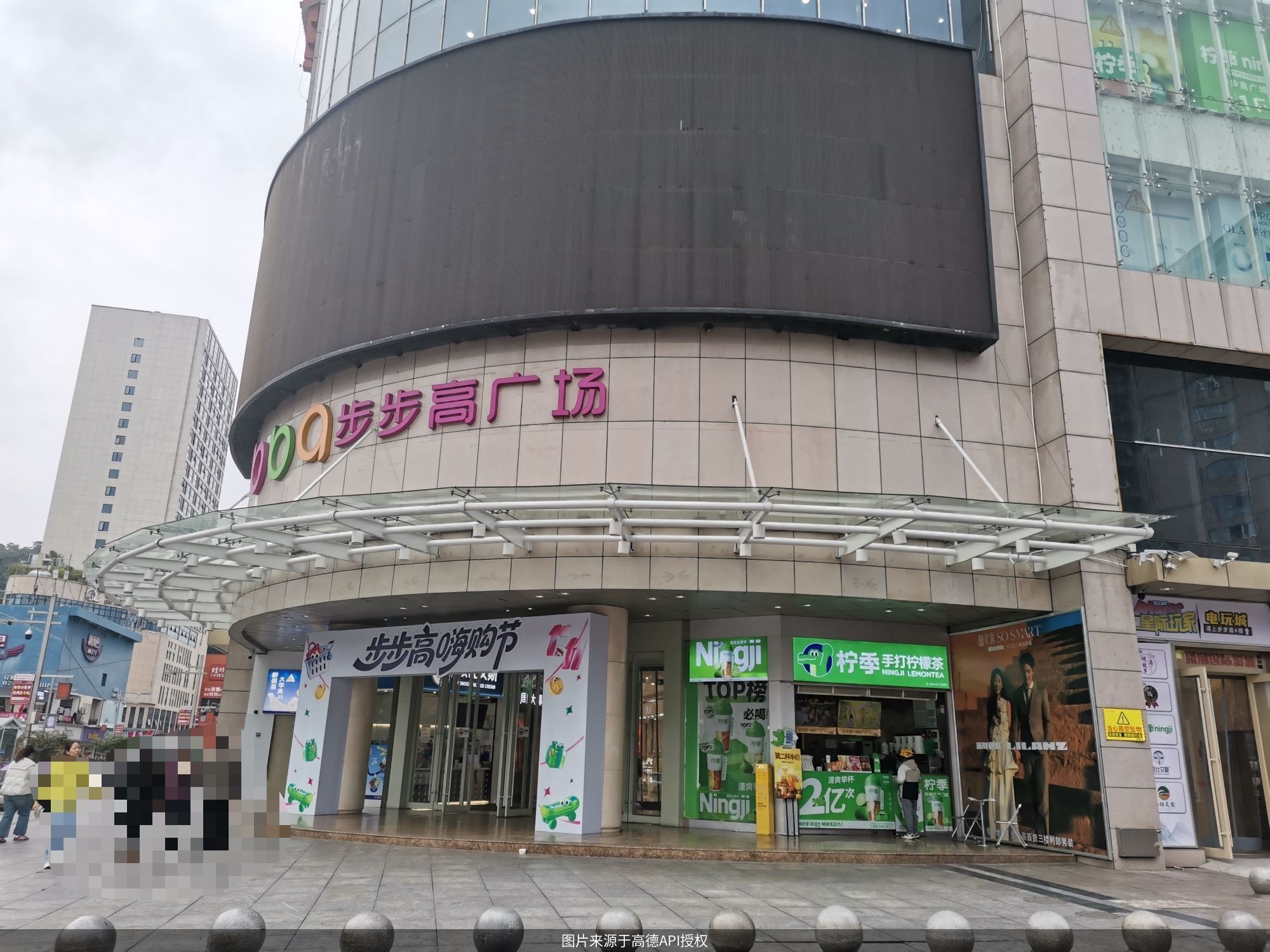
A large commercial complex in downtown Zhangjiajie combining a supermarket, department store, dining and…
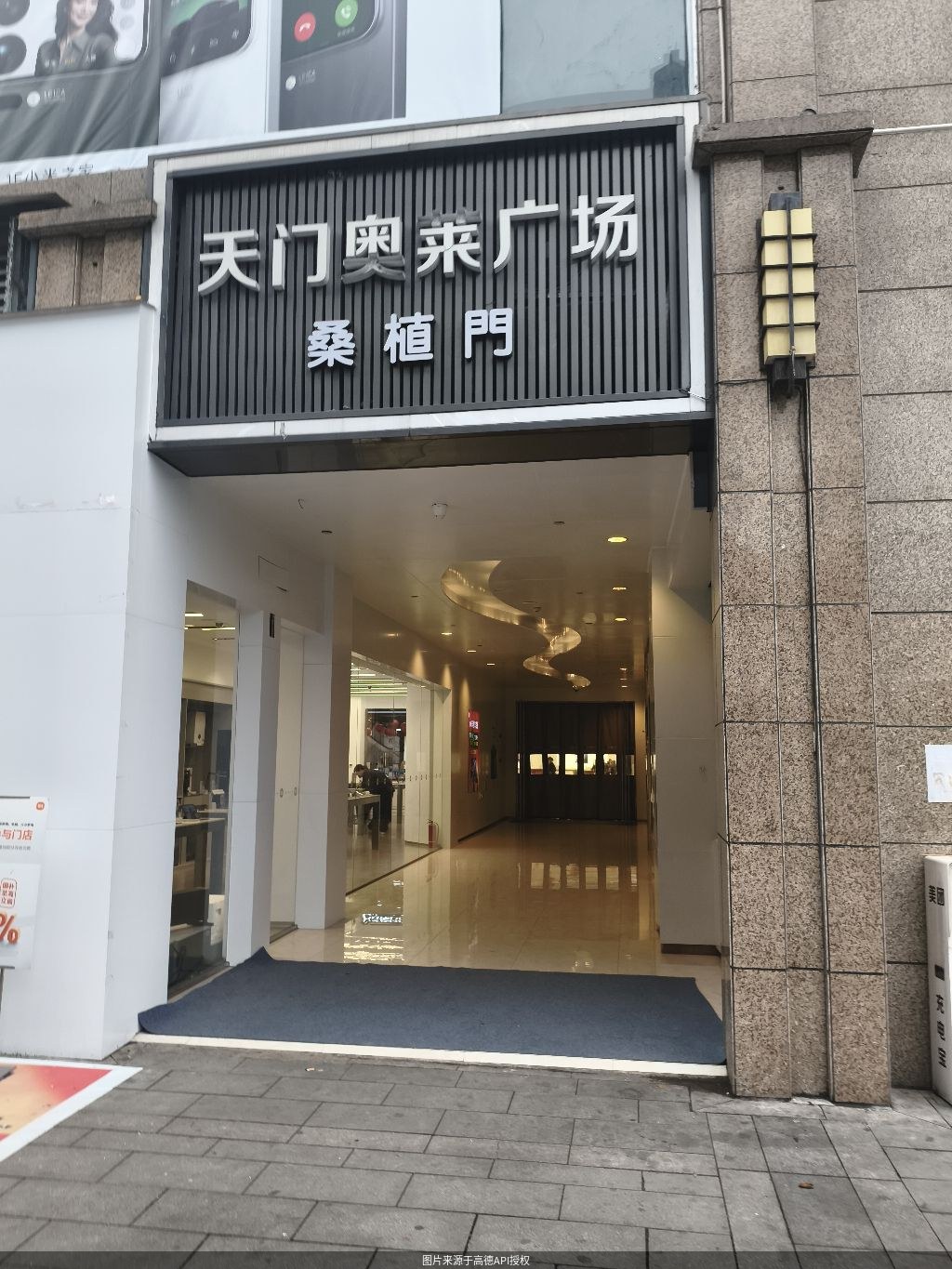
An outlet mall in downtown Zhangjiajie focused on discounted brand goods, covering apparel, sportswear, shoes…
Museums, galleries and workshops still keeping old crafts alive.
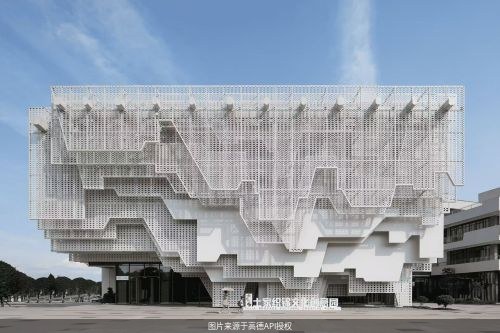
A national intangible heritage in which Tujia women weave brilliantly colored Xilankapu brocade using a…
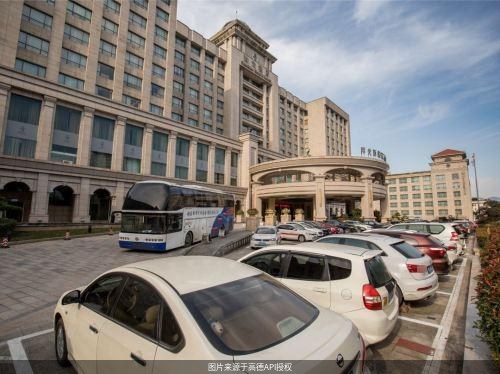
A traditional local opera popular in Zhangjiajie, a national intangible heritage with earthy singing styles…
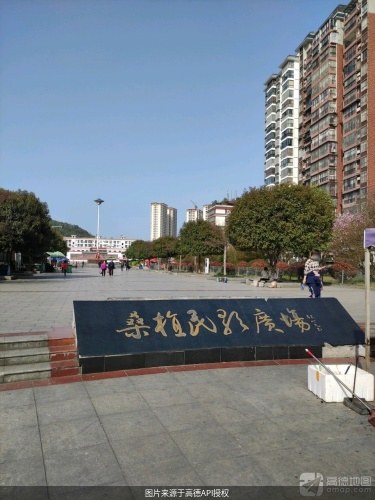
A national intangible heritage of folk songs from Sangzhi County in Zhangjiajie, sung by Han and Tujia people…
What is on stage after dark.
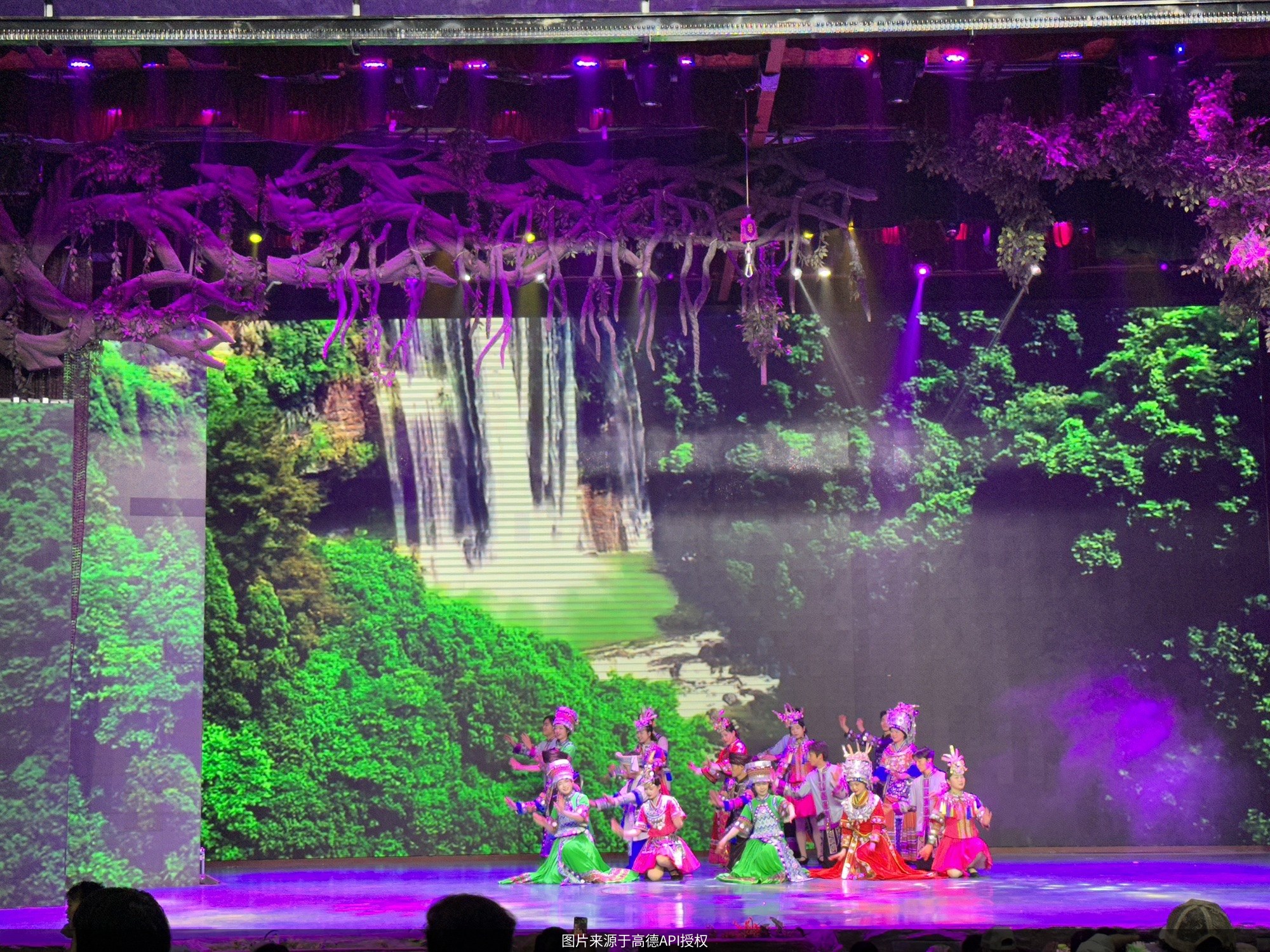
A large theatre in Wulingyuan staging the 'Dream Zhangjiajie' folk show, blending Tujia song and dance…
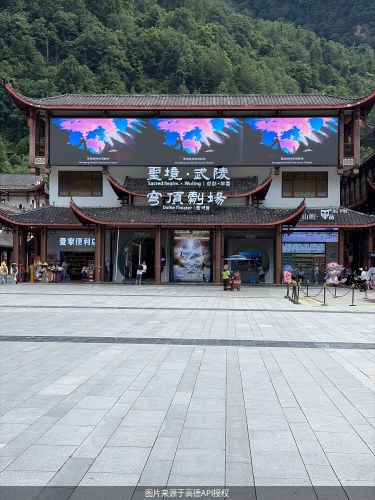
An immersive dome cinema in Wulingyuan presenting the region's peak forests and geological history on a…
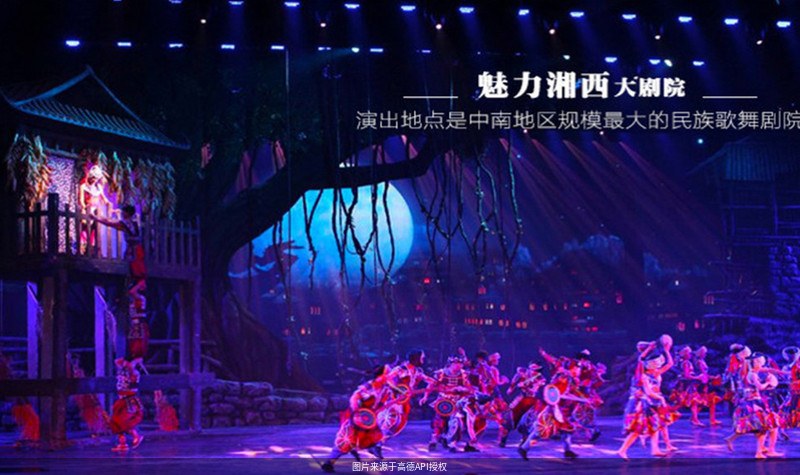
Zhangjiajie's most influential folk performance, using song, dance and acrobatics to present Tujia and Miao…
Where the whole street eats — the city's most famous food streets, each with its own guide page.
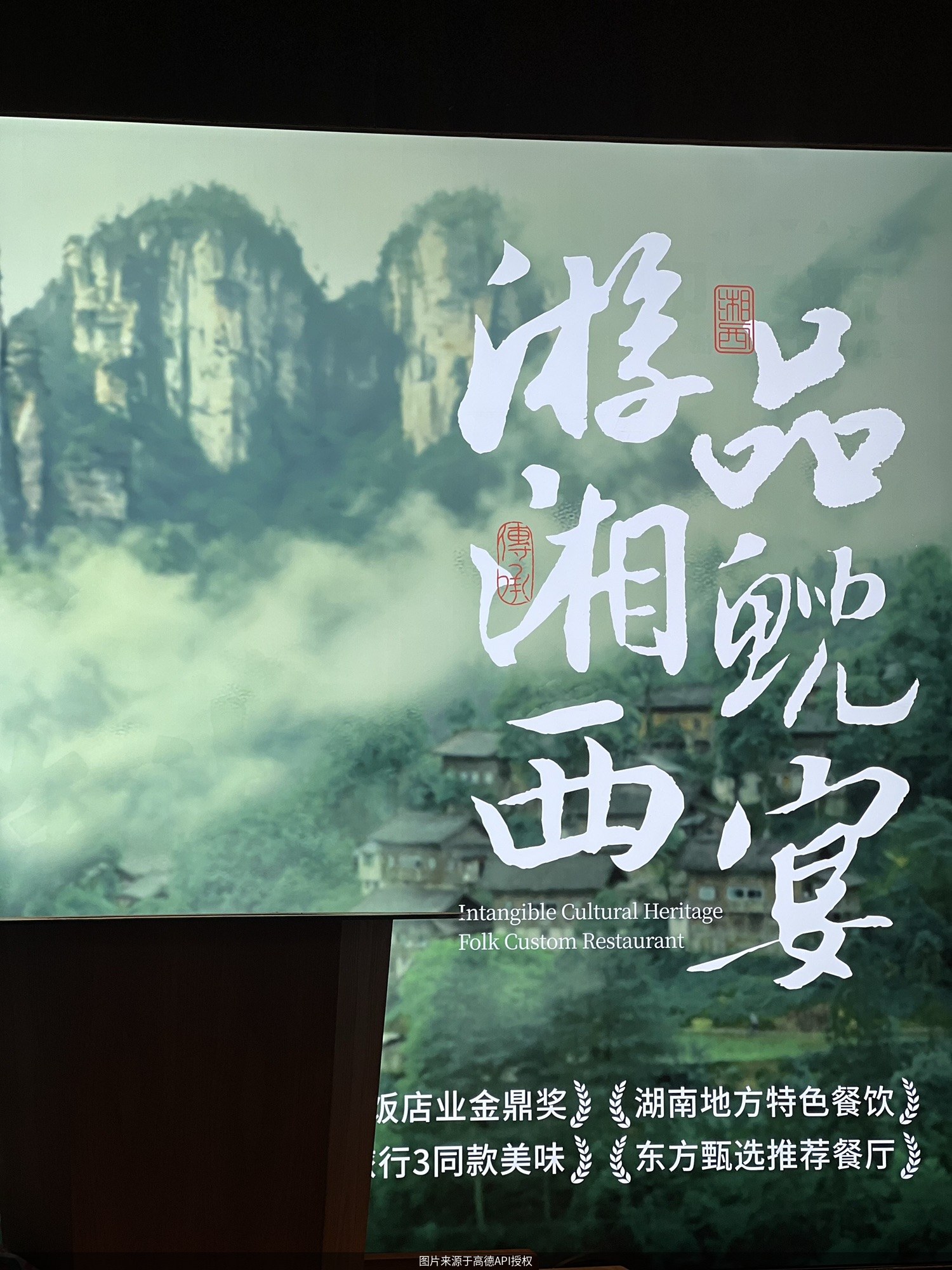
A themed restaurant featuring the giant salamander, a Zhangjiajie specialty, combining this rare aquatic…
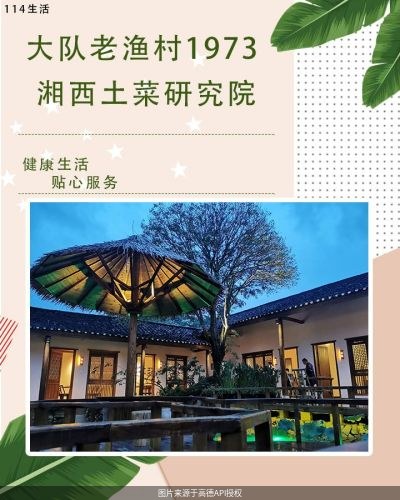
A popular restaurant in Wulingyuan specializing in fresh reservoir fish and western-Hunan home dishes in a…
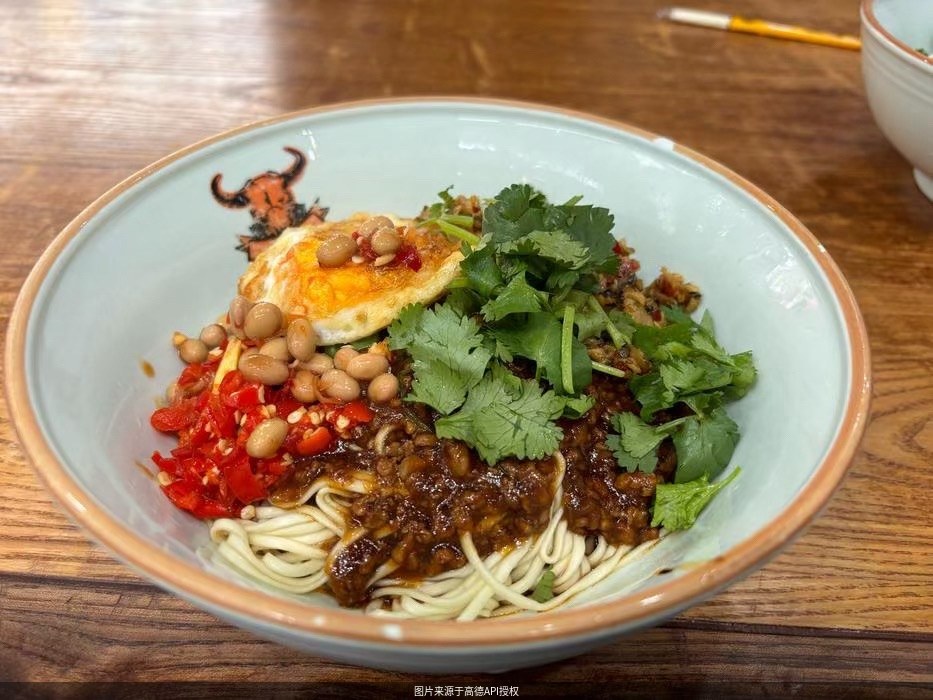
A famed beef-rice-noodle chain from Jinshi, with a bustling flagship in Zhangjiajie. Its silky noodles and…
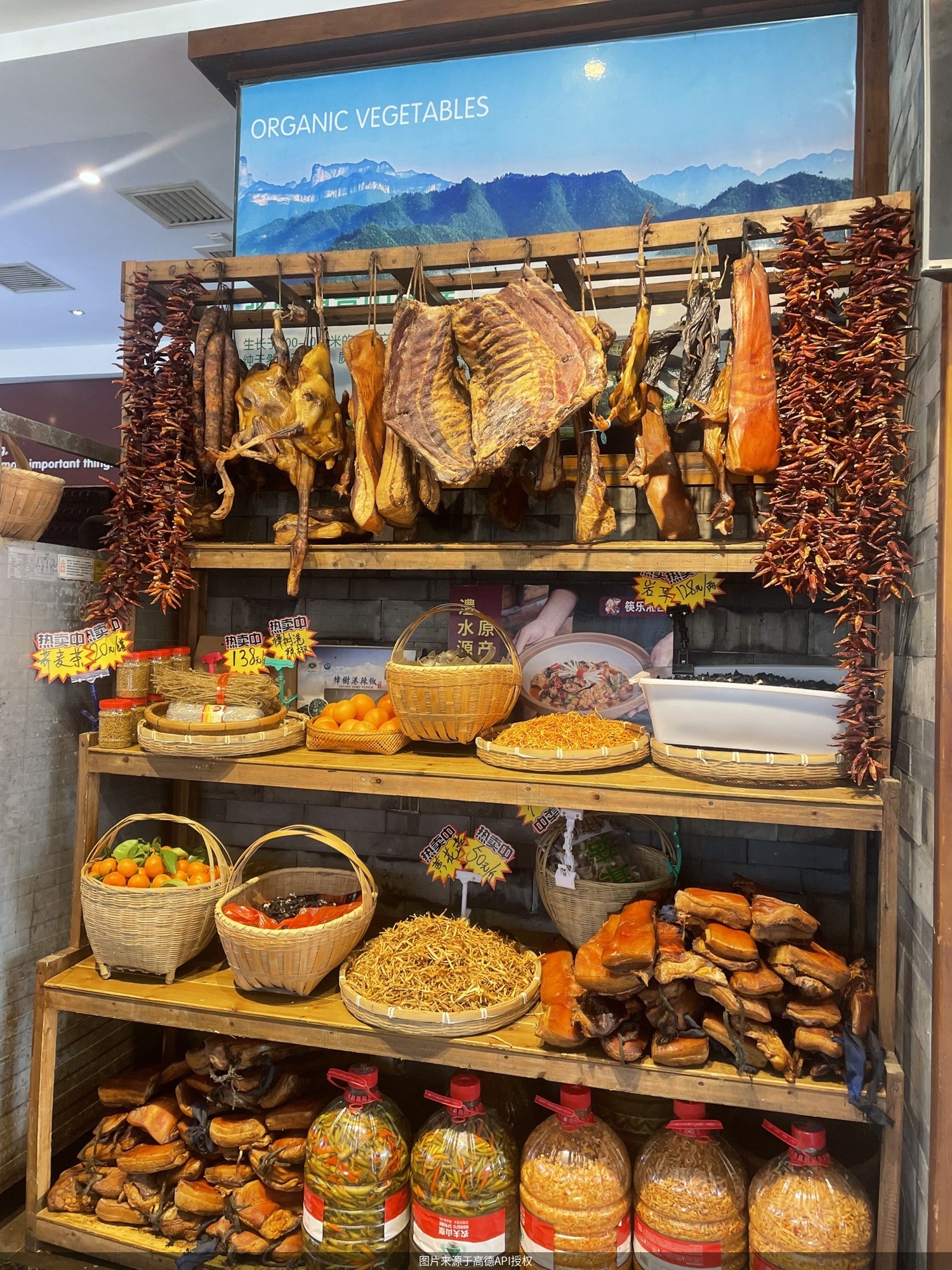
A western-Hunan restaurant beside the Charm of Xiangxi theatre, serving Tujia cured meats and sour-spicy…
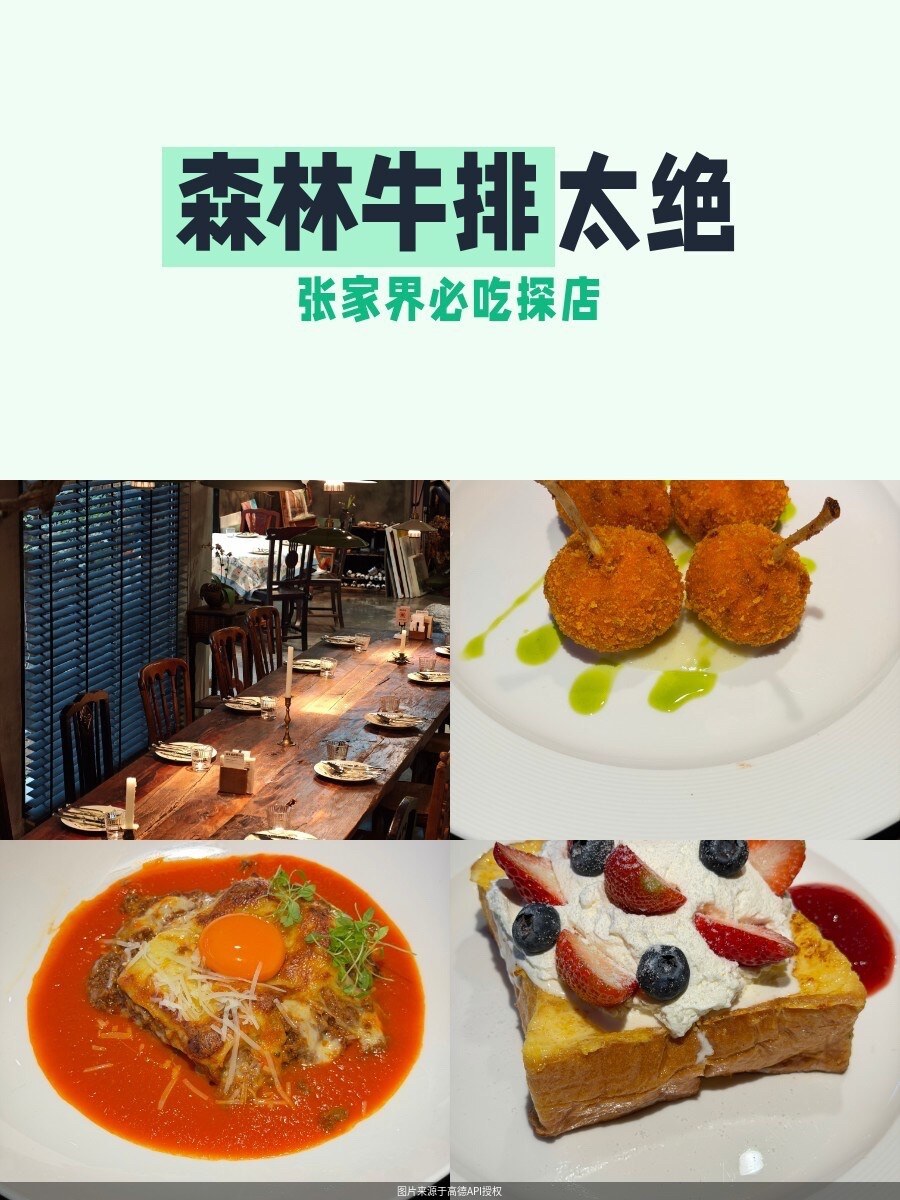
A Western restaurant in Zhangjiajie offering Western and fusion cuisine in a fresh, elegant setting. It…
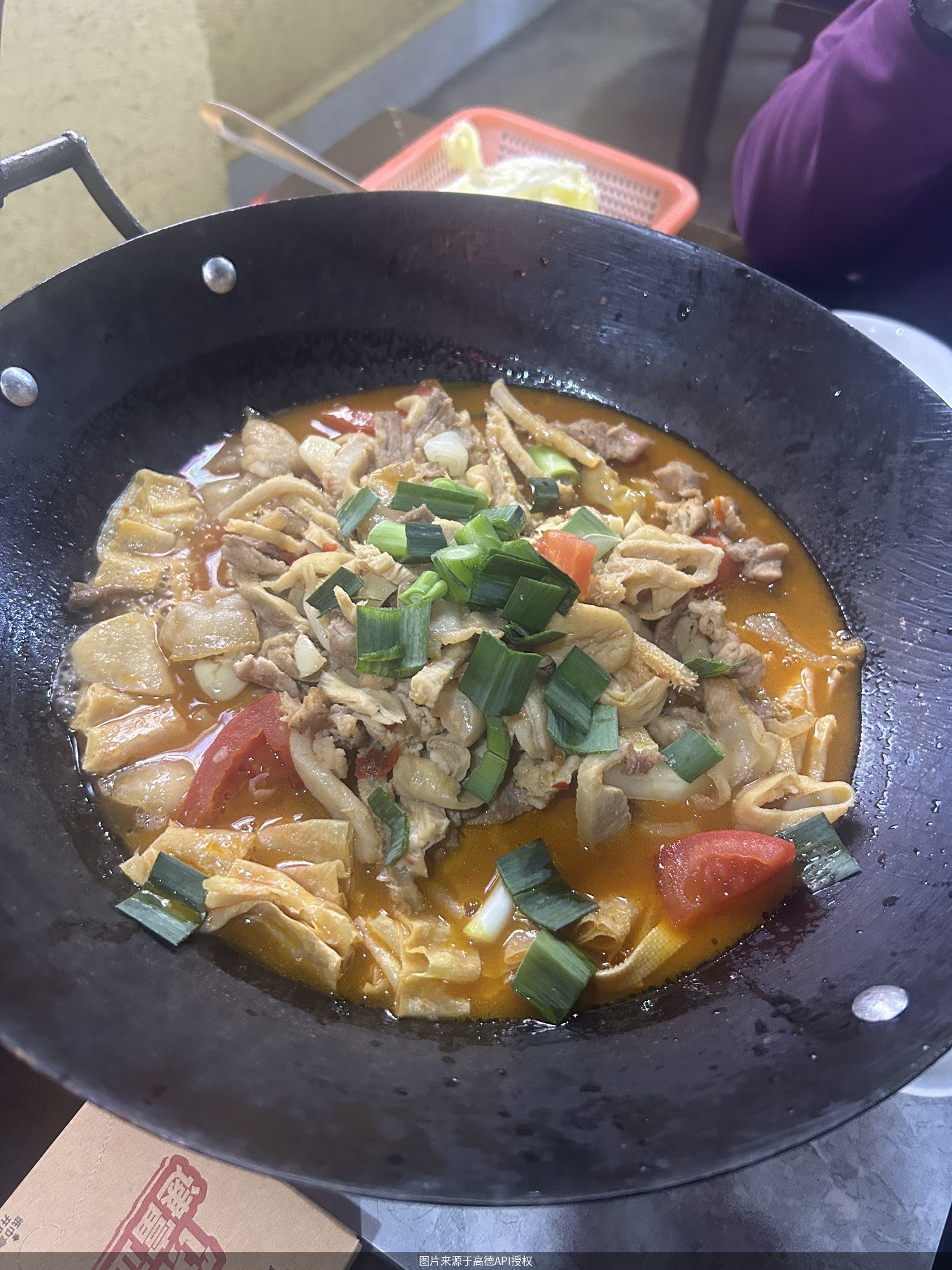
Zhangjiajie's signature restaurant for 'sanxiaguo', a hearty one-pot dish of cured pork, tofu and radish…
Riverside bars, Tujia snacks and souvenir shops at the park gate.
A large-scale Tujia and Miao song-and-dance show.
A dry-pot of pork, offal and vegetables — the local dinner.
Guesthouses outside the gate have dark skies and quiet courtyards.
Nights here are about Tujia food and folk shows — the mountains go dark early.
Listed sites and the crafts that made this city famous.
3,000 quartz-sandstone pillars, 800 streams and 40 caves across 264 km² — inscribed in 1992.
Hand-woven geometric brocade used for baby carriers and wedding quilts.
Mountain work songs and love songs from the Tujia villages — national intangible heritage.
Xilankapu — geometric silk-cotton brocade woven on a waist loom.
A circle dance performed at Tujia festivals, with hunting and farming movements.
Drum-led dancing from the Miao villages of western Hunan.
Senior licensed guides with 10+ years in the field and fluent English — deep on history, culture and local life.
Experienced licensed guides with clear English — solid on city highlights, food and day-to-day logistics.
Licensed guides with workable English — a good-value choice for city days, transfers and standard commentary.

Chauffeur-driven by the day, plus airport and intercity transfers.



Private chauffeur-driven vehicles, priced per vehicle not per person. Airport transfer from $45; intercity transfer from $180.
Zhangjiajie's main aviation hub on the city's outskirts, with flights to major Chinese cities. It is the key gateway for visiting Wulingyuan and Tianmen Mountain.
Zhangjiajie's conventional railway station in the city center, near the Tianmen Mountain cableway. It serves conventional trains and is a key arrival point for visitors.
Zhangjiajie's high-speed rail hub, serving lines such as the Qianjiang-Changde railway and linking the city with Wulingyuan. Its modern station is the main gateway for high-speed rail travel.
A highway coach hub in downtown Zhangjiajie, next to the railway station, with services to Wulingyuan, Tianmen Mountain and nearby counties. A key transfer point for reaching the scenic areas.
A large commercial complex in downtown Zhangjiajie combining a supermarket, department store, dining and entertainment. Its Huilong Road branch is a key destination for local life and consumption.
An outlet mall in downtown Zhangjiajie focused on discounted brand goods, covering apparel, sportswear, shoes and bags. A go-to for value-conscious shoppers.
A core shopping mall in downtown Zhangjiajie, gathering department stores, dining and cinemas with a wide range of brands. Its central location makes it a popular spot for shopping and leisure.

10 guides split by trip length: one-day city routes, three-day escapes and longer journeys, with stops, costs and transport in each.
One canyon, one cliff elevator, two stone forests: the park's essence in a day
Three DaysWulingyuan Deep in Three Days: Yangjiajie, the Gallery and Tianzi SunsetsUse all four valid days: one stone forest per day, unhurried
Multi-DayFive Days: Deep Wulingyuan Plus a Fenghuang EscapeThree days of peaks, one of water, and a final half-plus in Fenghuang
Real routes, real travellers — a sense of what a trip looks like.
Most travellers spend 3 days here. Add a day for a side trip if you want a slower pace.
Spring and autumn are usually the most comfortable. Check the seasonal notes above before booking.
We arrange airport/rail transfers and private drivers. Tell us your arrival point and we plan the connection.
Send an enquiry and a human expert replies within 12 hours with a draft plan and real prices. Flexible rescheduling; clear cancellation terms in your quote.
2-day private itineraries in Zhangjiajie start from $590 per person, two travelling together. Your proposal itemises hotels, tickets, guide and car — no hidden fees.
Three days covers the forest park and Tianmen Mountain properly. Two days is rushed; five adds Fenghuang.
If heights are your thing, yes — book a timed slot. The Tianmen Mountain glass walkway is shorter but has a better cliff setting.
The park is large and signage is limited; a guide saves hours of shuttle-bus guesswork. We include one in every route.
Recent listed prices: Wulingyuan Scenic Area ¥228; Tianmen Mountain ¥278; Zhangjiajie Grand Canyon Glass Bridge ¥256; Huanglong Cave ¥100; Baofeng Lake ¥96. Ticket prices change seasonally — we confirm them in your quote.