 TripMyChinaJOURNEYS THROUGH REAL CHINA✦ AI Trip✦ Plan My Trip
English
简体中文
繁體中文
日本語
한국어
ไทย
Tiếng Việt
Bahasa Indonesia
Italiano
Español
العربية
Русский
Deutsch
Français
Bahasa Malaysia
TripMyChinaJOURNEYS THROUGH REAL CHINA✦ AI Trip✦ Plan My TripShaoxing · Attractions
Long before written history, a king named Yu is said to have tamed the Great Flood by dredging channels instead of building walls — a legend so central to China that every dynasty paid him homage. Shaoxing claims his burial place, at the Mausoleum of Yu the Great on the slopes of Kuaiji Mountain southeast of the city. The ceremonial complex unfolds along a long sacred axis: an enormous stone archway, a tree-lined approach, the ancient Yu Temple, and a stele pavilion reading Tomb of Yu the Great. Climb further up the mountain and a modern statue of Yu stands against the sky, hoe in hand, gazing over the plain he is said to have saved.
Yu the Great is the hero of China's oldest dynastic legend. Around 2000 BC, tradition says, he spent thirteen years channeling the floodwaters to the sea, so dedicated that he passed his own home three times without entering. His son is credited with founding the Xia dynasty, China's first. For millennia afterward, emperors sent envoys to Kuaiji Mountain to sacrifice at his tomb, and the temple complex here was repaired and enlarged dynasty after dynasty. Whether or not one treats the story as history, the site captures something essential about Chinese civilization: the ideal of a ruler measured by his service against the waters.
A visit runs along a single axis. From the great stone archway you pass up a sacred way lined with statues, cross ceremonial gates and reach the stele pavilion marking the tomb area, then the Yu Temple with its grand hall, ancient steles and quiet courtyards. Above it all, a long staircase climbs Kuaiji Mountain to a modern statue of Yu standing with his hoe — the climb is demanding but the views over Shaoxing reward the effort. The site is part of the wider Kuaiji Mountain scenic area, and it combines easily with the <a href="/attractions/orchid-pavilion/">Orchid Pavilion</a> on a full-day loop out of town.
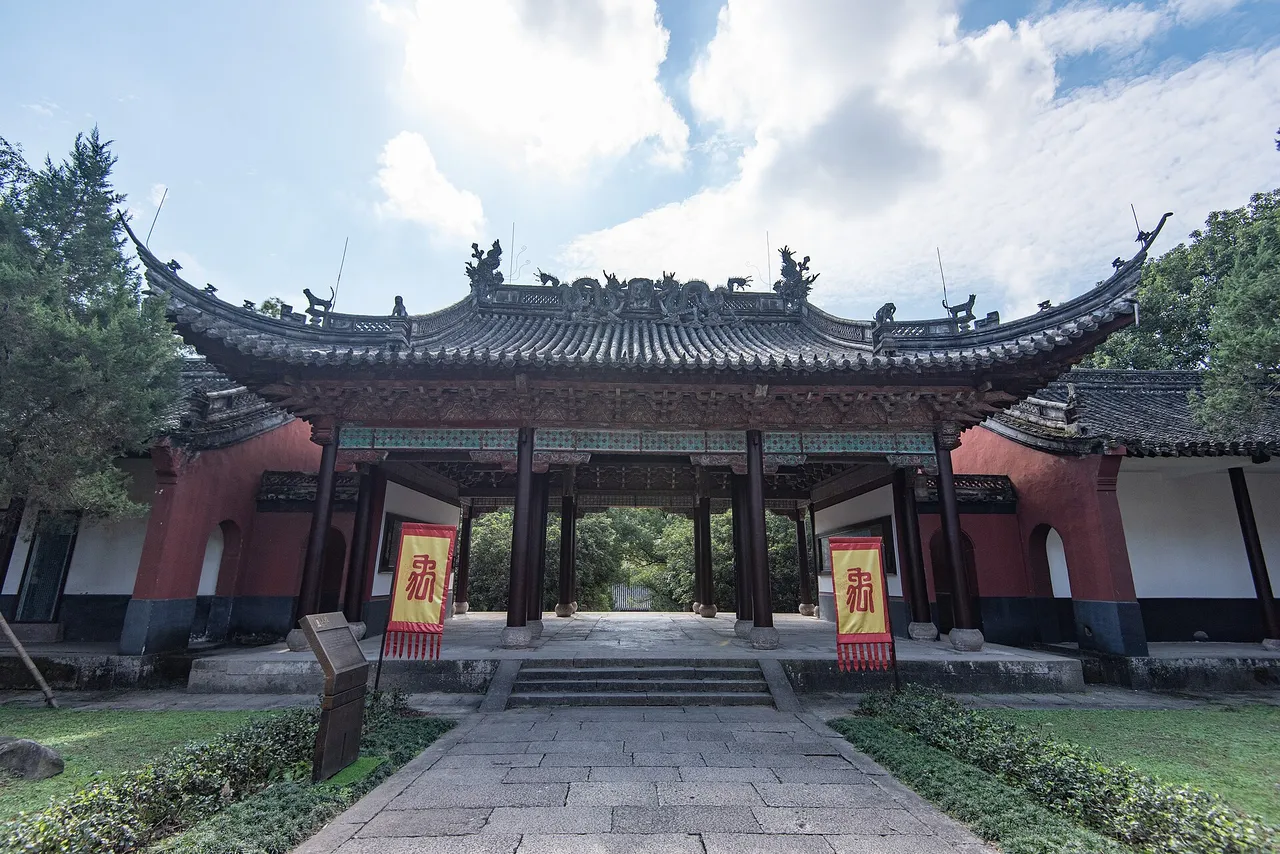
Admission covers the mausoleum and temple complex, with the mountain climb generally included; a combined ticket for the wider Kuaiji Mountain area may also be offered. Fees are modest by international standards but change from season to season, so check at the gate or have your guide confirm on the day. Opening hours generally run from morning to late afternoon. The stairway to the statue adds around forty minutes to an hour each way for average walkers, so start early in hot weather. Seniors, students and children qualify for standard discounts with identification. Weekdays are calm; local tour groups tend to arrive mid-morning.
The mausoleum lies about six kilometers southeast of downtown Shaoxing, at the foot of Kuaiji Mountain, roughly twenty minutes by taxi from the old city. Buses serve the area but are less convenient for visitors who do not read Chinese; most foreign travelers take a taxi or include the site in a half-day car charter together with the Orchid Pavilion or other suburban sights. From Shaoxing railway station allow about half an hour by car, and from the high-speed rail station the trip is longer across town. The entrance plaza is spacious, and ride-hailing cars can usually pick up at the main gate. Wear walking shoes if you intend to climb to the summit statue.
Spring and autumn offer the best mix of clear skies and comfortable temperatures for the long axis walk and the mountain climb. Summer is hot and humid, so go early in the morning. Winter can be cold but beautifully quiet. The site draws special crowds during the annual public sacrifice ceremony to Yu, traditionally held in spring — attending is memorable, but expect large gatherings. Weekday mornings remain the calmest time for photography along the sacred way.
Yu the Great is the legendary hero who tamed China's Great Flood, according to tradition by dredging rivers rather than damming them. His son is said to have founded the Xia dynasty, China's first, and Yu became the eternal model of a ruler devoted to public works.
Tradition holds that Yu died on an inspection tour in this region and was buried at Kuaiji Mountain. Like many tombs of ancient heroes, it is best understood as a place of commemoration shaped by thousands of years of ritual, rather than a verified archaeological burial.
The mausoleum and temple complex take about an hour and a half to two hours at an easy pace. Add roughly an hour if you climb to the summit statue, making a half-day outing in total.
It is a long, steady stairway rather than a technical hike, but the steps are steep in places and uneven underfoot. Average walkers manage it comfortably with water and a rest or two; visitors with limited mobility can enjoy the temple complex below instead.
 Full day · 8–10 hours
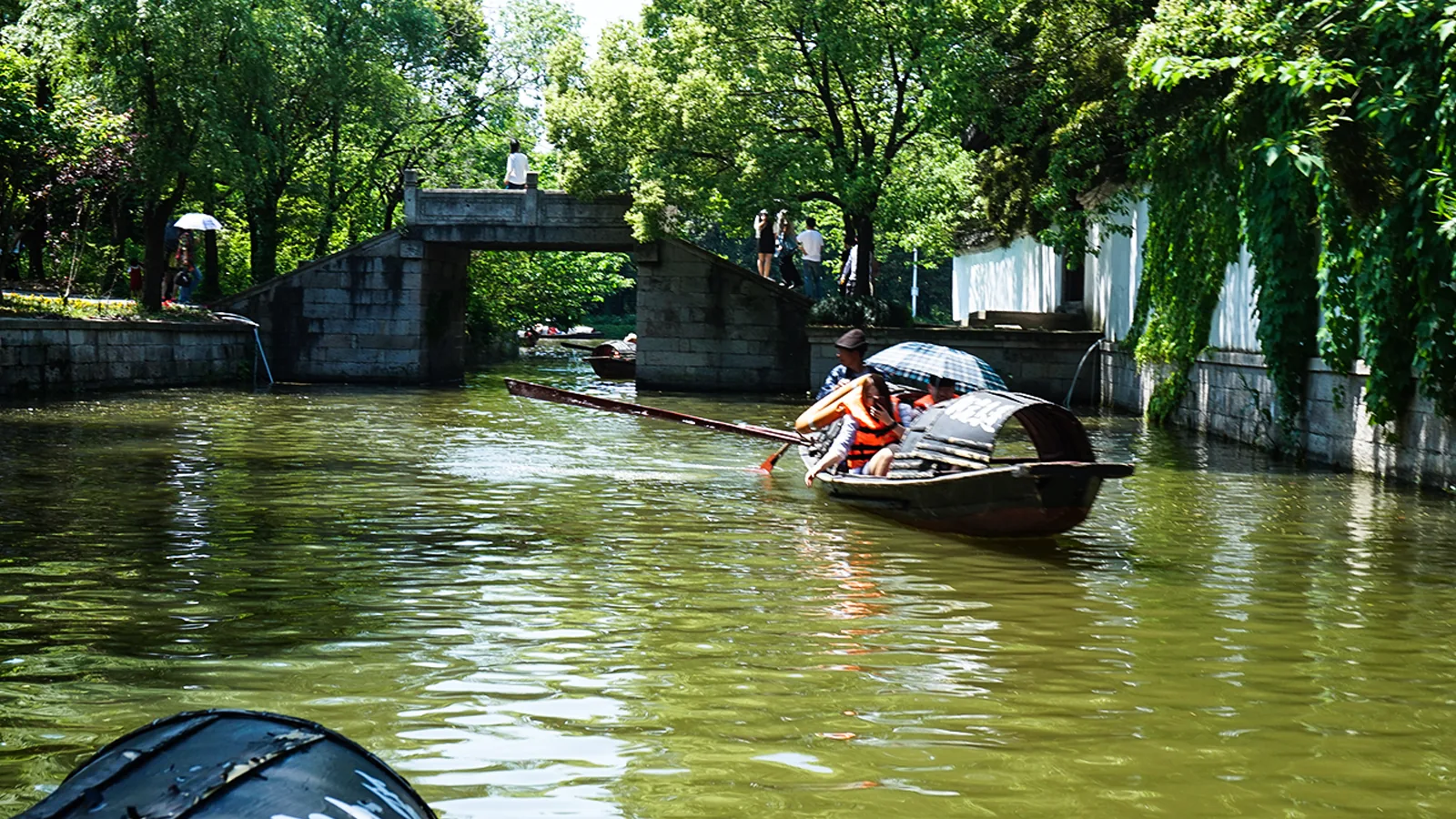
The landscape here is small enough to fit in a lens: one cliff lake, one winding stream, one old street
View details →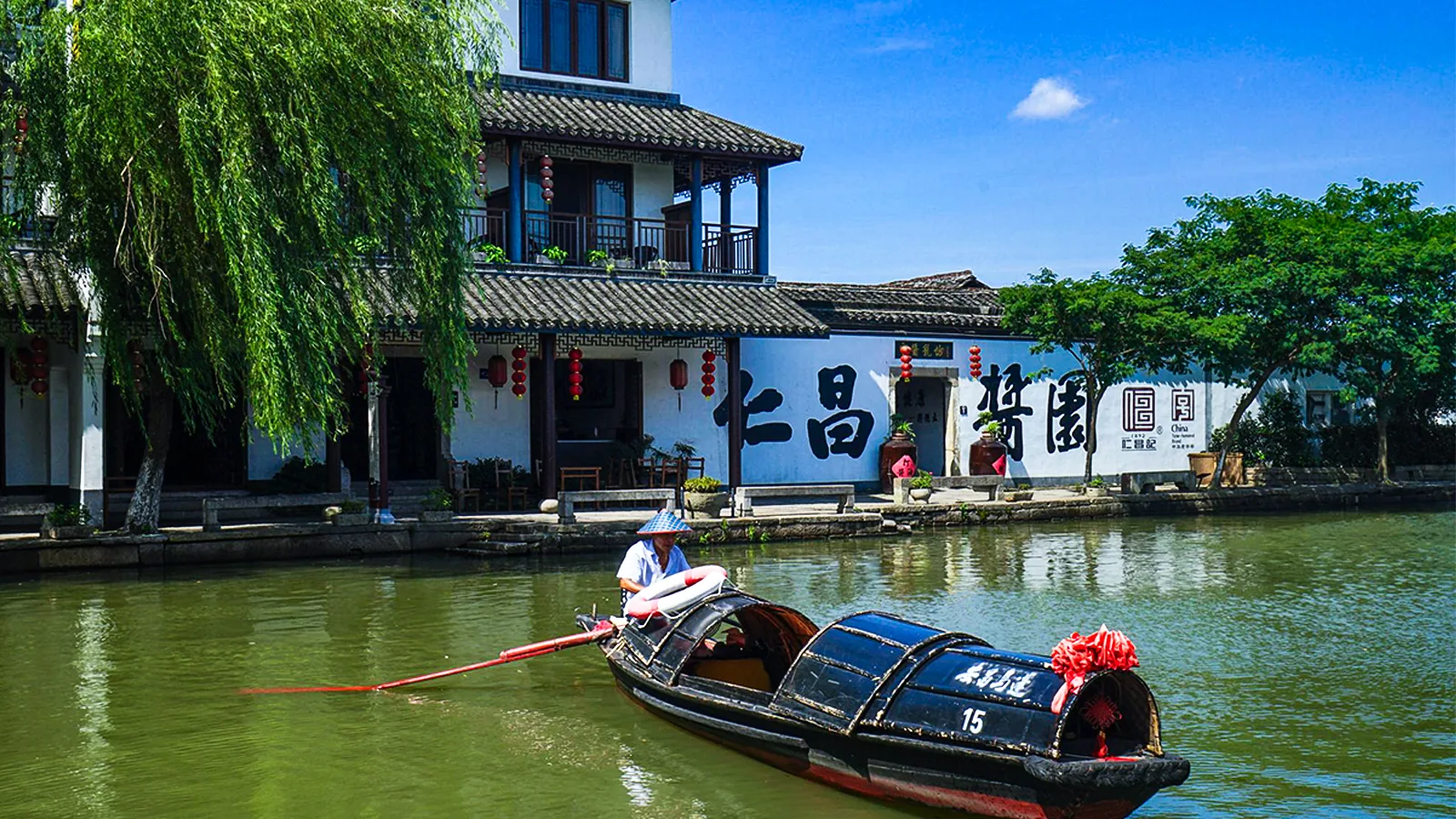 Full day · 8–10 hours
Two performances after dark: one against a garden wall, one along the water
View details →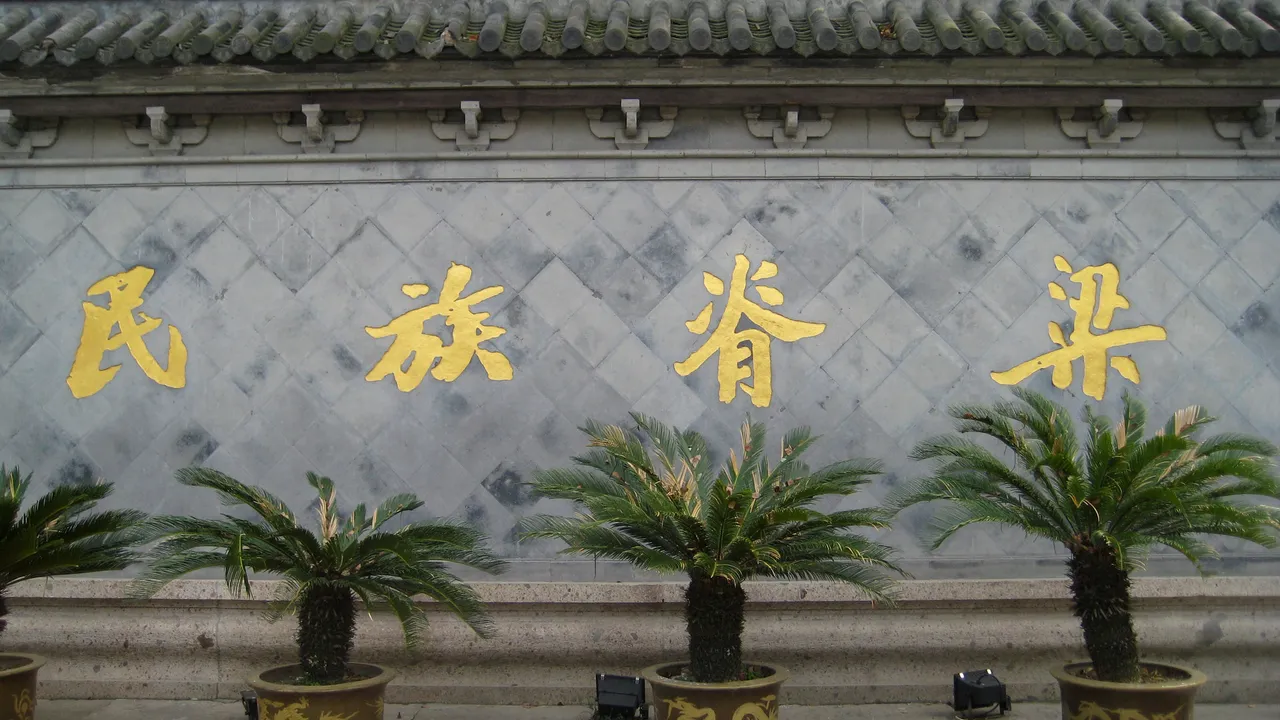 Full day · 8–10 hours
A city that turned fermentation into a daily habit: wine, soy, mould, lees, all of it in the lanes
View details → 2 days · 1 night · private
This two-day express route covers Shaoxing's essentials: the Lu Xun na
View details → 3 days · 2 nights · private
Three days cover the classic Shaoxing set: the Lu Xun quarter and Cang
View details →We booked a private guide for two days in Shaoxing and it was money well spent. He walked us down Cangqiao Straight Street and explained what all the little canal-side shops were selling, which we never would have figured out on our own. The pace was relaxed and he never rushed us.
Took the kids to Jinghu Wetland Park one morning and they loved spotting birds along the boardwalks. Bring snacks and water though, the food options inside were pretty limited and we got a bit stuck. Still a nice easy half day out with children.
Private car & driver, day trips and multi-day routes from Shaoxing. · Free consultation · reply within 12h