 TripMyChinaJOURNEYS THROUGH REAL CHINA✦ AI Trip✦ Plan My Trip
English
简体中文
繁體中文
日本語
한국어
ไทย
Tiếng Việt
Bahasa Indonesia
Italiano
Español
العربية
Русский
Deutsch
Français
Bahasa Malaysia
TripMyChinaJOURNEYS THROUGH REAL CHINA✦ AI Trip✦ Plan My TripYinchuan · Attractions
The Haibao Pagoda — the "North Pagoda" of old Yinchuan — is the city's most venerable structure, its origins reaching back some 1,500 years to the age of the northern kingdoms. What sets it apart is its plan: unlike ordinary square or octagonal towers, the Haibao rises on a rare cross-shaped, diamond-like base, tier by tier up eleven stories of brick. Set in a lakeside temple park on the city's northern side, with lotus beds, pavilions and locals flying kites on the lawns, it is Yinchuan's quietest and most distinctive historic stop.
Tradition traces the pagoda to the fifth century, in the era of the short-lived northern kingdoms, and it was rebuilt many times after the earthquakes that recurrently leveled Yinchuan — the present tower follows a Qing dynasty reconstruction on ancient foundations. Its hallmark is the unusual footprint: the body swells and recedes in a lobed, diamond-like outline that has no close parallel among Chinese pagodas, giving the silhouette an almost floral profile against the sky.
The pagoda stands within the Haibao Temple park, a green and watered compound popular with local families — lotus ponds, willow shade, incense at the temple halls and kites over the lawns in season. The tower is open for climbing on most days for a small extra fee, with steep interior stairs and little light, rewarded by rooftop views over the flat city toward the Helan Mountains. It sits in northern Yinchuan, an easy taxi ride from the center, and pairs naturally with the Chengtian Temple Pagoda — the "West Pagoda" — for a two-tower day of the city's ancient stack.
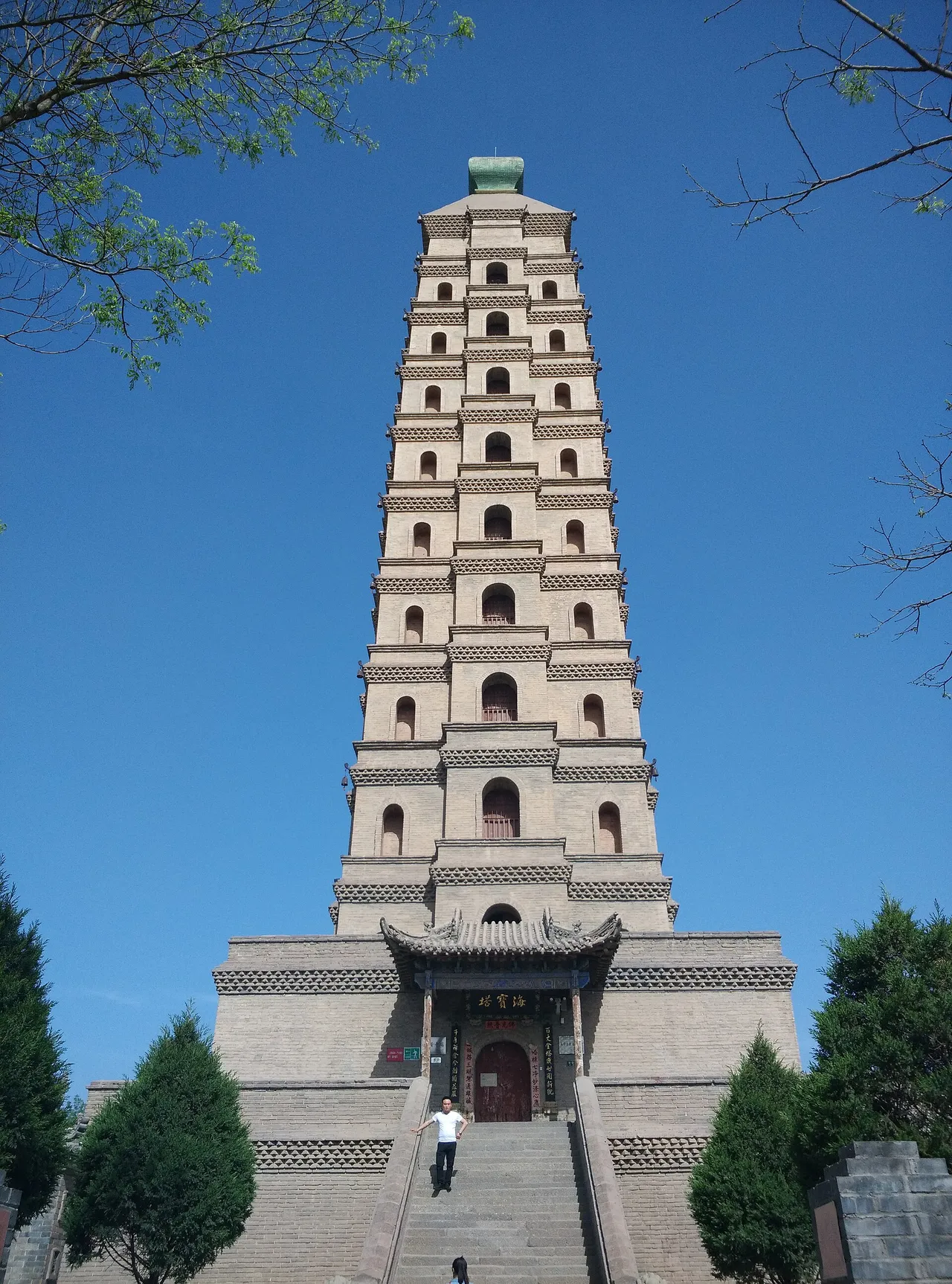
The park charges a modest entrance ticket, with a small additional fee for climbing the pagoda when the interior is open — which is most days in season but should be confirmed at the gate, as access pauses in bad weather and occasionally for maintenance. Prices are low and occasionally adjusted; verify on site. The park generally opens through the daytime from morning to early evening. Facilities are simple — restrooms and small vendors near the gate — and the visit is entirely self-guided. Weekday mornings are tranquil with worshippers and exercisers; weekends and holidays bring family crowds, kite flyers and photo groups around the lotus ponds.
The pagoda and its park sit in northern Yinchuan, about 10 to 15 minutes by taxi or ride-hail from the railway station and downtown; city buses along the northern corridors stop nearby. The park entrance is close to the main road, and everything is flat and walkable. The efficient plan is a two-pagoda day: Haibao in the morning when the park is at its calmest, lunch back in the center, then the Chengtian Temple Pagoda in the afternoon. From the top of the tower, on clear days, the Helan Mountains line the western horizon. Allow about an hour in the park, or ninety minutes with the tower climb.
Summer is the park's season — the lotus ponds bloom, the willows are dense, and evening kite-flying fills the lawns; mornings are the coolest and quietest hours. Spring and autumn offer crisp light on the brick tiers and comfortable climbing weather, while winter strips the park bare but keeps a stark charm, with occasional snow on the pagoda. Within the day, go in the morning for calm and clear mountain views from the top, or in the golden hour before closing when the brick warms to amber. The visit is compact — under two hours in any season — which makes the pagoda an easy companion to a morning at the Chengtian Temple Pagoda or the city museum.
Tradition places its first construction around 1,500 years ago in the era of the northern kingdoms. Earthquakes repeatedly destroyed later versions, and the present tower is a Qing dynasty rebuilding on the ancient foundations.
Unlike the usual square or octagonal plans, the Haibao rises on a lobed, cross-shaped footprint, so the tower's edges swell and recede like petals. Chinese pagodas with this plan are exceptionally rare.
Usually yes, for a small extra fee — the interior stairs are steep and dim, opening to a top-level view over the city toward the Helan Mountains. Access pauses in bad weather, so confirm at the gate.
An hour covers the park and exterior easily, or up to ninety minutes with the climb. It combines neatly with the Chengtian Temple Pagoda in one day.
 Full day · 8–10 hours
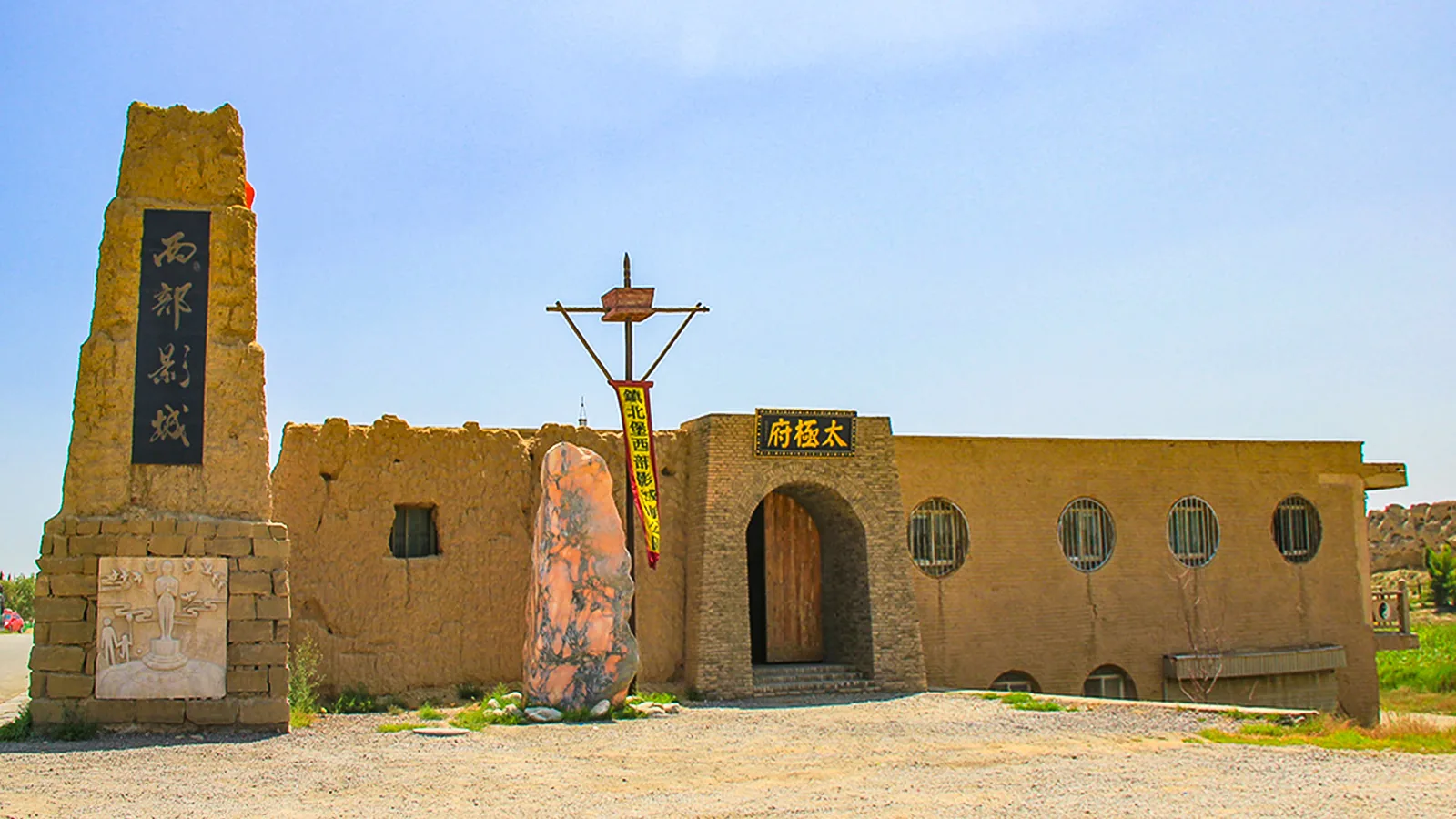
An empire that wrote its own script but left no history of its own, nine burial mounds, and a brick pagoda standing since 1050
View details →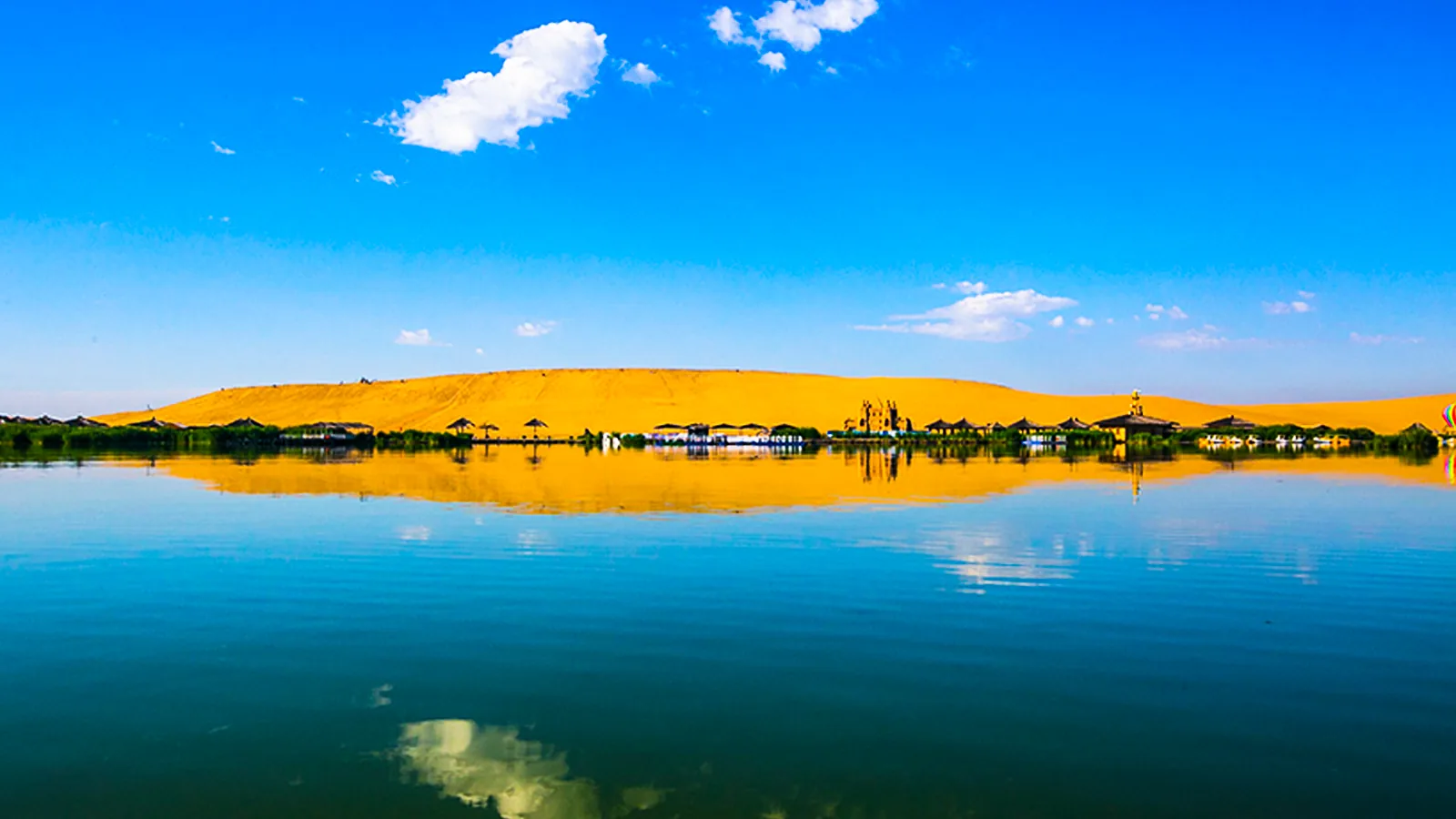 Full day · 8–10 hours
A lake with dunes on one shore and reeds on the other, then a gorge in the Helan range where the rock stands vertical
View details →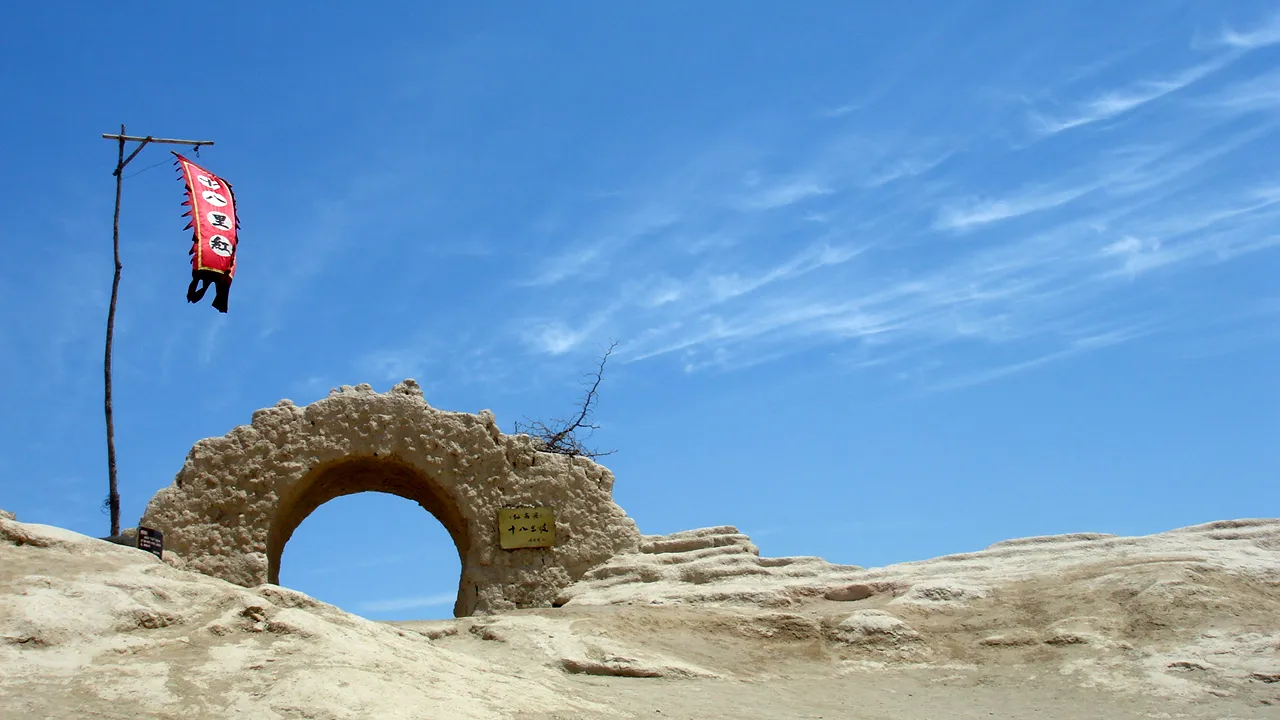 Full day · 8–10 hours
Two old garrison forts turned film sets, carvings pecked into stone three thousand years ago, and a hands-on hall at the end
View details →2 days · 1 night · privateA two-day express pairing Yinchuan's city and desert-edge essentials.
View details →3 days · 2 nights · privateThree days read Yinchuan's layered frontier story. The old city and Hu
View details →We booked a private guide for our two days in Yinchuan and it was worth every yuan. He walked us through Zhongshan Park in the afternoon, and instead of rushing us past the trees he just sat down with us near a group of old men playing cards. Climbing Lanshan Park afterward gave us the whole city spread out below, which our guide explained was where locals go to watch the sunset. No script, no shopping stops, just a guy who actually knew the place.
Took the kids to the China Flower Expo Park and they ran around the gardens for a solid two hours, which for a 6 and 8 year old is basically a miracle. The flower beds were nicely laid out and it never felt packed. Only gripe: not much shade in the middle section, so bring hats if you go in summer. We finished with ice cream near the entrance and everyone was happy.
Private car & driver, day trips and multi-day routes from Yinchuan. · Free consultation · reply within 12h