 TripMyChinaJOURNEYS THROUGH REAL CHINA✦ AI Trip✦ Plan My Trip
English
简体中文
繁體中文
日本語
한국어
ไทย
Tiếng Việt
Bahasa Indonesia
Italiano
Español
العربية
Русский
Deutsch
Français
Bahasa Malaysia
TripMyChinaJOURNEYS THROUGH REAL CHINA✦ AI Trip✦ Plan My TripShennongjia · Attractions
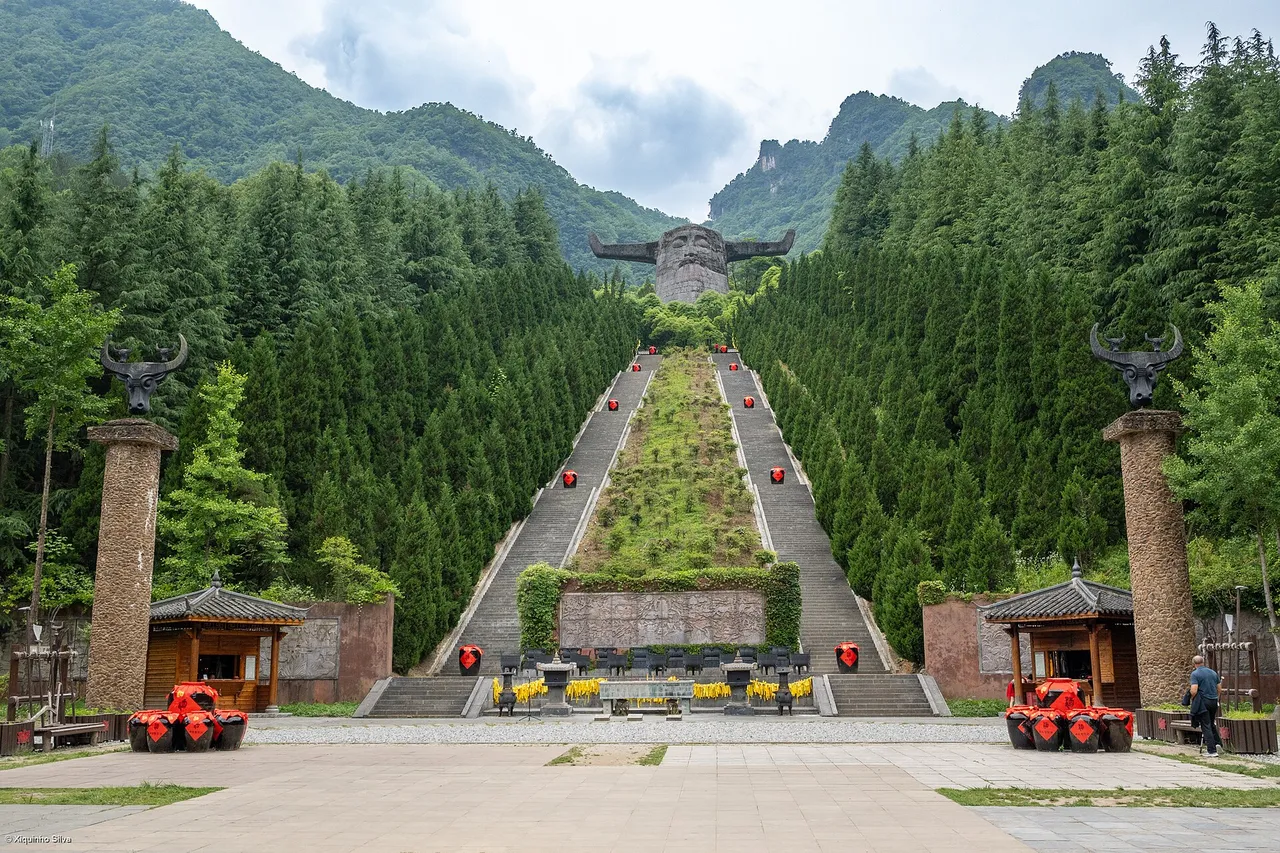
Shennong Altar is Shennongjia's ceremonial heart, built to honor Shennong, the legendary Divine Farmer said to have tasted hundreds of herbs in these mountains and taught his people to farm and to heal. The centerpiece is unforgettable: a colossal statue of the sage rises against the forested hillside, ox-horned and grave, gazing over terraced plazas where formal sacrifice ceremonies are still staged. Beside the altar stands one of the region's most venerated living things — an ancient fir more than a thousand years old, wrapped in red ribbons and prayer flags. Compact and easy to reach from Muyu town, it is the ideal cultural counterpoint to the area's long mountain drives.
Shennong, the Divine Farmer, is one of the founding figures of Chinese myth: the divine husbandman who invented the plow, sampled countless plants to discover which healed and which harmed, and is counted among the ancestors of the Chinese people. Shennongjia — literally Shennong's Ladder — takes its very name from the legend that he built scaffolding on these slopes to reach the herbs of the high cliffs. The altar complex was built in recent decades as the region's principal memorial to him, its design echoing ancient sacrifice terraces and the mountain itself.
A visit takes an unhurried hour. From the entrance a ceremonial way climbs through the trees to broad stone terraces beneath the giant statue, where local ceremonies are performed on festival days. The thousand-year-old fir, vast and hollow with age, occupies its own courtyard beside the stairway and is treated almost as a temple guardian. The site pairs naturally with nearby natural sights around Muyu, such as <a href="/attractions/guomenshan/">Guomenshan</a> and <a href="/attractions/tiansheng-bridge-2/">Tiansheng Bridge</a>, which together fill a relaxed day without long driving.
Entry is by ticket at the gate, with fees modest and sometimes bundled into multi-site passes covering several Shennongjia sights around Muyu; arrangements change seasonally, so confirm at the visitor center or let your guide handle it. Opening hours run through the daytime, and the site closes earlier than the big mountain areas. Ceremony performances are staged on selected festival days and may follow a fixed timetable — ask on arrival. Allow about an hour, longer if you join a ceremony. Seniors and students with identification receive standard discounts, and weekday visits are calmest.
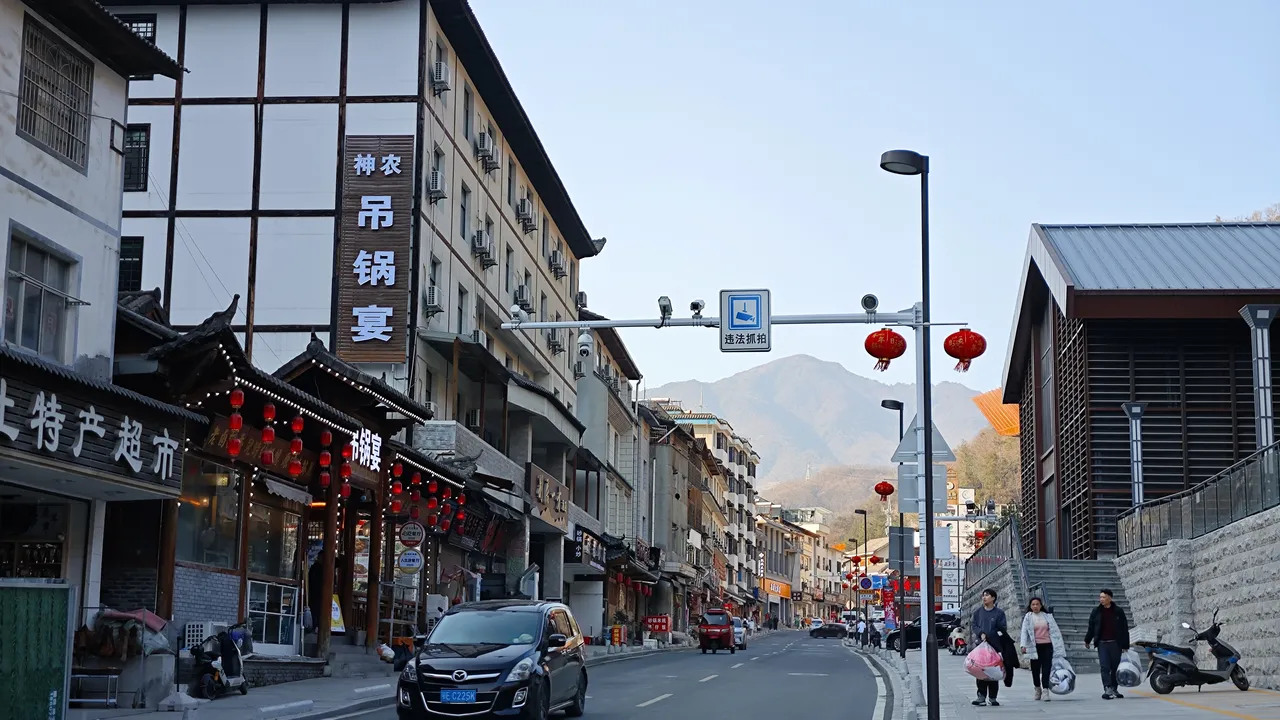
Shennong Altar lies a short drive from Muyu town, the main tourism hub of southern Shennongjia, and most visitors arrive by taxi, chartered car or as part of an organized day loop. From the Shennongjia high-speed rail station it is one to two hours by road to Muyu, from where the altar is well signposted. The site is often combined the same day with Guomenshan and Tiansheng Bridge, which lie along a similar route, and a local driver can chain all three together comfortably in a half or full day. The walk inside is uphill but short, on steps and terraces, so ordinary shoes are fine.
The altar is a year-round sight, thanks to its low altitude and short walking circuit, but late spring and autumn bring the most comfortable weather and the greenest or gauziest forest backdrop. Festival days with public ceremonies are memorable for their color and drums, though crowds swell accordingly. Morning light flatters the giant statue best, as it faces down the terraces toward the valley. In winter the site is quiet and often frosted, a peaceful time if you are already in the area. Any visit is short, so it slots easily into a day built around other Muyu sights.
Shennong, the Divine Farmer, is a legendary ancestor credited with inventing agriculture and medicine in China. Myth says he tasted hundreds of herbs to learn their powers — legend places those experiments in the Shennongjia mountains, which take their name from him.
About an hour covers the terraces, the statue and the ancient fir at an easy pace. If a sacrifice ceremony is being performed, allow extra time to watch from the plaza.
It works better than most mountain sights in rain, since the walking is short and partly sheltered by trees, and the giant statue is striking in mist. Bring an umbrella and watch your step on the stone terraces.
Guomenshan and Tiansheng Bridge are both a short drive away along the same corridor from Muyu town, and the three combine easily into one relaxed day. The summit highway and Dajiuhu Wetland lie deeper in the reserve for a second day.
 Full day · 8–10 hours
The kitchens up here do three things: meat smoked over cypress, tofu with the fibre left in, and a corn spirit at forty proof
View details →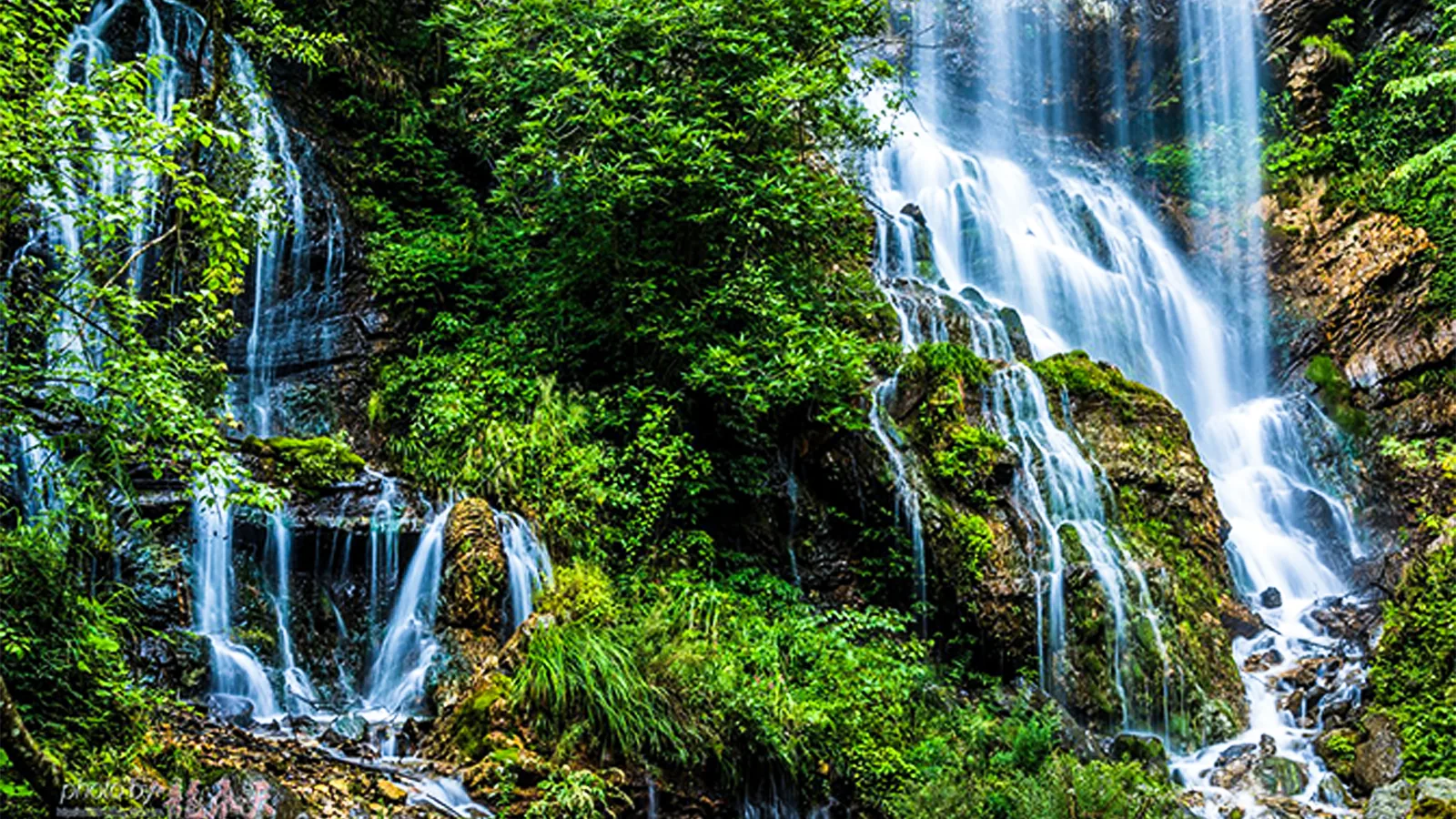 Full day · 8–10 hours
The iron fir in the altar grounds takes six people to ring it; beside it stands a god with a bull's head and a human body
View details → Full day · 8–10 hours
One day from 1,200 metres up to 3,106 and down to a wetland at 1,700; the air moves fifteen degrees with you
View details →2 days · 1 night · privateA compact first-visit loop of Shennongjia: Guanmen Hill's gorge and na
View details →3 days · 2 nights · privateThe classic Shennongjia loop: golden snub-nosed monkeys at the viewing
View details →Did Shennongjia alone over four days and the Shennong Peak area was the part I keep thinking about. Got up there early, clouds were sliding right over the ridge below me, and I just sat on a rock for an hour. Bring a windproof layer, it's colder up top than the trailhead suggests.
My partner and I took the gorge trail under the natural stone bridge and ended up following the stream for way longer than planned. Water was loud the whole way, we barely talked. Best two hours of our trip, honestly.
Private car & driver, day trips and multi-day routes from Shennongjia. · Free consultation · reply within 12h