 TripMyChinaJOURNEYS THROUGH REAL CHINA✦ AI Trip✦ Plan My Trip
English
简体中文
繁體中文
日本語
한국어
ไทย
Tiếng Việt
Bahasa Indonesia
Italiano
Español
العربية
Русский
Deutsch
Français
Bahasa Malaysia
TripMyChinaJOURNEYS THROUGH REAL CHINA✦ AI Trip✦ Plan My TripWuyuan · Attractions
Xiaoqi is really two villages in one: Lower Xiaoqi spreads along the riverbank with neat rows of merchant houses, while Upper Xiaoqi climbs a wooded valley a kilometer upstream, famous for its tea and for ancient camphor trees that tower over the rooftops. Between them run footpaths through rapeseed fields and groves, making the walk from one to the other half the pleasure. Wuyuan's eastern circuit passes directly through, so most visitors arrive by road from Jiangling or the county town, linger over tea beneath the big trees, and leave with the county's most aromatic souvenir.
The two villages were founded by the Jiang family, whose fortune came from tea and trade. Lower Xiaoqi grew into a compact market settlement, its houses lined up in unusually orderly rows with carved door lintels and skywells; Upper Xiaoqi stayed smaller and greener, its lanes winding toward groves of centuries-old camphor trees, the largest of which is said to be more than a thousand years old. Tea remains the local business — in season the surrounding slopes are dotted with pickers, and every second courtyard doubles as a tasting room.
A visit follows a simple loop: explore the rows and halls of Lower Xiaoqi, walk the field path up to Upper Xiaoqi, rest under the camphors with a cup of the local green tea, and return by the riverside lane. The village lies between Wangkou and the Jiangling turn-off, so it fits naturally into a day on the eastern circuit. Crowds are moderate by Wuyuan standards, thinning noticeably in the late afternoon when tour groups move on toward their next stop.
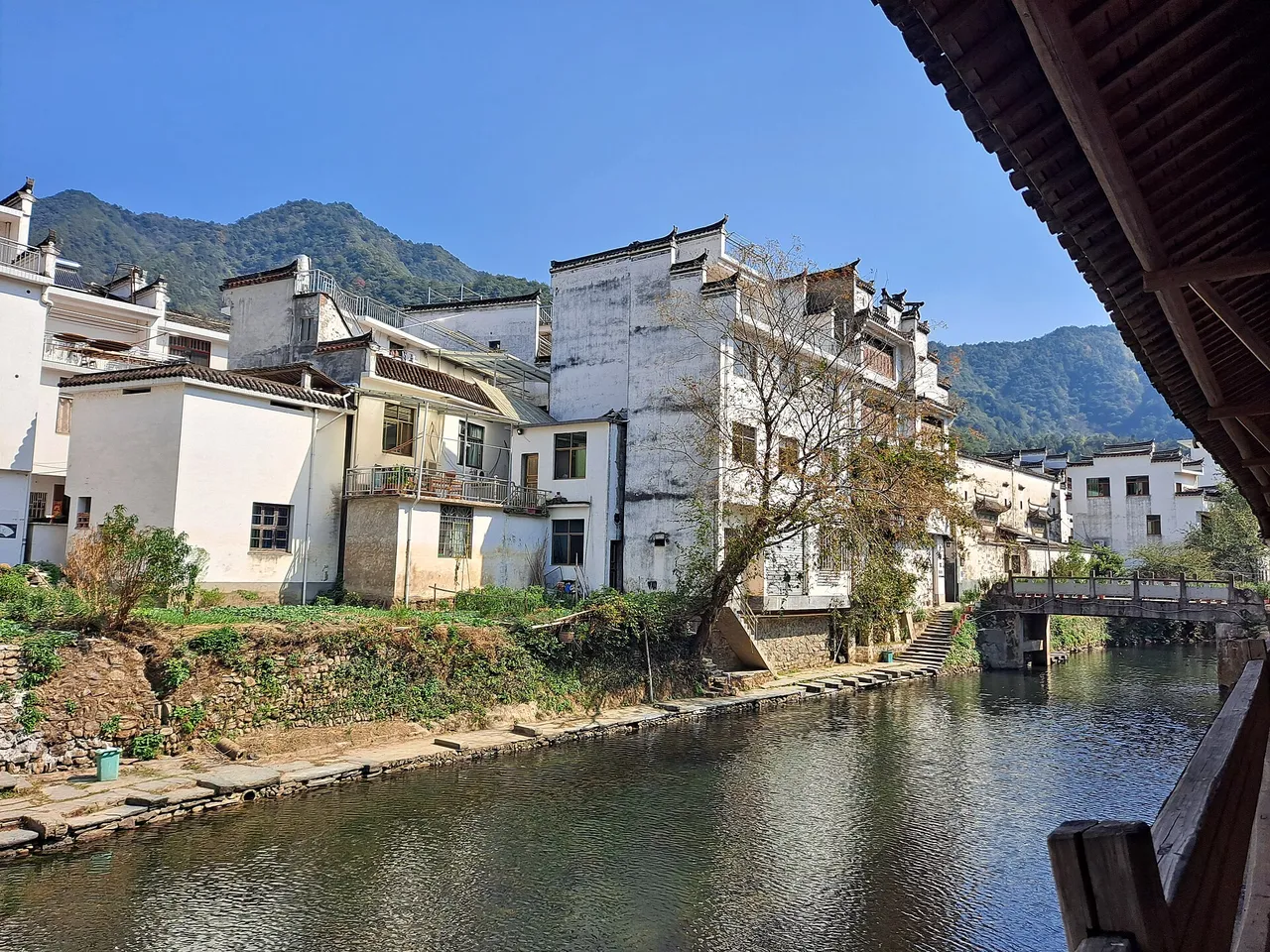
Xiaoqi charges an entrance ticket covering both the lower and upper villages, and it is included in the Wuyuan multi-village pass that bundles most of the county's main sights; verify current prices and pass rules at the gate, as they are revised periodically. Hours run from morning until late afternoon, with peak-season extensions. The site is essentially a walkable pair of villages, so there is little else to buy beyond tea and snacks — tastings and purchases in the courtyards are optional and separately priced. Crowds peak during the March flower season and on holidays; weekdays outside those windows are calm, and the last hour before closing is often nearly empty.
Xiaoqi sits on the eastern Wuyuan circuit, roughly 30 kilometers from the county town and a short drive from Wangkou village and the Jiangling turn-off. Rural buses along the eastern road stop near the entrance, but the flexible way to visit is by self-drive or chartered car, since the circuit's villages are strung out over several kilometers. From the parking lot, signed paths lead first into Lower Xiaoqi; the walk up to Upper Xiaoqi takes fifteen to twenty minutes along a field path. Travelers based in the county town usually combine Xiaoqi with Jiangling and Wangkou in one full day, starting early to stay ahead of the tour buses.
Spring brings the best combination: rapeseed bloom across the fields between the two villages from mid-March to early April, plus the first flush of green tea on the slopes. Autumn follows closely, with golden foliage, drying chilies and clear hiking weather for the field path. Summer is lush and warm — the camphor shade makes Upper Xiaoqi bearable even at midday — while winter offers quiet lanes and occasional frost on the rooftops. For pacing, arrive in the morning to see Lower Xiaoqi before the groups, then linger under the big trees in Upper Xiaoqi through the early afternoon light.
The Jiang family settled both sites: Lower Xiaoqi became the market and residential center, while Upper Xiaoqi, upstream in the valley, kept the tea groves and the ancient camphor trees. A footpath connects them.
About two hours covers both villages at an easy pace, including the walk between them and a tea break. Add time in spring if you want photos in the rapeseed fields.
The area genuinely grows Wuyuan green tea, and tasting before buying is easy since every courtyard offers cups. Prices vary between shops, so compare a couple before choosing.
Lower Xiaoqi has the finer architecture and orderly streets; Upper Xiaoqi has the trees, tea and greener scenery. They complement each other, and the pleasant walk between is reason enough to see both.
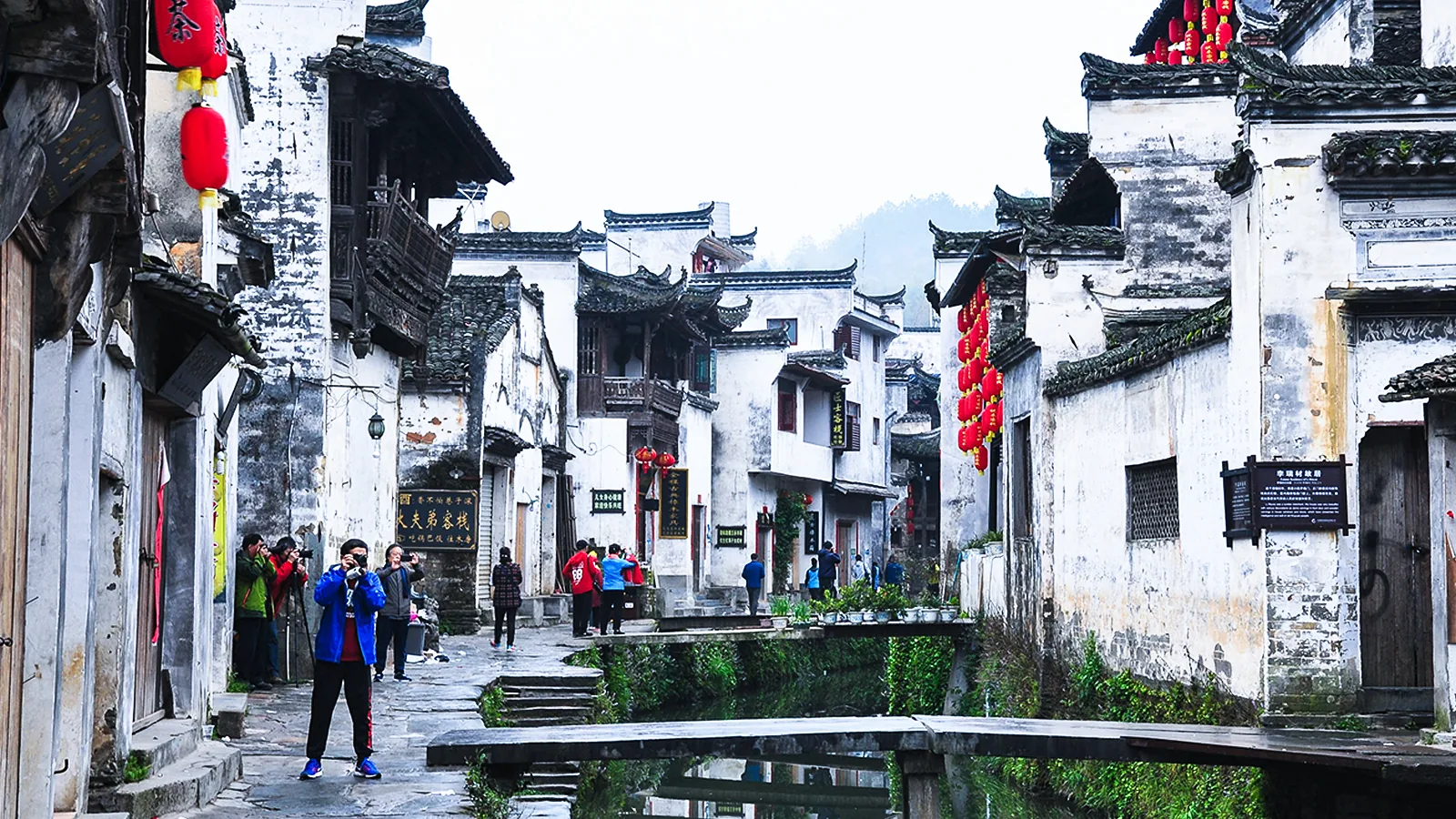 Full day · 8–10 hours
Three villages in a day, two of them flat, and a ten-minute cable car that saves the climb to the drying racks
View details →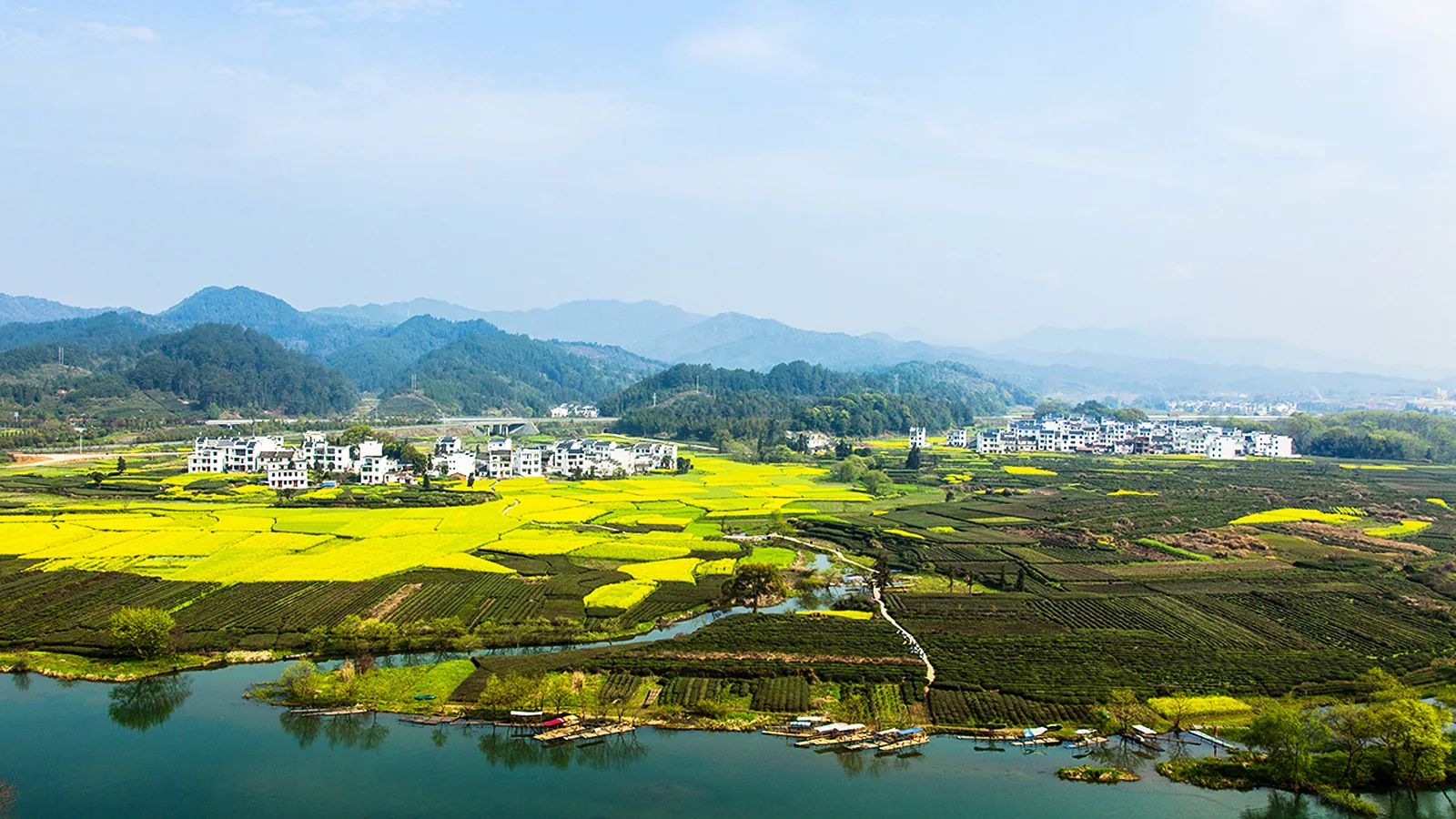 Full day · 8–10 hours
Drying racks from late September to November, rapeseed from mid-March to early April; the two never share a day
View details →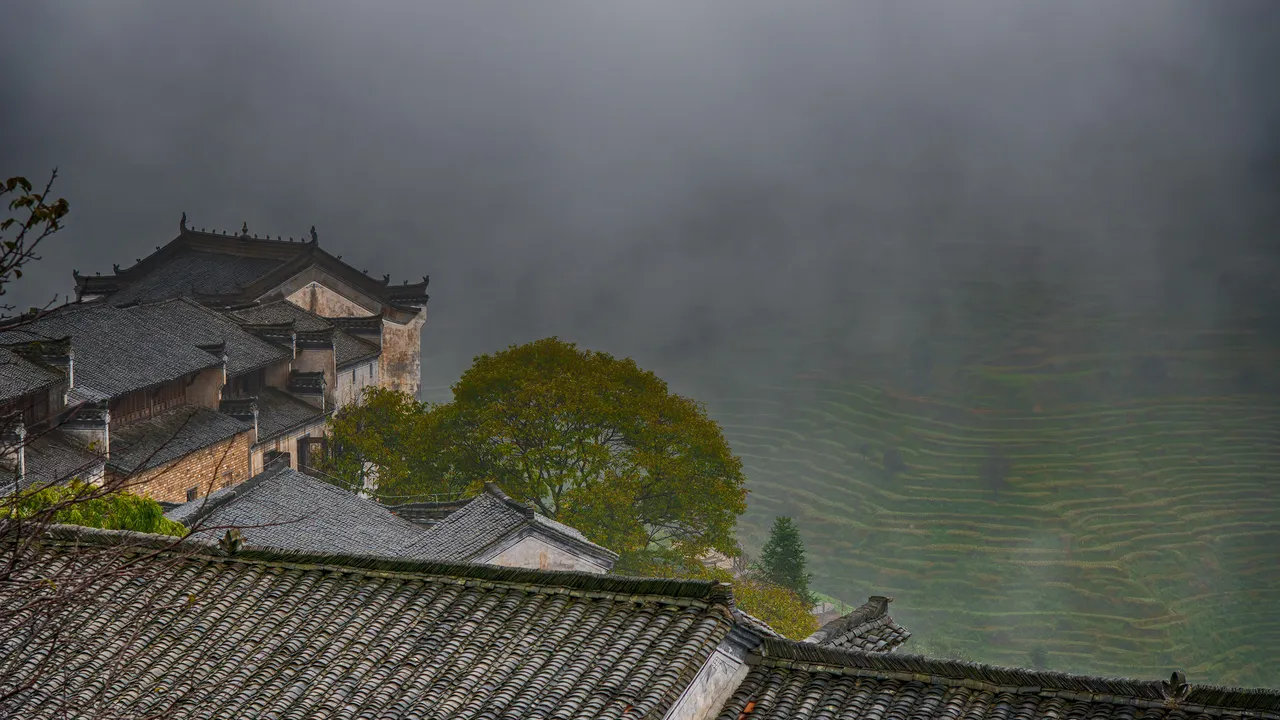 Full day · 8–10 hours
Dinner on a mountain lane among lit shopfronts, then a river walk where the town goes after dark
View details →We booked a private guide for Jiangwan and it was worth it just to have someone point out the little carved figures above the doorways that I'd have walked straight past. He also let us linger whenever we wanted, no herding. Spent nearly two hours in one courtyard because my husband kept asking questions about the old family histories.
Took the kids up to the Huangling viewpoints and the terraced fields looked like something out of a painting, the little ones loved counting the layers. Fair warning though, the stairs are no joke with a stroller and we ended up carrying it half the way. Still glad we went, the village below is worth the climb.
Private car & driver, day trips and multi-day routes from Wuyuan. · Free consultation · reply within 12h
