 TripMyChinaJOURNEYS THROUGH REAL CHINA✦ AI Trip✦ Plan My Trip
English
简体中文
繁體中文
日本語
한국어
ไทย
Tiếng Việt
Bahasa Indonesia
Italiano
Español
العربية
Русский
Deutsch
Français
Bahasa Malaysia
TripMyChinaJOURNEYS THROUGH REAL CHINA✦ AI Trip✦ Plan My TripZhongwei · Attractions
The Zhongwei Drum Tower anchors the exact center of the old city, a three-tiered wooden pavilion raised on a brick base through which the town's four main streets still pass. First built in the Ming dynasty and rebuilt several times since, it remains the best orientation point in Zhongwei: address anything as near the Drum Tower and every driver knows where you mean. By day it frames low-rise streetscapes and distant mountains; by night the floodlit tower glows like a lantern above the snack stalls and night markets spreading along the surrounding lanes.
Drum and bell towers once timed the day in every Chinese county town, and Zhongwei's version, at the crossing of the city's historic axes, dates to the Ming era and was reconstructed during the Qing dynasty after damage, giving it its present form: a brick platform with arched gateways on all four sides, crowned by a multi-eaved pavilion with balconies. Small shrines and plaque inscriptions inside reflect the mixture of Buddhist, Taoist and Confucian elements such towers often carried. It stands today as the emblem of the city, printed on local souvenirs and lit up each night.
The tower's real role for travelers is as the hub of Zhongwei's best food and street life: within a few blocks you hit the city's liveliest food lanes and night markets, where locals queue for hand-pulled noodles, lamb skewers and local flatbread. It also makes the natural bookend for a Zhongwei day — the tower in the evening after returning from <a href="/attractions/shapotou/">Shapotou</a> or a desert camp, when the streets around it are at their best.
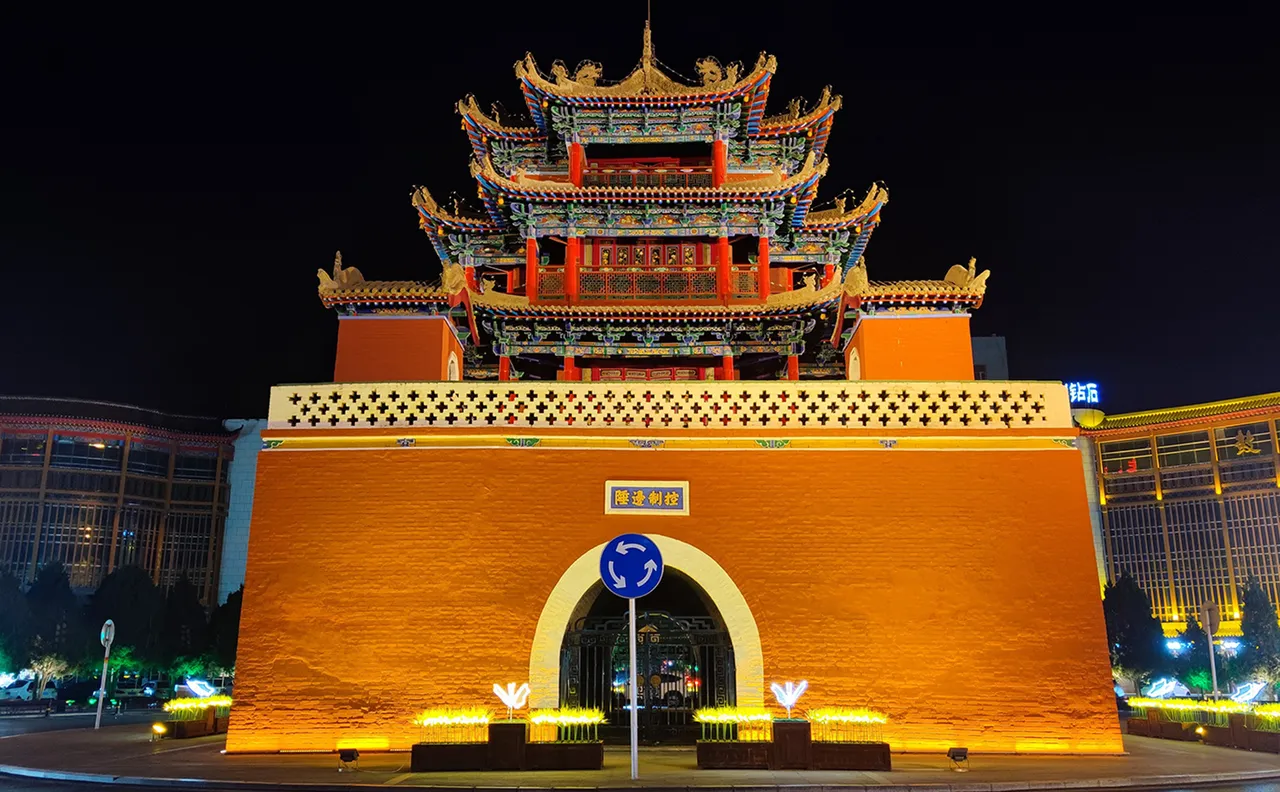
Viewing the tower from the streets is free at any hour, and that is how most visitors experience it; whether the interior pavilion is open to visitors varies by period and season, and when open, a small ticket is sold at the base, so treat access as a bonus rather than a plan. The surrounding area is at its best from late afternoon onward, when stall grills fire up and the floodlights switch on at dusk. National holidays pack the crossing with families; weekdays feel local and relaxed. As arrangements change from time to time, ask at your hotel about current opening of the upper level.
The tower stands at the crossing of the old city's main streets, within a few minutes' walk of most central hotels. From the railway station, a taxi or Didi takes about 10 minutes; the high-speed station on the city's edge connects Zhongwei with Yinchuan and Lanzhou, and the airport lies a short ride east of town. City buses converge on the center, but the streets are compact enough that walking is the best way to combine the tower with nearby food lanes, shops and the riverfront further west. Driving in risks slow traffic and limited parking, so leave the car at your hotel in the evening.
Zhongwei's dry climate makes the tower pleasant year-round, with May to October the most comfortable months for lingering over street food outside. Summer evenings are warm and bustling; spring and autumn add crisp air and clear light for photos of the pavilion against the mountains. Winter nights are cold but atmospheric, with fewer crowds. Within any day, the slot from sunset to about 9 pm is unbeatable: the tower is lit, the night market is in full swing and the day-tripper crowds returning from the desert have filled the lanes with energy.
Access to the upper pavilion depends on current arrangements and is not always open; viewing the tower from the streets is free at any time. Ask at your hotel or check posted notices to see whether the interior is open during your visit.
About 20 kilometers, or 30 to 40 minutes by car. Many travelers stay in hotels near the tower, spend the day at Shapotou or a desert camp, and return to the food streets around the tower for the evening.
The surrounding lanes are known for hand-pulled noodles, lamb skewers, local flatbreads and seasonal Ningxia produce. Evening is the best time to graze, when stalls line the streets and queues mark the most popular shops.
Absolutely — it is the single best snapshot of the city: historic architecture, night illumination and street food all in one square. One relaxed hour covers the tower and the surrounding lanes comfortably.
 Full day · 8–10 hours
Dunes a hundred metres high end directly in the river, and a railway has run through the sand since the 1950s
View details →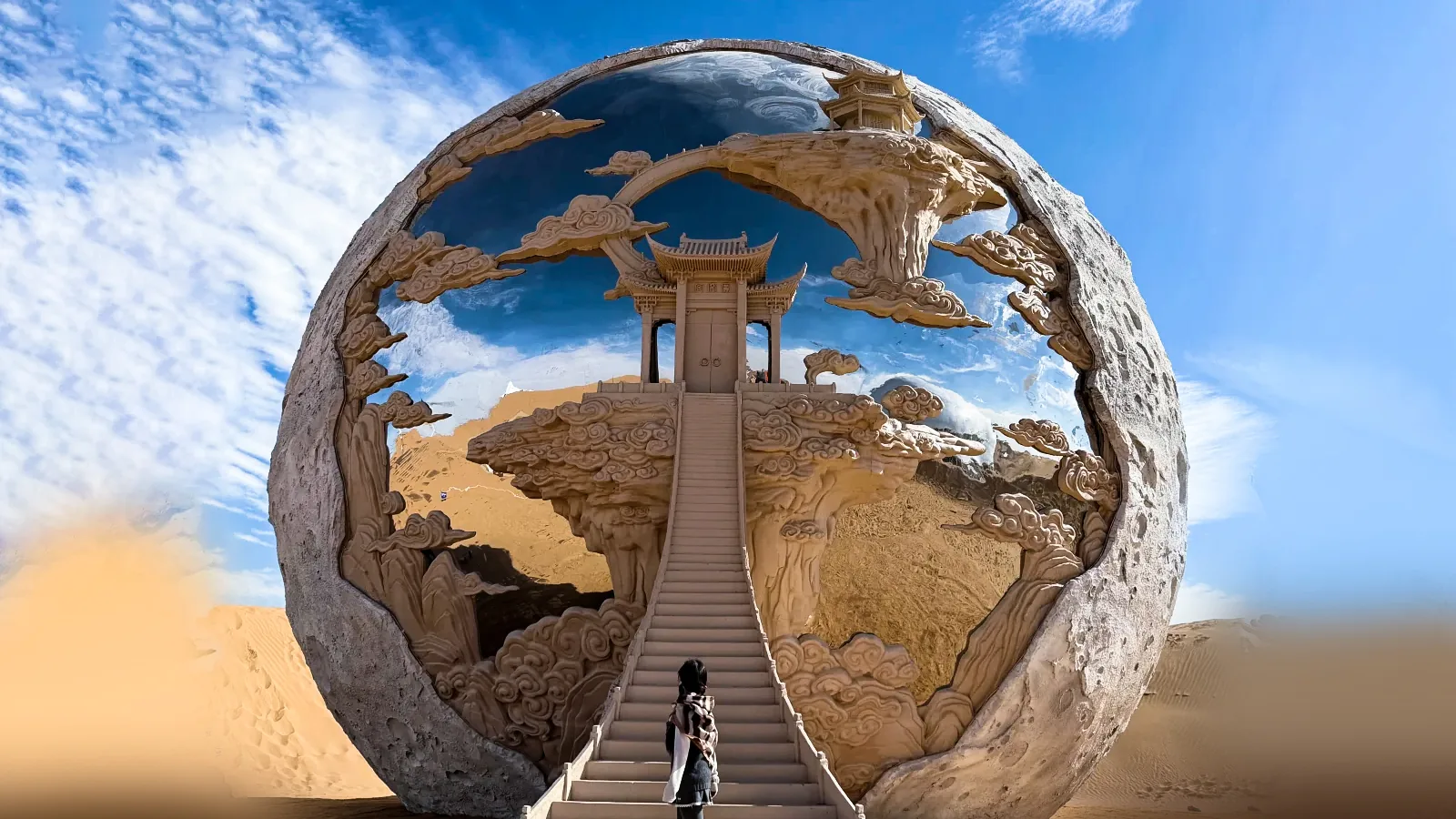 Full day · 8–10 hours
At Shapotou the Tengger desert drops straight into the river, and children can spend everything they have in one afternoon
View details →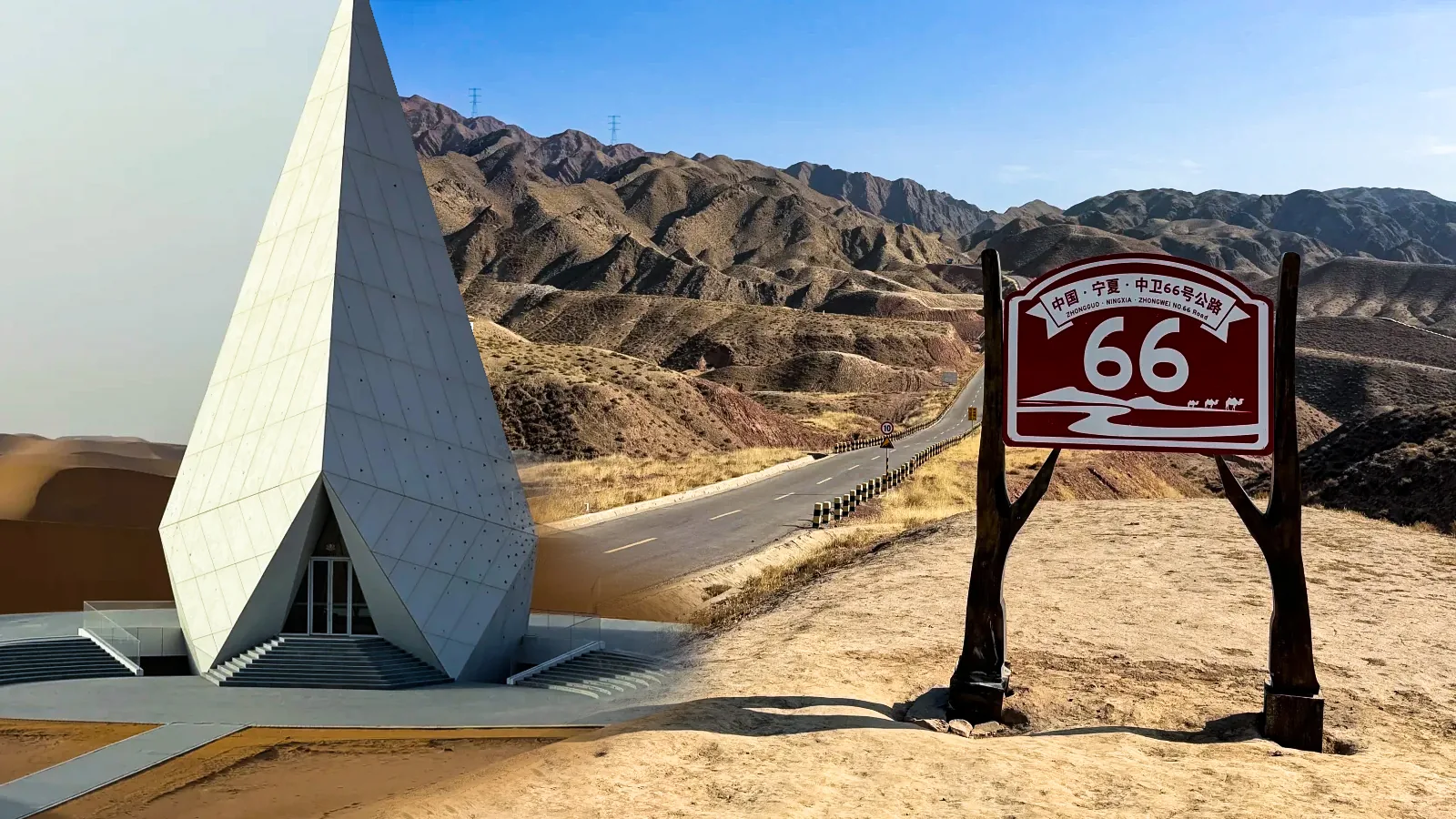 Full day · 8–10 hours
One road runs out to Beichangtan with river on one side and desert on the other, and it is best in the last two hours of light
View details →2 days · 1 night · privateA two-day express around Zhongwei's two worlds. Day one settles into t
View details →3 days · 2 nights · privateThree days cover Zhongwei's three landscapes. The old city and hillsid
View details →Booked a private guide for two days and it was worth every yuan. The sheepskin raft at Shapotou is a strange, slow ride — the guy paddling just hums while the river carries you. Then we drove out to the Tengger Desert and I tried the sand therapy, which basically means being buried up to your neck in hot sand. Weirdly relaxing.
Took our two kids (9 and 12) and they're still talking about the sand sledding. We climbed the dunes at Shapotou and the little one went down about fifteen times. My husband and I took turns holding the bags at the bottom. The sand gets everywhere, bring a change of socks.
Private car & driver, day trips and multi-day routes from Zhongwei. · Free consultation · reply within 12h