
Wanning's culture runs on two roots: one at Dongshan Ridge, from Song-era cliff inscriptions to the incense of Chaoyin Temple, the landscape and faith of Hainan itself; the other in Xinglong, where returnees from more than twenty countries brought coffee, pepper and a Nanyang way of life in the 1950s and rewrote a town's palate.
One day covers both roots: climb and read stones in the morning, plants after lunch, and by dusk hear the coffee valley tell grandparent-generation stories. Wanning's culture is not heavy, but it is real, because it is still alive.
Itinerary at a glance
| 08:30 | Dongshan Ridge Cultural Tourism Area: Inscriptions on Hainan's First Mountain |
| 11:30 | Lunch at the Ridge Foot: Dongshan Goat Done Right |
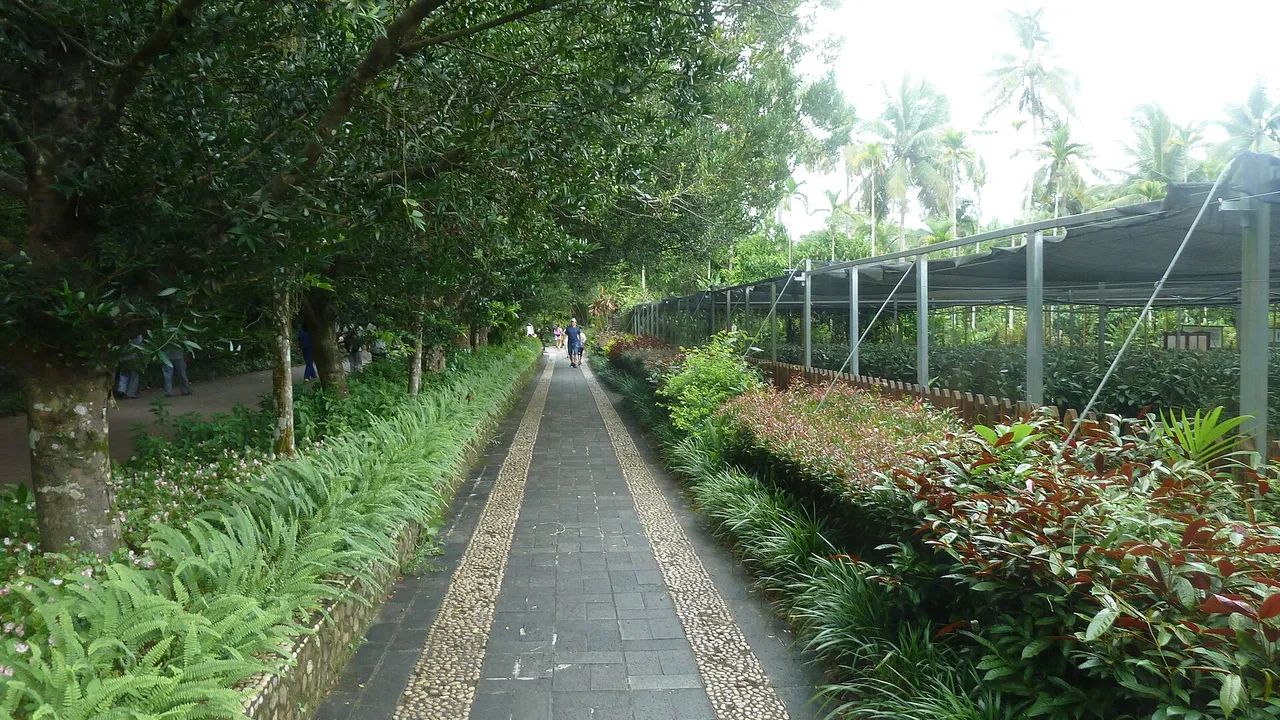
| 14:30 | Xinglong Tropical Botanical Garden: A Plantation That Reads as History |
| 17:00 | Xinglong Coffee Valley: Where This Cup Came From |
The route, stop by stop
Dongshan Ridge Cultural Tourism Area: Inscriptions on Hainan's First Mountain
Dongshan Ridge tops out under two hundred meters, an easy climb packed with content: dozens of cliff inscriptions dating from the Song dynasty, with the five great characters proclaiming Hainan's First Mountain cut into the rock face. The gaps between stone peaks narrow to single file, the hill like a giant boulder puzzle pulled apart.
Chaoyin Temple midway up is the ridge's faith core, incense never cold. The sea-view pavilion behind it frames Wanning town and the little sea, with distant Dazhou Island on clear days. The inscription highlights cluster on the front hill, interpretive signs tracing each carving.
Lunch at the Ridge Foot: Dongshan Goat Done Right
A culture day's lunch goes straight to the local ingredient: black goats grazed on the ridge itself. Plain-poaching is the honest test, crisp skin and springy flesh with lime and garlic, plus an offal soup and local greens. This line reads the bond of mountain and people, and the goat is the mountain's answer.
The goat street at the foot ranks houses by word of mouth, so sit where locals sit. Small appetites order half a goat; big ones take a whole one, half poached and half braised, with rice liquor as the local pairing.
Xinglong Tropical Botanical Garden: A Plantation That Reads as History
The garden is more than a sight, a living history of plant introduction: seeds the returnees and researchers carried from Southeast Asia in the 1950s took root here, making vanilla, cacao and pepper part of Hainan agriculture. The guides match every crop to a chapter of migration.
Two hours covers the core, with the vanilla pollination display and the cacao orchard the anchors. The tasting room's Xinglong coffee and cacao drinks land the word culture right on the tongue.
Xinglong Coffee Valley: Where This Cup Came From
Dusk is the valley's best light, coffee trees setting fruit in slanting sun. The grounds show coffee's full run from cherry to roast, while the returnee memorial lays Xinglong's story across a few walls: why these people, why this coffee, why condensed milk.
Sit in the valley cafe for the day's first and last cup, and if an elder in the shop will tell a little of those years, the culture day lands its finale. Wanning's story lives not behind museum glass but on cafe tables.
| Getting around |
|
| Budget | Dongshan Ridge and the garden each run about RMB 40-60 with the rest free; budget RMB 150-250 pp all in. |
| Best time | Year-round; climb the ridge in the cool morning, and the garden's shade peaks after lunch. |
FAQs
Is Dongshan Ridge worth the climb? What is its real draw?
Yes, the draw is density, not height: one small massif holds Song-era inscriptions, temples, strange stones and a sea-view vantage, two hours with no dead stretch. For culture it is Wanning's root; for nature it is a rock garden overlooking the little sea. Both kinds of visitor leave with what they came for.
Do the garden and coffee valley overlap?
Overlap exists but the angles differ: the garden tells crops and science, why these plants live here; the valley tells people and industry, where this cup comes from. On a tight day pick the garden, denser content; the coffee-obsessed reverse it. Separated by half a day, the repetition barely shows.
Does the culture line suit children?
From eight up, yes: the ridge's stone maze is a natural playground, the garden's vanilla pollination and cacao pods are curiosities, and the valley's roasters run visually. The friction is the depth of interpretation; parents who retell the returnee story in kid language beforehand double the payoff.
With half a day, which stop goes?
Cut the coffee valley, keep the ridge and the garden: the mountain is uniquely Wanning, while plants and coffee have partial substitutes elsewhere in Hainan. The half-day version runs ridge plus goat lunch in the morning, or garden plus a town cafe in the afternoon, each a valid half.