TripMyChinaJOURNEYS THROUGH REAL CHINA✦ AI Trip✦ Plan My Trip
English
简体中文
繁體中文
日本語
한국어
ไทย
Tiếng Việt
Bahasa Indonesia
Italiano
Español
العربية
Русский
Deutsch
Français
Bahasa Malaysia
TripMyChinaJOURNEYS THROUGH REAL CHINA✦ AI Trip✦ Plan My TripJingdezhen · Attractions
The Ancient Kiln Folk Customs Museum is the best single introduction to Jingdezhen, the Porcelain Capital — a park where history's great kilns have been rebuilt and actually fired. Master craftsmen demonstrate every stage of imperial porcelain production by hand: throwing, trimming, painting in brilliant cobalt blue, and glazing, exactly as workshops did when this city supplied the world. Wood-burning kilns of different dynasties stand across the grounds, sometimes fired live, sending smoke over the pines. If you visit only one porcelain site in Jingdezhen, make it this one — it turns the city's thousand-year craft into something you can watch, smell and touch.
Jingdezhen made porcelain for the imperial court for over six centuries, and the museum preserves the workshop system that made it possible. Its centrepiece buildings are reconstructions of the historic kiln types that defined different eras — the towering chambered Zhen kiln of the Qing, the long dragon kiln of earlier dynasties and the gourd-shaped Ming kiln — rebuilt with traditional materials on the old principles, and fired on special occasions with full ceremony. Around them, timber workshops reproduce the division of labor that made Jingdezhen unique: separate masters for throwing, trimming, painting and firing, each trained for decades.
A visit moves through the workshops in production order, so you see a bowl's whole biography — clay kneaded and thrown on the wheel, dried to leather hardness, trimmed to translucency, painted with cobalt and coated in glaze — before meeting the kilns that transfigured it. Demonstrators work daily, and visitors can try the wheel at hands-on stations for a small fee. The park sits on the city's western edge, easy to combine with the China Ceramics Museum in town for the complete story of the craft.
The Ancient Kiln Folk Customs Museum is a ticketed scenic area, priced in the mid range for Jingdezhen sights, with discounts for students and seniors; prices have been adjusted over the years, so confirm current rates at the gate or through official channels on the day. Hands-on pottery sessions and guided demonstrations cost small extra fees. Opening hours run from morning to late afternoon, with the craft demonstrations concentrated in the middle of the day — arrive before mid-afternoon or you will find workshops closing. The live kiln firings happen on special dates rather than daily; if one matters to you, ask the tourist office or your hotel for the firing calendar.
The museum sits in the western part of Jingdezhen city, roughly 15-20 minutes by taxi from the railway station and the city center. Local buses run along the approach roads, but taxis and DiDi are cheap and simplest for visitors. The site combines naturally with the China Ceramics Museum near the city center — many travelers do the workshops in the morning and the collections after lunch. From the high-speed rail station across town, allow 30-40 minutes by cab. Within the park, the route between workshops and kilns is a pleasant walk of a couple of kilometers in total; wear comfortable shoes and allow at least half a day.
Spring and autumn offer the most comfortable weather for the largely outdoor park — mild air, green pines and good light on the kiln structures. Weekday mornings are calmest and give you unobstructed watching at the workshop benches; weekends bring domestic tour groups in waves. Summer is hot and humid but the timber workshops stay shaded; winter is cold, and this is when the wood-fired kilns are most likely to be fired, since the festive firing season clusters around late autumn and the New Year. Whenever you come, time your visit around the demonstration schedule — the craftsmen's benches are the heart of the place, and midday is when every workshop is alive.
Yes — the kilns are full-scale reconstructions built with traditional materials and techniques, and they are fired live on special occasions, complete with ceremony. Between firings you can walk through them and see how each dynastic design managed heat and flame.
Yes. Hands-on stations let you try the potter's wheel and painting for a small fee, with craftsmen guiding beginners. Your creation usually needs drying and firing, so most visitors take home the experience rather than the object.
Plan for at least two to three hours: the workshop circuit, the kilns and a hands-on session fill half a day comfortably. Craft enthusiasts easily spend longer, especially if a firing is scheduled.
They complement each other: the ceramics museum is a modern collection of masterpieces through the ages, while the ancient kiln park shows living craft — working hands, wood smoke and kilns. Doing both in one day gives you the full picture of Jingdezhen.
 Full day · 8–10 hours
A Hui-style village an hour up the valley, then a cave almost two hours south; this is a long day in the car and worth saying so
View details → Full day · 8–10 hours
A potter pulls a bowl in under a minute, and in the afternoon a child can sit at a wheel and try
View details →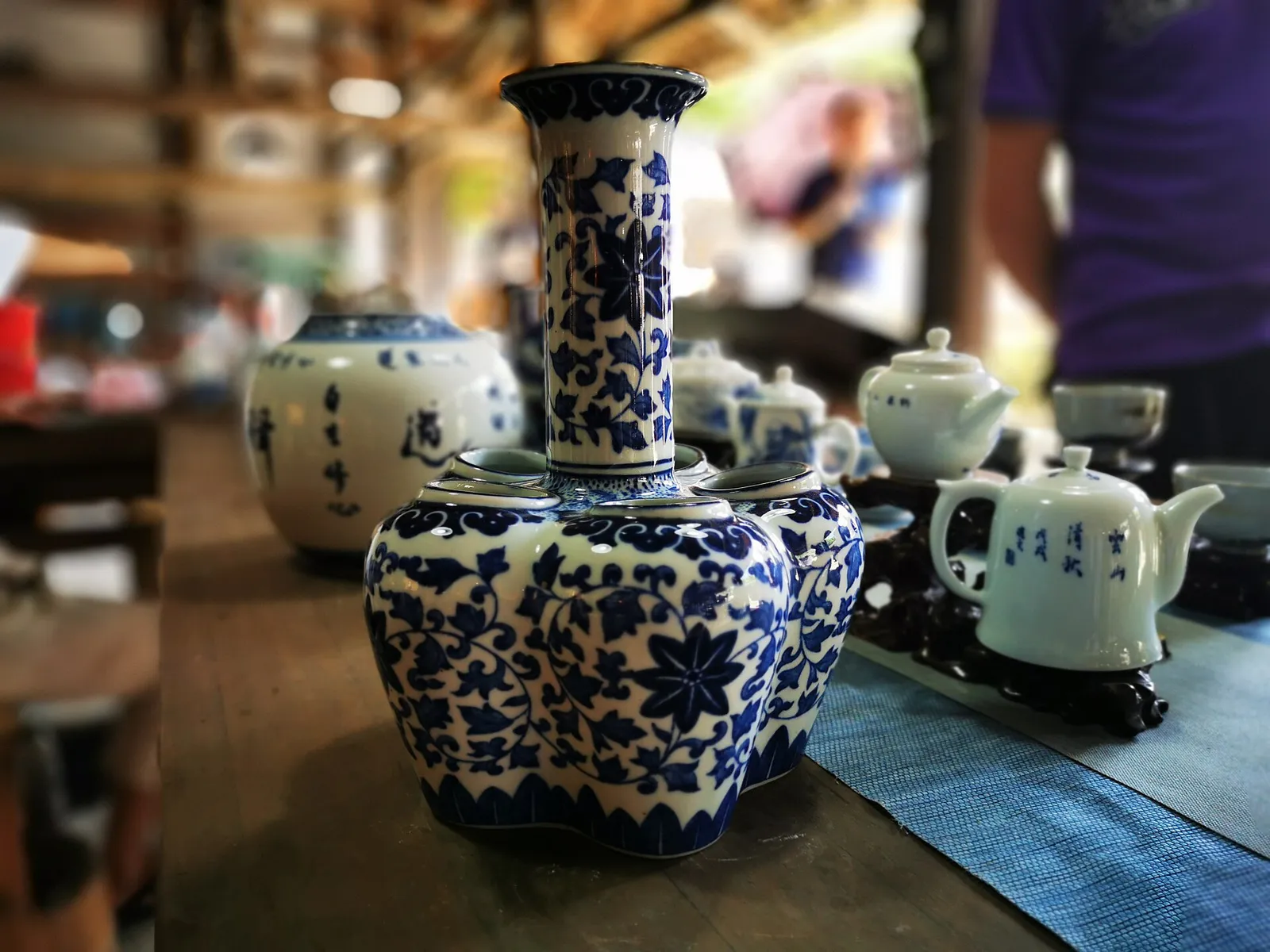 Full day · 8–10 hours
Chimneys, sawtooth roofs and wet clay; the city looks best in the two hours after sunrise and the one after sunset
View details →Booked a private guide for a day and it was worth it — at the Ancient Kiln Expo Area he explained each step of throwing and firing, and I got to try the wheel myself. My bowl came out lopsided, but the guy just laughed and said it takes years. We also stopped at the Imperial Kiln Factory site, which I would have walked past without him.
Took the kids to the China Ceramics Museum and they actually stayed interested for two hours, which never happens. The old kiln area was a hit too — my son kept asking how they got the fire hot enough. Only gripe: the signage in English is patchy in places, so we guessed a fair bit. Still a good day out.
Private car & driver, day trips and multi-day routes from Jingdezhen. · Free consultation · reply within 12h