 TripMyChinaJOURNEYS THROUGH REAL CHINA✦ AI Trip✦ Plan My Trip
English
简体中文
繁體中文
日本語
한국어
ไทย
Tiếng Việt
Bahasa Indonesia
Italiano
Español
العربية
Русский
Deutsch
Français
Bahasa Malaysia
TripMyChinaJOURNEYS THROUGH REAL CHINA✦ AI Trip✦ Plan My TripYangzhou · Attractions
Daming Temple crowns Shugang Hill on Yangzhou's northern edge, a working monastery whose roots reach back some fifteen hundred years to the Southern Dynasties. Its greatest son is the monk Jianzhen, who set out from here on the voyages that would carry Chinese Buddhism to Japan — and pilgrims from both countries still climb the hill today. The complex stacks courtyard upon courtyard up the slope, with a memorial hall to Jianzhen, elegant gardens, and the multi-story Qiling Pagoda rising above everything. From the top, Yangzhou spreads out in its full low-rise, lake-dotted breadth.
The temple was founded during the Southern Dynasties period and took its name from the Daming era of that time. Through the Tang dynasty it stood at the center of Yangzhou's religious life, and it was here that Jianzhen served as an abbot before undertaking six attempts to cross the sea to Japan — finally succeeding, blind, in the eighth century. A memorial hall designed in the 1960s with input from the architect Liang Sicheng honors him, deliberately echoing Japanese temple styles in recognition of the two countries' shared Buddhist lineage.
Beyond the Jianzhen memorials, the compound holds a sequence of grand halls with roaring incense, a classical garden called the West Garden with a famous spring, and the Qiling Pagoda, rebuilt in recent decades on the foundations of an ancient predecessor and equipped with elevators to the viewing floors. The temple grounds run into the wider Shugang scenic area, so a visit can stretch to include hillside walks and the neighboring Tang-era ruins. Half a day covers the temple comfortably; pair it with Slender West Lake, just down the hill, for a full northern-Yangzhou day.
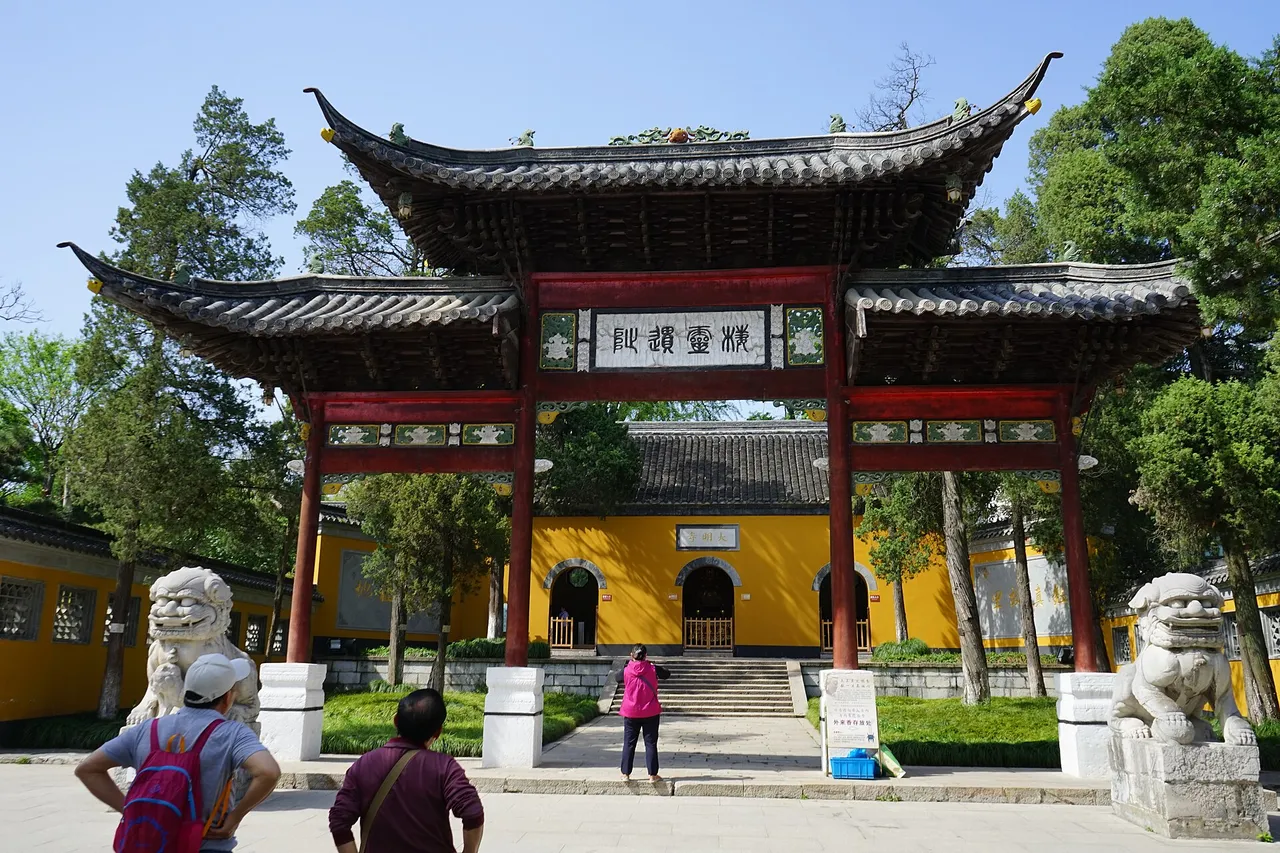
The temple charges an entrance ticket at the hill gate, with the Qiling Pagoda's elevator and viewing floors historically carrying a small separate fee; prices are adjusted from time to time, so confirm the current structure at the ticket window. Combined tickets that bundle the temple with Slender West Lake or the wider Shugang area are commonly available and save money on a two-stop day. Hours run from morning until around dusk, with slightly longer summer schedules. The incense halls are busiest on the first and fifteenth of each lunar month and during Buddhist festivals, when pilgrims arrive early — a weekday morning is the calmest time to explore.
Daming Temple sits atop Shugang Hill in northern Yangzhou, about 15 minutes by taxi or ride-hail from the railway station and a short ride from the Slender West Lake gate. City buses run along the roads below the hill, and the walk up from the lake area takes only minutes. The natural circuit is to combine it with Slender West Lake in one outing — lake first, then temple — or to start at the temple in the cool of the morning and descend for lunch. The pagoda's upper floors are reached by elevator, making the best view in the district accessible to almost everyone. Taxis back to the old city are easy to flag on the road below the gate.
Spring is Daming Temple at its best: the hillside greens early, blossoms dot the courtyards, and the pagoda views are crispest in the March-to-April air. Autumn follows close behind with golden gingkoes inside the compound and thinner crowds. Summer mornings work well before the heat builds, and winter offers stark quiet, bare branches and occasional snow on the roofs. Within the day, go early — the monks' morning rituals and empty courtyards are worth the alarm, and by mid-morning the tour groups from the lake below start arriving in waves. Dusk is a secret second window, when day-trippers leave and the light turns amber across the pagoda.
Jianzhen was the temple's celebrated abbot who made six attempts to reach Japan, finally succeeding in the eighth century and founding monasteries there. He is revered in both China and Japan, and the memorial hall on the hill honors that legacy.
The current tower is a modern reconstruction raised on the foundations of an ancient pagoda. Its elevator and viewing floors, however, deliver the same reward as of old: the finest panorama over Yangzhou's rooftops and lakes.
About two hours covers the halls, Jianzhen memorial, West Garden and the pagoda climb. Add an hour or more if you plan to walk the surrounding Shugang parkland.
Yes — the two sites sit at opposite ends of the same wooded hill, minutes apart by taxi or a short walk. Most visitors do the lake in the morning and the temple before or after lunch.
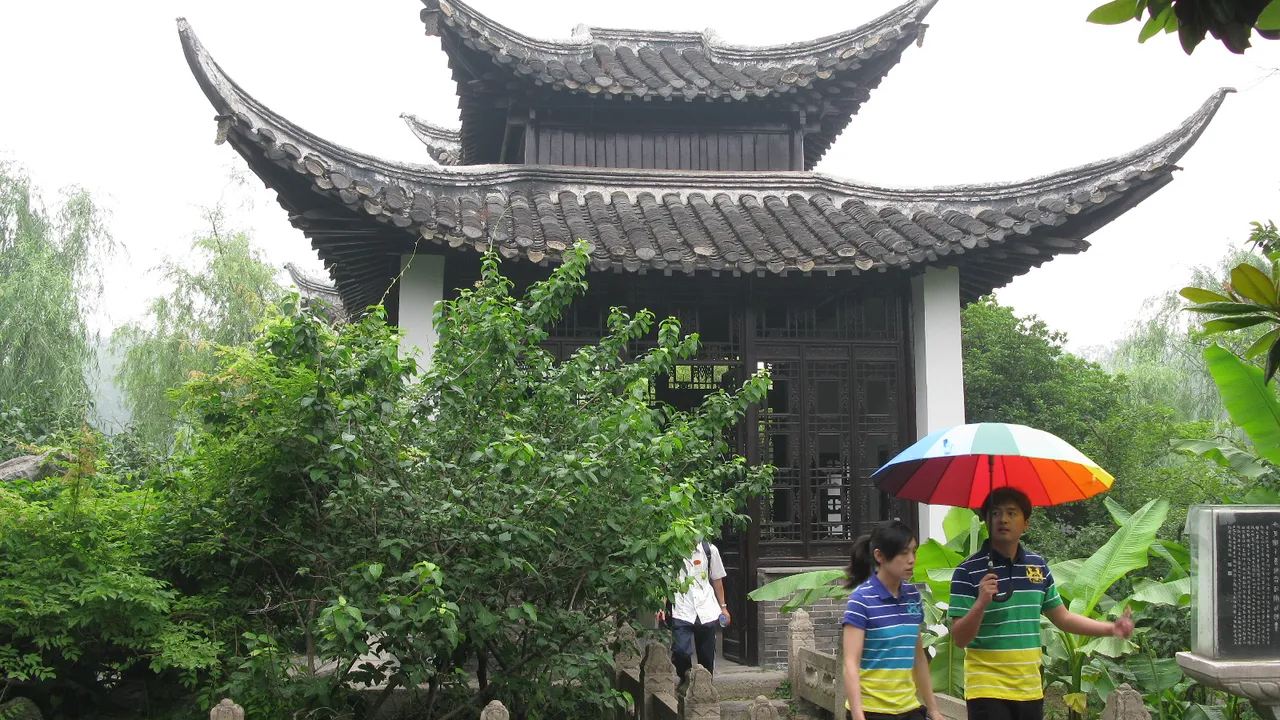 Full day · 8–10 hours
The day starts at a teahouse at seven and ends with a plate of tofu cut into five thousand threads
View details →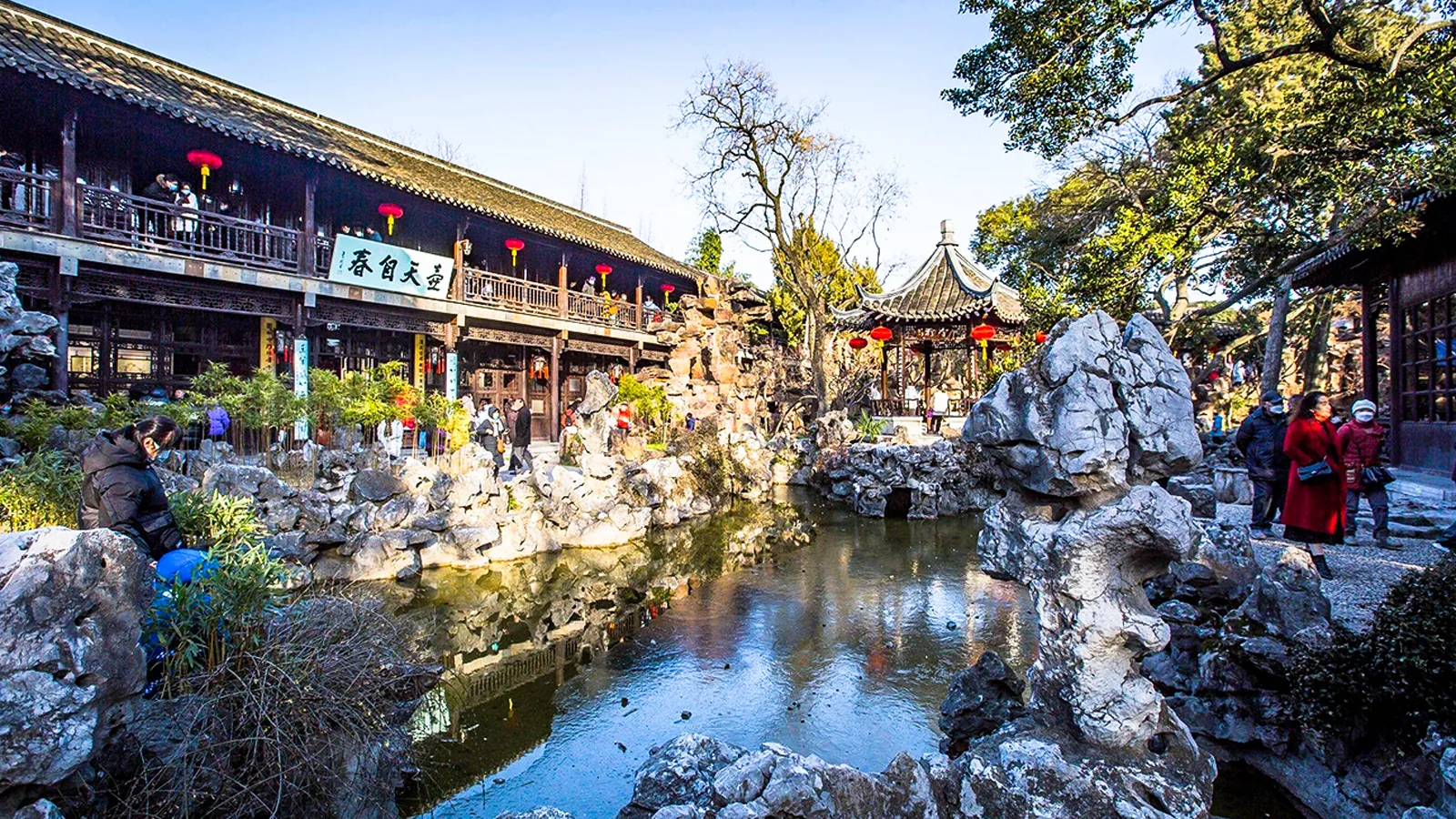 Full day · 8–10 hours
A city that made gardens into everyday life: bridges on the water, mountains inside the lanes
View details →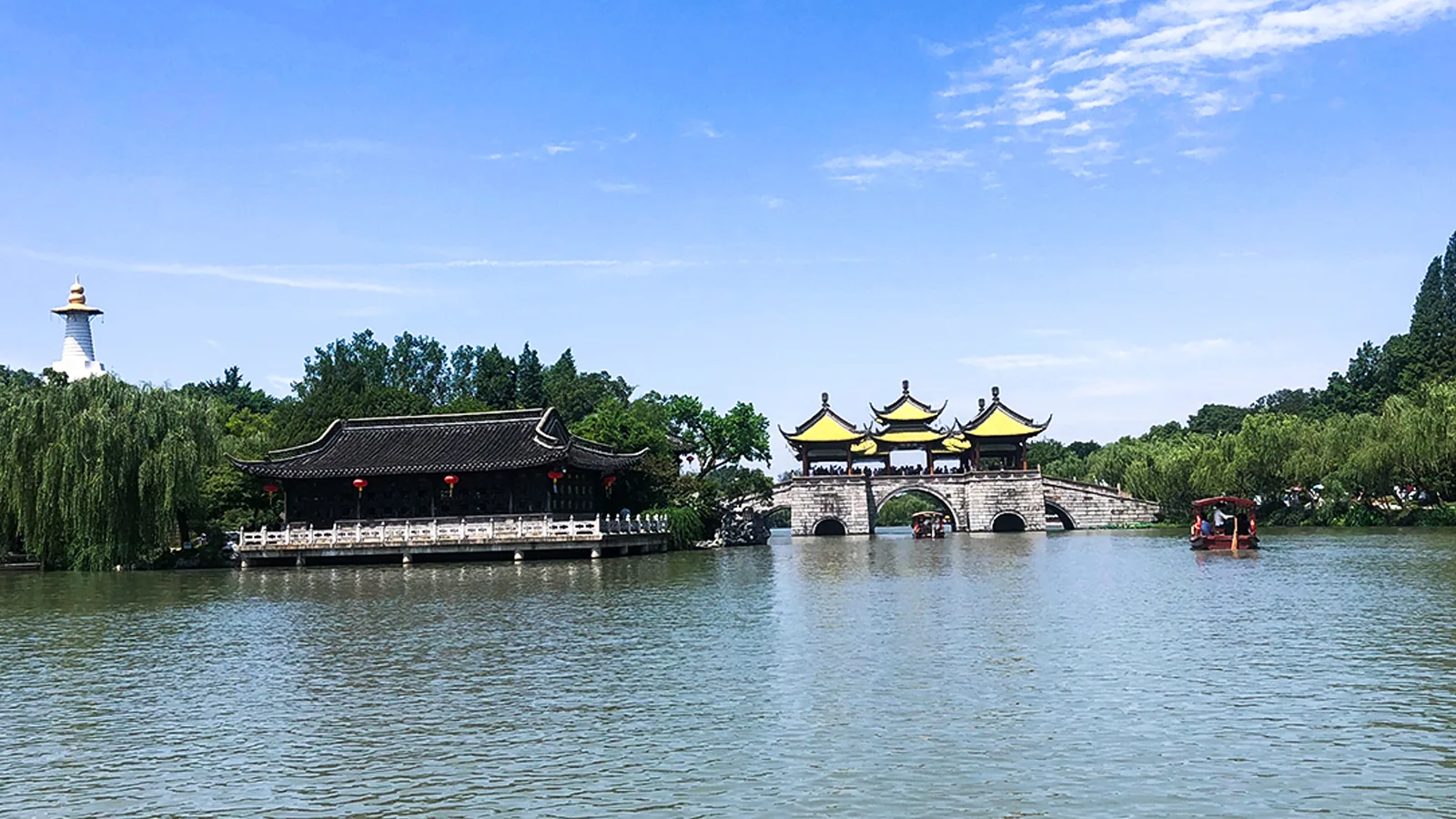 Full day · 8–10 hours
Up the canal to reeds, metasequoia and a lake with no crowd on it
View details →2 days · 1 night · privateThis two-day express route covers Yangzhou's essentials: Slender West
View details → 3 days · 2 nights · private
Three days cover the classic Yangzhou set: Slender West Lake and Damin
View details →Booked a private guide for one day and it was worth it just for the lake. We walked the causeways past Five Pavilion Bridge, and my guide kept pointing out which willow trees were oldest, stuff I'd never have noticed alone. Ge Garden was the surprise — I spent way longer than planned trying to figure out how they got four different rockeries to feel like four different seasons.
Took the kids to He Garden mainly because of the two-storey covered walkway, and they loved running up and down it. The place is quieter than the lake, which suited us fine. Only gripe: almost no English signage on the upper level, so I was basically guessing what each room was for. Still a good half-day out.
Private car & driver, day trips and multi-day routes from Yangzhou. · Free consultation · reply within 12h