 TripMyChinaJOURNEYS THROUGH REAL CHINA✦ AI Trip✦ Plan My Trip
English
简体中文
繁體中文
日本語
한국어
ไทย
Tiếng Việt
Bahasa Indonesia
Italiano
Español
العربية
Русский
Deutsch
Français
Bahasa Malaysia
TripMyChinaJOURNEYS THROUGH REAL CHINA✦ AI Trip✦ Plan My TripTaiyuan · Attractions
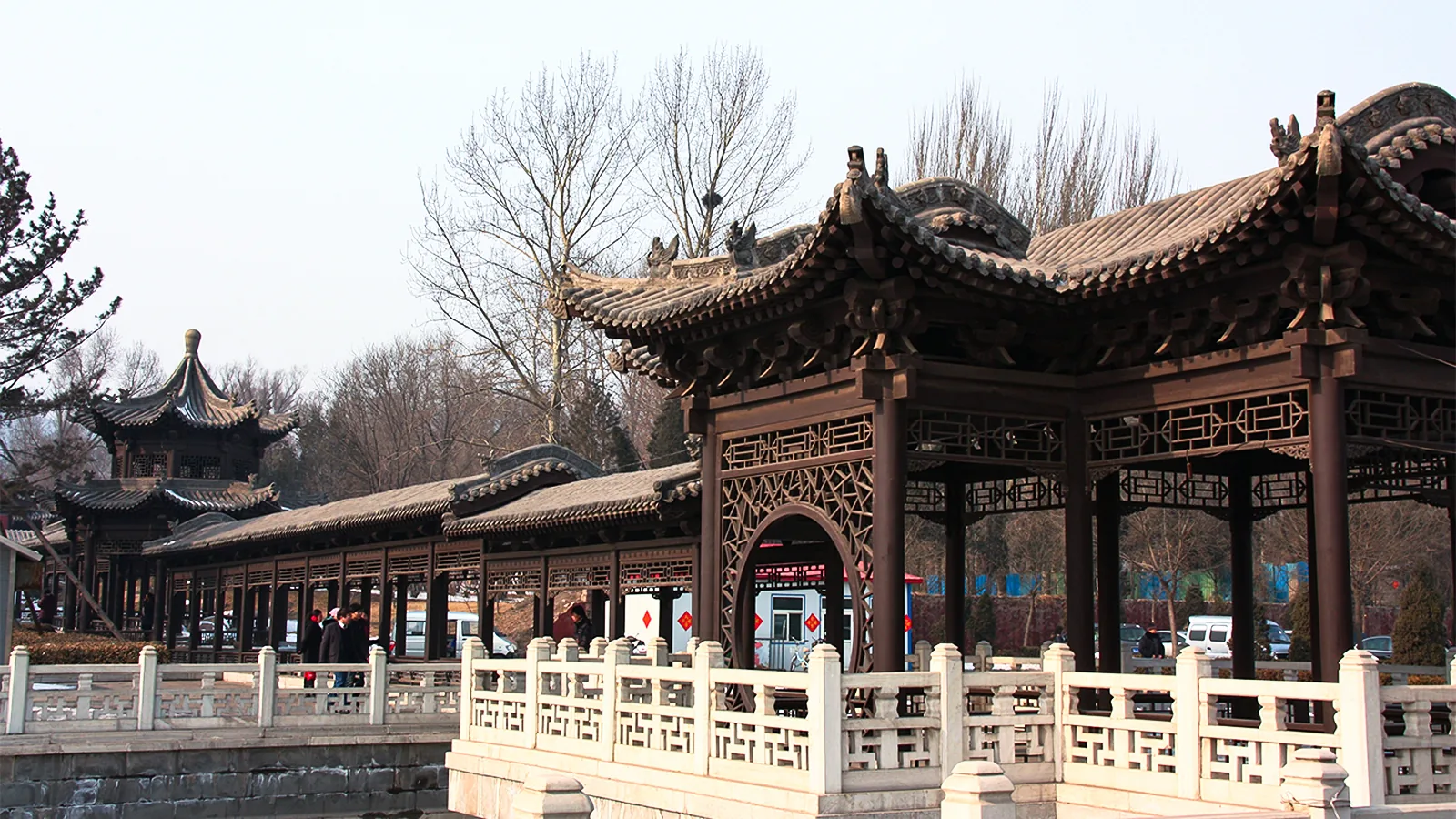
Jinci is where Shanxi keeps its oldest treasures. At the foot of Xuanweng Mountain southwest of Taiyuan, this temple-and-garden complex has grown around the shrine of a Zhou dynasty prince for nearly three thousand years, and its buildings chart Chinese architecture at its finest. The Holy Mother Hall, raised in the Song dynasty on stately columns with coiling wooden dragons, shelters a choir of forty-two painted clay maidens frozen mid-gesture for a millennium. Beside it stands the Flying Bridge, a cross-shaped bridge over a fish pond found nowhere else in China, while a gnarled cypress said to date from the Zhou dynasty leans nearby, and the Never-Old Spring still murmurs through the courtyards.
Jinci began as a shrine to Shu Yu of Tang, a Zhou dynasty prince enfeoffed in this region, and grew as successive dynasties added halls, pavilions and shrines until the grounds became a rolling composition of water, trees and timber architecture. The masterpiece is the Holy Mother Hall, first raised in the tenth century and rebuilt in the Song: its grand columns bear some of the oldest surviving wooden dragon carvings in China, and inside, the painted maidens — attendants of the enshrined Holy Mother — are celebrated as the pinnacle of Song dynasty sculpture, each with an individual face, pose and mood.
Around the hall, the details accumulate. The Flying Bridge, a square pond crossed by a cross-shaped timber bridge on stilts, is the unique surviving example of a bridge type described in ancient texts. The Never-Old Spring, which feeds the garden streams, has run for recorded millennia. And the Zhou Cypress, twisted and propped, is said — a generous estimate, botanists caution — to be three thousand years old. Jinci sits about twenty-five kilometers from downtown, reachable by taxi or bus, and rewards three unhurried hours; combine it with the <a href="/attractions/mengshan-buddha/">Mengshan Giant Buddha</a>, in the same southwestern hills, for a classic Taiyuan day.
Entry is by ticket at the main gate, with fees historically moderate for a site of this significance; prices and hours can change, so check current notices or let your guide confirm on the day. The complex opens through the daytime with last entry before closing, and the ticket covers the temple quarter, gardens and lakes. Students and seniors with identification receive standard discounts. Allow three hours to see the axis, side shrines and garden properly. Photography is generally permitted outdoors; flash is restricted near the painted sculptures. Weekday mornings are calmest, and spring and autumn weekends can draw local crowds — arrive at opening.
Jinci lies in Jinci township about twenty-five kilometers southwest of downtown Taiyuan, roughly forty minutes by taxi or ride-hailing car. Public buses run from the city center to the Jinci stop, an economical option though slower; taxis from major hotels cost little by international standards. The site combines naturally with the Mengshan Giant Buddha in the same southwestern hills, and a half-day car charter linking both is the most efficient plan. From Taiyuan's railway stations allow about forty-five minutes in traffic. Inside, the grounds are extensive and flat, so wear comfortable walking shoes; the temple quarter and the surrounding park can each absorb an hour.
Spring and autumn are the finest seasons, when the ancient trees, clear skies and mild air flatter both the architecture and the garden. Summer brings thick shade and lotus on the ponds, though midday is hot; winter is starkly beautiful, with snow on grey tiled roofs and near-solitude in the courtyards. Mornings offer the best light on the Holy Mother Hall's facade. The site is a half-day sight, most often paired with Mengshan in the hills to the south; serious architecture students can add a full extra hour for the side halls and steles alone.
It is famed as Shanxi's oldest temple complex, home to the Song dynasty Holy Mother Hall with its dragon columns and forty-two painted clay maidens, the unique cross-shaped Flying Bridge, the Never-Old Spring and an ancient cypress said to be three thousand years old.
Three hours is right for a rewarding visit covering the temple axis, side shrines and garden. Architecture enthusiasts can add another hour, and it pairs easily with Mengshan in the same half or full day.
A taxi or ride-hailing car takes about forty minutes from the city center. Public buses reach the Jinci stop more cheaply but slowly, and a half-day chartered car is the most efficient way to combine the temple with other southwestern sights.
The Song dynasty sculptures break from rigid Buddhist formula: each attendant has an individual face, posture and expression, from smiling to weary. Connoisseurs rank them among the supreme achievements of Chinese clay sculpture, which is why photography near them is restricted.
Full day · 8–10 hoursA Northern Song hall standing behind a cross-shaped stone bridge over a spring, then caves cut into a cliff above the Fen
View details →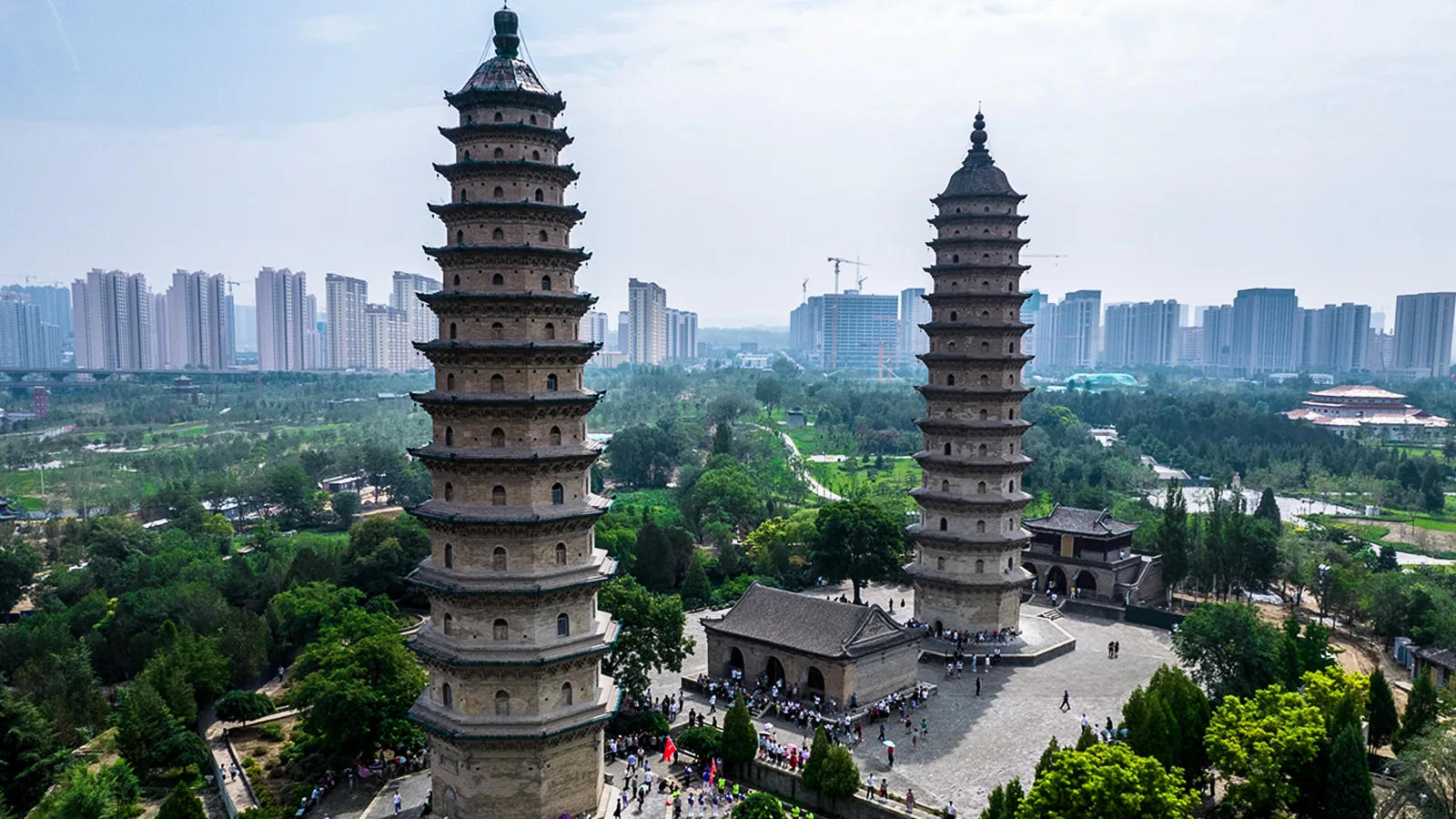 Full day · 8–10 hours
A Northern Qi cliff Buddha, a Tang underground palace, and a ridge that turns red in late October
View details → Full day · 8–10 hours
A free museum holding a bronze bird from the Jin marquis tombs, then sand and animals in one afternoon
View details → 2 days · 1 night · private
A compact first-visit loop of Taiyuan: the Song-dynasty halls of Jinci
View details →3 days · 2 nights · privateThe classic Taiyuan triangle: the Song halls and springs of Jinci, the
View details →Booked a private guide for Jinci mainly because I wanted someone to explain what I was looking at, and it paid off. The Hall of the Holy Mother is Song dynasty, over 900 years old, and our guide pointed out details in the wooden brackets I'd have walked right past. Crossing the Fish Pond Flying Beam was a small thing but I still remember it. We found the Never-Aging Spring after and I filled my water bottle there like a local.
Took the kids up Yongzuo Temple — the twin brick pagodas are steep and the stairs are narrow, so my youngest needed a hand most of the way. Worth it for the view over the city. We did Jinci the day before and the kids actually liked comparing the brickwork with the old wooden halls, which surprised me. Only gripe: not much signage in English at the temple, we were guessing a fair bit.
Private car & driver, day trips and multi-day routes from Taiyuan. · Free consultation · reply within 12h