 TripMyChinaJOURNEYS THROUGH REAL CHINA✦ AI Trip✦ Plan My Trip
English
简体中文
繁體中文
日本語
한국어
ไทย
Tiếng Việt
Bahasa Indonesia
Italiano
Español
العربية
Русский
Deutsch
Français
Bahasa Malaysia
TripMyChinaJOURNEYS THROUGH REAL CHINA✦ AI Trip✦ Plan My TripTaiyuan · Attractions
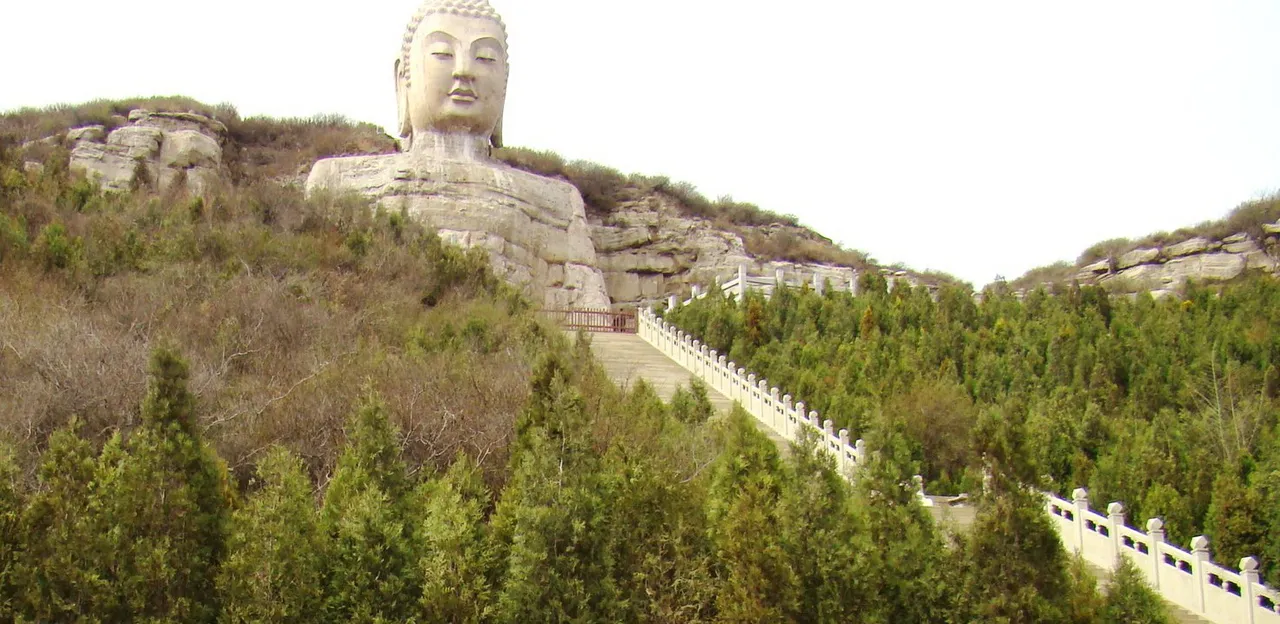
Carved into a cliff face in the sixth century, the Mengshan Giant Buddha is one of the earliest colossal Buddha sculptures in the world — and for centuries it was lost. The seated figure, hewn under a Northern Qi dynasty emperor's patronage and once the centerpiece of a great imperial temple, gradually toppled and was buried by rockfalls and time, its head gone. Only in the 1980s did researchers confirm that the great mound on Mengshan's slope was in fact a buried Buddha; restoration later rejoined it to a new head, and today visitors climb through the quiet hills southwest of Taiyuan to stand beneath its serene gaze, with forest paths and temple ruins completing the walk.
The Buddha was commissioned in the sixth century under Northern Qi rule, an era when this region was a political heart of the realm, and contemporary records describe emperors performing rites before the carved figure. The statue, estimated to have stood over sixty meters when complete, belonged to the great Kaihua Temple complex on the mountainside. Over the centuries earthquakes and erosion brought parts of the carving down; the head was lost entirely, and fallen debris and vegetation hid the fact that a Buddha was there at all — local people spoke only of a great stone slope.
Twentieth-century surveyors rediscovered the truth, and in 2008 a sculpted head in period style was joined to the weathered body, restoring the figure's presence if not its original face. The visit today follows a pleasant forested valley: paths and steps lead through the lower temple ruins to the viewing terraces directly beneath the seated figure, whose scale only registers at close range. The site sits in the same southwestern hills as <a href="/attractions/jinci-temple/">Jinci Temple</a>, and a half-day car loop linking the two is the classic Taiyuan excursion — sixth-century carving in the morning, Song dynasty sculpture in the afternoon.
Entry to the scenic area is ticketed at the gate, with the internal shuttle sometimes charged separately; fees are modest and subject to change, so confirm on site or let your guide arrange the day before. Hours run through the daytime, with last entry allowing time for the valley walk back. Students and seniors with identification receive standard discounts. Allow two to three hours including the approach paths and the viewing terraces. Weekdays are quiet; weekends draw local hikers, especially in autumn. Photography is permitted at the terraces, and the statue faces down the valley so morning light flatters it best.
The Mengshan scenic area lies about fifteen kilometers southwest of downtown Taiyuan in the same hill belt as Jinci. Taxis and ride-hailing cars take roughly thirty to forty minutes from the city; many visitors charter a car for the half day and combine the Buddha with <a href="/attractions/jinci-temple/">Jinci Temple</a>, which sits nearby. Public buses reach the district but involve transfers and time. Inside the scenic area, a shuttle or a longer walk covers the valley approach to the statue — comfortable shoes are essential either way. The excursion fits neatly into a morning, returning to the city for lunch, or extends to a full day when paired with Jinci.
Spring and autumn are the best seasons, with mild air for the valley walk and clear views of the carved figure. Summer mornings are cool under the forest canopy but hot by midday; winter can be starkly beautiful with frost on the slopes, though paths ice and some services thin out. Mornings suit the statue best, since it faces down the valley and catches the earlier light. The site is often paired with Jinci Temple in one southwestern loop — many travelers do the Buddha first while legs are fresh. Avoid national holiday weekends, when the shuttle queues lengthen considerably.
The carving dates to the sixth century under the Northern Qi dynasty, making it one of the earliest colossal Buddha statues ever attempted — older than many of China's famous giants — and records describe imperial rites held before it.
Earthquakes and erosion brought parts of the statue down over the centuries, and rockfall debris and vegetation buried the remainder. By modern times locals saw only a stone slope; surveys in the twentieth century identified it as the buried Buddha.
Visitors follow paths and steps through the valley to viewing terraces at the statue's base, a walk of moderate length. The interior of the figure is not accessible; the experience is the close-up view from the terraces.
Two to three hours covers the shuttle, the valley approach and the terraces. Most visitors pair it with Jinci Temple nearby, filling a satisfying day in Taiyuan's southwestern hills.
 Full day · 8–10 hours
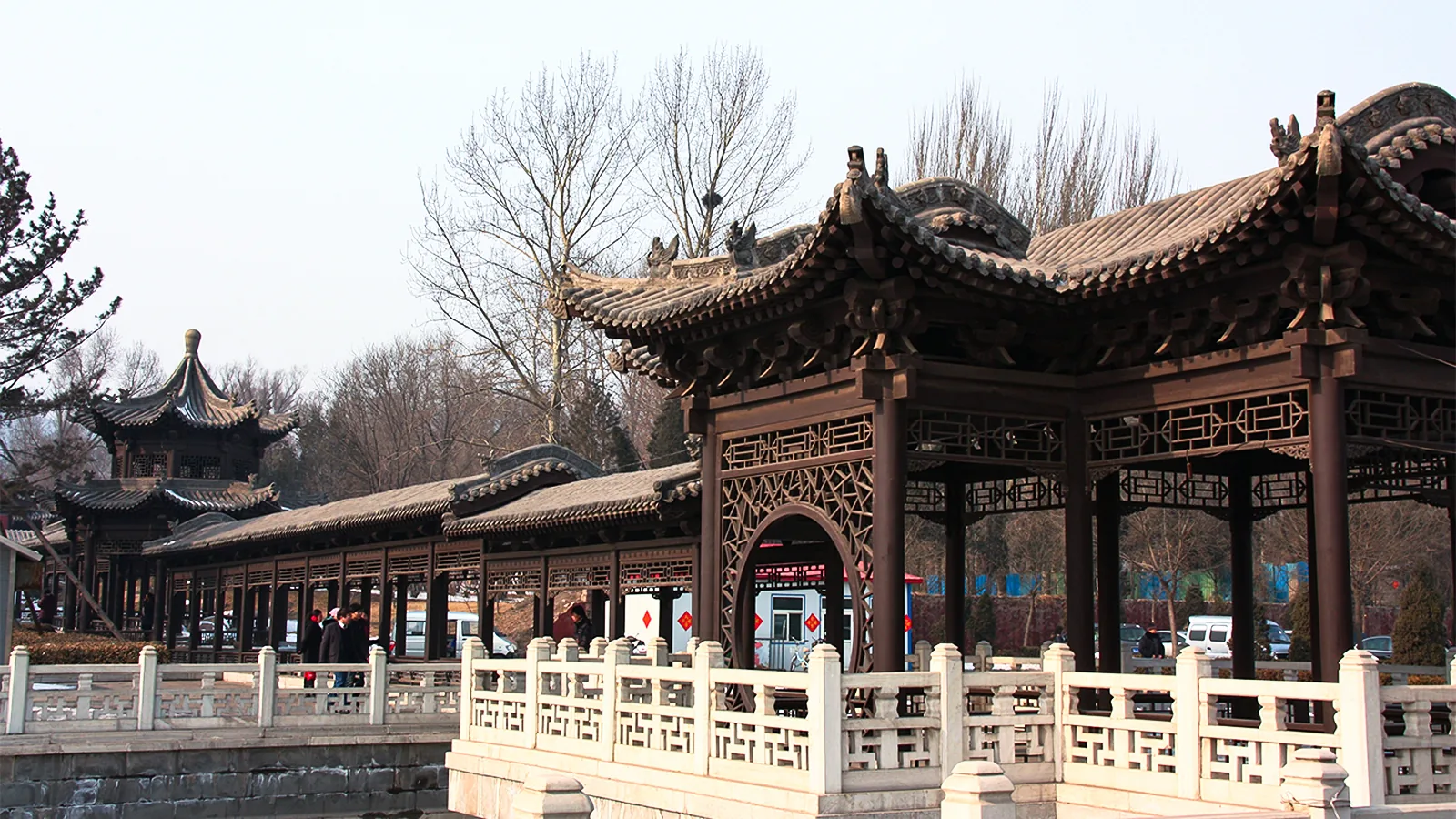
A Northern Song hall standing behind a cross-shaped stone bridge over a spring, then caves cut into a cliff above the Fen
View details →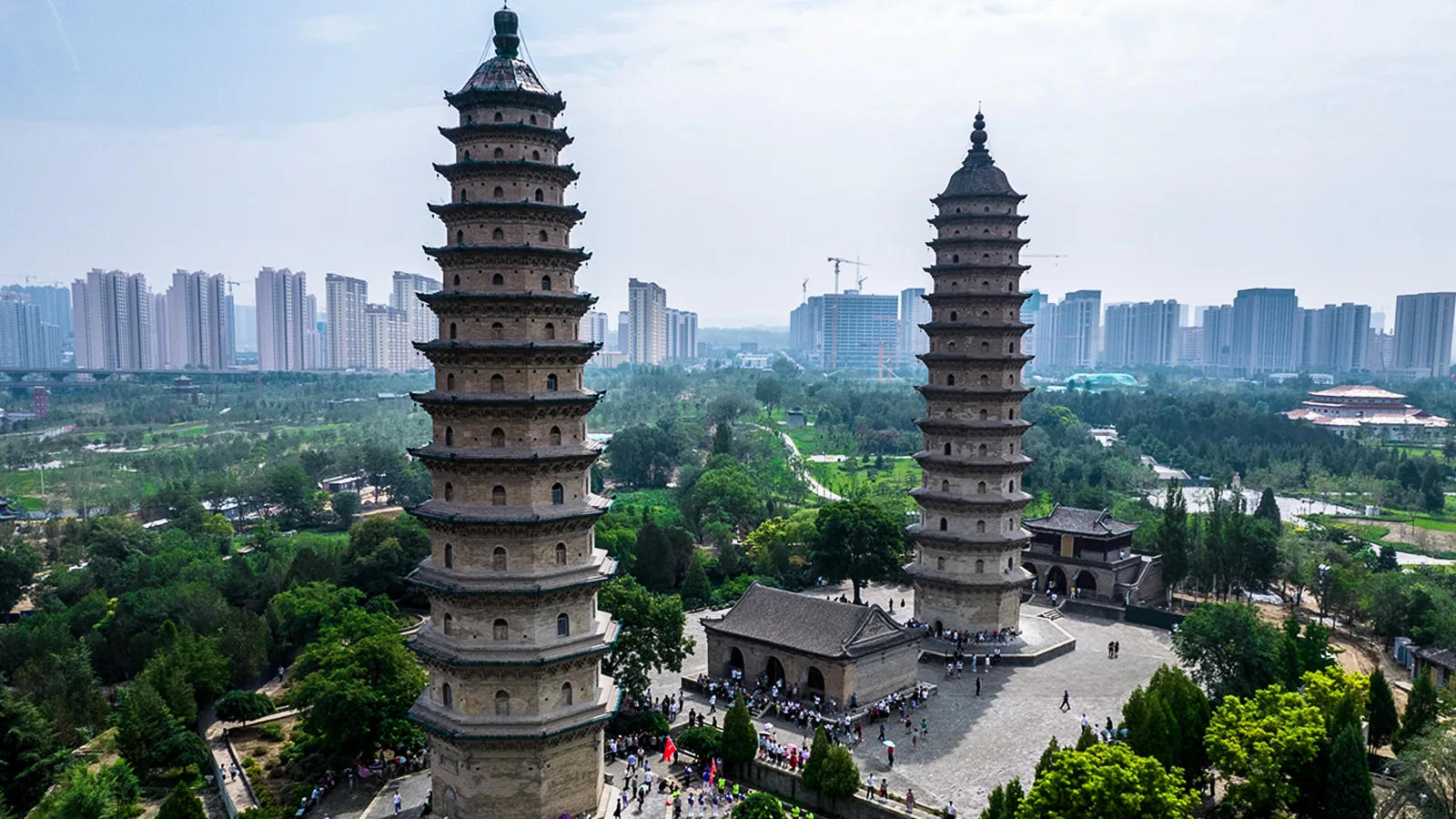 Full day · 8–10 hours
A Northern Qi cliff Buddha, a Tang underground palace, and a ridge that turns red in late October
View details → Full day · 8–10 hours
A free museum holding a bronze bird from the Jin marquis tombs, then sand and animals in one afternoon
View details → 2 days · 1 night · private
A compact first-visit loop of Taiyuan: the Song-dynasty halls of Jinci
View details →3 days · 2 nights · privateThe classic Taiyuan triangle: the Song halls and springs of Jinci, the
View details →Booked a private guide for Jinci mainly because I wanted someone to explain what I was looking at, and it paid off. The Hall of the Holy Mother is Song dynasty, over 900 years old, and our guide pointed out details in the wooden brackets I'd have walked right past. Crossing the Fish Pond Flying Beam was a small thing but I still remember it. We found the Never-Aging Spring after and I filled my water bottle there like a local.
Took the kids up Yongzuo Temple — the twin brick pagodas are steep and the stairs are narrow, so my youngest needed a hand most of the way. Worth it for the view over the city. We did Jinci the day before and the kids actually liked comparing the brickwork with the old wooden halls, which surprised me. Only gripe: not much signage in English at the temple, we were guessing a fair bit.
Private car & driver, day trips and multi-day routes from Taiyuan. · Free consultation · reply within 12h