 TripMyChinaJOURNEYS THROUGH REAL CHINA✦ AI Trip✦ Plan My Trip
English
简体中文
繁體中文
日本語
한국어
ไทย
Tiếng Việt
Bahasa Indonesia
Italiano
Español
العربية
Русский
Deutsch
Français
Bahasa Malaysia
TripMyChinaJOURNEYS THROUGH REAL CHINA✦ AI Trip✦ Plan My TripChengde · Attractions
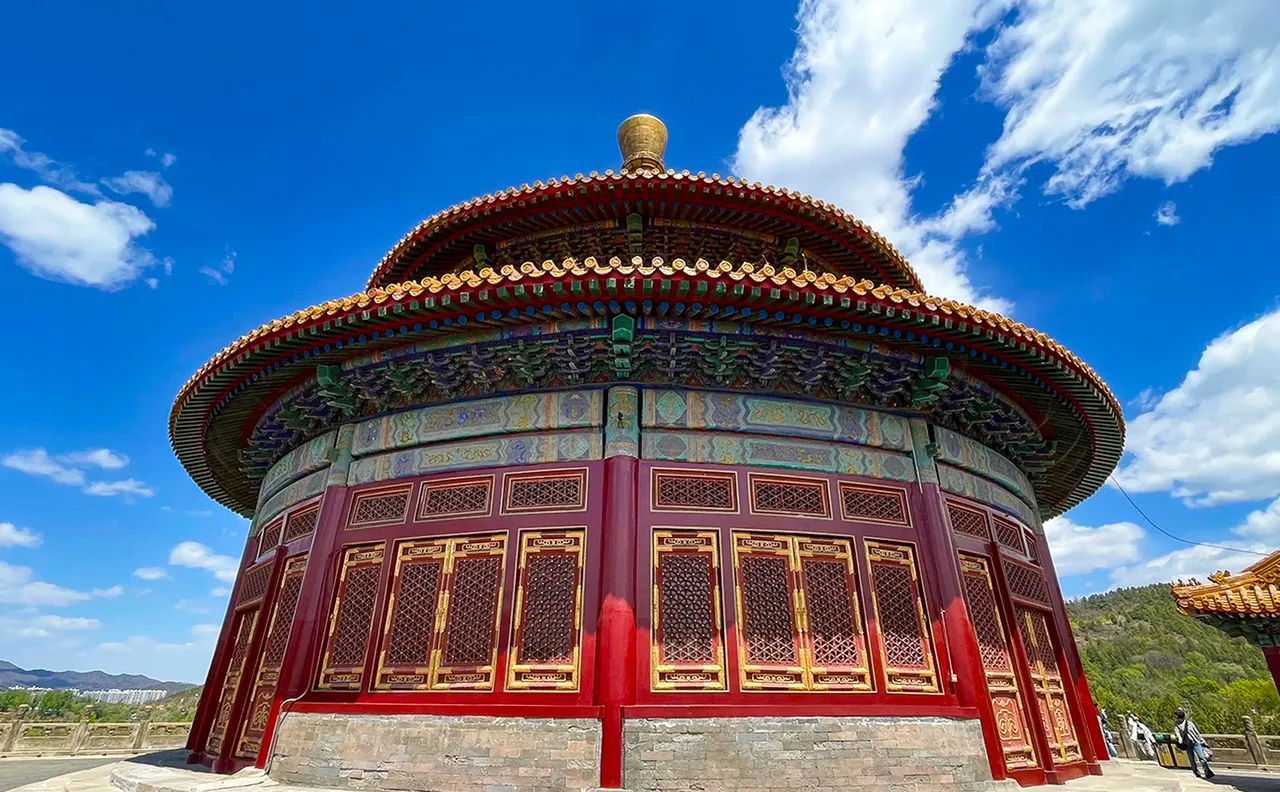
Pule Temple, the Temple of Universal Happiness, is Chengde's architectural oddball: a strictly axial Han-Buddhist front half that ends abruptly at a star-shaped Tibetan terrace crowned by the wooden Xuguang Pavilion, its gilded dome glowing above the trees. Built in 1766 to receive nomadic nobles visiting the imperial summer court, it is compact enough to explore in an hour yet contains the most unusual interior in the Outlying Temples. Climb the terrace and the stone pillar of Qingchui Peak lines up dead center behind the altar.
Qianlong commissioned the temple in 1766 for the successive delegations of Mongol and other steppe nobles who came north to pay homage at the Mountain Resort, giving them a place of worship in a style that spoke to both traditions. The front section follows conventional Chinese monastic planning with halls, bell tower and stele pavilions. Then the ground rises into a triple stone platform, and on it stands the Xuguang Pavilion, a round-and-square hybrid modeled on Tibetan prototypes, its coffered dome sheltering a gilded bronze statue group.
The pavilion's interior houses an esoteric Buddhist image of the Joyous Union, an unusual sculptural subject that makes the building a favorite with architecture-minded travelers even when the rest of the circuit blurs together. From the upper terrace the temple axis aims precisely at <a href="/attractions/qingchui-peak/">Qingchui Peak</a>, the city's stone-mallet landmark, a deliberate piece of imperial landscape design. Pule sits closest of all the <a href="/attractions/xumi-fushou-temple/">outlying temples</a> to the resort, which makes it the easiest to slot into any half-day schedule.
Admission is ticketed individually, historically in the low tens of yuan, and Chengde frequently offers combined tickets for multiple outlying temples, which is worthwhile if you plan two or more stops; verify current arrangements at the ticket office. Hours generally run about 08:00-17:30 in high season with shorter winter schedules. The pavilion interior is sometimes closed for protection on quieter days, but the terrace, dome exterior and views remain accessible. Allow an hour, and note that a combined morning covering Pule plus one neighboring temple fits comfortably before lunch.
Pule Temple stands about 2-3 km east of the Mountain Resort on the road through the outlying-temples district, a ten-minute taxi ride or a brisk 30-minute walk from downtown Chengde. City buses toward the temple area stop nearby, and the site shares its access road with several sibling temples, so drivers can chain visits efficiently. Inside, the route is linear: gate, halls, then the stair-stepped stone platform to the pavilion, with the whole circuit taking around an hour. Steps onto the platform are steep but short.
Spring and autumn deliver the clearest sightlines from the upper terrace, which matters here since the alignment with Qingchui Peak is the highlight. Come in the morning when sunlight fronts the gilded dome and the eastern haze has not thickened. Summer afternoons are hot on the open platform, and winter can be bitterly windy but photographically striking with snow. Tour groups move through the outlying temples on a midday rhythm, so arriving before 10:00 or after 15:30 keeps the pavilion calm.
Its centerpiece is the Xuguang Pavilion, a star-shaped Tibetan-style terrace building with a gilded dome, unlike any other structure in Chengde. The temple also visually aligns with Qingchui Peak.
About an hour covers the halls, terrace and pavilion comfortably. It is the most compact of the major outlying temples.
Yes, it is roughly 2-3 km from the resort walls, a 30-40 minute walk. Taxis cost little, which most visitors prefer in summer heat or winter wind.
Usually, but the pavilion interior occasionally closes on quiet days or for conservation. The exterior, terrace and alignment views are always accessible.
 Full day · 8–10 hours
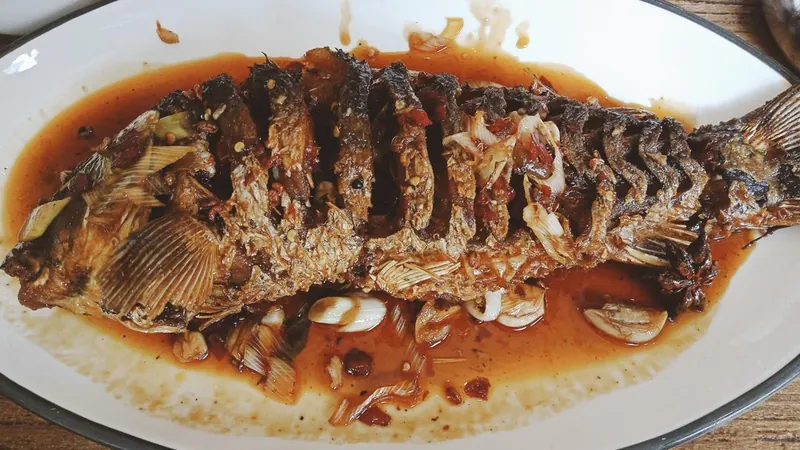
A mountain town that lives on buckwheat, lamb, and one chicken baked inside a ball of yellow clay
View details →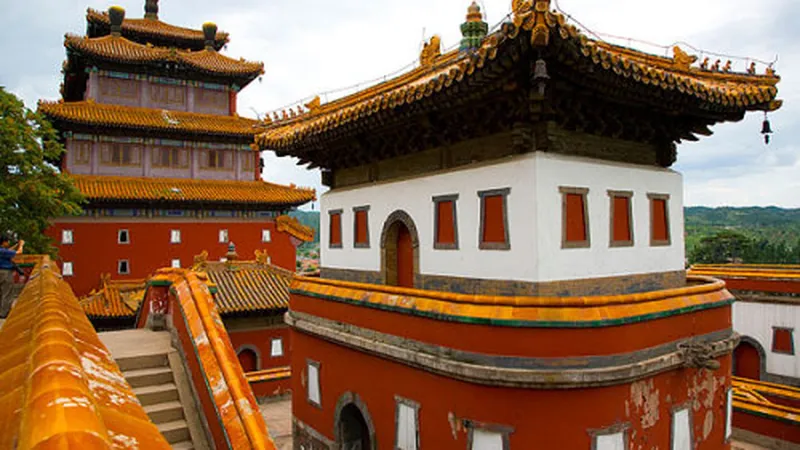 Full day · 8–10 hours
Three Qing imperial projects in one valley: a summer palace, a Tibetan-style temple, and a copy of the Potala
View details →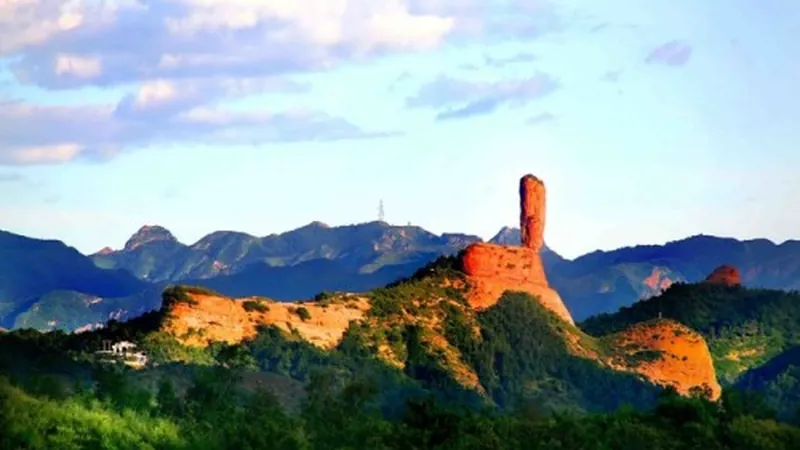 Full day · 8–10 hours
Two stone towers an hour from town, and a forest three and a half hours away that deserves its own day
View details →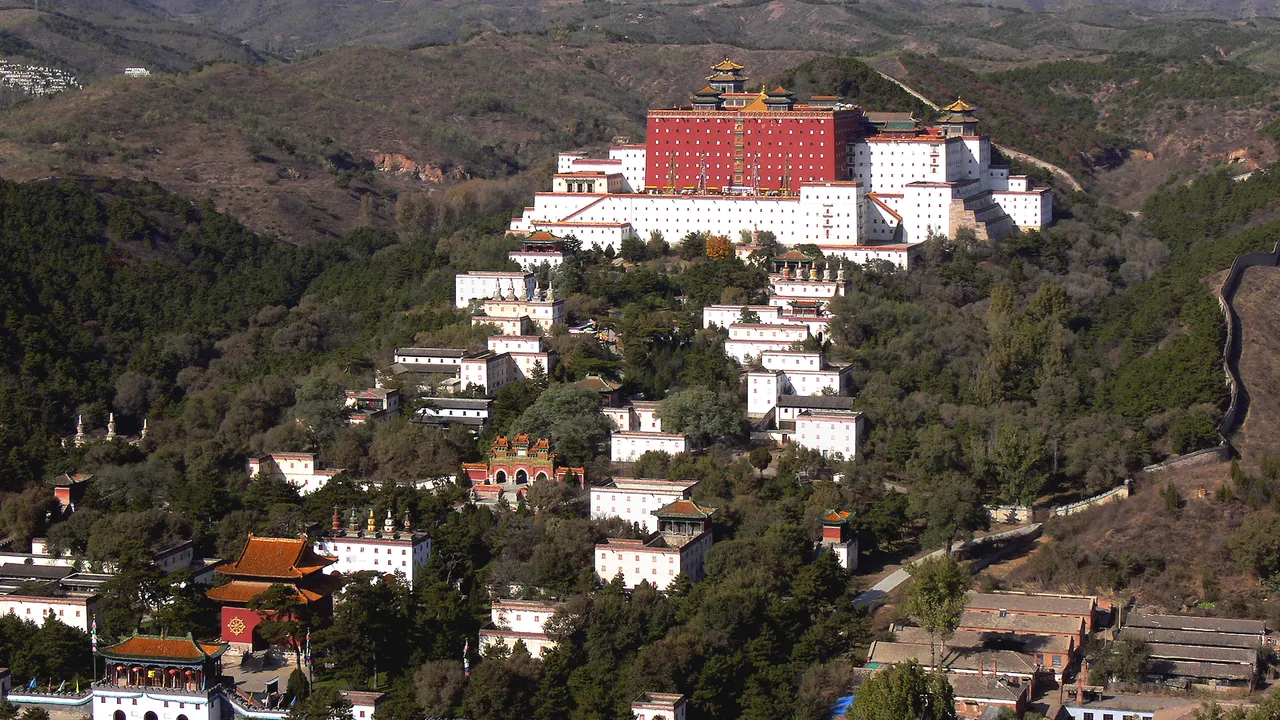 2 days · 1 night · private
A compact first-visit loop of Chengde: the imperial Mountain Resort wi
View details →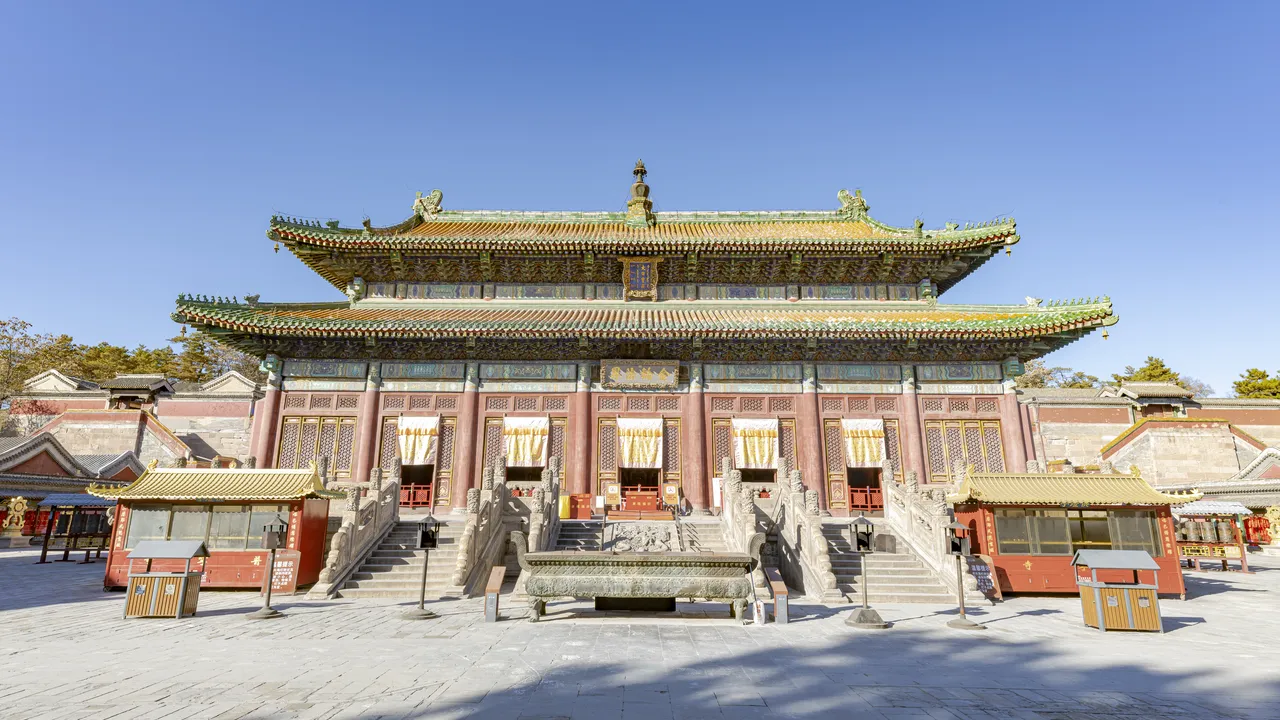 3 days · 2 nights · private
The classic Chengde triangle at an unhurried pace: a full day in the M
View details →We booked a private guide for the Mountain Resort and split it by zone — lakes first, then the mountain road, then the plain. Having someone explain why the emperors built it this way made the walking worth it. The guide also took us to Puning Temple in the afternoon, and the contrast with Putuo Zongcheng Temple the next day was the part I keep telling people about.
Took the kids and my parents, so we kept the Mountain Resort to the lake area in the morning and skipped most of the mountain section. The boat ride kept everyone happy, and my dad got his photo with Qingchui Peak from the viewpoint. Lunch was yutu lotus-leaf chicken — my son picked the lotus leaves apart and ate them, which he now claims was the best part.
Private car & driver, day trips and multi-day routes from Chengde. · Free consultation · reply within 12h