 TripMyChinaJOURNEYS THROUGH REAL CHINA✦ AI Trip✦ Plan My Trip
English
简体中文
繁體中文
日本語
한국어
ไทย
Tiếng Việt
Bahasa Indonesia
Italiano
Español
العربية
Русский
Deutsch
Français
Bahasa Malaysia
TripMyChinaJOURNEYS THROUGH REAL CHINA✦ AI Trip✦ Plan My TripMount Wutai · Attractions
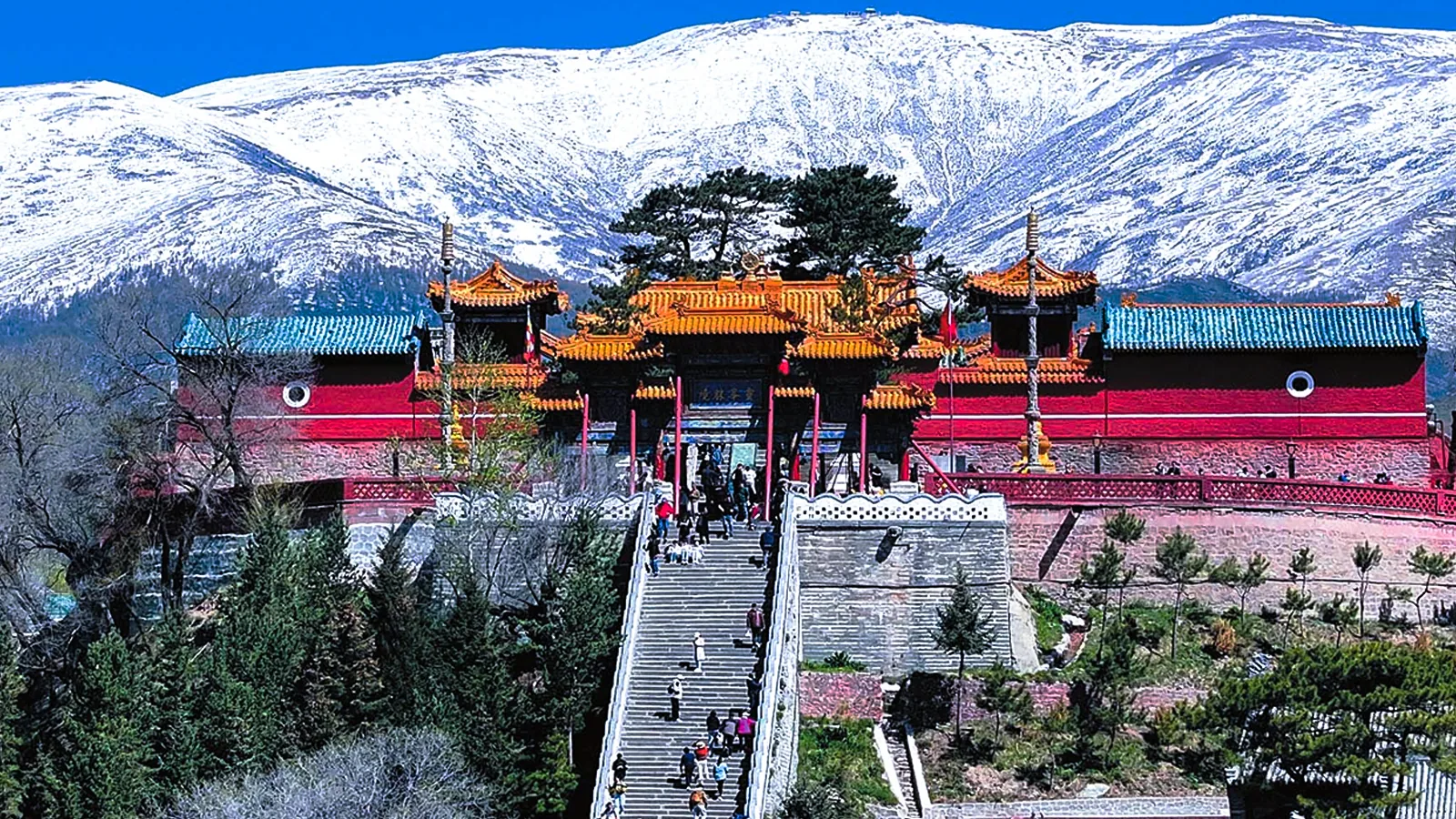
Perched on the crest above Taihuai valley, Pusading is Mount Wutai at its most imperial and most Tibetan at once. A monumental staircase of 108 stone steps climbs from the town to a yellow-glazed gateway guarded by imperial stele pavilions — for centuries this was the mountain's premier lama monastery, where Qing emperors stayed and Tibetan Buddhism set its golden tone. Climb the steps, catch your breath in the courtyard, and look back: the whole valley of temples, rooftops and white pagoda spreads below, arguably the finest vantage on the mountain.
Pusading — 'the terrace of the bodhisattva' — occupies Lingjiu Peak at the head of the valley, and its affiliation tells you much about Mount Wutai's dual soul: this is the leading Tibetan Buddhist (Gelug) monastery of the mountain, its halls capped in imperial yellow glaze that ordinary temples were forbidden to use. Kangxi and Qianlong both visited repeatedly; the emperors' stele pavilions still flank the entrance, their inscriptions in four scripts. Within, the courtyards follow the Tibetan plan, butter lamps burn in dark chapels, and the calls of long horns drift over the valley at ceremony times.
The 108 steps have their own meaning: in Buddhist reckoning, the number corresponds to the 108 afflictions, and pilgrims climb them chanting, some ascending in full prostration. The monastery stands directly above Xiantong Temple and the <a href="/attractions/white-pagoda-wutai/">Great White Pagoda</a>, so it slots naturally into the central valley circuit — temples below, overlook above. Come late afternoon and you may have the terrace almost to yourself as the sun drops behind the terraced peaks and the valley's first lights appear.
Entry requires a modest donation at the gate in addition to the Mount Wutai scenic-area ticket covering the whole mountain. The monastery follows the valley's general rhythm — open from morning until dusk, with ceremonies at set hours and slightly reduced hours in winter. Donations and opening details change from time to time, so confirm the day's arrangements with your hotel or guide before you climb. Wear shoes with grip for the stone steps, which can be icy outside summer, carry your passport for any checks, and remember the terrace edge at the overlook is unfenced in places.
Pusading rises at the north end of Taihuai town, directly above Xiantong Temple and the Great White Pagoda, so the approach is on foot for most visitors. The base of the 108 steps is a few minutes' walk from the valley's shuttle stops and hotels; the climb itself takes most people ten to twenty minutes at pilgrim pace. A road also winds up behind the monastery for those unable to climb — taxis can use it, and your hotel can point out the trailhead for the steps. Build the visit into the central circuit: pagoda and Xiantong below, Pusading's viewpoint above, Dailuoding across the valley beyond.
Late afternoon is Pusading's hour: the tour groups have gone down, the light rakes across the yellow roofs, and the valley below turns gold before the lights come on. Morning works beautifully too — climb early, hear the horns, and watch mist lift off the temple roofs. June to September offers the safest footing and full access; autumn is crisp and clear; winter delivers superbly atmospheric snow scenes but the steps can be treacherous, so use the back road in ice. Avoid midday on Chinese holidays, when the staircase becomes a slow-moving queue.
It means 'the terrace of the bodhisattva', referring to the monastery's hilltop site on Lingjiu Peak above the Taihuai valley. It is Mount Wutai's leading Tibetan Buddhist monastery, distinguished by the imperial yellow roofs once reserved for imperial patronage.
For most healthy visitors it takes ten to twenty minutes at a steady pace — steep but well stepped. Pilgrims climb more slowly, some in full prostration, so keep to one side; anyone with mobility concerns can reach the monastery by the vehicle road behind it.
Yellow glazed tiles were an imperial privilege, granted because Pusading served as a Qing imperial monastery and hosted emperors on their pilgrimages. The color also marks its Gelug, or 'Yellow Hat', Tibetan Buddhist affiliation — hence its nickname, the lama temple above the valley.
Perfectly at the center. It sits directly above Xiantong Temple and the Great White Pagoda in Taihuai, so the classic circuit runs: valley temples in the morning, the climb and overlook in the afternoon, and Dailuoding across the valley if energy remains.
 Full day · 8–10 hours
The monastery dining hall serves at about six and eleven, in silence, and the town kitchens cook the same mushroom another way
View details →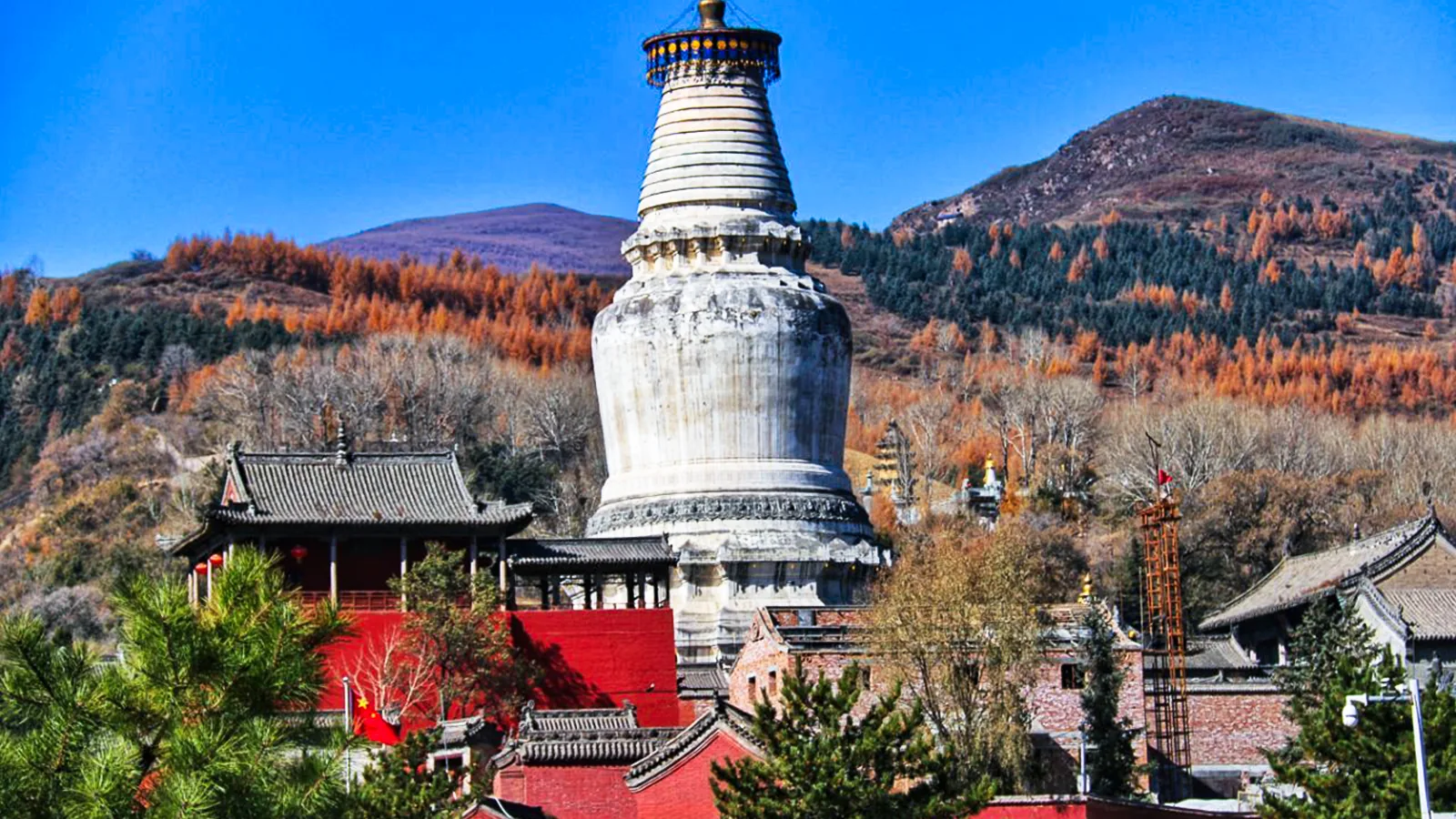 Full day · 8–10 hours
A monastery founded in the Eastern Han, a stupa designed by a Nepali craftsman, and a Qing imperial temple up 108 steps
View details →Full day · 8–10 hoursOne way up is stone stairs, the other is a road that closes with snow, so the sunrise half needs a check the night before
View details → 2 days · 1 night · private
A compact first visit to Mount Wutai: the great white stupa of Tayuan
View details →3 days · 2 nights · privateThe classic Mount Wutai circuit at pilgrim pace: Tayuan's white stupa,
View details →Booked a private guide for two days and it was worth every yuan. We walked the whole temple cluster in Taihuai at our own pace, and my guide knew which halls were Ming versus Qing without checking a sign. The Great White Stupa at Tayuan Temple looks even bigger up close than in photos.
Took my parents and two kids up to Pusa Ding — the climb is no joke for older legs, but my dad made it and wouldn't stop talking about the view over Taihuai town. Xiantong Temple's bronze hall kept the kids quiet for a solid twenty minutes, which is a record. Only gripe: signage in English is patchy, so bring a translation app.
Private car & driver, day trips and multi-day routes from Mount Wutai. · Free consultation · reply within 12h