 TripMyChinaJOURNEYS THROUGH REAL CHINA✦ AI Trip✦ Plan My Trip
English
简体中文
繁體中文
日本語
한국어
ไทย
Tiếng Việt
Bahasa Indonesia
Italiano
Español
العربية
Русский
Deutsch
Français
Bahasa Malaysia
TripMyChinaJOURNEYS THROUGH REAL CHINA✦ AI Trip✦ Plan My TripYangzhou · Attractions
The Shi Kefa Memorial Hall is Yangzhou's place of memory: a serene complex of courtyards, old trees and a plum-covered ridge where the city honors the official who chose to die defending it in 1645. Shi Kefa, the Ming dynasty's last governor of Yangzhou, refused to surrender to the approaching Qing army, and his stand — and the city's fall — became a defining story of loyalty in Chinese history. Today the memorial is free, unhurried and profoundly quiet, a short walk from the old city's food streets. Twenty minutes here adds more depth to Yangzhou than any amount of scenery.
In the spring of 1645 Shi Kefa commanded the defense of Yangzhou against the advancing Qing forces. When the walls were breached he refused to flee or submit, and was executed; his officers had earlier begged him to allow a burial plan, and a robe-and-cap tomb was later raised on the plum-tree ridge beside the memorial — Meihua Ling, Plum Blossom Ridge. The story entered the canon of Chinese loyalty literature, and generations of visitors have come to the courtyards to read the steles, calligraphy and letters he wrote on the eve of the fall.
The memorial occupies a classical courtyard compound north of the old city moat, its halls displaying relics, manuscripts and paintings tied to Shi Kefa's life and the siege, alongside later tributes by poets and calligraphers. The plum ridge at the back is planted with trees that blossom in late winter — the flower chosen deliberately, symbolizing integrity in cold. The site is compact and mostly flat, takes well under an hour to see properly, and sits within easy walking distance of the Wanshou Palace food district, making it the natural cultural interlude in a day of eating and gardens.
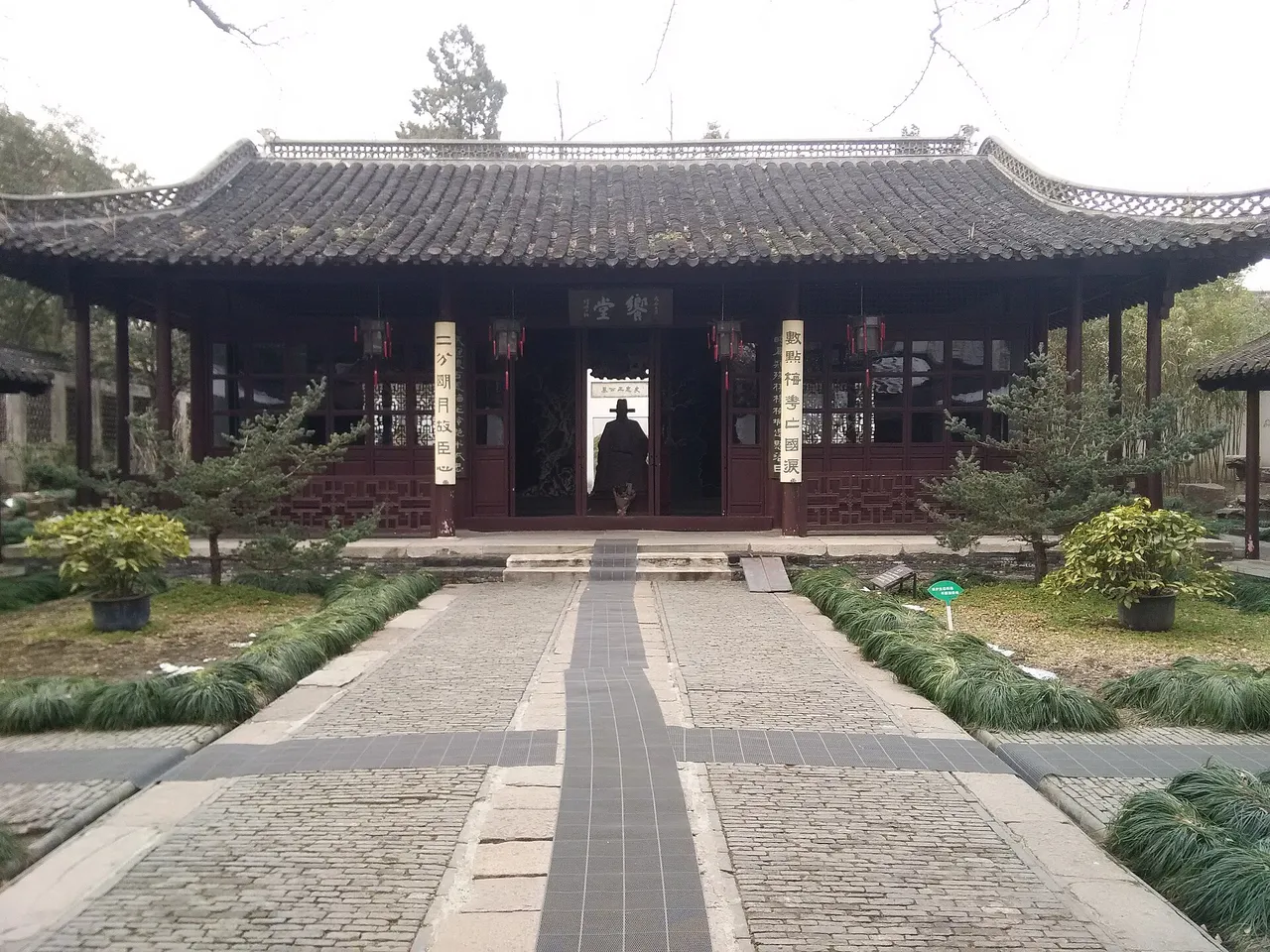
Admission to the Shi Kefa Memorial Hall is free — there is no ticket window beyond basic visitor registration when required, and no charge for the exhibitions or the ridge behind. Opening hours follow a museum pattern, generally from morning to late afternoon, with Monday closures common at sites of this type, so confirm the current schedule locally before going. The visit is self-guided; captions are primarily in Chinese with some bilingual panels on the main story. There are no crowds even at busy times of year, no timed entry and no facilities beyond restrooms and a small shop area, so allow forty-five minutes and combine it freely with the surrounding streets.
The memorial stands on the north bank of the old city moat in central Yangzhou, about 10 minutes by taxi or ride-hail from the railway station and a comfortable walk from the Wanshou Palace food district and the northern old streets. City buses along the moat road stop nearby. Because the site is small and free, the easiest plan is to fold it into a downtown day: visit in the late morning after the gardens, break for lunch at the food streets, and return afterward if you want a second, quieter pass through the halls. Entry is from the moat-side gate, and the exhibition flow runs naturally from the front courtyards to the plum ridge at the rear.
The memorial is an all-season destination, but it acquires special meaning in late winter, when the plum trees on the ridge bloom — the flower that embodies the loyalist ideal the site commemorates. Spring and autumn bring the most comfortable walking weather for the old-city circuit it belongs to; summer heat makes the cool halls a welcome mid-day retreat; winter quiet suits the solemnity of the place best of all. Within the day, morning light through the old trees and the near-empty courtyards give the most contemplative visit. Whatever the season, it is worth reading the story of 1645 beforehand — the halls speak loudest to those who arrive prepared.
He was the Ming dynasty's chief minister in charge of defending Yangzhou. When the city fell to Qing forces in 1645 he refused to surrender and was executed, and his stand became one of the most celebrated stories of loyalty in Chinese history.
It is a cenotaph — a robe-and-cap tomb raised on Plum Blossom Ridge, since his remains were not recovered. Memorial tombs of this kind are a long-standing Chinese tradition.
Forty-five minutes to an hour covers the halls, galleries and the plum ridge comfortably. Add time in late winter if the plum blossoms are out.
No, the memorial is free to enter. It keeps museum-style hours — morning to late afternoon, often closed Mondays — so check the schedule locally before you go.
 Full day · 8–10 hours
The day starts at a teahouse at seven and ends with a plate of tofu cut into five thousand threads
View details →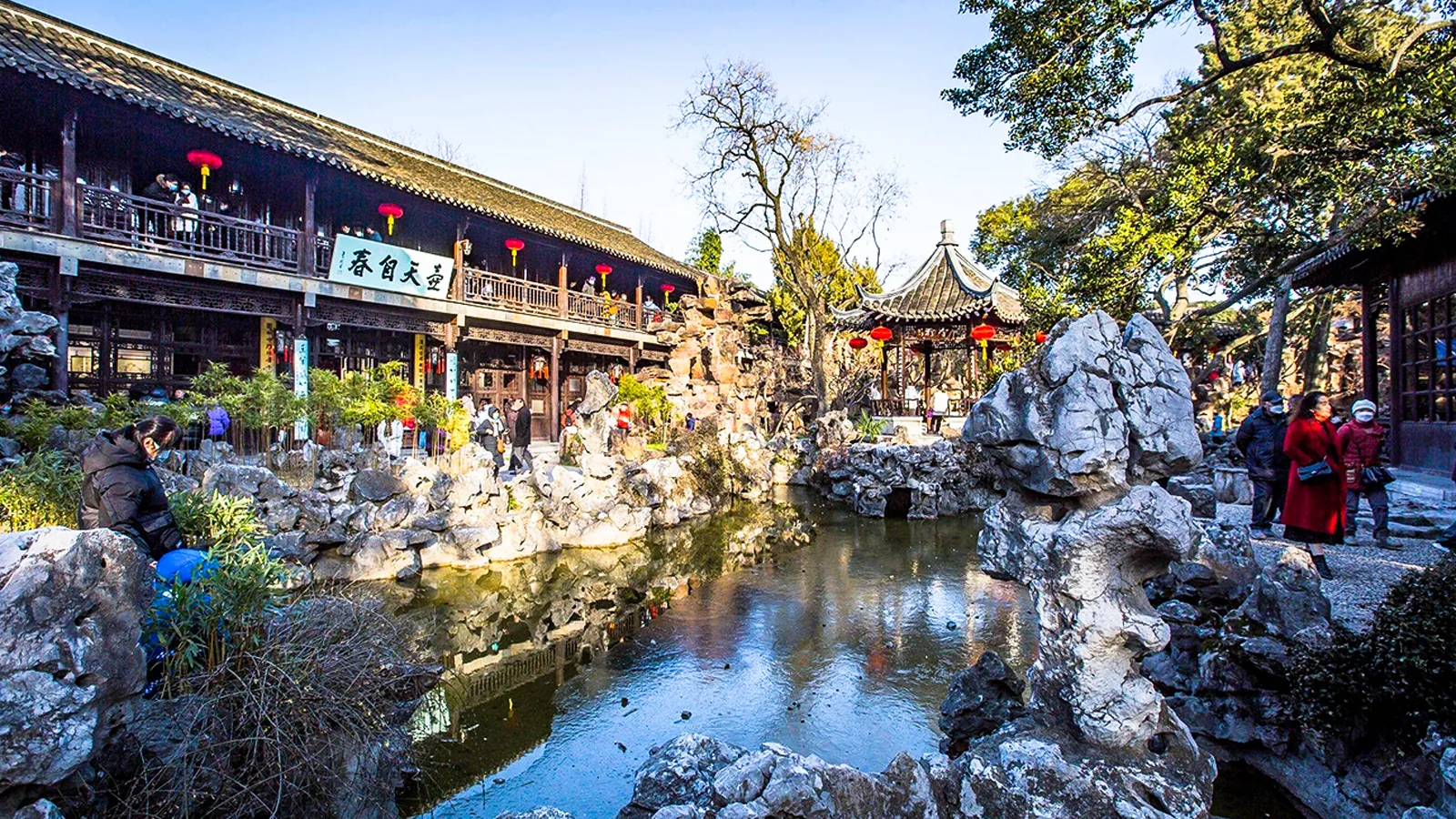 Full day · 8–10 hours
A city that made gardens into everyday life: bridges on the water, mountains inside the lanes
View details →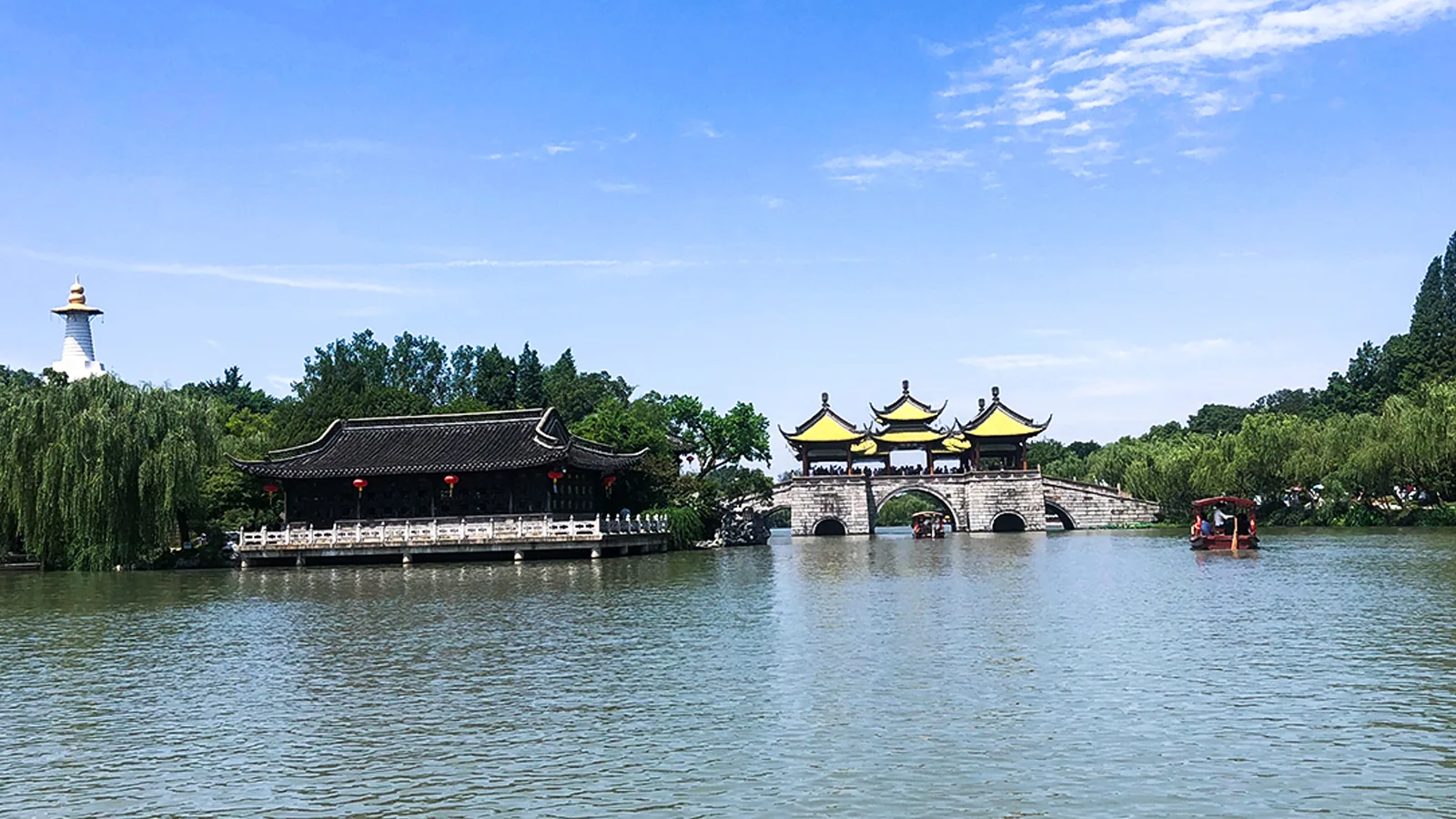 Full day · 8–10 hours
Up the canal to reeds, metasequoia and a lake with no crowd on it
View details →2 days · 1 night · privateThis two-day express route covers Yangzhou's essentials: Slender West
View details → 3 days · 2 nights · private
Three days cover the classic Yangzhou set: Slender West Lake and Damin
View details →Booked a private guide for one day and it was worth it just for the lake. We walked the causeways past Five Pavilion Bridge, and my guide kept pointing out which willow trees were oldest, stuff I'd never have noticed alone. Ge Garden was the surprise — I spent way longer than planned trying to figure out how they got four different rockeries to feel like four different seasons.
Took the kids to He Garden mainly because of the two-storey covered walkway, and they loved running up and down it. The place is quieter than the lake, which suited us fine. Only gripe: almost no English signage on the upper level, so I was basically guessing what each room was for. Still a good half-day out.
Private car & driver, day trips and multi-day routes from Yangzhou. · Free consultation · reply within 12h