 TripMyChinaJOURNEYS THROUGH REAL CHINA✦ AI Trip✦ Plan My Trip
English
简体中文
繁體中文
日本語
한국어
ไทย
Tiếng Việt
Bahasa Indonesia
Italiano
Español
العربية
Русский
Deutsch
Français
Bahasa Malaysia
TripMyChinaJOURNEYS THROUGH REAL CHINA✦ AI Trip✦ Plan My TripMount Wutai · Attractions
Every postcard of Mount Wutai is, at bottom, a photograph of the Great White Pagoda. Rising more than fifty metres above the Taihuai valley, this bulbous white stupa in Nepali style is the mountain's defining landmark — the first thing you see from the road and the last thing you look back at. It stands within Tayuan Temple, whose courtyard encircles the base with a full circuit of prayer wheels. Spin them as pilgrims do, watch the pigeons wheel around the spire, and you have touched the very heart of the mountain's religious geography.
The stupa is said to enshrine relics of the Buddha, and its present form — a massive white dome on a tiered base, crowned with a slender spire — was rebuilt in the Ming dynasty in the style of Nepalese stupas. Its scale surprises first-time visitors: the dome alone dwarfs the temple halls around it, and the bronze wind bells on the spire chime across the valley in any breeze. Around the base runs a colonnade of prayer wheels, and pilgrims of all ages can be seen completing clockwise circuits from dawn to dusk, prostrating, spinning and murmuring mantras.
Tayuan Temple itself is a working monastery attached to the stupa, and its position at the center of the valley makes it the natural hinge of a Taihuai walking day: Xiantong Temple beside it, Pusading's 108 steps across the lane, the shops of Taihuai a few minutes' walk away. Photographers should come early or late, when low sun turns the white plaster gold and crowds are thinnest. The site is also the reference point for finding everything else in the valley — locals give directions as 'left of the White Pagoda' or 'behind the White Pagoda', and they are always right.
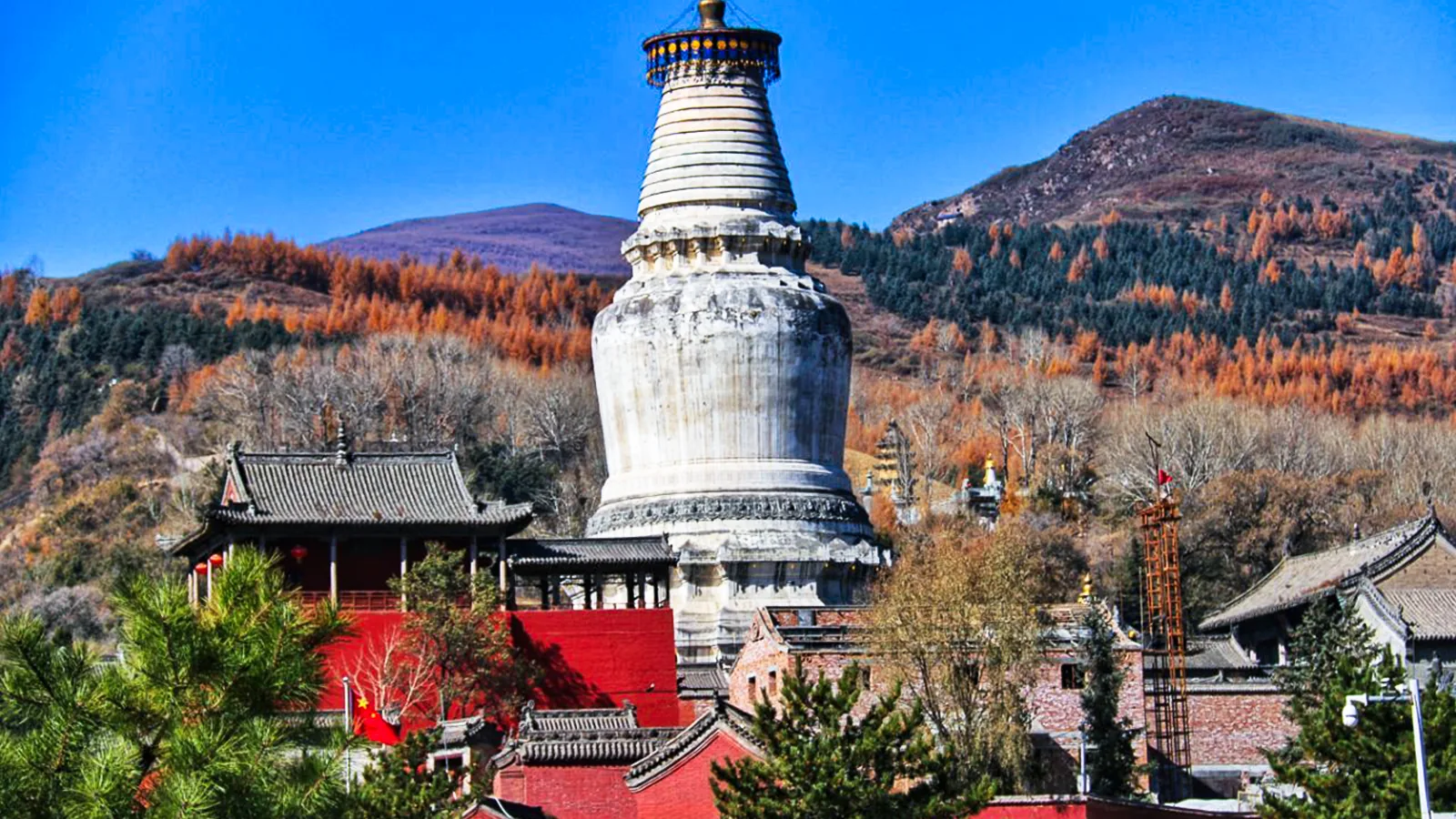
Viewing the pagoda requires the Tayuan Temple donation, traditionally a small fee paid at the gate, on top of the Mount Wutai scenic-area ticket that covers the mountain as a whole. The temple opens early and closes around dusk, keeping hours similar to the neighboring monasteries. Fee levels and opening arrangements can change seasonally, so confirm the day's details with your hotel or guide before setting out — they will verify both the park ticket and temple donation that morning. Dress modestly, walk the prayer-wheel circuit clockwise as tradition dictates, and ask before photographing worshippers at close range.
The pagoda stands at the center of Taihuai town, the main valley of Mount Wutai, within a few minutes' walk of the town's hotels, shuttle stops and shops. From the scenic-area bus terminus it is a flat stroll through the town; taxis can drop you at the lane leading to Tayuan Temple's gate. The site pairs naturally with Xiantong Temple immediately adjacent and Pusading uphill nearby, and the whole central circuit — pagoda, Xiantong, Pusading, Dailuoding across the valley — fits comfortably into one day on foot and shuttle.
The pagoda is photogenic at every hour, but two windows stand out: early morning, when mist lifts off the valley and the stupa glows against the peaks, and late afternoon, when low sun warms the white plaster before the lights of Taihuai come on. May to September offers the most reliable weather and the fullest religious calendar; autumn adds crisp skies, and winter sometimes lays snow on the dome — starkly beautiful for those prepared for the cold. Chinese public holidays bring dense pilgrim crowds; on ordinary weekdays even midday remains manageable, and mornings belong almost entirely to worshippers.
It is the great white stupa of Tayuan Temple in the Taihuai valley of Mount Wutai — a Ming-dynasty reconstruction in Nepali style, said to enshrine relics of the Buddha. At more than fifty metres it is the tallest structure on the mountain and its universally recognized symbol.
Yes, and visitors are welcome to join the circuit of prayer wheels around the stupa base. Follow tradition by walking clockwise, moving with the flow of worshippers, and treating the practice as devotion rather than amusement.
Thirty to forty-five minutes covers the temple courtyard, the full prayer-wheel circuit and unhurried photos of the stupa. Most visitors then continue straight on to neighboring Xiantong Temple, making the pair a two-hour block.
Extremely — it is the tallest white structure in Taihuai town, visible from most of the valley. Any local can point you to it, and virtually every hotel and shuttle stop is within a ten-minute walk.
 Full day · 8–10 hours
The monastery dining hall serves at about six and eleven, in silence, and the town kitchens cook the same mushroom another way
View details →Full day · 8–10 hoursA monastery founded in the Eastern Han, a stupa designed by a Nepali craftsman, and a Qing imperial temple up 108 steps
View details → Full day · 8–10 hours
One way up is stone stairs, the other is a road that closes with snow, so the sunrise half needs a check the night before
View details →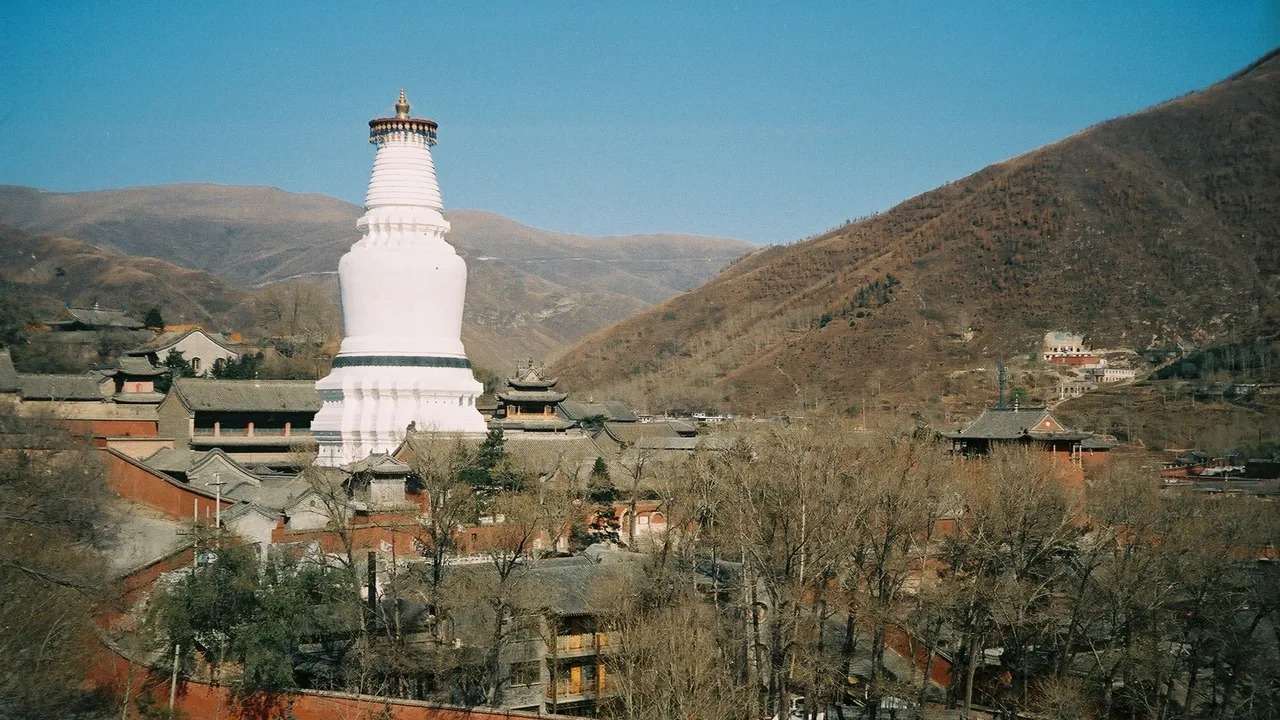 2 days · 1 night · private
A compact first visit to Mount Wutai: the great white stupa of Tayuan
View details →3 days · 2 nights · privateThe classic Mount Wutai circuit at pilgrim pace: Tayuan's white stupa,
View details →Booked a private guide for two days and it was worth every yuan. We walked the whole temple cluster in Taihuai at our own pace, and my guide knew which halls were Ming versus Qing without checking a sign. The Great White Stupa at Tayuan Temple looks even bigger up close than in photos.
Took my parents and two kids up to Pusa Ding — the climb is no joke for older legs, but my dad made it and wouldn't stop talking about the view over Taihuai town. Xiantong Temple's bronze hall kept the kids quiet for a solid twenty minutes, which is a record. Only gripe: signage in English is patchy, so bring a translation app.
Private car & driver, day trips and multi-day routes from Mount Wutai. · Free consultation · reply within 12h