 TripMyChinaJOURNEYS THROUGH REAL CHINA✦ AI Trip✦ Plan My Trip
English
简体中文
繁體中文
日本語
한국어
ไทย
Tiếng Việt
Bahasa Indonesia
Italiano
Español
العربية
Русский
Deutsch
Français
Bahasa Malaysia
TripMyChinaJOURNEYS THROUGH REAL CHINA✦ AI Trip✦ Plan My TripMount Wutai · Attractions
Xiantong Temple is where Mount Wutai's story begins. Founded in the Eastern Han dynasty and expanded by dynasty after dynasty, it is the oldest and largest monastery on China's foremost Buddhist mountain, sprawling across seven successive courtyards at the foot of Lingjiu Peak. Its treasures are extraordinary: a hall cast entirely of bronze, a cluster of slender bronze pagodas, and a vast timber hall raised without nails in the Ming style. Step through its gate and you are walking the same stone courtyards where emperors worshipped and monks from across Asia studied for sixteen centuries.
Tradition holds that the temple was founded in 68 CE, making it one of the earliest Buddhist establishments in China and the founding temple of Mount Wutai itself. Imperial patronage followed century after century — the Tang court, the Khitan Liao, the Mongol Yuan, the Ming and the Qing all left their marks, which is why its halls read like an anthology of Chinese Buddhist architecture. The layout climbs uphill through seven courtyards, each grander than the last, culminating in the famous Bronze Hall cast in the Ming dynasty from thousands of kilograms of copper.
Among the highlights are the Beamless Hall, a brick-vaulted structure built without timber beams; the pair of elegant bronze pagodas flanking the terraces; and the Great Wenshu Hall with its towering columns. The temple sits in the heart of the Taihuai valley, steps away from the <a href="/attractions/white-pagoda-wutai/">Great White Pagoda</a> of Tayuan Temple, so it anchors any walking circuit of the valley temples. Come in the early morning, when courtyards are quiet, incense drifts thin in cold air, and the halls belong almost to you alone.
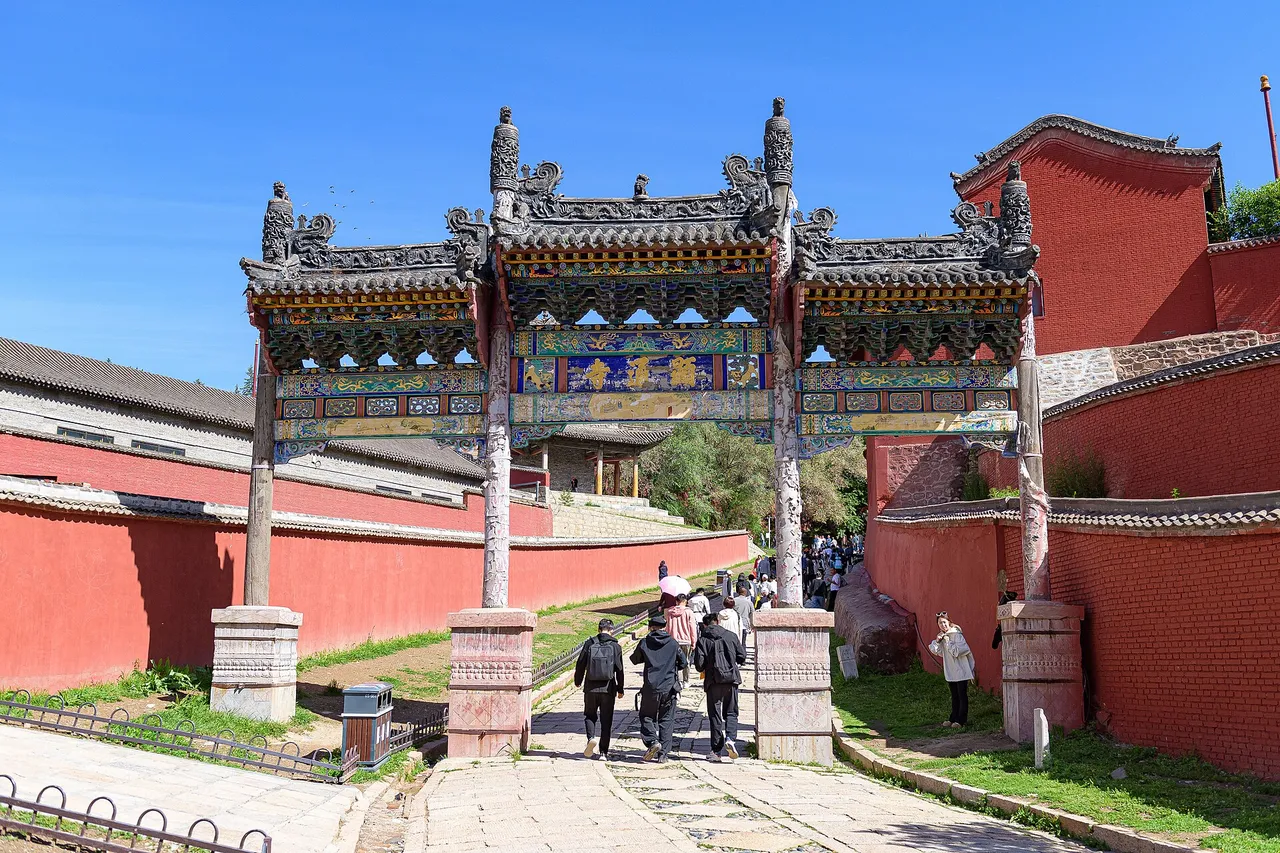
Access to Xiantong Temple traditionally requires a small donation at the gate in addition to the Mount Wutai scenic-area ticket, which covers entry to the mountain as a whole. The temple opens early in the morning and closes around dusk, with slightly varied hours in winter. Both the scenic-area ticket and temple donations are subject to periodic adjustment, so confirm current arrangements with your hotel or guide on arrival — they will verify the day's prices before you set out. Carry your passport for any checks, dress modestly, and note that photography is generally allowed in the courtyards but discouraged inside halls.
The temple lies at the northern end of Taihuai town, the central valley of Mount Wutai, an easy walk from most hotels and from the Great White Pagoda next door. From the scenic-area shuttle stops it is a few minutes on foot; taxis within the valley are cheap and plentiful if you are staying farther out. The gate faces the main road through the valley, and the route inside climbs steadily uphill, so allow about an hour and a half to see the courtyards properly. Pair it with Tayuan Temple, Pusading above, and the valley's other great monasteries in one circuit.
Any season rewards a visit, but early morning is the time: the courtyards are nearly empty, monks are chanting, and the low light gives the bronze and grey brick a soft glow. May to September offers the most comfortable weather and every path open; autumn adds golden foliage to the courtyard trees, and winter snow on the temple roofs is hauntingly beautiful if you can handle the cold. Avoid midday in Chinese holiday weeks, when tour groups flow through the seven courtyards in waves — come at opening time instead and you may have the axis to yourself.
It is traditionally dated to 68 CE, making it among China's earliest Buddhist temples and the founding monastery of Mount Wutai. Across sixteen centuries it grew into the mountain's largest complex, and its bronze hall, bronze pagodas and beamless hall make it an anthology of Chinese Buddhist architecture.
Prioritize the Ming-dynasty Bronze Hall, the brick-vaulted Beamless Hall, the paired bronze pagodas and the uphill sequence of seven courtyards. If time is short, the top courtyards hold the most distinctive structures.
Plan on an hour to an hour and a half to walk the full axis of courtyards at an unhurried pace. Photographers and those attending morning chanting often stay two hours or more.
Very easily. The temple stands in central Taihuai beside the Great White Pagoda of Tayuan Temple, with Pusading on the hillside above — the three form the classic valley walking circuit, all reachable on foot from town hotels.
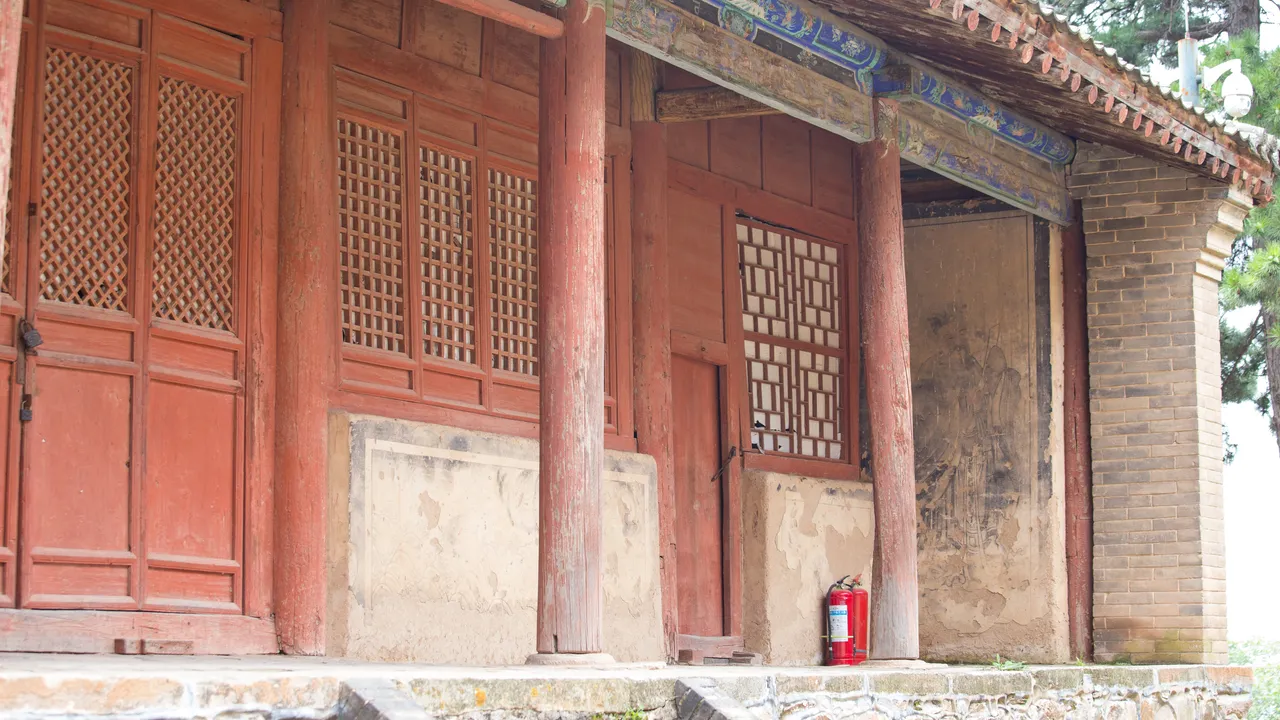 Full day · 8–10 hours
The monastery dining hall serves at about six and eleven, in silence, and the town kitchens cook the same mushroom another way
View details →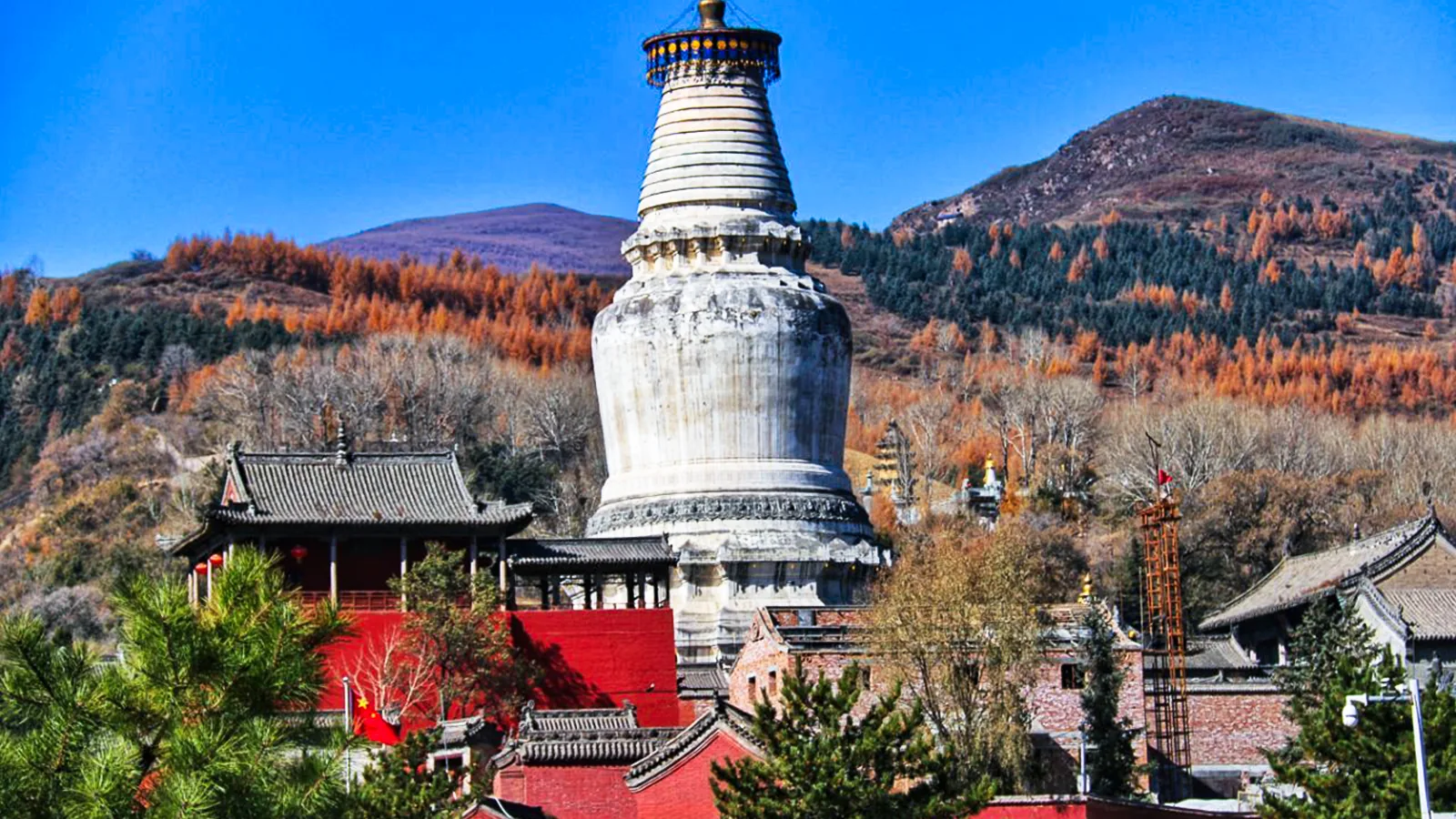 Full day · 8–10 hours
A monastery founded in the Eastern Han, a stupa designed by a Nepali craftsman, and a Qing imperial temple up 108 steps
View details →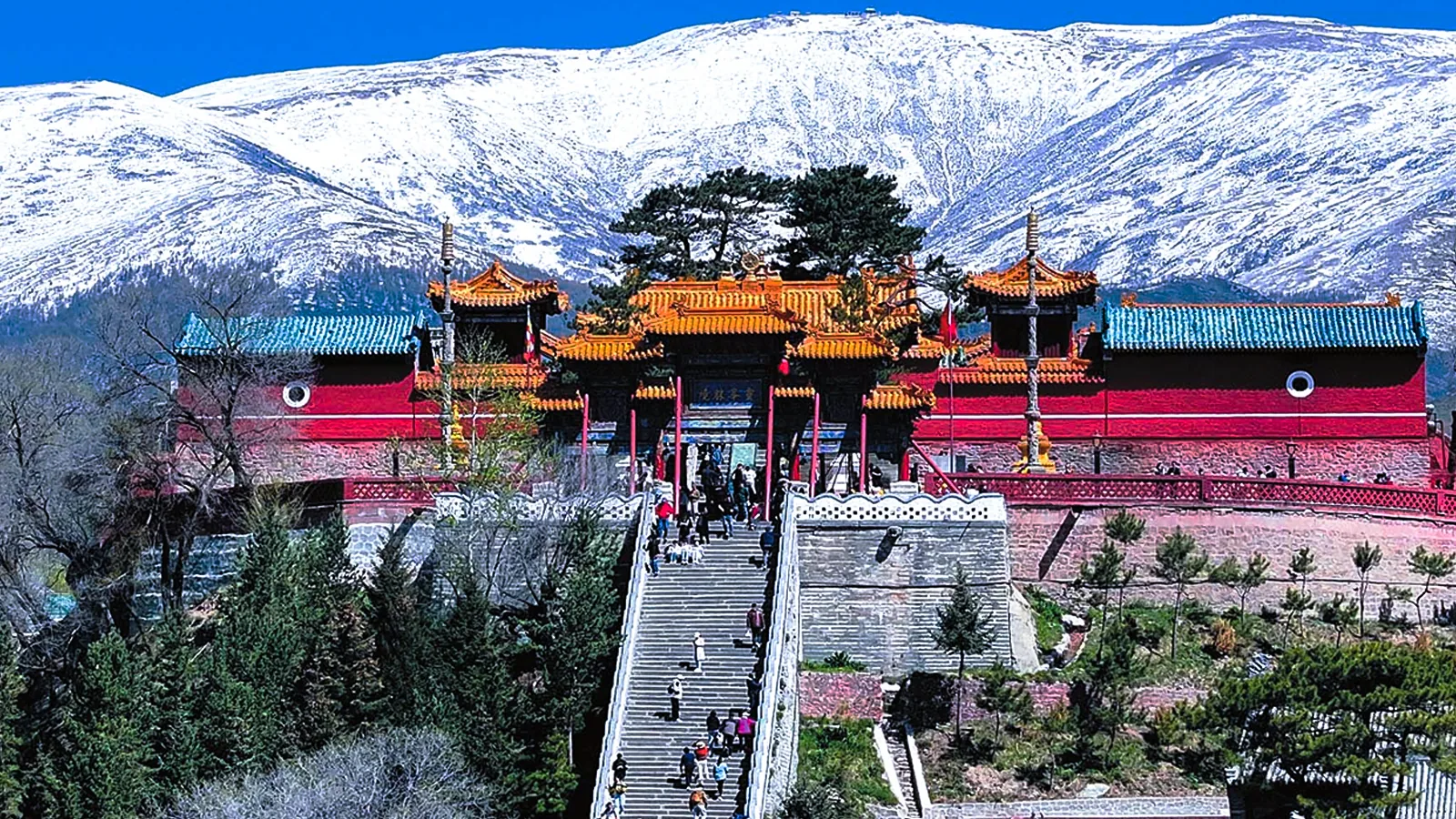 Full day · 8–10 hours
One way up is stone stairs, the other is a road that closes with snow, so the sunrise half needs a check the night before
View details →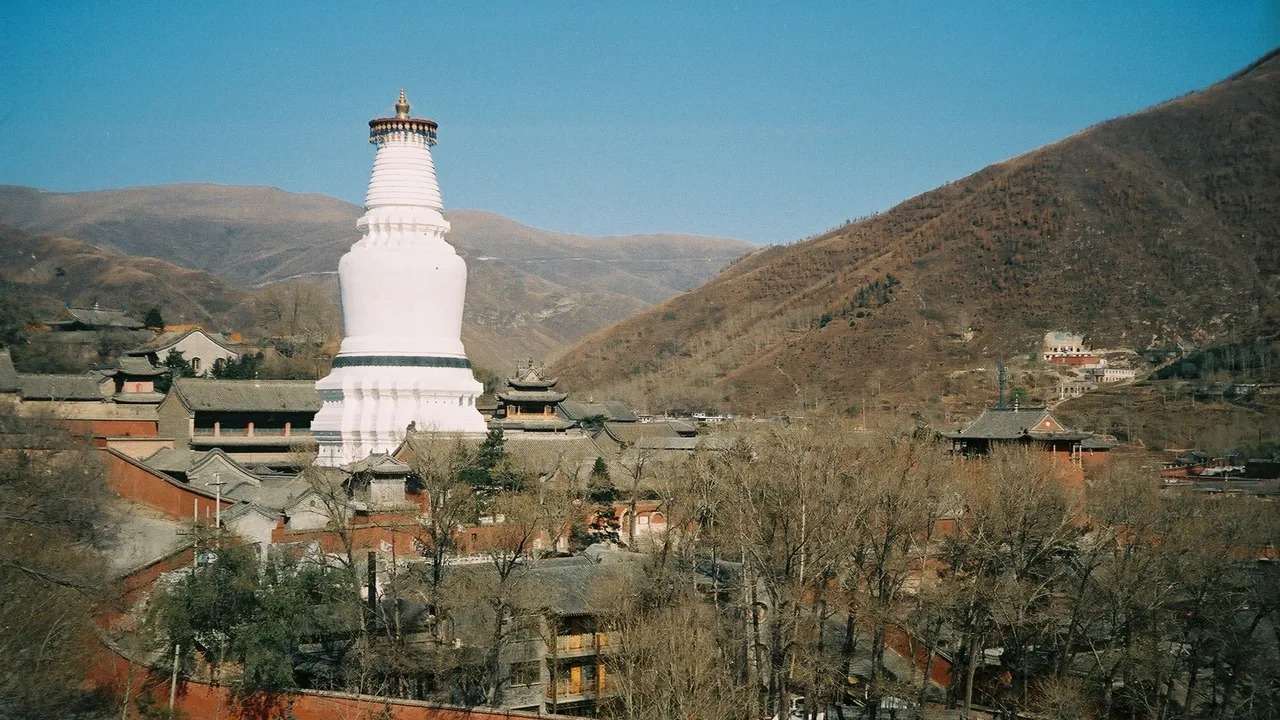 2 days · 1 night · private
A compact first visit to Mount Wutai: the great white stupa of Tayuan
View details →3 days · 2 nights · privateThe classic Mount Wutai circuit at pilgrim pace: Tayuan's white stupa,
View details →Booked a private guide for two days and it was worth every yuan. We walked the whole temple cluster in Taihuai at our own pace, and my guide knew which halls were Ming versus Qing without checking a sign. The Great White Stupa at Tayuan Temple looks even bigger up close than in photos.
Took my parents and two kids up to Pusa Ding — the climb is no joke for older legs, but my dad made it and wouldn't stop talking about the view over Taihuai town. Xiantong Temple's bronze hall kept the kids quiet for a solid twenty minutes, which is a record. Only gripe: signage in English is patchy, so bring a translation app.
Private car & driver, day trips and multi-day routes from Mount Wutai. · Free consultation · reply within 12h