 TripMyChinaJOURNEYS THROUGH REAL CHINA✦ AI Trip✦ Plan My Trip
English
简体中文
繁體中文
日本語
한국어
ไทย
Tiếng Việt
Bahasa Indonesia
Italiano
Español
العربية
Русский
Deutsch
Français
Bahasa Malaysia
TripMyChinaJOURNEYS THROUGH REAL CHINA✦ AI Trip✦ Plan My TripFuzhou · Attractions
Xichan Temple is the grandest monastery in Fuzhou, a sprawling complex of glittering halls, lotus ponds and pagodas on Yishan Hill near the city's western edge. Founded in the Tang dynasty and rebuilt many times since, it remains a working Buddhist monastery where monks chant at dawn and incense drifts across courtyard banyan trees. Its most famous residents are its lychee trees, celebrated in Song dynasty poetry, and its most photographed feature is the towering Relief Pagoda that rises above the rooftops. This guide explains what to see, how to get there, and how to time a visit around the monastery's rhythm.
The temple traces its origins to the Tang dynasty, when a meditation retreat established on Yishan grew into one of the great Chan Buddhist centres of Fujian. Over more than a thousand years it burned, was abandoned and rose again repeatedly, and the present buildings, though modern in fabric, follow classical layouts: a sequence of courtyards ascending the hillside, giant banyans casting shade over ponds of lotus and carp, and halls of carved stone that glow softly in the humid air. The poet-Song-dynasty connection runs through the temple's lychee groves, which have been famous since scholars wrote verses under them a millennium ago.
What sets Xichan apart from Fuzhou's smaller city temples is scale. The complex stretches over a broad slope, with a tall pagoda, a large vegetarian restaurant, and halls filled with gilded Buddhas. Visitors often time their stay around daily rhythms: the morning chants, the quiet of the side courtyards, and the soft light that floods the main axis late in the afternoon. The temple sits only a short ride from the city centre, yet the atmosphere inside the walls feels a world away from the ring roads beyond.
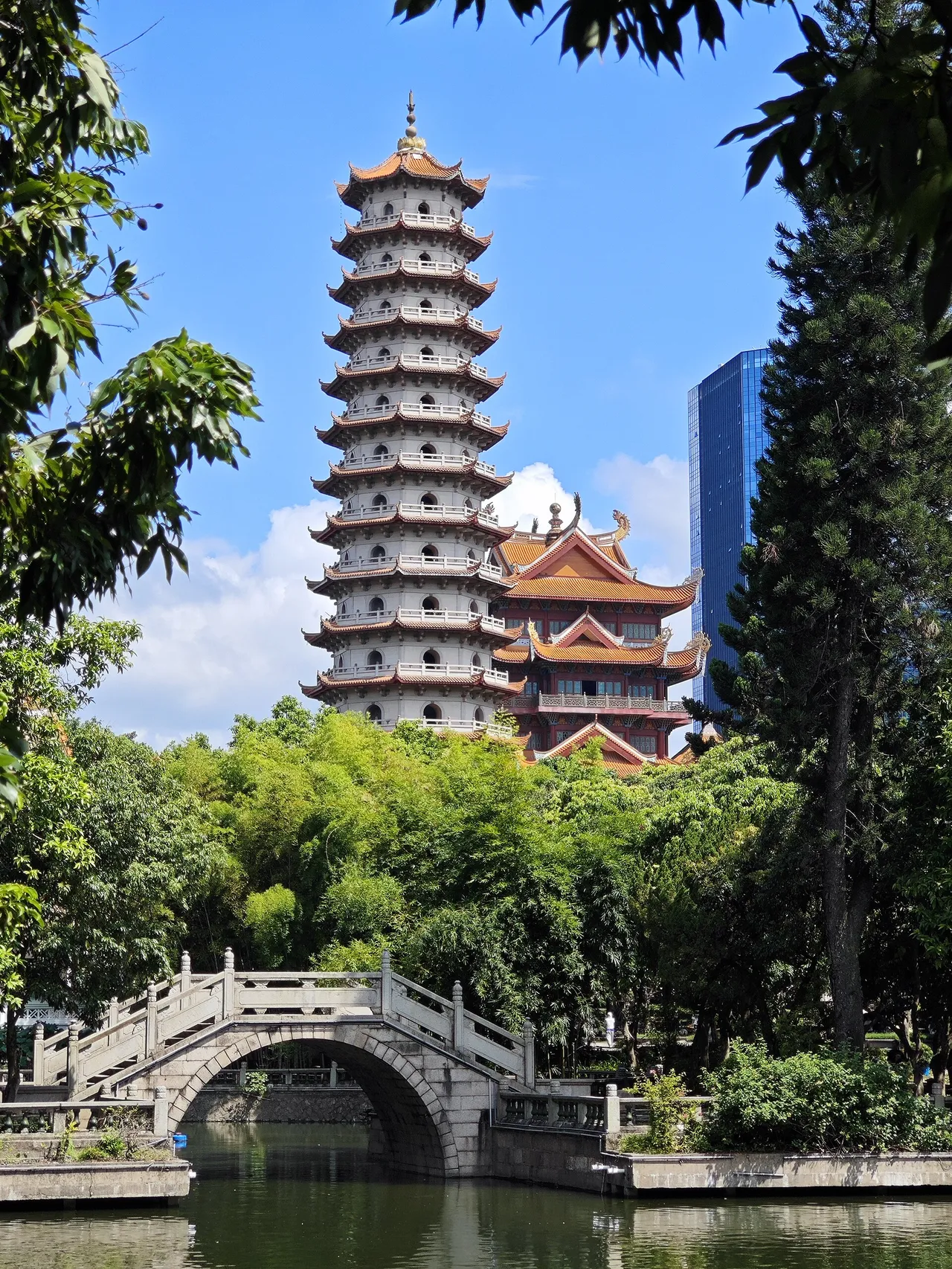
Xichan Temple charges a small admission ticket at the main gate, with the price modest by city-temple standards; it has changed occasionally over the years, so confirm at the gate or through your hotel. Opening hours generally run from early morning until around 17:00 or 18:00, and mornings are the most atmospheric time to visit, when monks chant in the main hall and the courtyards are coolest. The vegetarian restaurant inside serves simple meals at lunchtime for a small extra cost. Dress respectfully, covering shoulders and knees, as this is an active place of worship. Bring your passport if buying tickets at a window that requires ID, and carry small cash or mobile payment for incense offerings.
Xichan Temple sits on Yishan in Gulou district's western side, roughly three kilometres from the city centre along Gongye Road, and is easy to reach by bus, with stops directly at the temple gate, or by a short taxi or ride-hail trip from anywhere downtown. From Fuzhou railway station the journey takes about 20 to 30 minutes by car depending on traffic. The temple's main entrance faces the main road, and once inside the compound is fully walkable, with gentle slopes between courtyards. A natural half-day links the temple with the city's central sights, such as the three lanes and seven alleys area or <a href="/attractions/wushan-hill/">Wushan Hill</a>, both within a short ride.
Any season works for the temple's stone halls and shaded courtyards, but early summer, in May and June, adds the lychee season, when the famous trees fruit and the temple at its most photogenic; lotus on the ponds peaks shortly after, in July and August. Autumn and winter offer clearer air for photography of the pagoda against the sky. Within the day, arrive at opening time to hear the morning chanting and see the courtyards before tour groups, or come after 15:30 when the light softens and most visitors have gone. Rainy days are surprisingly rewarding, as wet flagstones and misted banyans suit the temple's mood. Allow 90 minutes to two hours.
It is Fuzhou's largest monastery, known for its Tang-dynasty origins, its towering pagoda, and lychee trees that have been celebrated in Chinese poetry for a thousand years.
It lies about three kilometres west of the city centre. City buses stop at the temple gate, and a taxi or ride-hail trip from the centre takes around 15 minutes depending on traffic.
Yes, a small admission fee is charged at the main gate. The amount is modest and has occasionally changed, so confirm the current price at the gate.
At opening time in the morning for the chanting and quiet courtyards, or in late afternoon for softer light. Early summer adds the lychee season and blooming lotus follows soon after.
 Full day · 8–10 hours
Three districts that between them cover 1,200 years of a port city
View details → Full day · 8–10 hours
A thousand steps up, and a hill village that used to be a foreign retreat
View details → Full day · 8–10 hours
Three stops, all flat, none more than 30 minutes apart
View details → 2 days · 1 night · private
Two compact days covering Fuzhou's essentials. Wander Three Lanes and
View details → 3 days · 2 nights · private
Three days covering Fuzhou's full register. Read the scholar lanes of
View details →We booked a private guide for two days and it was worth every cent. He walked us through Sanfang Qixiang, then into the Lin Zexu Memorial Hall, and explained the opium story in a way I actually followed. The Yan Fu house next door was quieter and we had it almost to ourselves.
Took the kids up Gushan on a Saturday, which was maybe a mistake because the path was packed with locals. Still, Yongquan Temple at the top kept them interested, and the view back over Fuzhou was the reward. Bring water and start early.
Private car & driver, day trips and multi-day routes from Fuzhou. · Free consultation · reply within 12h