 TripMyChinaJOURNEYS THROUGH REAL CHINA✦ AI Trip✦ Plan My Trip
English
简体中文
繁體中文
日本語
한국어
ไทย
Tiếng Việt
Bahasa Indonesia
Italiano
Español
العربية
Русский
Deutsch
Français
Bahasa Malaysia
TripMyChinaJOURNEYS THROUGH REAL CHINA✦ AI Trip✦ Plan My TripChengde · Attractions
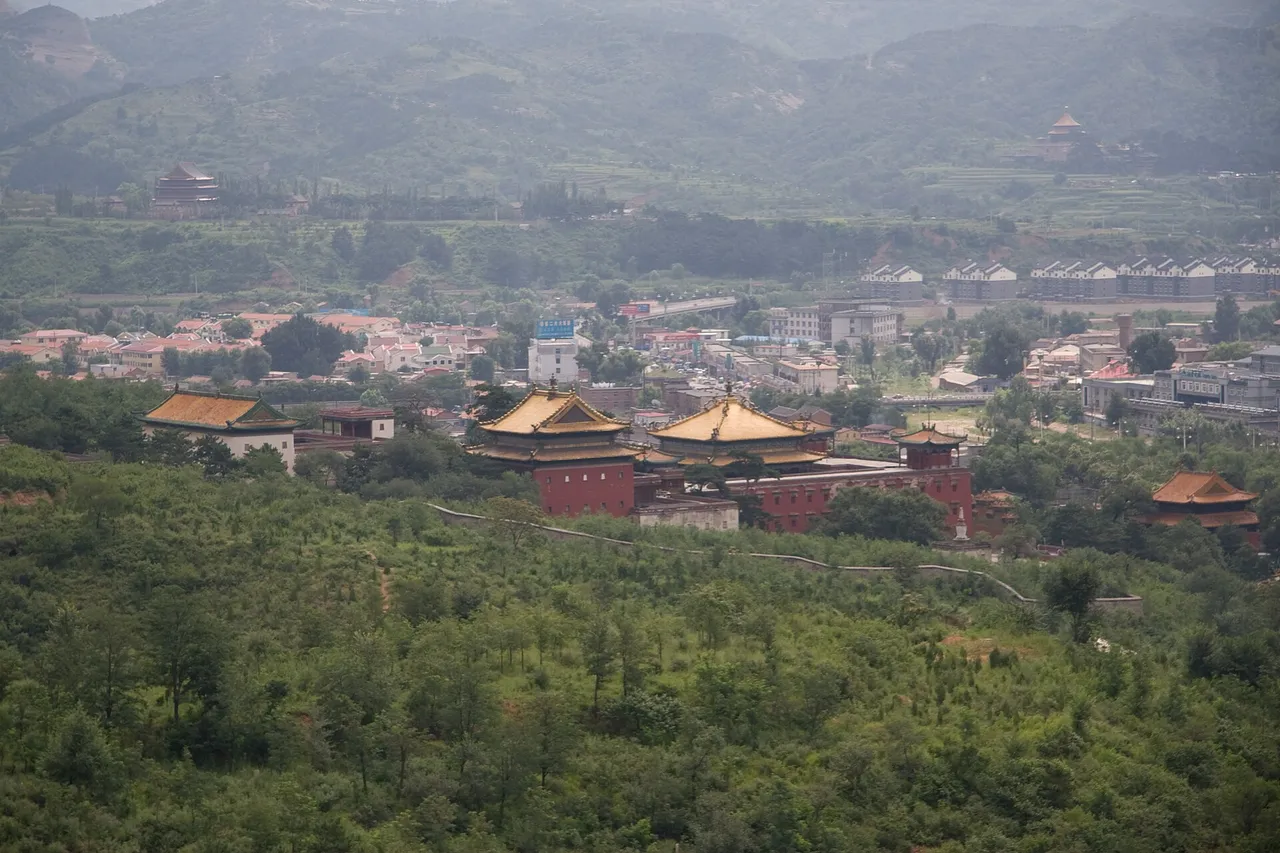
Xumi Fushou Temple is Chengde's most personal imperial monument, built in 1780 so the sixth Panchen Lama could stay and celebrate the Qianlong Emperor's seventieth birthday. Modeled on the Panchen Lama's own Tashilhunpo Monastery in Shigatse, the temple fuses Tibetan red-and-white terraces with Chinese axial courtyards across a steep hillside. Its gold-roofed hall and glazed octagonal pagoda survive intact, making this one of the most atmospheric of Chengde's eight outlying temples. For anyone tracing Qing-dynasty statecraft, this hillside is the most eloquent argument in stone.
No other temple in Chengde was raised for a single living guest. When the Panchen Lama agreed to travel two years overland from Tibet to wish the emperor long life, Qianlong ordered architects to replicate Tashilhunpo's silhouette on a slope east of the Mountain Resort; the name translates roughly as the temple of happiness and longevity at Mount Sumeru. The Great Terrace Hall where the Panchen Lama lectured still shows the marching glazed roof tiles, among the few gold-roofed buildings ever sanctioned outside the capital.
The complex climbs the hillside in three stages: a stone-arched Chinese gate and stele pavilions, then the dramatic red stepped platform housing the main hall, and finally the octagonal seven-story glazed pagoda at the summit, its tiles alternating turquoise and purple. Inscriptions in Chinese, Tibetan, Manchu and Mongolian record the event in four languages, a quiet piece of Qing statecraft. It stands within easy walking distance of other <a href="/attractions/pule-temple/">outlying temples</a>, and sightline purists note that on clear days the ridge points toward <a href="/attractions/qingchui-peak/">Qingchui Peak</a>.
Admission is by individual ticket, historically in the low tens of yuan, and Chengde has at times sold combined tickets covering several outlying temples, which is the better value if you plan two or more; confirm current options at the first ticket office you reach. Opening hours generally run from about 08:00-08:30 to 17:00-17:30 in season, shorter in winter. Interior halls sometimes close for conservation without notice, but the terraces, pagoda and exterior sculpture remain the highlights regardless. An unhurried visit takes about an hour.
The temple sits on the eastern side of Chengde, about 3-4 km from the Mountain Resort walls, ten minutes by taxi from downtown or a half-hour walk if you are already near the Puning area. Buses serving the outlying-temples district stop within a few hundred meters. Most visitors combine it with neighboring <a href="/attractions/pule-temple/">Pule Temple</a> and the smaller shrines along the same road, all comfortably walkable in a morning. The site climbs a hillside in terraces, with stone steps between levels, so allow an hour and wear grippy shoes.
May to June and September to October offer the best combination of clear skies and comfortable temperatures for the exposed terraces; the red platform photographs beautifully in slanted morning light. Midsummer works fine but midday heat on the stone steps is draining, so come early. The temple is busiest midday with tour groups cycling through the outlying-temples circuit, so before 10:00 is markedly quieter. Winter visits are possible and atmospheric under snow, though some halls may be unheated and hours shorten.
Emperor Qianlong built it in 1780 to host the sixth Panchen Lama, who traveled from Tibet to celebrate the emperor's seventieth birthday. It replicates the Panchen Lama's own Tashilhunpo Monastery.
About an hour covers the courtyards, red terraces and summit pagoda. Photography enthusiasts often add twenty minutes on the upper terraces.
Partially: the lower courtyards are accessible, but the red platform and pagoda require climbing steep stone steps. The best views are unfortunately at the top.
Yes, it lies along the same road as several other outlying temples, within short taxi hops or walks. Two or three temples plus the Mountain Resort make a full but comfortable day.
 Full day · 8–10 hours
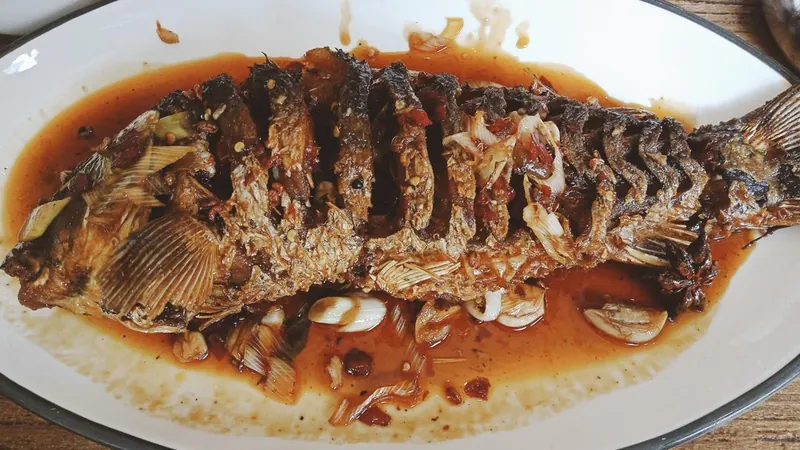
A mountain town that lives on buckwheat, lamb, and one chicken baked inside a ball of yellow clay
View details →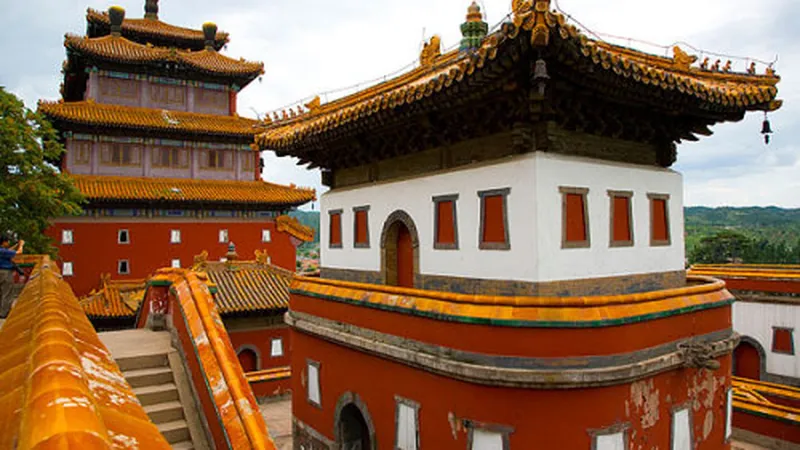 Full day · 8–10 hours
Three Qing imperial projects in one valley: a summer palace, a Tibetan-style temple, and a copy of the Potala
View details →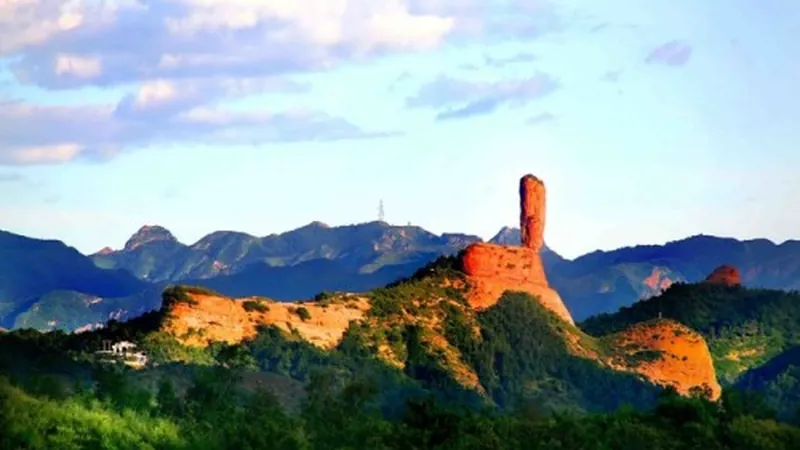 Full day · 8–10 hours
Two stone towers an hour from town, and a forest three and a half hours away that deserves its own day
View details →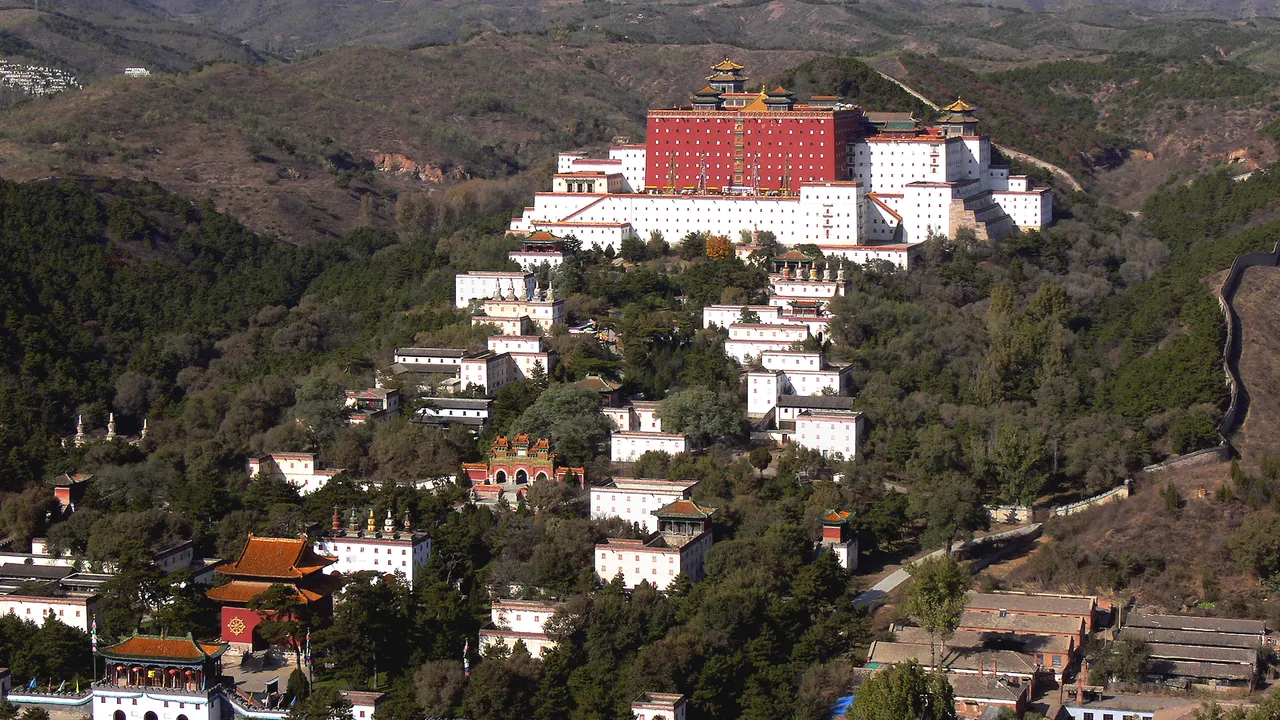 2 days · 1 night · private
A compact first-visit loop of Chengde: the imperial Mountain Resort wi
View details →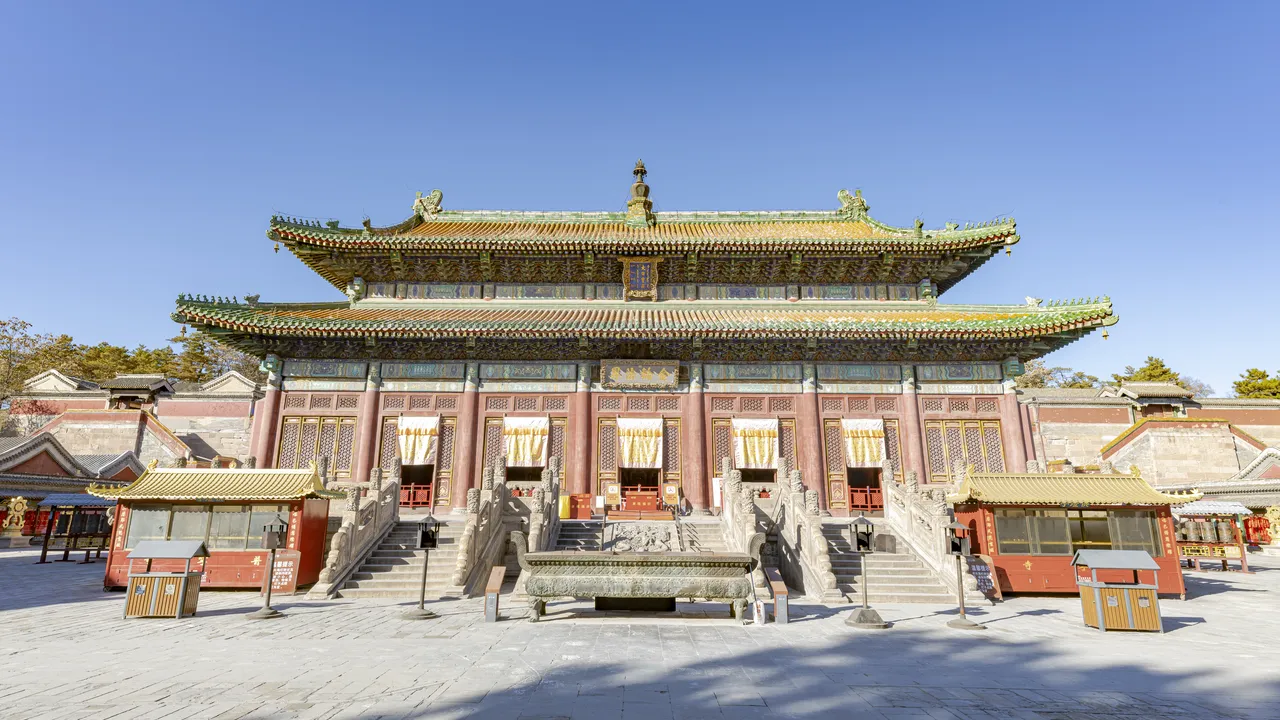 3 days · 2 nights · private
The classic Chengde triangle at an unhurried pace: a full day in the M
View details →We booked a private guide for the Mountain Resort and split it by zone — lakes first, then the mountain road, then the plain. Having someone explain why the emperors built it this way made the walking worth it. The guide also took us to Puning Temple in the afternoon, and the contrast with Putuo Zongcheng Temple the next day was the part I keep telling people about.
Took the kids and my parents, so we kept the Mountain Resort to the lake area in the morning and skipped most of the mountain section. The boat ride kept everyone happy, and my dad got his photo with Qingchui Peak from the viewpoint. Lunch was yutu lotus-leaf chicken — my son picked the lotus leaves apart and ate them, which he now claims was the best part.
Private car & driver, day trips and multi-day routes from Chengde. · Free consultation · reply within 12h