 TripMyChinaJOURNEYS THROUGH REAL CHINA✦ AI Trip✦ Plan My Trip
English
简体中文
繁體中文
日本語
한국어
ไทย
Tiếng Việt
Bahasa Indonesia
Italiano
Español
العربية
Русский
Deutsch
Français
Bahasa Malaysia
TripMyChinaJOURNEYS THROUGH REAL CHINA✦ AI Trip✦ Plan My TripNanchang · Attractions
In the middle of downtown Nanchang, hemmed in by shopping streets, Youmin Temple has been a working Buddhist monastery for some 1,400 years. Founded in the sixth century, it rose to fame as the home temple of Chan master Mazu Daoyi, one of the most influential figures in Zen history, and it remains a genuinely living temple today: worshippers line up with incense, monks chant behind the halls, and the great bronze Buddha presides over a courtyard of pigeons and cigarette-thin incense smoke. Small, free or low-cost, and deeply atmospheric, it is the quietest hour you will spend in the city.
The temple dates to the Southern Dynasties era, and its golden age came in the Tang dynasty when Mazu Daoyi, the Chan master whose teaching shaped Zen as it later spread to Japan, taught here. Successive dynasties rebuilt the complex, and after 20th-century damage it was restored again in recent decades. The present layout is compact: an entrance hall, the Grand Hall with its large Buddha statue, side halls, and courtyards where locals light armfuls of incense and bow toward all four directions.
What makes Youmin Temple special is its lived-in authenticity. This is not a ticketed showpiece but a neighborhood temple where retirees drop in daily, families pray before exams, and festival days such as Lunar New Year bring lines around the block. The scent of incense, the murmur of chanting and the sight of urban worshippers in down jackets kowtowing beside students create one of those unscripted China moments that travelers remember longest. Thirty to sixty minutes suffices, ideally paired with the Bayi Square area and the nearby old-town food streets, and respectful quiet is the only dress code.
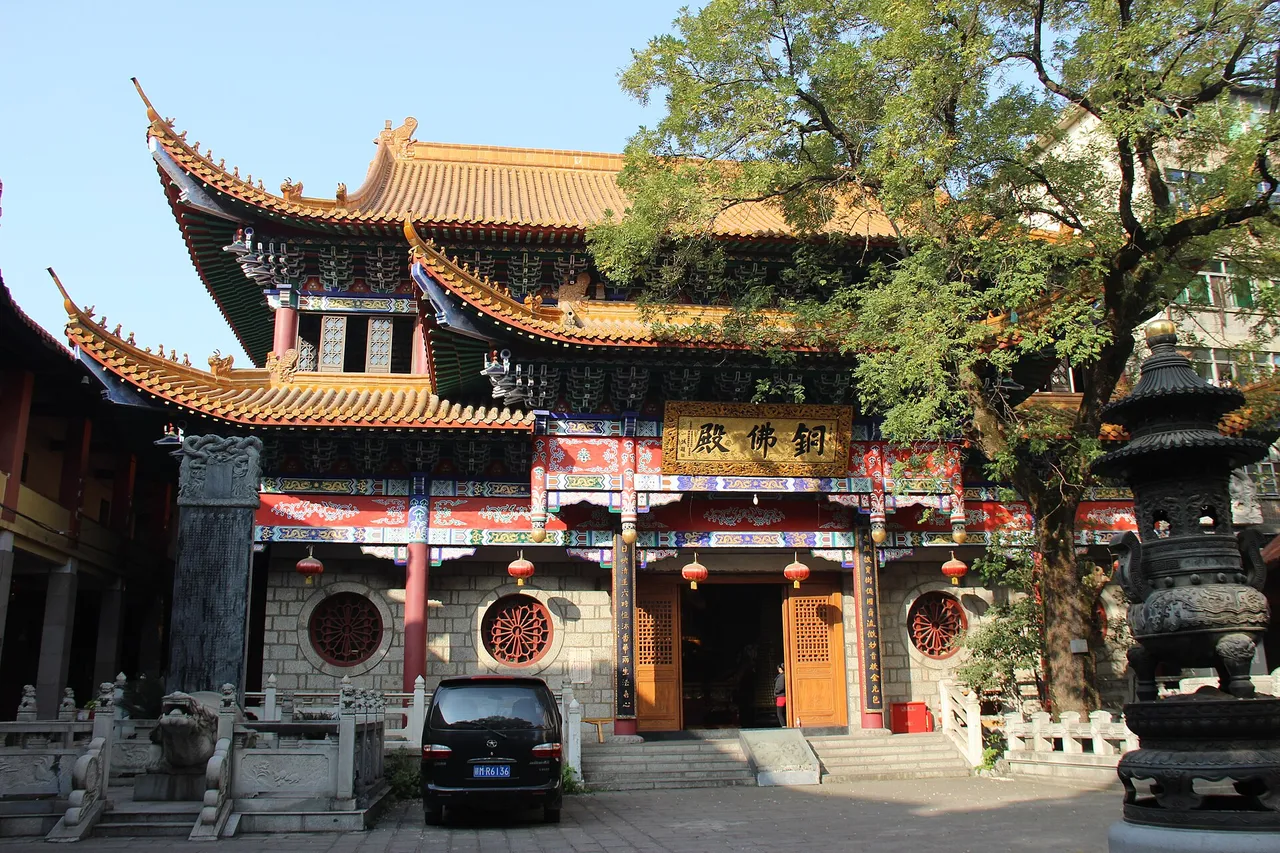
Admission to Youmin Temple is free or charged nominally, with policies that have varied over recent years, so confirm at the gate; incense is often included or available by donation. Opening hours are typically daytime, commonly 8:00 to 17:00, with earlier closing in winter. The temple is active, so visitors should follow temple etiquette: dress modestly covering shoulders and knees, keep voices low in the halls, do not photograph worshippers without permission, and note some halls restrict photography altogether. Weekday mornings are quiet and meditative; the first days of Lunar New Year and major Buddhist festivals draw enormous crowds and traffic controls downtown. Allow 30 to 60 minutes.
Youmin Temple stands on Dijing Lane in the heart of Nanchang's old city center, steps from the shopping streets around Bayi Square and Sun Road pedestrian areas. Nanchang Metro Line 1 and Line 2 both serve the Bayi Square area, from which the temple is a 5 to 10 minute walk, and taxis from the railway stations take about 10 minutes in normal traffic. The visit takes 30 to 60 minutes and slots naturally into a central Nanchang day: the temple in the morning, Bayi Square and the Aug. 1st Uprising monuments nearby, then the Wanshou Palace district or the Pavilion of Prince Teng for the afternoon and evening. The temple is flat and compact, suitable for all visitors.
The temple rewards every season since it is a compact urban site, but the atmosphere peaks at specific moments: weekday mornings when light falls through the incense smoke and the halls are calm, and major festivals, Lunar New Year, Guanyin's birthdays and Buddha's Birthday, when the courtyard fills with worshippers and the energy is electric. Autumn and winter suit it well, the low sun and thin light give the gray-brick walls and bronze Buddha a muted beauty. Avoid midday weekends if you seek quiet, and remember that during big festivals the surrounding streets jam with traffic, so arrive by metro. One quiet hour here before the city's noise is the ideal way to start a Nanchang day.
It was the home temple of Chan master Mazu Daoyi in the Tang dynasty, whose teaching profoundly shaped Zen Buddhism in China and Japan, giving the temple rare stature.
Entry is free or nominally priced depending on current policy; incense is typically included or offered by donation. Bring your passport if registration applies.
Thirty to sixty minutes covers the halls and courtyards. Visitors who sit quietly or time a chanting session may stay longer.
Exterior and courtyard photos are generally fine, but some halls restrict photography, and photographing worshippers without permission is inappropriate. Follow the posted signs.
 Full day · 8–10 hours
The city runs on four-yuan soup and three-yuan noodles, and it is proud of it
View details → Full day · 8–10 hours
A Tang poem, a gunshot that started a war, and the old commercial quarter
View details → Full day · 8–10 hours
Out of the city in 40 minutes, into a forest that stays cool in August
View details → 7 days · 6 nights · private
Wuxia-dream valleys, harvest rooftops and the porcelain capital where
View details → 2 days · 1 night · private
A compact first-visit loop of Nanchang: the rebuilt Tengwang Pavilion
View details →Booked a private guide for one day in Nanchang and it was worth it just for Tengwang Pavilion. My guide read out chunks of Wang Bo's essay at the spots they describe, which I would have totally missed on my own. Also squeezed in the August 1 Uprising Memorial — the 1927 timeline there is laid out clearly enough that I actually followed it.
Took the kids to the August 1 Uprising Memorial and they were more into it than I expected — the old rifles and the dioramas kept them quiet for a solid hour. Wanshou Palace afterwards was a good reward, we let them pick snacks from the stalls. Only gripe: the pavilion stairs were packed on a Saturday, so go early if you have little ones.
Private car & driver, day trips and multi-day routes from Nanchang. · Free consultation · reply within 12h