 TripMyChinaJOURNEYS THROUGH REAL CHINA✦ AI Trip✦ Plan My Trip
English
简体中文
繁體中文
日本語
한국어
ไทย
Tiếng Việt
Bahasa Indonesia
Italiano
Español
العربية
Русский
Deutsch
Français
Bahasa Malaysia
TripMyChinaJOURNEYS THROUGH REAL CHINA✦ AI Trip✦ Plan My TripFuzhou · Attractions
Zhenhai Tower is the ceremonial crown of Fuzhou, a grand multi-storeyed pavilion standing on the crest of Ping Mountain at the northern edge of the old city. First raised in the early Ming dynasty as a watchtower and symbol of the city, it was destroyed and rebuilt several times before its present reconstruction, and today it serves as both a city landmark and a superb viewing platform. From its terraces the whole shape of Fuzhou reveals itself: the grid of old streets, the encircling hills, and the Min River threading south. This guide explains its history, how to reach it, and when the views are best.
The tower was first built in 1371, shortly after the Ming dynasty was founded, at a spot the city's founders judged to be the geomantic head of Fuzhou, with three mountains forming a screen behind and the city laid out below. Named Zhenhai, to quell the sea, it was intended both as a lookout against pirates and as a symbol of protection for a city frequently battered by typhoons. Fire, war and time destroyed successive versions, and the tower long survived mainly in poetry and paintings as the emblem of Fuzhou.
The current structure is a careful modern reconstruction, completed in the 2000s, rising several storeys in painted timber style with sweeping eaves, set inside Ping Mountain Park. Climbing it is as much about the setting as the building: the hill is quiet, wooded and threaded with paths, and the tower's terraces look south over the entire urban basin. Pair it with the older relics scattered on the hillside, then continue downhill toward the city centre, where the historic lanes and the site of the old city wall begin.
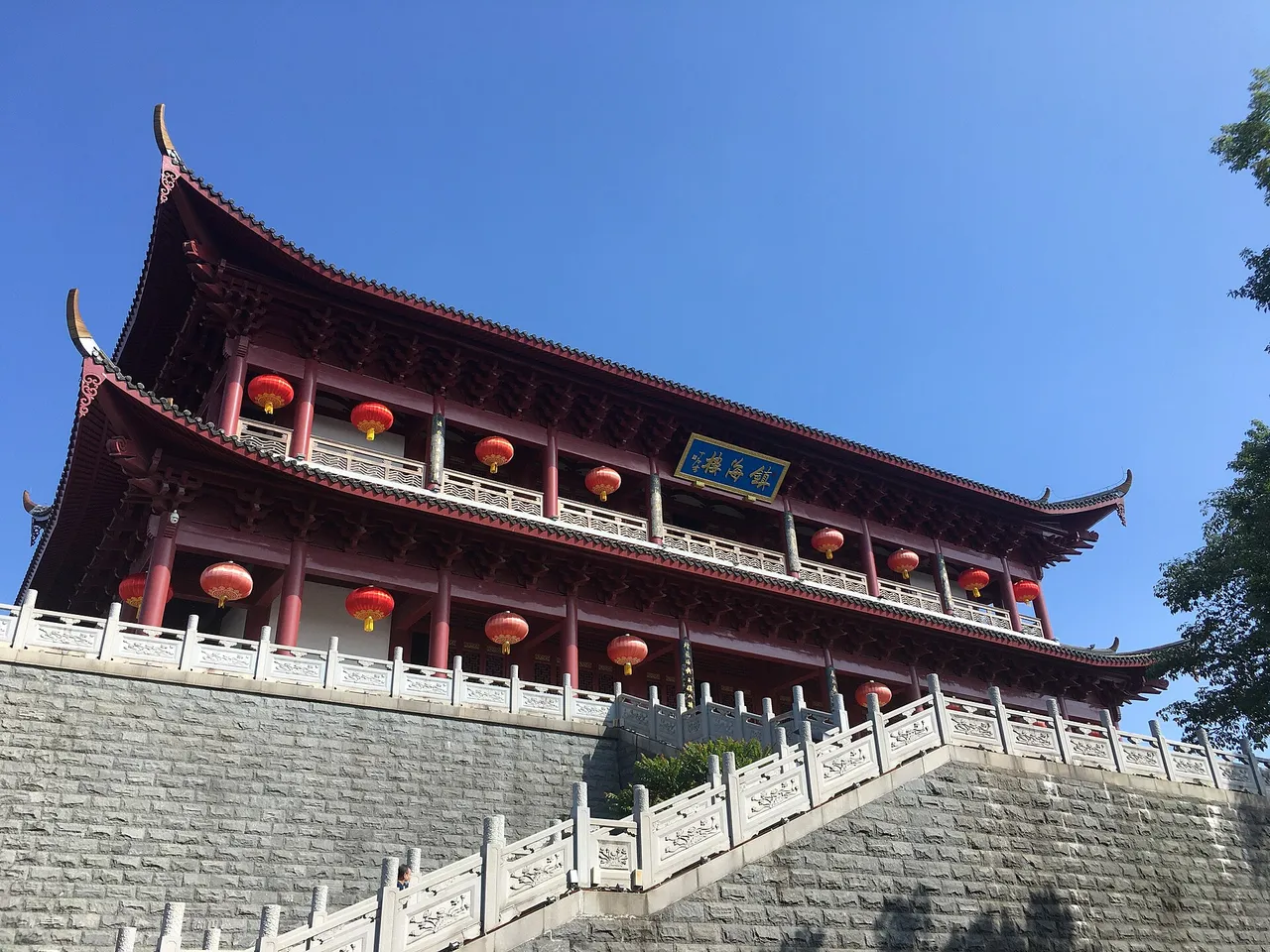
Access to Ping Mountain Park is free, and the hill paths are open from early morning to evening as a public park. The tower precinct itself has historically charged a small admission fee, though fee policies in Fuzhou have changed over the years, so confirm the current arrangement at the park entrance; on some occasions the tower's interior exhibition has been included, on others only the exterior terraces. Opening hours generally run from around 8:30 or 9:00 to 17:00, with last entry before closing, and the terraces close earlier than the park itself. Bring your passport for any ticket purchase, carry small change or mobile payment, and note that rainy or hazy days reduce the views dramatically, so time your visit for clear weather.
Zhenhai Tower stands at the top of Ping Mountain Park in Gulou district, just north of Fuzhou's old city centre, about two kilometres from the Dongjiekou shopping area. City buses stop at the park's foot on Hubin Road, and a taxi or ride-hail from anywhere downtown costs little; the gate to the tower's precinct is then a steady 15 to 25 minute walk uphill on paved, tree-shaded paths. There is no cable car, so come prepared for a short climb. The tower combines naturally with a city-centre day: three lanes and seven alleys, Wushan Hill and the riverside parks are all within a short taxi ride, making an easy loop of Fuzhou's landmarks.
Autumn and early winter, from October to January, bring Fuzhou's clearest air and the sharpest long views from the terraces; late spring is also good before the summer haze builds. Summer mornings work if you climb early, but afternoons often end in showers or haze. Within the day, the golden hour before sunset is the finest time: the low light picks out the painted eaves, and the city below shifts into evening colour, with the tower's lamps coming on as you descend. Weekday afternoons are calm; weekends bring local families to the park paths. Allow about two hours including the uphill walk, longer if you linger over the hillside relics.
It is Fuzhou's historic landmark pavilion on top of Ping Mountain, first built in 1371 as a watchtower and city symbol, destroyed and rebuilt several times, and reconstructed in recent years as a viewing terrace over the whole city.
From the foot of Ping Mountain Park, it is a paved, tree-shaded uphill walk of about 15 to 25 minutes at a relaxed pace. There is no cable car, so allow a short but steady climb.
The park is free, and the tower precinct has sometimes charged a small fee that has varied over the years. Check at the park entrance on the day of your visit for the current arrangement.
Late afternoon before sunset, on a clear autumn or winter day. The low sun lights the tower's eaves and the city below turns to evening colour as the lamps come on.
 Full day · 8–10 hours
Three districts that between them cover 1,200 years of a port city
View details → Full day · 8–10 hours
A thousand steps up, and a hill village that used to be a foreign retreat
View details → Full day · 8–10 hours
Three stops, all flat, none more than 30 minutes apart
View details → 2 days · 1 night · private
Two compact days covering Fuzhou's essentials. Wander Three Lanes and
View details → 3 days · 2 nights · private
Three days covering Fuzhou's full register. Read the scholar lanes of
View details →We booked a private guide for two days and it was worth every cent. He walked us through Sanfang Qixiang, then into the Lin Zexu Memorial Hall, and explained the opium story in a way I actually followed. The Yan Fu house next door was quieter and we had it almost to ourselves.
Took the kids up Gushan on a Saturday, which was maybe a mistake because the path was packed with locals. Still, Yongquan Temple at the top kept them interested, and the view back over Fuzhou was the reward. Bring water and start early.
Private car & driver, day trips and multi-day routes from Fuzhou. · Free consultation · reply within 12h