
The Chishui River has been pulled by three historical lines: the salt merchants' route, the Red Army's crossings, and the factory belts of the third-front build. Walk a stretch of each in one day, add the living craft of bamboo country, and the small city shows a depth far beyond waterfalls and danxia.
The order runs old to new: Bing'an as the salt era's living specimen, the ferry monument where a crossing changed China's fate, bamboo weaving alive in the groves today, and the Chitianhua square carrying the urban grain laid down in the nineteen-sixties. A charter strings the four points, every leg under forty minutes.
Itinerary at a glance
| 09:00 | Bing'an Ancient Town: The Chain Bridge and the Salt-Era Wharf |
| 11:00 | The Red Army Ferry Crossing and Monument: Where the River Was Crossed |
| 14:30 | Chishui Bamboo Sea National Forest Park: Weaving in Bamboo Country |
| 18:00 | Chitianhua Sports Square: Square Evenings of a Third-Front Town |
The route, stop by stop
Bing'an Ancient Town: The Chain Bridge and the Salt-Era Wharf
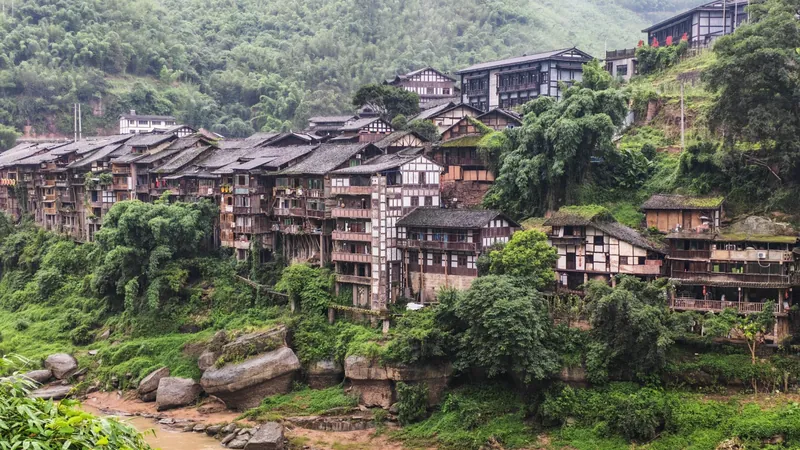
Culture day opens with the crossing. Bing'an's chain bridge spans the Chishui, and the town beyond was a key relay wharf on the Sichuan-to-Guizhou salt route, barges unloading and reloading here while salt houses, eateries and horse inns lined the single main street. Walk the flagstones today and the Ming-Qing stilt houses still hang on cliff braces, a rare fortified merchant settlement.
Bing'an's secret is the word precarious: water on three sides, cliff on one, a position that spared the town fire and war for centuries and rooted every timber post in rock crevices. The street takes an hour, plus twenty minutes at the ferry mouth watching the water, imagining the town's volume when salt barges docked.
The Red Army Ferry Crossing and Monument: Where the River Was Crossed
In January 1935 the Red First Corps crossed the Chishui at Bing'an, opening the four crossings that reshaped the war, and the town's exhibit hall with the monument at the ferry keeps the record. The stone is not tall, but standing before it watching the river you grasp the weight of that choice, pursuers behind, the unknown ahead, the water that had to be crossed.
The hall is small, panels and objects, forty minutes well spent. The ferry steps keep their original pitch, and the stone lip worn bright underfoot turns history from concept into touch.
Chishui Bamboo Sea National Forest Park: Weaving in Bamboo Country
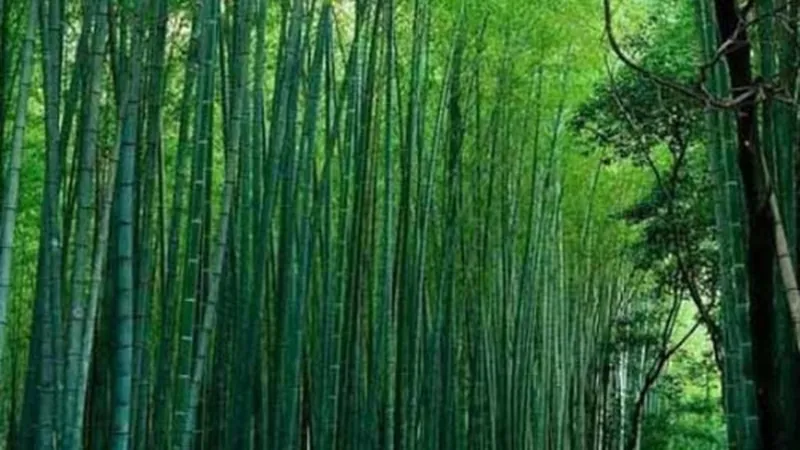
The afternoon enters the bamboo sea for the living strand of the culture line. This moso grove is not scenery alone, the mountain people's beams, baskets, panniers and mats all born here, and the weaving workshops in the park and villages still ply the trade. Watch one culm split into strips and woven into vessels, and the fluency of those hands is the depth of bamboo country's history.
Climb the lookout for the full green waves, the halls and workshop below for the craft, two hours for the pair; a short path through the grove suffices, the deep trails saved for another day.
Chitianhua Sports Square: Square Evenings of a Third-Front Town
Culture closes back in town. The Chitianhua fertilizer works landed in the third-front build of the nineteen-sixties, and for half a century the plant was nearly synonymous with Chishui's modern industry, the sports square the heart of its housing life. By evening the workers and their grandchildren share the same concrete, dancing, at chess, strolling.
The estate blocks around the square keep their Soviet-style red brick outlines, old slogans ghosting on walls. Understand Chitianhua and you understand why Chishui is a factory town, plant first, city after, with waterfalls and bamboo sea discovered by the world only later.
| Getting around |
|
| Budget | Town and bamboo sea tickets total about RMB 100-140 pp, guides and meals extra, the day roughly RMB 180-260. |
| Best time | Any season; the town reads best at dawn and the bamboo sea at mid-afternoon, with extra guide sessions on holidays. |
FAQs
Does this culture line suit children, or will it bore them?
Children's highlights cluster at the chain bridge and the weaving bench: the sway is a natural playground, and weaving a small sieve by hand beats any panel. Tell the hall and monument as story, not syllabus, for the four crossings need no help being gripping. Three hours of driving total, so slot a town morning tea and a grove afternoon snack.
Do the exhibit hall and monument need booking?
The hall opens free with no routine booking, though groups and holiday peaks deserve a call ahead; the monument stands in the public ferry area, open all day. Peak-season park tickets run real-name, and the town ticket buys ahead on official channels to skip the queue.
What does a weaving session cost, and can I keep the piece?
Basic sessions price by the piece, a coaster or small sieve from a few tens of yuan with materials and instruction included, about an hour, the work yours on the spot. Deeper study can be arranged as a half-day course at separate terms. Woven pieces fear crushing, so wrap them in clothing for the journey or have the shop box them.
Which stretch of the day can least be missed?
Ranked by rarity: Bing'an's intactness is scarce even nationally, unmissable; the ferry monument is the history in place, worth the pause; the weaving is memory you carry; the square is the town's grain. If hours shrink, keep the first two, flash-visit the lookout, and catch the square incidentally on your lodging night.