
Harbin's best walking hides off the tourist track: Daowai's Chinese Baroque quarter is the only such ensemble in China, Western carved facades wrapping wholly Chinese courtyards; the old railway bridge turned an industrial relic into a river gallery; and Gogol Street's diagonal grid with its church keeps Nangang's old Russian grain.
Four segments in a day, walking plus metro and bus, about eight kilometers. Nothing demands a checklist; it suits travelers who read architectural detail and street faces, and in winter build in shop-warming breaks between stretches.
Itinerary at a glance
| 09:00 | The Chinese Baroque Quarter: Chinese Courtyards behind Western Facades |
| 11:00 | The Chinese Eastern Railway Bridge: A Century of Steel over the River |
| 14:00 | Gogol Street and Saint Alexius Church: Nangang's Old Russian Quarter |
| 16:30 | Central Street's Side Lanes and the Old Hall Concert: A Musical Finale |
The route, stop by stop
The Chinese Baroque Quarter: Chinese Courtyards behind Western Facades
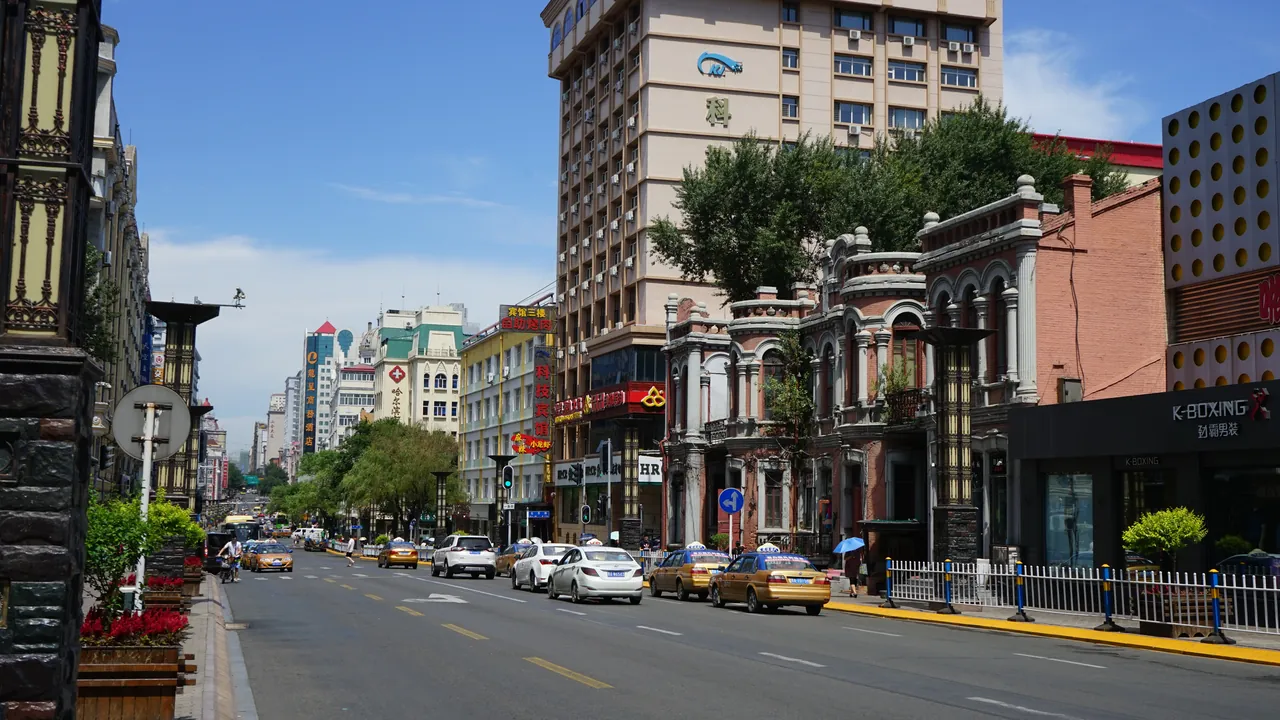
Daowai is the birthplace of Harbin's national commerce, and its architecture earned the name Chinese Baroque: Baroque carved fronts outside, purely Chinese courtyard compounds inside. The restored main street holds cafes and design shops, while one step into side lanes returns life exactly as it was.
Read the quarter by entering courtyards: most admit visitors freely, with carved wooden galleries upstairs and laundry and flowerpots below. Veteran breakfast houses like the bao shop anchor the blocks, ideal for eating while wandering.
The Chinese Eastern Railway Bridge: A Century of Steel over the River
Opened in 1901, this railway bridge now serves walkers, its steel truss and rivets original, with a glass viewing strip in the deck. From mid-span the Songhua shows summer's freighters and tour boats crisscrossing, and winter's pedestrians ant-small on the ice.
The north landing joins the wetland paths toward Sun Island, the south returns to the Daowai bank. A forty-minute round trip, the best vantage of the whole walk, with the bridge's silhouette against sunset a magnet for cameras.
Gogol Street and Saint Alexius Church: Nangang's Old Russian Quarter
The afternoon moves to Nangang. Gogol Street, named for the Russian writer, keeps the district's old spine in eclectic facades and plane trees, with bookshops, Russian craft stores and cafes scattered along. Unlike tourist-soaked Central Street, the local life runs thicker here.
Saint Alexius Church at the street's south end is a brick-and-timber gem, its onion dome and red walls photogenic down the corner perspective. Family bakeries and delicatessens line the ground floors of old blocks nearby, and a cup of kvass travels well.
Central Street's Side Lanes and the Old Hall Concert: A Musical Finale
Return to Central Street by evening, but skip the red-brick main drag and dive into the side lanes, First through Twelfth West Street, where old buildings, courtyards and quiet shops hide. The Old Hall Concert Hall sits among them, a century-old synagogue turned chamber venue with strings and small ensembles nightly.
Harbin styles itself the City of Music, and a concert of this caliber is another way to understand the place. After the performance, walk back for the street's night lights, where the citywalk closes itself.
| Getting around |
|
| Budget | Quarters and bridge are free, concerts RMB 80-150; the day runs about RMB 100-200 pp before meals. |
| Best time | Any season; in winter favor sunlit midday hours, in summer the riverbank sings at dusk. |
FAQs
Is this walking line doable in winter?
Yes, with new tactics: never stay out past forty minutes without an indoor recovery, cafes, malls and bookshops being warming stations. The quarter's courtyards turn special after snow, and cross the rail bridge around midday to dodge the coldest hours. Wear grippy boots throughout.
Is the Chinese Baroque quarter worth the trip, or over-commercialized?
Worth it, for the courtyards rather than the shops: the main street does show restoration gloss, but the side lanes' unbroken daily life is unique to Harbin. Give half your time to side lanes, watching laundry, chess and coal stoves, truer than any exhibit, and commercialization stays far below Central Street's main drag.
How good are the Old Hall concerts, and are tickets easy?
Programs favor local string and chamber ensembles, above-average for a city of this size, and the venue's own acoustics and architecture justify the ticket alone. Weekend shows fill, so buy a day ahead; weekday seats stay loose with door tickets often left. No dress code, just quiet listening.
Is food convenient along the route?
Very, and each stretch has its own flavor: morning pork-rib baozi in the Baroque quarter, classic sweet-sour pork at midday in Daowai or riverside, kvass and bread on Gogol in the afternoon, and any restaurant near Central Street after the concert. Two proper meals plus grazing as mood strikes fits a walking day's appetite.