
Harbin's history needs no museum, for stepping outside is the exhibit: the Chinese Eastern Railway stretched a fishing village of the 1890s into an international city, where Russian exiles, Jewish emigres and settlers from inside the pass each built their own quarter. Three days walk it by community, the Russians' Central Street and churches first, the Chinese merchants' Daowai and the Confucian temple second, Nangang's railway administration and emigre housing third.
Walking, metro and bus chain the quarters tightly. The pleasure is living heritage: these old buildings still serve as churches, shops, concert halls and homes, in use rather than vitrines, which beats any display case for vividness.
Itinerary at a glance
| D1 08:30 | Saint Sophia Cathedral: Where the Heritage Line Starts |
| D1 10:00 | Central Street and Side Lanes: The Russian Quarter's Commercial Legacy |
| D1 14:00 | The Old Synagogue and Tongjiang Street: Another Emigre Trail |
| D1 16:00 | The Old Railway Bridge: Industrial Heritage at Dusk |
| D2 09:00 | The Chinese Baroque Quarter: The Big Lesson of Day Two |
| D2 13:30 | The Confucian Temple and Jile Temple: Two Buildings of Local Faith |
| D2 16:30 | Gogol Street at Dusk: Nangang's Old Russian Grain |
| D3 09:00 | The Museum District: Qiu Lin's Old Building and the Provincial Museum |
| D3 13:30 | Yi Street and Hongjun Street: The Railway Administration's Ensemble |
The route, stop by stop
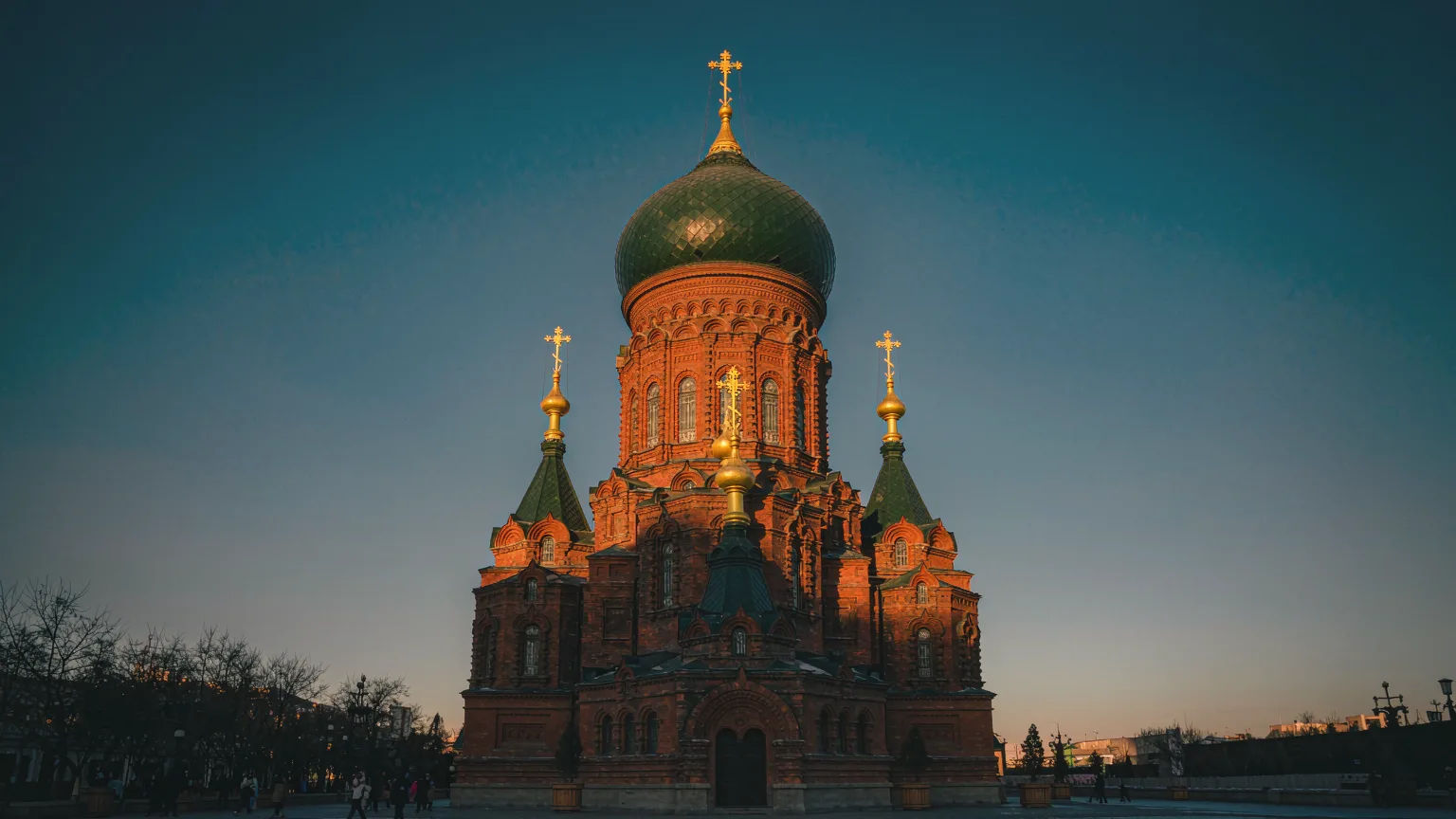
Saint Sophia Cathedral: Where the Heritage Line Starts
Open three days at the city's most famous building. The early square runs emptiest, red brick and onion dome truest in morning light. Inside, the architecture exhibit explains the church's birth alongside the railway, the thread to which the next two days' every sight will attach.
Exit and circle the building, reading brick and arched-window differences across all four elevations. Half past eight to half past nine is the day's best shooting window.
Central Street and Side Lanes: The Russian Quarter's Commercial Legacy
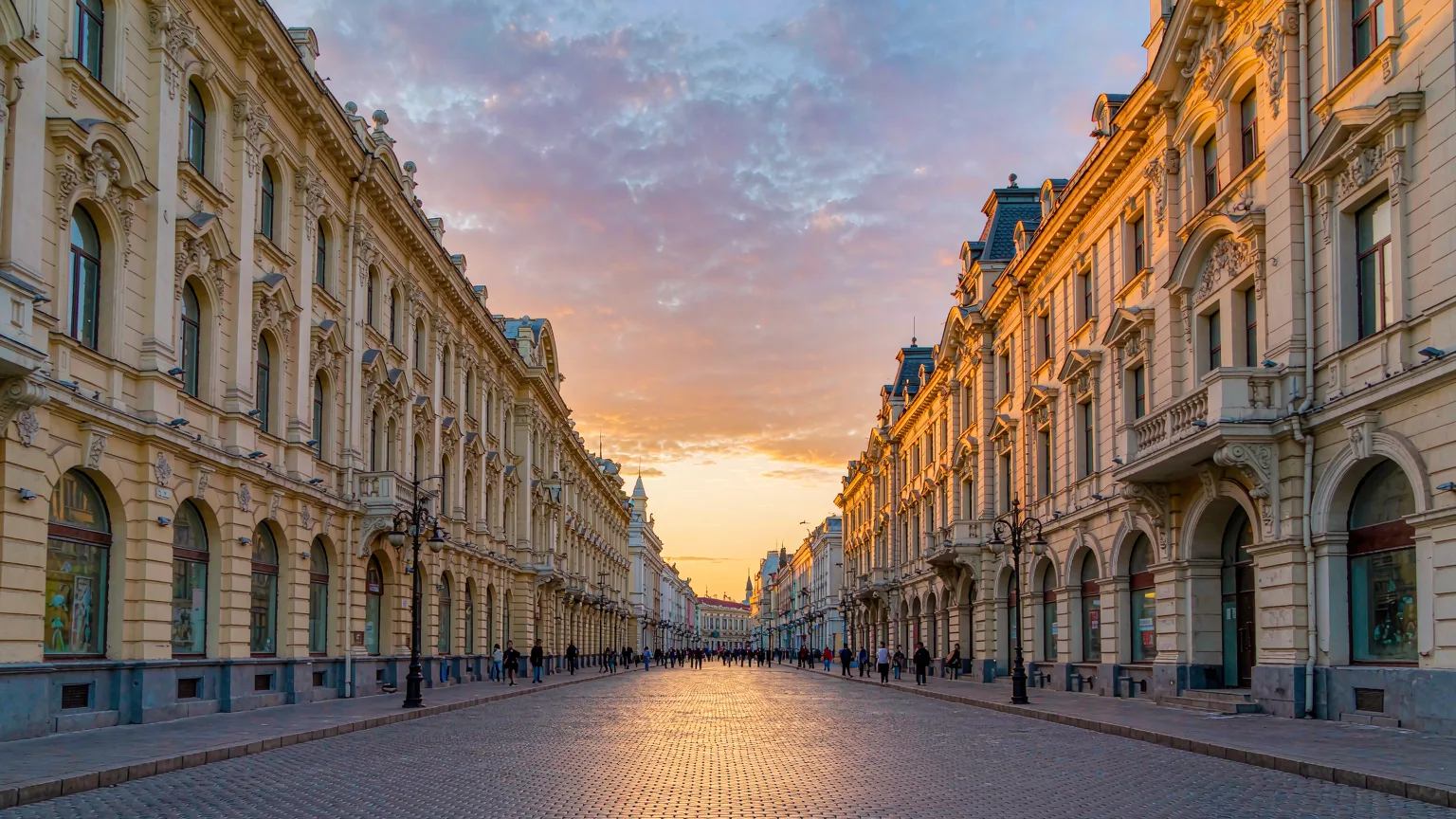
Walk to Central Street from the cathedral and read it as architecture: every doorway carries a plaque dating the building and naming its original trade, banks, trading houses, hotels and newspapers in sequence. The side lanes hold the key extras, the Old Hall concert venue and courtyard buildings beyond the main drag.
Lunch on Russian plates at the street's heritage restaurants, with the afternoon turning west from the Modern hotel's front.
The Old Synagogue and Tongjiang Street: Another Emigre Trail
The afternoon narrows to Harbin's Jewish quarter remains. Tongjiang Street around the Old Hall housed the emigre community, with synagogues, schools and hospital sites lining the blocks. The hall admits visitors to the building itself, and a daytime concert slot makes a natural half-session of strings.
The stop completes the narrative: Harbin was a way station for Jews moving between the Far East and Europe, and this street is their fullest surviving scene.
The Old Railway Bridge: Industrial Heritage at Dusk
Close day one on the old railway bridge, the 1901 steel span that was the city's founding works, its boards explaining how the railway fixed Harbin's very location. Dusk river views against bridge rivets make the industrial heritage's best portrait.
Dinner on the bank after descending ends the day, with the Flood Control Memorial's night lighting a bonus for spare legs.
The Chinese Baroque Quarter: The Big Lesson of Day Two
Day two gives Daowai the whole morning. This quarter anchored Chinese national capital in Harbin, Chinese courtyards under Baroque facades hiding heritage brands, homes and trading-house sites. Side lanes run richest in life before noon, laundry, doorstep chess and steam from bun baskets all part of the fabric.
Read it in layers: facades on the main street, courtyards off it, snacks from heritage pastry houses in hand. Three hours dissolve unnoticed here.
The Confucian Temple and Jile Temple: Two Buildings of Local Faith
The afternoon takes Harbin's Chinese sacred architecture. The Confucian temple ranks among the best-preserved in the Northeast, rigorous in plan and shaded by old trees, a sharp contrast to the European city; neighboring Jile Temple, a famed Northeast monastery, keeps its incense burning today.
The two lie a walk apart, two hours combined. Eyes sated on churches recalibrate here, which is precisely Harbin's double nature.
Gogol Street at Dusk: Nangang's Old Russian Grain
By dusk return to Nangang and walk Gogol Street south to north. Once the Russian quarter's administrative and living axis, it strings churches, schools and apartment blocks, with slanting dusk light raising the stucco ornament in relief. Corner bookshops and cafes suit a closing rest.
Dine at old-family kitchens in the residential blocks nearby, home-style Northeast plates pricing well below scenic areas.
The Museum District: Qiu Lin's Old Building and the Provincial Museum
Day three's morning stays in the museum district. The Heilongjiang Provincial Museum is itself an artifact, housed in the former Moscow Trading Company building, its collections centered on Northeastern nature and history; neighboring stands Qiu Lin's old building, a century of commercial heritage whose food hall restocks souvenirs in passing.
Five minutes apart, the two fill a two-hour morning neatly. If buildings outweigh collections for you, spend the emphasis on the museum's own historic spaces.
Yi Street and Hongjun Street: The Railway Administration's Ensemble
The finale wraps around the rail station on Hongjun and Yi streets, where the Chinese Eastern Railway administration era's key public buildings cluster, the old railway headquarters, consulate sites and senior-staff housing, with Art Nouveau detailing rare in China.
Walk Hongjun Street to Harbin Station and the three-day line closes its loop, begun with railway-borne churches and shops, ended with the railway's own administrative architecture. The last look before boarding goes to the century-old landmarks fronting the square.
| Getting around |
|
| Budget | Tickets total RMB 200-300 pp with most quarters free and churches cheap; transport and meals extra. |
| Best time | Any season; winter dresses churches and streets in snow for the best frames, summer tucks the old buildings into green. |
FAQs
Does this route work without architectural knowledge?
Entirely: plaques and interpretive boards write every building's story plainly, and the sequence of silhouette, then window detail, then plaque gives outsiders real pleasure. To go deeper, hire guides or audio at Central Street and the Old Hall, threading the whole three-day architectural line.
How do I survive the cold outdoors in winter?
Break each quarter into beats of twenty minutes out, ten in: step into cafes and malls between street runs. Churches, concert halls and museums are natural warming stations, and indoor points already claim four of every ten stops. Ten to three is the prime outdoor window, saving mornings and evenings for indoors.
Do the Confucian temple and Jile Temple need booking?
Usually not, with door tickets or free entry except holiday peaks. The Confucian temple doubles as a museum with likely Monday closures, and Jile fills with worshippers on lunar firsts and fifteenths, so avoid those for quiet. One hour each suffices, focus on plan and courtyards.
How do I choose between this and the three nature days?
Season and taste decide: heritage loses least in winter since buildings ignore weather, while the nature line dazzles but caps outdoor hours; summer favors both, nature slightly ahead. First-time visitors should take heritage, the true answer to this city's identity, and save nature for a return.