
Seven days read the city through, then walk the wild: three days by community, the Russians' Central Street and church cluster, the Chinese merchants' Daowai, administrative Nangang; day four across the river for ice and tigers, day five Yabuli, day six Volga Manor, day seven closing on springs and Zhaolin lanterns. Winter fills every ice slot while summer swaps wetlands and indoor halls, skeleton intact.
The rhythm runs three-moderate, one-peak, one-summit, two-easing: city days at medium effort, the north bank the outdoor peak, Yabuli the physical summit, then a graded landing. Base at Central Street, the best springboard for lanterns, trains and old streets alike.
Itinerary at a glance
| D1 08:30 | Saint Sophia Cathedral: Where Seven Days Begin |
| D1 10:00 | Central Street and Side Lanes: A Morning of Reading Buildings |
| D1 14:00 | The Old Hall Concert Hall: The Jewish Emigre Remains |
| D1 17:00 | The Old Railway Bridge: Day One Closes on the River |
| D2 09:00 | The Chinese Baroque Quarter: Merchant Harbin |
| D2 14:00 | The Confucian Temple and Jile Temple: Chinese Faith in a European City |
| D3 09:00 | Gogol Street and Saint Alexius Church: Nangang's Old Russian Axis |
| D3 11:30 | The Provincial Museum and Qiu Lin's Old Building: A Museum-District Meal |
| D3 15:00 | Hongjun Street and Yi Street: The Railway Administration Ensemble |
| D4 09:00 | Sun Island: Opening the Outdoor Peak Day |
| D4 13:30 | Siberian Tiger Park: Kings of Beasts in the Snow |
| D4 16:30 | Ice and Snow World or the Polar Land: The Seasonal Fork |
| D5 08:00 | Yabuli Ski Resort: The Physical Summit Day |
| D6 09:30 | Volga Manor: A Russian Day in the Country |
| D7 10:00 | Zhaolin Lanterns and the Springs: Closing under the Lights |
The route, stop by stop
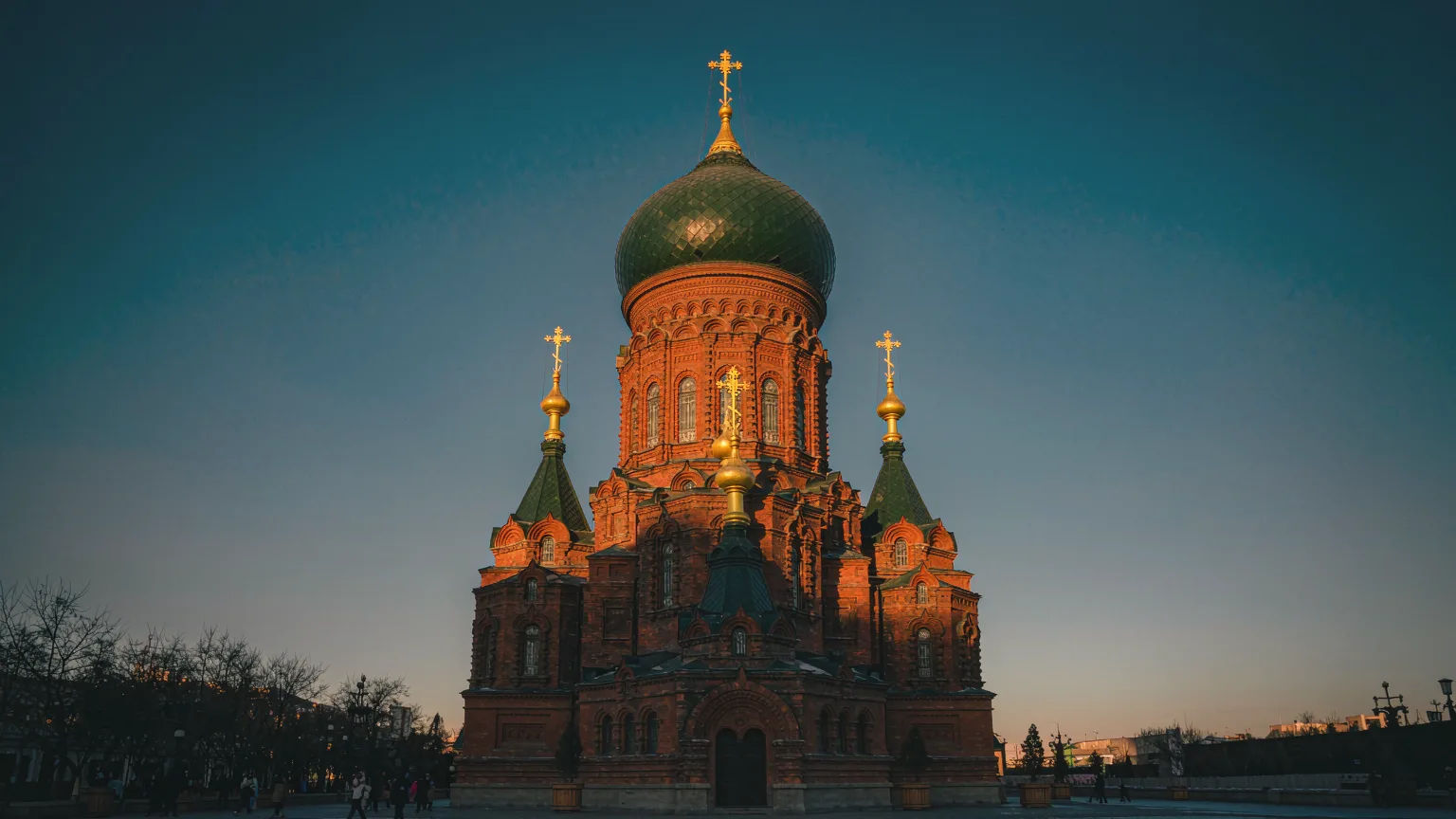
Saint Sophia Cathedral: Where Seven Days Begin
Deep reading starts at the cover. The early square sits near empty, red brick at its truest color. Inside, the architecture exhibit lays down the timeline of railway, consulates and emigre building, the index to which the next six days will refer.
Circle the building comparing four elevations, then spend twenty minutes on the square reading pigeons against the dome. Morning holds the day's best light on the church.
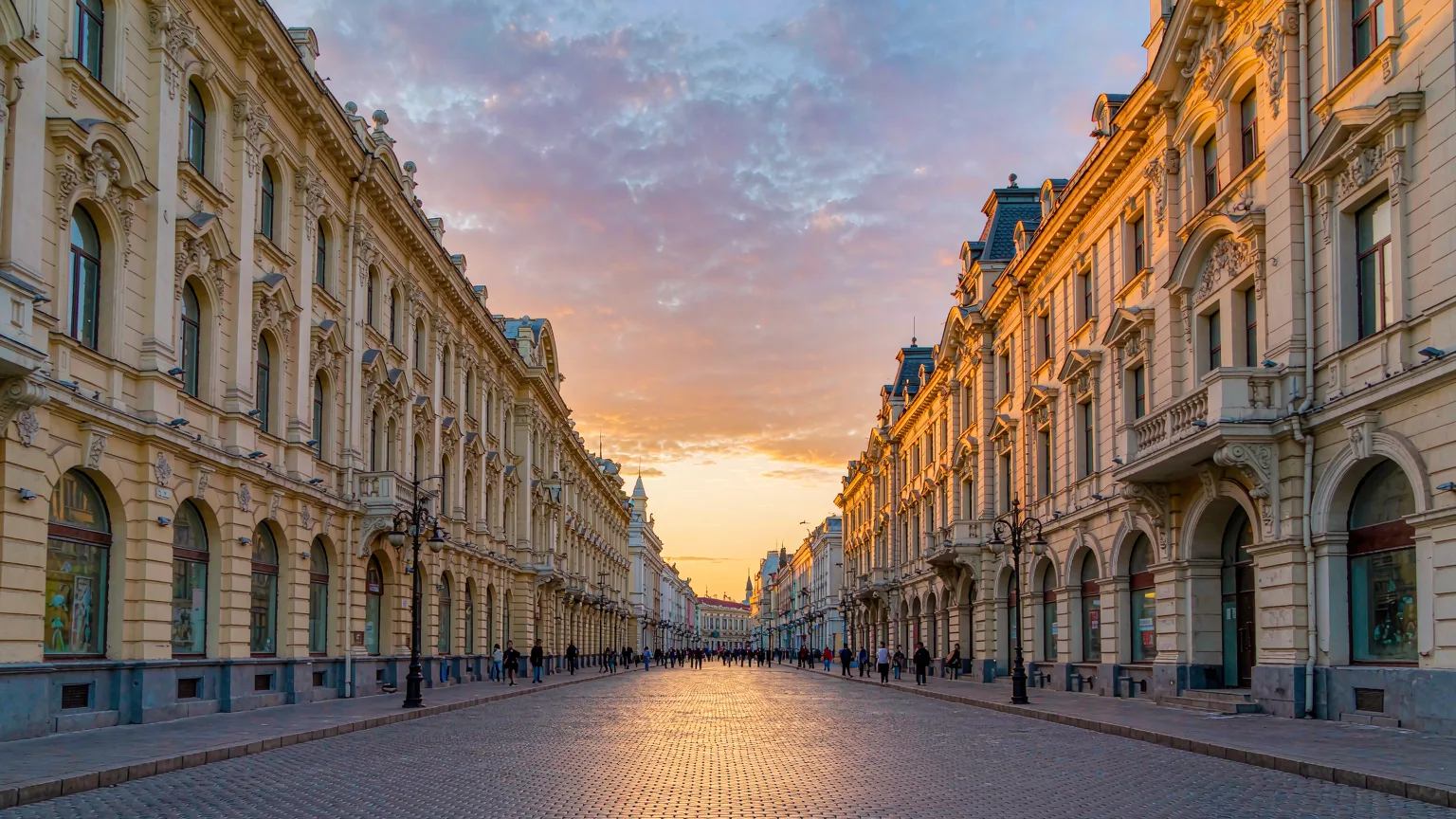
Central Street and Side Lanes: A Morning of Reading Buildings
Walk Central Street as a reader: plaques date every building and name its original trade, banks, trading houses and hotels each speaking through their details. Off the main drag, the courtyard buildings and quiet shops around West First Street give the depth the promenade lacks.
Lunch on Russian plates at a heritage house. The popsicle and bread-counter ritual is non-negotiable, eating ice cream at minus twenty being this city's entrance exam.
The Old Hall Concert Hall: The Jewish Emigre Remains
The afternoon turns to the Jewish quarter remains around Tongjiang Street, synagogue, school and hospital sites lining the blocks. The Old Hall keeps its dome and stained glass, visitable by day and playing strings by night, worth a dedicated evening within seven days.
The stop completes the immigration story: beyond the Russians, the Jewish emigre footprint in Harbin runs deep, and this street is its fullest surviving scene.
The Old Railway Bridge: Day One Closes on the River
Take the railway bridge at dusk, the 1901 steel span that started the city, its boards explaining how the railway chose Harbin's very ground. First sight of the river belongs here, freighters and the far island sinking into twilight.
Dine riverside after descending. Three stops in, cathedral, old street, bridge, the question of where Harbin came from is half answered.
The Chinese Baroque Quarter: Merchant Harbin
Day two gives Daowai the whole morning. Chinese courtyards under Baroque facades anchored national capital; read facades on the main street, courtyards off it, with the bao house and heritage pastry shops as supply stops. Before noon the life density peaks, steamers, chess and laundry all exhibits.
The deep-reading homework is comparison: Central Street and Daowai of the same era speak entirely different architectural languages of commerce, and the pair read together triples what either yields alone.
The Confucian Temple and Jile Temple: Chinese Faith in a European City
The afternoon takes Chinese sacred architecture: the Confucian temple, rigorous and tree-shaded, among the Northeast's best preserved, with neighboring Jile's incense still burning. Set against the churches, Harbin's double character gains its physical form here.
The pair chains on foot in two hours. On lunar firsts and fifteenths, Jile's worshipper crowds are folk spectacle in themselves.
Gogol Street and Saint Alexius Church: Nangang's Old Russian Axis
Day three moves to Nangang. Gogol Street once served as the Russian quarter's administrative axis, churches, schools and apartments strung along a diagonal grid that preserves century-old urban design. Early streets run quiet, stucco ornament most sculptural in slanted light.
Saint Alexius at the south end is a brick-and-timber gem, the corner perspective a classic camera position. Bookshops and cafes pace the walk.
The Provincial Museum and Qiu Lin's Old Building: A Museum-District Meal
Around midday reach the museum district. The provincial museum's building is itself an exhibit, the former Moscow Trading Company premises, with collections on Heilongjiang's nature and history supplying background for the north-bank and forest days ahead.
The food hall in Qiu Lin's old building next door doubles as the post-lunch supply stop: sausage, big bread and kvass, the itinerary's best-placed souvenir purchase.
Hongjun Street and Yi Street: The Railway Administration Ensemble
The afternoon closes around the rail station: the railway administration era's public buildings cluster here, the old headquarters, consulate sites and senior-staff housing, with Art Nouveau detailing rare in China. Walking Hongjun Street to Harbin Station seals three days of urban reading.
Keep the pre-boarding dusk for yourself: the square and neighboring lanes earn twenty extra minutes of shooting light.
Sun Island: Opening the Outdoor Peak Day
Day four is the trip's outdoor peak, starting on Sun Island. Summer offers wetland gardens and cycle paths, while winter snow-expo sculptures show richest detail in morning light. Metro line 2 runs direct, park trams as needed.
Three hours on the island with batched outdoor stints and warming-hut breaks, then lunch on the bank or island as the afternoon unfolds north of the river.
Siberian Tiger Park: Kings of Beasts in the Snow
The afternoon tiger park is the trip's most singular wildlife scene: Siberian tigers roam a large enclosure as the caged truck threads through, their coats blazing brightest against winter snow. The walking zone holds cubs and exhibits, two hours overall.
No feeding or open windows in the drive zone, no flash in photos, and families may stretch the walking-zone time.
Ice and Snow World or the Polar Land: The Seasonal Fork
The evening forks: from late December into February enter Ice and Snow World for daylight and lit versions in one visit; other seasons take the Polar Land for belugas and penguins, warm indoors and the right buffer after the outdoor peak.
Both venues sit on metro line 2 with an easy dinner return; in winter, taxis vanish at the ice-park exit, so walk to the station.
Yabuli Ski Resort: The Physical Summit Day
Day five is the high-speed-rail round trip to Yabuli, about ninety minutes each way. Skiers progress from beginner runs, booking coaching by the hour; non-skiers ride the gondola into the snowy forest sea, the summit cafe's view justifying the fare.
The summer cut swaps forest hiking and mountain biking on the same transport plan. Back in Harbin, a stew dinner repays the day's burn.
Volga Manor: A Russian Day in the Country
Day six slows for Volga Manor: the Saint Nicholas replica, a Pavlov castle and Russian log houses spread along the Ash River, boats on summer channels, golden domes on winter snowfields. Three hours minimum inside, with Russian lunch on the grounds.
This is the week's only day of hurrying nothing, photography, strolling and idling all legitimate. The return can add a spring stop or head straight back.
Zhaolin Lanterns and the Springs: Closing under the Lights
The last day splits in halves: springs in the morning (Maple Town or Dadingzi), handing six days' fatigue to hot water, then Zhaolin Park by evening, whose winter ice lantern fair is the city's veteran stage, modest in scale and deepest in history.
The off-season finale swaps in Central Street's night lights and an Old Hall concert. Either way, the last night should close on a hot meal.
| Getting around |
|
| Budget | Seven days of tickets and activities total RMB 1200-1900 pp (ice and skiing the main winter variable), with long-haul transport and lodging extra. |
| Best time | December to February for the full ice program, June to August for wetland greens, with late November and March the quiet shoulders of ski season. |
FAQs
What if the seven-day line overlaps the three- and five-day versions?
The seven-day line is a superset: the city expands from two days to three (adding the Nangang day) and the wild from two to three (splitting the north bank, keeping Yabuli). Alumni of shorter cuts should resume at unfamiliar days rather than restart, the Nangang and Volga days adding the most.
What is the booking and ticketing list for seven days?
One to two weeks ahead: ice world tickets (winter), Yabuli rail and lift tickets, Old Hall concerts, springs. Same day or day before: cathedral and museum buy at the door, as do the tiger park and manor. New Year and Spring Festival slots at the ice world vanish first, so lock them once dates firm up.
How should rest be scheduled across seven days of effort?
The effort curve runs medium, medium, medium, high, summit, low, low: the first three days hover near twelve thousand steps with seats always near, day four carries the longest exposure, day five tires most, days six and seven deliberately empty. One seated proper lunch daily and hotel by ten pm, and nobody falls off the pace.
Which season rewards seven days most?
Winter is the answer, since Harbin is a city that exists only in winter, the ice world, snow expo, lanterns and snowfield tigers all exclusive, and seven days completes the full winter program. Summer wins on comfort and price for slower architectural and natural reading. The connoisseur's slot is late November or early March, thin crowds, surviving snow, falling room rates.