
Seven days in Kunming run on one slow, two fast: slow the old-city days into markets, cafes and lakeshores until the local rhythm holds; give the two far points, Stone Forest and Red Land, one full day each, in fast and out fast; then slow back through Dianchi, the hills and the temples. Three slow, two fast, two medium.
No hotel changes all week, Green Lake or the old quarter, with the Red Land pair sleeping at Huashitou. Ten to fifteen thousand steps daily, strength spread evenly, with legs still left for the hill climb on day seven.
Itinerary at a glance
| 09:00 | Green Lake Park: Day One Sets the Coordinates |
| 11:00 | Yunnan Military Academy: Modern History in Yellow |
| 14:30 | Kunming Old Street (Qianwang Street): Old Houses, New Shops |
| 09:30 | Yunnan Provincial Museum: Day Two Reads the Record |
| 14:00 | Guandu Ancient Town: The Field Lesson After the Galleries |
| 08:00 | The Stone Forest: Day Three's Geological Expedition |
| 09:00 | Haigeng Dam: Day Four Returns to the Water |
| 13:00 | Western Hills Dragon Gate: A Shrine on the Cliff |
| 16:00 | Yunnan Nationalities Village: The Villages, Second Half |
| 13:00 | Luoxia Gully: Day Five Turns Red |
| 07:00 | Damakan: Sunrise and the Road Back |
| 19:30 | Dounan Flower Market: The Eight-O'Clock Flower Tide |
| 09:00 | Golden Temple (Jindian): Day Seven Runs Bronze |
| 14:00 | Qiongzhu Temple and Daguan Pavilion: Five Hundred Arhats, One Couplet |
The route, stop by stop
Green Lake Park: Day One Sets the Coordinates
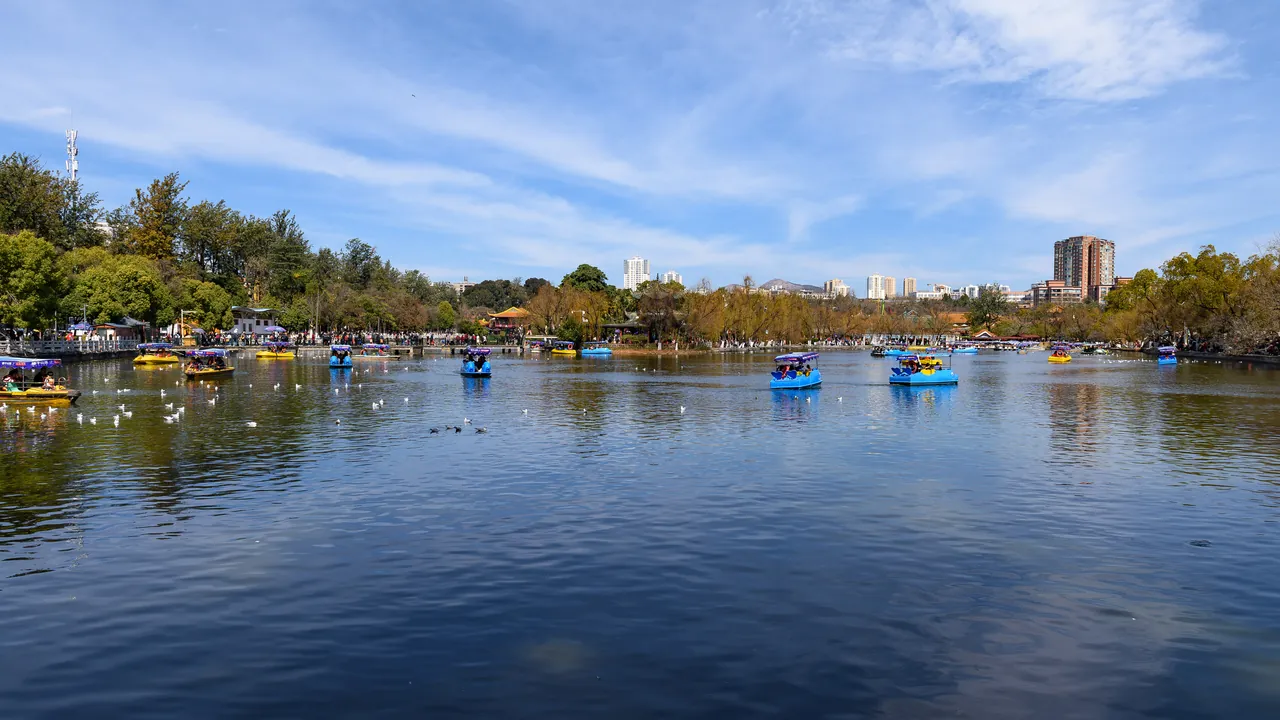
Seven days open at Green Lake, the jade in the city's parlor: gull season blankets the water, off-season the lotus and willows carry it. A fifty-minute loop, then a short return walk each evening, the lake anchoring the whole week.
No sprints today; the task is the city's coordinate system, where the lake sits, the old streets, Nanping. Twenty minutes on a bench watching locals box, play chess and walk their birds, the Spring City's clock starts calibrating here.
Yunnan Military Academy: Modern History in Yellow
By late morning, the academy: bright-yellow corridors ringing the drill court, Zhu De and Ye Jianying among its graduates. Two floors from late-Qing drilling to the resistance, ninety minutes, and standing mid-court beneath the closing ring of eaves is mandatory.
The exit faces the lake's west gate, finishing the morning's shore. Day one reads the old city in lake-and-building stereo, and after lunch take a hotel nap, leaving white space in a week's first day.
Kunming Old Street (Qianwang Street): Old Houses, New Shops
The afternoon walks Qianwang and Wenming streets, the Qing banking grid now housing cafes, silver dealers and bookshops, Ma Family Courtyard's double-eaved compound deep in the lanes, its woodcarving and screen walls rewarding piece-by-piece looking.
Dinner sits in a Nanqiang courtyard, small-pot noodles and griddled tofu arriving as the lanterns come on. End the day on the old city's lights, drafting the week's dinner map across the quarter in passing.
Yunnan Provincial Museum: Day Two Reads the Record
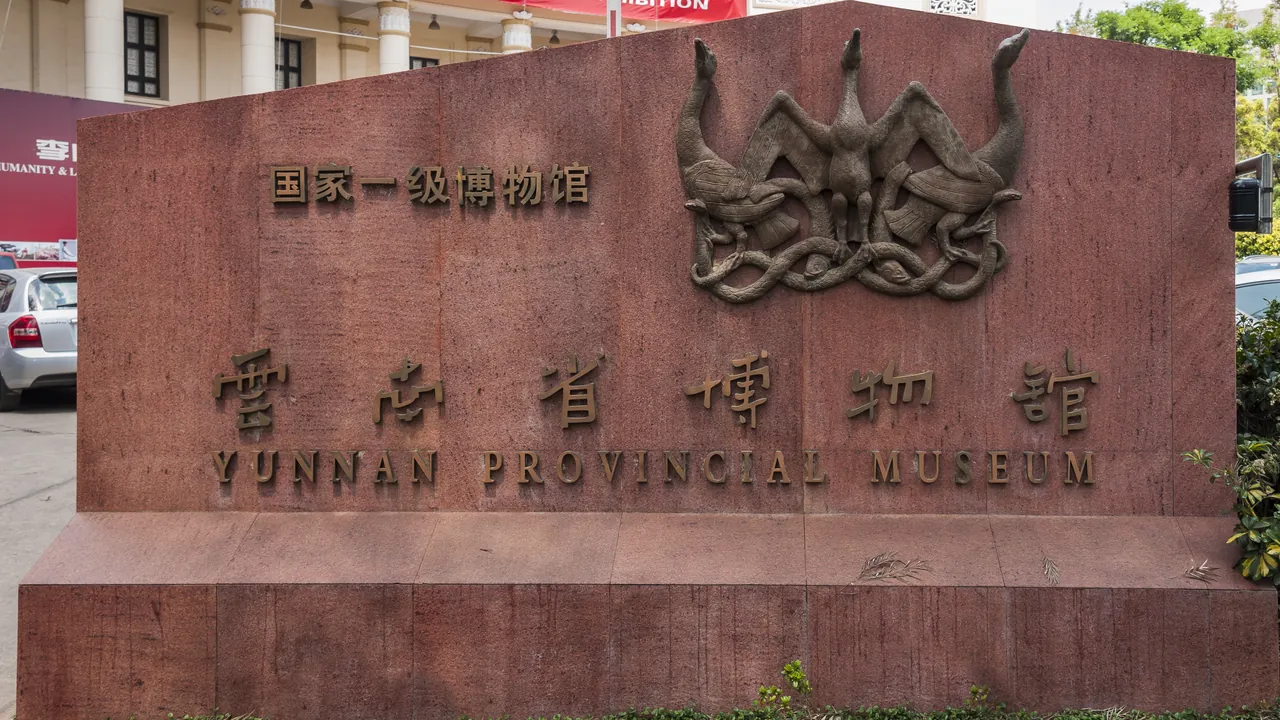
Day two's morning goes whole to the museum. The Dian bronzes stand alone nationally: the ox-and-tiger case, cowrie containers and bronze drums archive a two-thousand-year-old society. Four hours complete the permanent line; pressed, hold to bronze and ethnic halls.
Hire the guide, since bronze iconography without one is decoration. This stop drafts the history behind every later stop: Guandu's pagoda, the hill shrines, the old banking street all find their annotations here.
Guandu Ancient Town: The Field Lesson After the Galleries
A twenty-minute taxi from the museum reaches Guandu, the Miaozhan diamond pagoda mid-street, temples, pavilions and shrines along the flagstones. The morning's vitrine history gets cross-checked this afternoon in a living quarter.
Incense burns for locals, schoolkids spill into lanes, and the baba ovens peak after two. History here is kept by living it, Guandu's finest answer to a museum morning.
The Stone Forest: Day Three's Geological Expedition
Day three leaves early for the Stone Forest, carbonate seabed from 270 million years ago grown into a forest of pinnacles. The greater forest's sword columns crowd like trees, Wangfeng Pavilion explains the metaphor, and the lesser forest's Ashima pinnacle settles the Yi legend.
Three hours on foot through the core, mind head and feet in the passages and slick rock after rain. Lunch in the park, Naigu's black stone and meadows as an afternoon add-on with legs to spare, back in Kunming by night.
Haigeng Dam: Day Four Returns to the Water
Day four slows, the morning at Haigeng Dam, two kilometers facing the Sleeping Beauty ridge, gull flocks overhead in season, layered water views off-season, walking through into Haigeng Park's camphor shade and handing yesterday's expedition fatigue to the lake wind.
Give the dam an hour, waiting on wind, cloud and gull. Midweek, this day is the week's breathing hole; the afternoon's hill and village both start from the dam side, a zero-waste line.
Western Hills Dragon Gate: A Shrine on the Cliff
After lunch, the cableway climbs to the Dragon Gate, Qing masons' Taoist grottoes in the cliff, ledges one person wide, the terrace before Datian Pavilion spilling the whole lake below, Kunming's grandest viewpoint.
Descend past the Mercy-Cloud grotto to the mid-hill tea room for Dianhong. Looking back from the cliff across four days of lake, museum and town, the week's whole geography snaps into place.
Yunnan Nationalities Village: The Villages, Second Half
From the hill, west along the shore to the village, Dai bamboo houses, Bai courtyards and Yi flat-roofed homes at true scale, shows timed across the grounds. Three or four villages carry the essence in two and a half hours.
This stop is the week's practicum in ethnography: the narratives read at the academy and museum turn walkable in the buildings and dances. Out by evening, day four closes on its lake, hill and village trio.
Luoxia Gully: Day Five Turns Red
Day five leaves town entirely, three hours by road to the Dongchuan Red Land, first stop Luoxia Gully after lunch. Red ravines cradle an oasis of fields, village and trees at the color-field's center, afternoon side light pressing out the land's texture.
The thousand-year tree and Jinxiyuan fields follow, contrast at its fiercest at dusk. The Red Land runs on waiting for light, so sleeping at Huashitou takes both sunrise and sunset, while a day return forfeits them.
Damakan: Sunrise and the Road Back
Day six leaves in the dark for Damakan, mist and ridges all silhouette before the light, then half an hour after sunrise the glow climbs from the valley floor lighting the color blocks one by one, the Red Land's closing image worth the early alarm.
Breakfast follows, with Qicai and Yuepu taking the morning light, lunch at Huashitou, then the road back. In Kunming by evening, head straight to Dounan Flower Market, trading the land's earth tones for the market's petals.
Dounan Flower Market: The Eight-O'Clock Flower Tide
Ride metro line 1 to Dounan by evening. Wholesale owns the day, the night market opens to walk-ins after eight, roses by the bunch and by the catty, an armful for twenty yuan. Buy in the retail rows, watch the spectacle in the auction halls.
From the Red Land's reds to the market's pinks and purples, day six turns its palette over within hours. Newspaper wrap and damp stems hold blooms two days; where flying fails, dried and preserved flowers carry on.
Golden Temple (Jindian): Day Seven Runs Bronze
Day seven climbs Mingfeng Hill north of town. The Golden Temple is cast entire in bronze, gleaming in sunlight, among China's largest bronze structures, Wu Sangui's rebuild adding romance, with the bell tower and relic displays along the way.
The camphor woods run quiet and morning slant light into the bronze hall shoots best. The week's only real stair climb, so spend the last legs here, then a farewell lunch of mushroom hotpot or steam-pot chicken at the bottom.
Qiongzhu Temple and Daguan Pavilion: Five Hundred Arhats, One Couplet
The afternoon starts at Qiongzhu Temple on the Yuxi hills west of town, where the late-Qing sculptor Li Guangxiu and his apprentices shaped five hundred painted arhats celebrated as a masterpiece of Eastern sculpture, full of laughter and brooding, every face drawn from street life, best read by recognition.
The last stop is Daguan Pavilion, Sun Ranweng's 180-character couplet singing Dianchi above and a millennium below, the week of lake, stone, bronze and old streets all its annotation. Sunset crosses the inner sea, seven Kunming days sealed with one couplet.
| Getting around |
|
| Budget | Seven days of tickets, city transport and meals run about RMB 1800-3000 pp, excluding lodging and long-haul fares, with the Red Land charter priced apart. |
| Best time | Nov-Mar, the gull season, is the optimal window; June-October stacks mushroom season onto the food line; the rhythm itself works year-round. |
FAQs
Are seven days too many, how do I judge my own count?
It depends on density taste: two stops or fewer daily with open afternoons suits seven; box-tickers need five. The surplus days buy the Red Land and the rhythm, and with no appetite for countryside photography, drop days five and six.
Do the Red Land days deserve a seventh of the week?
Photographers and open-country lovers count it a bargain: sunrise, color fields and star skies that the city core cannot give. The indifferent can swap the pair for Fuxian Lake and a deeper downtown, same frame, different far point.
How should meals shift during mushroom season on the seven-day plan?
Keep the route, move the clock: alternate mushroom hotpot and Dian stir-fries at dinner, slot the market sweep any afternoon, and fix steam-pot chicken as both arrival and farewell meals. The safety floor: fungus only fully timed and cooked.
Which days can flex or shrink within the week?
Days two and four swap freely with others against rain; day seven's afternoon temple is the most elastic stop, removable without hurting the spine; and the lake and old streets are meant for repeat use, never stealing schedule.