
Kunming's cultural holdings are underrated: the Dian Kingdom bronzes have no peer in China, the Military Academy's graduates fill half a century of modern history, and Guandu's diamond pagoda ranks among the oldest of its type in the country. This route orders four stops on one timeline, from two-thousand-year-old drums to a century-old parade ground.
The provincial museum is the day's only booking fight, free but real-name, with weekend slots tight; Guandu, the academy and the art museum all enter free. Legs run under half an hour each, so the day breathes.
Itinerary at a glance
| 09:00 | Yunnan Provincial Museum: The Dian Kingdom in Bronze |
| 13:00 | Guandu Ancient Town: Old Kunming Under the Diamond Pagoda |
| 15:30 | Yunnan Military Academy: Modern History Inside Yellow Walls |
| 17:30 | Yunnan Art Museum: The Day's Signature |
The route, stop by stop
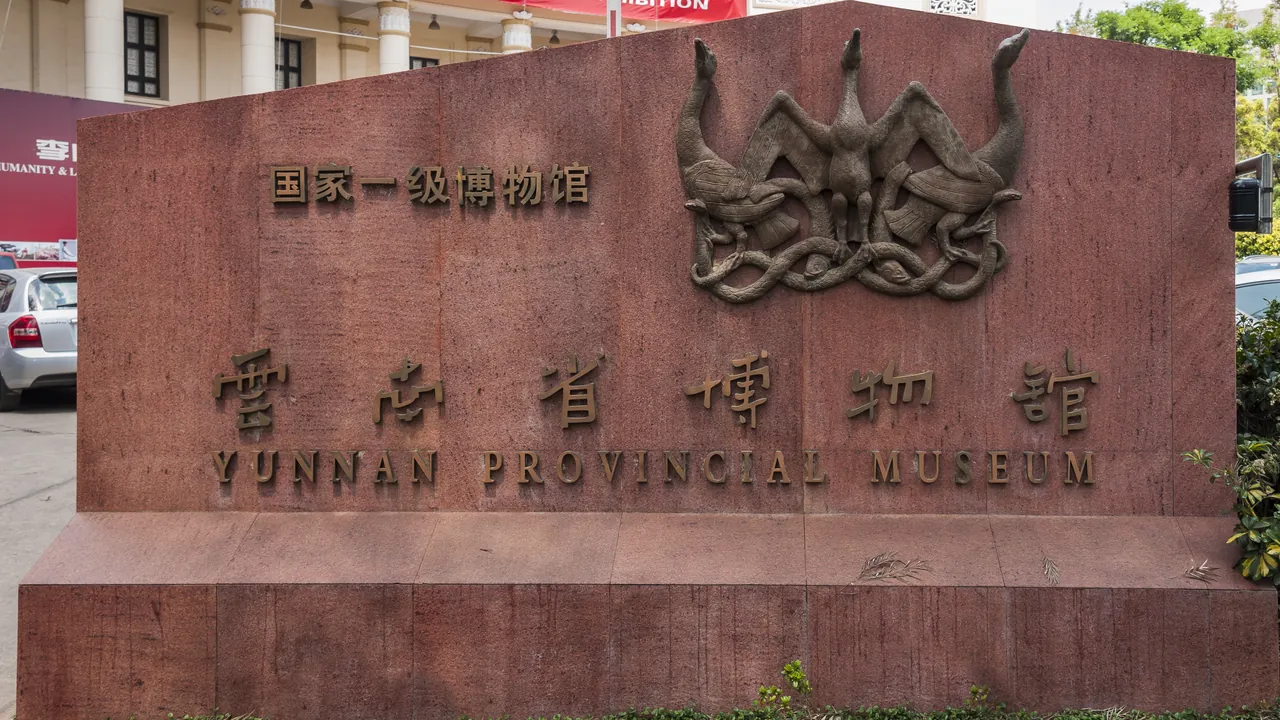
Yunnan Provincial Museum: The Dian Kingdom in Bronze
Enter at opening and go straight to the Dian bronzes. The Ox-and-Tiger Case, the signature piece, shows a tiger biting a great ox's tail while a calf shelters beneath, casting skill and lived scene in one; the cowrie-container lids, cast with markets, rites and battles, are rare documentary bronzes.
The permanent galleries run from deep prehistory to modern times, and the ethnic-collections hall of silver dress, brocade and lacquer deserves its own time. Three hours is the honest minimum; pressed for it, lock onto the bronze and ethnic halls alone.
Guandu Ancient Town: Old Kunming Under the Diamond Pagoda
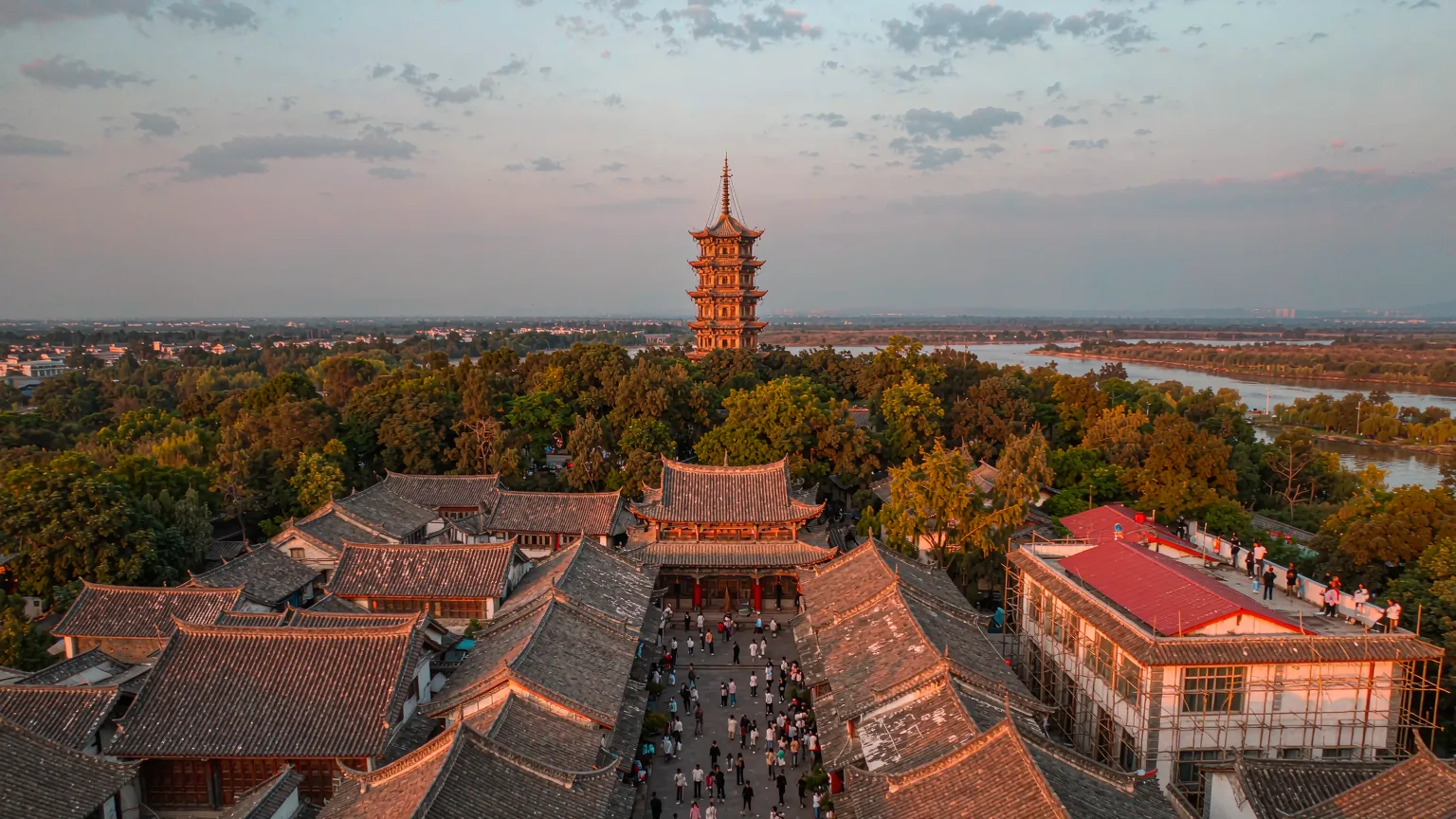
A twenty-minute taxi from the museum brings you to Guandu. The Vajrasana-style diamond pagoda at Miaozhan Temple dates to the Ming and ranks among the oldest of its kind in China, its five-stupa base and carved panels standing mid-street, wholly grown into the market life around it.
The town's spine is its temples, pavilions and shrines, a one-hour loop along the memorial gates and flagstones. Guandu baba cakes must be eaten hot from the oven, the sugar-ham filling the local answer; add a rice block or pea-jelly bowl and lunch happens under the pagoda's shadow, the loosest hour of the culture day.
Yunnan Military Academy: Modern History Inside Yellow Walls
West of Green Lake stands the Yunnan Military Academy, the city's most photogenic historic building: a bright-yellow courtyard block on the continuous-corridor plan ringing a drill court, from which a generation of late-Qing and Republican generals marched out. The exhibits run from founding and curriculum through the Protection-of-the-Constitution era to the War of Resistance, about ninety minutes over two floors.
The building is its own exhibit: barrack courtyards, a restored cadet dormitory and the original timetables say more than the captions. The yard thins around each hour, and from the center of the drill court looking up at the eaves closing into a ring is the building's best angle.
Yunnan Art Museum: The Day's Signature
By evening, return downtown to the Yunnan Art Museum on Wuyi Road. The Soviet-style old building opens into tall, airy halls, its exhibits rooted in Yunnan's own art: heavy-color paintings, prints and ethnic-subject oils, a Yunnan more complex than landscapes, where artists translated twenty-six peoples' daily life into color.
This is the day's lightest hour; an unhurried hour suffices. The exit leaves Nanping Street and the Golden Horse and Jade Rooster Archways within walking range, so dinner lands there and the culture day closes as the lanterns come on.
| Getting around |
|
| Budget | Built on free venues; budget RMB 60-120 pp mainly for meals and city transport. |
| Best time | Year-round with climate-controlled halls; museums close Mondays except public holidays, so plan around them. |
FAQs
How do I book the provincial museum, and what if slots run out?
Book via the museum's official channels with real-name registration; reservations open two or three days ahead and cancellations drip back. If full, try weekday early or pre-closing slots; Guandu and the academy take no booking, so run the other three legs and retry.
Are four stops too much for one day?
It works if the museum stays within three hours; the other three stops are ninety-minute weights. With a deep bronze appetite, drop the art museum and repay the museum and Guandu, a kinder trade than rushing all four.
Is Guandu worth it, and how does it differ from other ancient towns?
Guandu's value is its realness: locals still live there, temples, schools and wet markets sharing ground, and the diamond pagoda is a national relic. Commercialization runs lighter than most ancient towns with honest snack prices; half a day suits it, pairing perfectly with a culture route.
Does this culture route work with kids?
Yes. The museum runs interactive zones and children's guides, and the lid-scene figurines mesmerize kids; Guandu doubles as snack walk, and the academy's drill court gives room to run. Put the museum in the freshest morning hours and use Guandu's snacks as the afternoon reward.