
The Historic Centre of Macao joined the World Heritage list whole in 2005, twenty-two buildings and eight squares all walkable between. Three days read it through: the core first, the coast second, the village heritage of Taipa and Coloane third, density and breathing room both designed in.
Heritage rewards slowness: each building deserves its facade plus its relationship to the block. Chinese and Portuguese building traditions alternate within a few hundred meters, a density rare anywhere on earth.
Itinerary at a glance
| Day 1 · 09:00 | The Ruins of St. Paul's and the Na Tcha Shrine |
| Day 1 · 10:30 | Mount Fortress and the Macao Museum |
| Day 1 · 12:00 | Senado Square and St. Dominic's Church |
| Day 1 · 14:30 | St. Augustine's Square and St. Lawrence's Church |
| Day 1 · 16:30 | The Mandarin's House and Lilau Square |
| Day 2 · 09:30 | Guia Fortress and the Chapel of Our Lady of Guia |
| Day 2 · 11:30 | The Moorish Barracks and A-Ma Temple |
| Day 2 · 15:00 | St. Joseph's Seminary and Church |
| Day 3 · 10:00 | The Taipa Houses-Museum |
| Day 3 · 14:00 | Coloane Village and the Chapel of St. Francis Xavier |
The route, stop by stop
The Ruins of St. Paul's and the Na Tcha Shrine
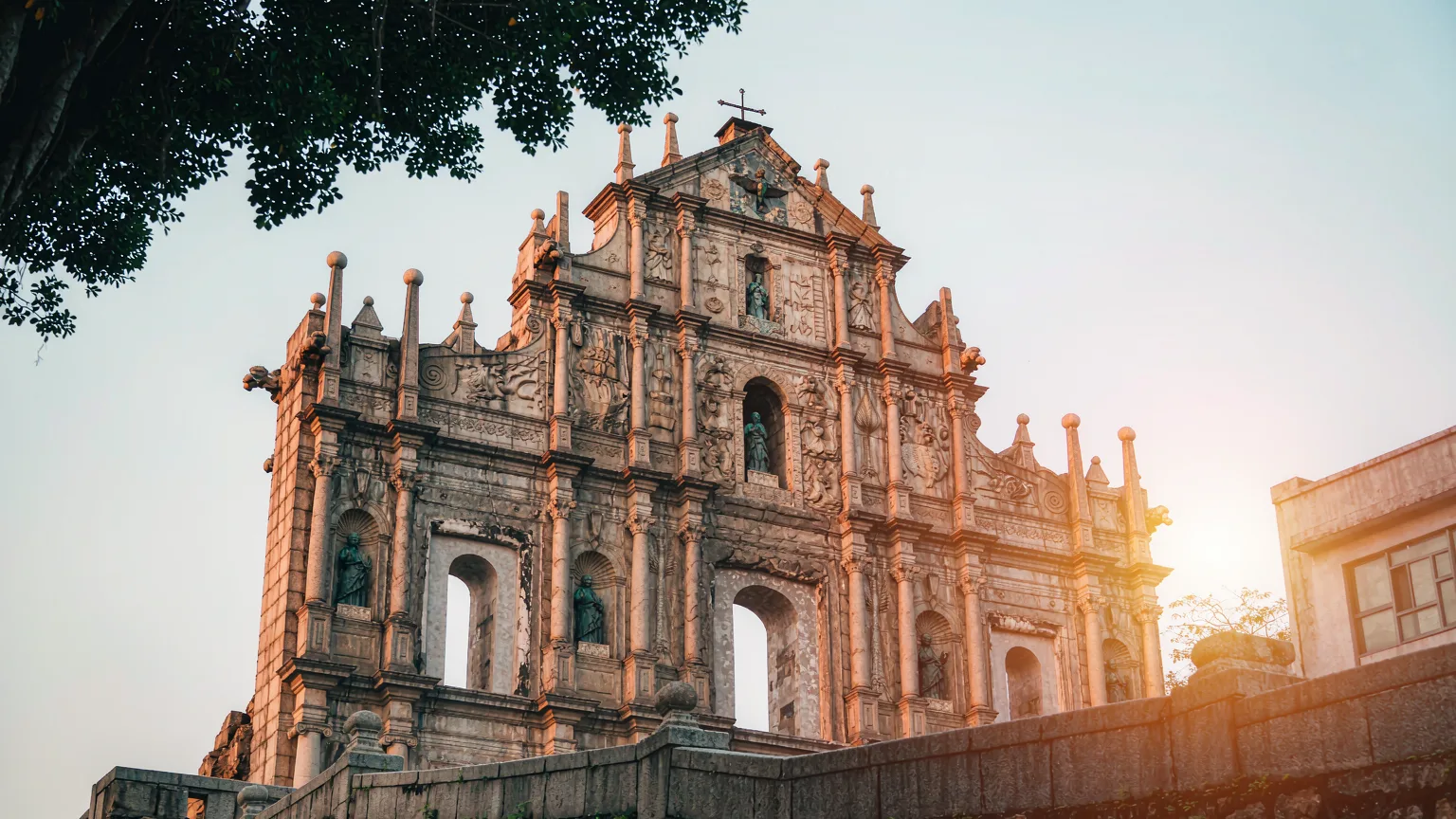
Day one opens at the facade, the lone survivor of St. Paul's after the 1835 fire, its carvings placing Eastern dragons and Western angels in one composition; arrive at opening and the steps empty.
Behind and above sits the Na Tcha shrine, a small temple standing beside the Catholic ruin, the very emblem of Macao's cultural symbiosis. Free and tiny, it explains a folk faith's survival in ten minutes.
Mount Fortress and the Macao Museum
Climb the side steps to Mount Fortress, the Jesuit bastion of 1617 and the old city's high point, walls and corner towers intact, the platform surveying the whole historic centre.
The Macao Museum inside tells the city over three floors in an hour; from the platform, identify the heritage points of yesterday and today, the best possible warm-up for the line.
Senado Square and St. Dominic's Church
Noon returns to Senado Square, the wave mosaic and Portuguese blocks the city's card, the civic building's courtyard free to enter; the side aisle leads to St. Dominic's, founded by the Dominicans in 1587, its treasury the finest religious art in Macao.
After lunch, rest around the square, benches by the fountain and arcade shade the historic core's midday strategy.
St. Augustine's Square and St. Lawrence's Church
The afternoon walks south: St. Augustine's Square wraps the church, the Dom Pedro V Theatre, among China's earliest Western theatres, and the Ho Tung Library, whose rare-book holdings lead the south, into one compact plaza.
Southward again to St. Lawrence's, one of the three ancient churches with baroque interior intact, garden and feng-shui spheres anchoring neighborhood life; the densest heritage half-day happens right here.
The Mandarin's House and Lilau Square
Day one closes at the Mandarin's House, the residence of late-Qing thinker Zheng Guanying and Macao's largest private compound, Chinese layout inlaid with Western ornament, the sliding gates and lime reliefs rewarding slowness; entry is free with timed caps.
Outside stands Lilau Square, the small plaza of Portuguese townhouses said to mark the first Portuguese settlement; evening light on yellow walls and cobbles gathers day one to a quiet close.
Guia Fortress and the Chapel of Our Lady of Guia
Day two starts on Guia Hill: the fortress lighthouse among China's earliest modern coastal lights, and the chapel of Our Lady of Guia hiding murals that blend Chinese and Western elements, a nationally noted survival.
The morning wind and the whole-city view open heritage's other face here, coastal defense and navigation; climb from the Flora Garden side, funicular available.
The Moorish Barracks and A-Ma Temple
Downhill, second stop is the Moorish Barracks, once quarters for Indian soldiers, its arcades and tracery uniquely exotic in Macao, corridor views close enough to study the detail.
Ten minutes on foot to A-Ma Temple, the city's oldest temple and source of the Macau name legend; the Maritime Museum across completes the seafaring story, heritage and ocean lines merging here.
St. Joseph's Seminary and Church
The afternoon returns to the lanes near the theatre district: St. Joseph's Seminary and Church hide between two rows of old houses, the baroque dome and altar among Macao's most splendid interiors, with a seminary treasury of religious art almost unknown.
This is the most underrated heritage point beyond the ruins, tourist density low and quietness inversely proportional to splendor; half an hour inside plus a lane stroll paces the afternoon perfectly.
The Taipa Houses-Museum
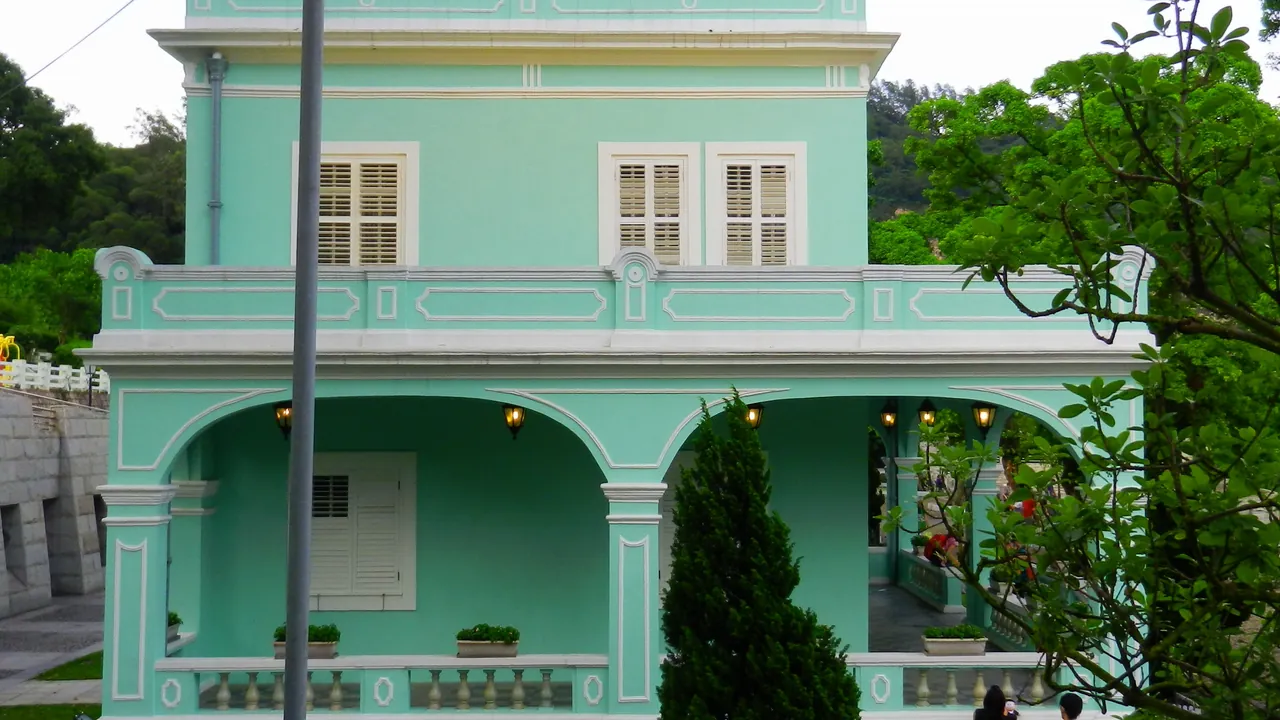
Day three crosses the water: the five mint-green Taipa houses of the early twentieth century now display domestic, culinary and maritime life of Portuguese Macao at cheap combination rates, the wetland and chapel in front completing the frame.
An hour for exhibitions plus photos; walk into Taipa old town from the houses, everyday market life alternating with Portuguese heritage along one road, day three's theme.
Coloane Village and the Chapel of St. Francis Xavier
The afternoon enters Coloane village: the neo-Gothic shell and cream interior of St. Francis Xavier's chapel is the signature scene of Macao cinema, relics and stained glass rewarding a close look, the square in front quiet enough to hear wind.
Stroll Rua de Cinco de Outubro to Lord Stow's original, one warm tart closing the three heritage days; the fishing village's lanes and old houses keep Macao's other face alive.
| Getting around |
|
| Budget | Heritage buildings run free or cheap, museum tickets totaling about MOP 50 (RMB 45); meals add RMB 150-200 a day. |
| Best time | October to March walks best; most heritage buildings sit indoors, so rain barely touches the plan. |
FAQs
Which border for three heritage days?
Days one and two sit in the peninsula core, where Border Gate buses run smoothest to the avenue area; day three's Taipa and Coloane lie closer to Hengqin's light-rail link. Most heritage sits in pedestrian zones, so stash luggage at the hotel and go light.
Which heritage points charge or need booking?
Nearly all heritage buildings are free with no booking; the Macao Museum charges about MOP 15 and rests Mondays, St. Dominic's treasury and the Taipa Houses run cheap, and the Mandarin's House is free but capped by ticket. Check Monday closures before planning that day.
Do three days over twenty sites turn into a blur?
Not if you run two or three deep stops per day: the ruins, the Mandarin's House, St. Joseph's and A-Ma deserve forty-plus minutes each, while the rest read from the street in passing. Heritage rewards continuity, walking-and-reading over checklist-ticking.
Any etiquette and tips for churches and temples?
Stay quiet and skip flash during services and chanting; temple incense is donation-based, and covered shoulders with below-knee dress fit best. Cobbles slick in rain, so wear grip soles, and carry cash plus mobile wallet with small notes for old-town shops.