
Nanning is not a postcard ancient capital; its heritage hides in finer places, bronze drums and Han-era maritime relics in museums, opera that never quite stopped on the old stage, and a Song-dynasty river port still living by the Zuo River. Three days run museum to street to town, reading the Zhuang layer by layer.
The pacing: day one for downtown museums and the old city on foot and metro, day two given wholly to Yangmei's flagstone streets by the Zuo River, day three returning to ethnic themes for the close. Physical strain stays gentle, so slow down and leave time for guides and hands-on sessions.
Itinerary at a glance
| D1 09:00 | Guangxi Zhuang Autonomous Region Museum: The Maritime Silk Road Entrance |
| D1 11:30 | The People's Theatre at Sanjie Liangxiang: Echoes on the Old Stage |
| D1 14:30 | Nanning Museum: The City's Own Display Case |
| D1 19:00 | Guangxi Intangible Heritage Food Gallery: The Edible Register |
| D2 08:30 | Yangmei Old Town: A Song-Dynasty Port on the Zuo River |
| D2 15:00 | Zhuanggu Intangible Heritage Art Gallery: Watching the Craft Close Up |
| D2 19:30 | Zhongshan Road Night Market: The Old Street's Evening Seminar |
| D3 09:00 | Guangxi Museum of Nationalities: The Panorama of Twelve Peoples |
| D3 14:00 | Xiangsi Town: Golden Hour in an Ethnic Quarter |
| D3 19:30 | Zhuang Brocade Museum Theme Restaurant: A Zhuang Curtain Call |
The route, stop by stop
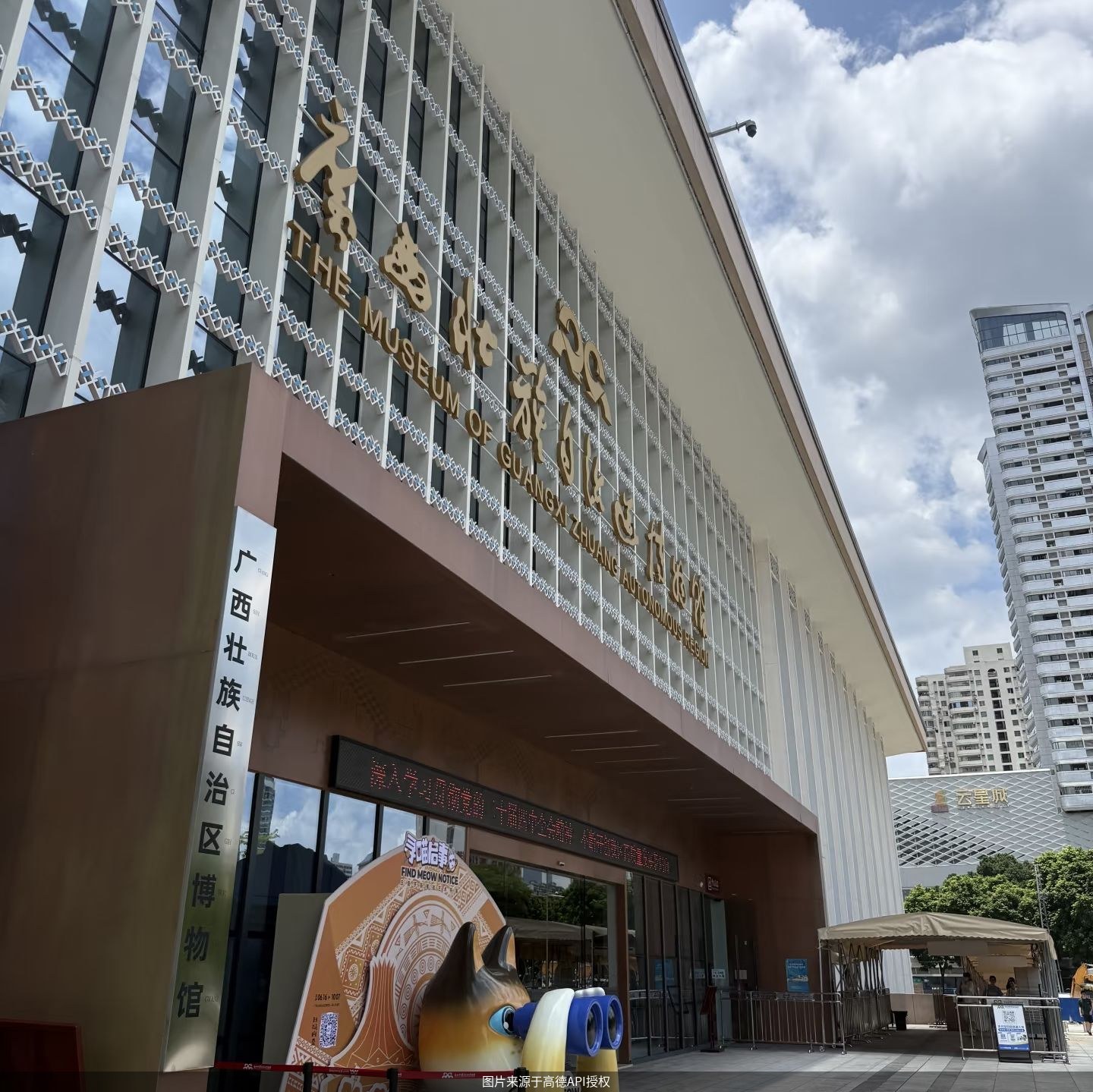
Guangxi Zhuang Autonomous Region Museum: The Maritime Silk Road Entrance
Three heritage days open with flagship collections. Head first to the Han galleries of the general exhibition: the bronze phoenix lamp, glass beads and imported ornaments from Hepu port lay out the claim that the maritime silk road departed from Guangxi, the key to everything that follows.
The bronze and drum halls deserve equal time, the pattern evolution across generations of drums reading like a wordless chronicle. Special exhibitions list in the ground-floor hall and reward a detour.
The People's Theatre at Sanjie Liangxiang: Echoes on the Old Stage
Walk from the museum into the old town, where the People's Theatre stands as one of Sanjie Liangxiang's most storied buildings, carrying the city's opera memory, the gongs and drums of Cantonese and Yong opera ringing here on and off for most of a century.
By day a performance is unlikely, yet the building alone repays the steps: the gatehouse style, vintage posters and production stills all narrate old Nanning's entertainment history. Shows cluster at night, times posted at the door and online, and catching one is a genuine bonus.
Nanning Museum: The City's Own Display Case
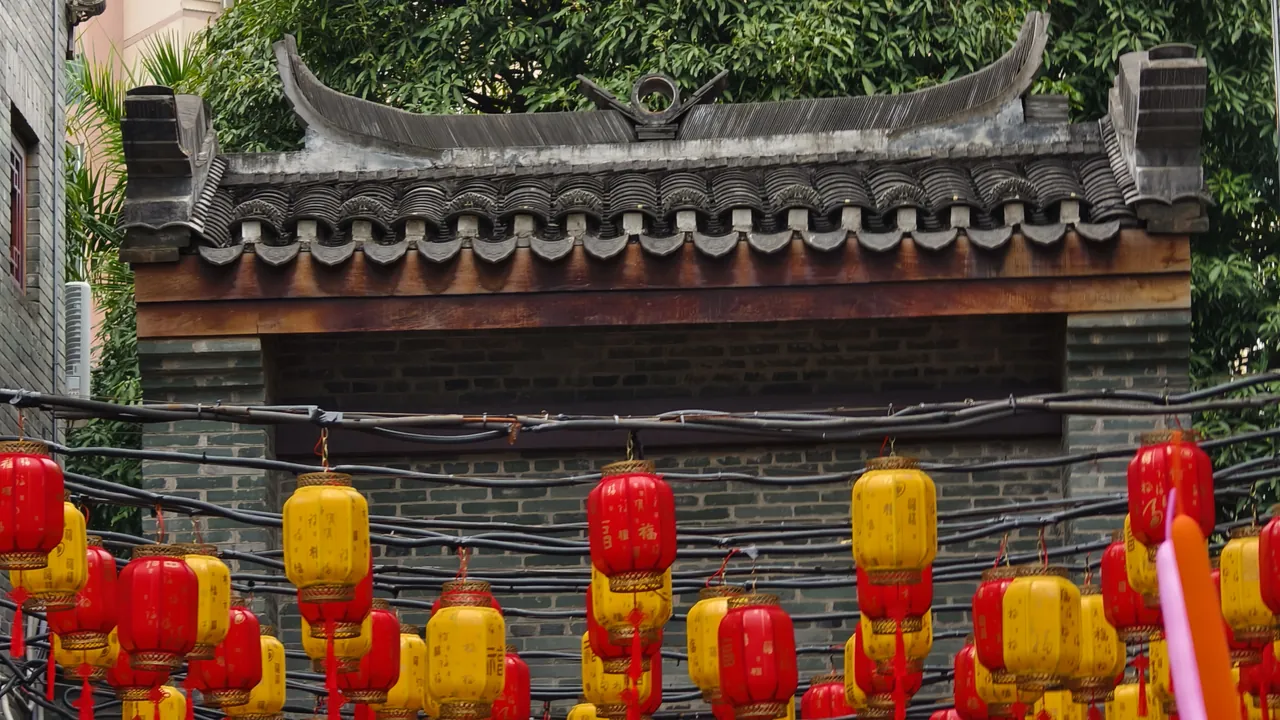
Cross the river after lunch to the Nanning Museum. This is not the all-Guangxi panorama but one city's account, from prehistoric shell mounds through Song-era founding, treaty-port trade and the modern green city, a tight complement to the morning's grand narrative.
The modern galleries shine with old photographs, wharves, arcade markets and vintage theatres that map neatly onto the streets you will walk later. Temporary halls rotate ethnic themes, so scan listings on entry.
Guangxi Intangible Heritage Food Gallery: The Edible Register
Dinner at the heritage food gallery moves culture from vitrine to table. Laoyou noodles, five-color sticky rice, lemon duck sauce, jasmine tea pastries, each item tied to a listed craft, reading the cards while you eat, the route's most appetizing lesson.
Counters divide by region; pairs should share orders, covering five or six items in one round. The souvenir zone settles gifts on the way out, noodle kits and tea packs all individually sealed.
Yangmei Old Town: A Song-Dynasty Port on the Zuo River
Depart southwest early: Yangmei Old Town dates to the Song dynasty and grew rich on water, once a key trading port on the lower Zuo River. Ming-Qing houses stand in whole streets along flagstones, with the Kuixing Tower and riverside old street at the core, merchant ghosts in every brick seam.
Yangmei rewards slowness: walk the riverside street end to end, study lintels and wharf steps, eat braised pork with preserved greens by the river at noon, and leave with sha gao cake and fermented black beans. Crowds stay thin even on weekends, the quiet holds.
Zhuanggu Intangible Heritage Art Gallery: Watching the Craft Close Up
Back in town, the afternoon goes to Zhuanggu gallery, where Zhuang brocade, embroidered balls, bronze drums and ethnic silver sit far closer than in the big museums, weaving and hammering details legible on many pieces.
Its value is liveness: craft sessions often run, weaving a strip of brocade or stitching a ball under a master's eye. Even as an onlooker, watching artisans work beats any glass case, the closest approach to the craft in three days.
Zhongshan Road Night Market: The Old Street's Evening Seminar
Night returns you to Zhongshan Road. Seen through a heritage lens the market itself is an artifact: the street grid unchanged for decades, stall crafts passed down through lineages, the rice-roll batter and pickle brine all inherited formulas.
Having read the registers all day, come verify the flavors: does the sour bamboo bite hard enough, does the perilla carry the snails. Culture's last mile always lands on the tongue.
Guangxi Museum of Nationalities: The Panorama of Twelve Peoples
Day three returns to the ethnic theme. The permanent galleries cover the Zhuang, Yao, Miao and Dong peoples in one sweep of costume, brocade, silver and architecture, and the cloud-thunder bronze drum demands five minutes standing before it.
Do not skip the outdoor grounds, where re-created wind-rain bridge and drum tower scale the galleries up to life, the engineering sense of pile dwellings and bridge galleries landing only at full size. This half day is the route's density peak.
Xiangsi Town: Golden Hour in an Ethnic Quarter
Shift to Xiangsi Town by mid-afternoon, a cultural quarter modeled on Zhuang pile dwellings, condensing stilted houses, a wind-rain bridge and an ethnic plaza into a walkable stage set. Light peaks around lantern-hour, whitewash and timber warmed by the slanting sun.
Costume rental and shows run often, and renting Zhuang brocade or Miao dress for a portrait before the bridge is many visitors' whole reason to come, and photogenic enough to justify it. Pure strolling and shooting stands on its own too.
Zhuang Brocade Museum Theme Restaurant: A Zhuang Curtain Call
The farewell dinner sits at the brocade theme restaurant. Between walls of weaving and instruments, lemon duck, five-color sticky rice and mugwort cakes array the table, the patterns and crafts you met in cases now rendered edible.
The meal closes the route formally: from Han-era glass beads to tonight's sour bamboo, Guangxi's cultural thread completes its loop in the stomach. Turn in early, no alarm needed tomorrow, yet the suitcase already runs full.
| Getting around |
|
| Budget | RMB 400-800 pp: museums entirely free, Yangmei round trip by charter or bus RMB 80-150, lodging and meals separate. |
| Best time | Year-round, kindest April-May and September-November; intangible-heritage events cluster around the Sanyuesan song festival, worth timing for. |
FAQs
Does Yangmei deserve a whole day?
For heritage travelers, yes: it is one of Guangxi's rare living old ports, intact Ming-Qing streets, thin crowds, and the round trip fills a day neatly. If old towns leave you cold, swap the day for deeper museum time plus a lakeside night, keeping the three-day spine intact.
Do all the museums need booking, and what about Mondays?
The regional, Nanning and ethnology museums all book online by real name and all close Mondays, while the food and craft galleries follow on-site rules. Route around Mondays; if a collision is unavoidable, fill the day with Yangmei or Xiangsi Town and slide the museums along.
What does timing around the Sanyuesan festival add?
The third day of the third lunar month is the Zhuang calendar's biggest festival, and the surrounding weeks flood with song gatherings, ball and brocade sessions and street performances, with museums and sights staging tie-ins. The cost is higher lodging and transport prices and fast-filling slots, so book a week out.
Is this route manageable with kids?
The strain stays gentle: no climbs, all downtown except the Yangmei day, museums with children's zones and interactives, and craft sessions are the kids' favorite. Put Yangmei on the strongest-leg day, cap each museum at two hours, and take an hour's hotel rest at midday before continuing.