
Seven days gives Quanzhou its full stretch: four days on the old-town radius finishing every heritage site, faith house and lane fabric; day five up Qingyuan for the Laozi statue, down to Luoyang Bridge's sea-crossing works; day six the Xunpu village plus museums and puppetry; day seven to Chongwu's stone city with Anping Bridge on the return.
The trick is a fixed base: all seven nights near West Street, every outlying day a return trip, luggage unpacked once. The effort curve runs front-loaded, easing deliberately over the final two days so the week reads as pleasure, not drill.
Itinerary at a glance
| 08:30 | Kaiyuan Temple and the Twin Pagodas: Day One's Foundation |
| 14:00 | West Street and the Clock Tower: Lane Fabric 101 |
| 09:00 | Qingjing Mosque: Day Two's Faith Line Begins |
| 10:30 | The Guanyue Shrine and Confucian Temple: Two Halls, One Street |
| 16:00 | Tianhou Temple and Deji Gate: The Ritual of Sailing |
| 09:00 | The Maritime Trade Office Site: Day Three's Governance Lesson |
| 11:00 | Zhongshan Road Arcades: Day Three's Commercial Spine |
| 08:30 | Qingyuan Mountain and Laojun Rock: Day Four's Hill |
| 14:30 | Quanzhou Shaolin Temple: The Southern Shaolin Afternoon |
| 09:30 | The Maritime Museum: Day Five's Archive Session |
| 19:30 | Quanzhou Puppet Theatre: Day Five's Night |
| 09:00 | Luoyang Bridge: Day Six's Sea-Crossing Works |
| 16:00 | Xunpu Village: Day Six's Fishing Dusk |
| 09:00 | Chongwu Ancient City: Day Seven's Stone Fortress |
| 15:00 | Anping Bridge and Departure: Farewell on the Five-Li Bridge |
The route, stop by stop
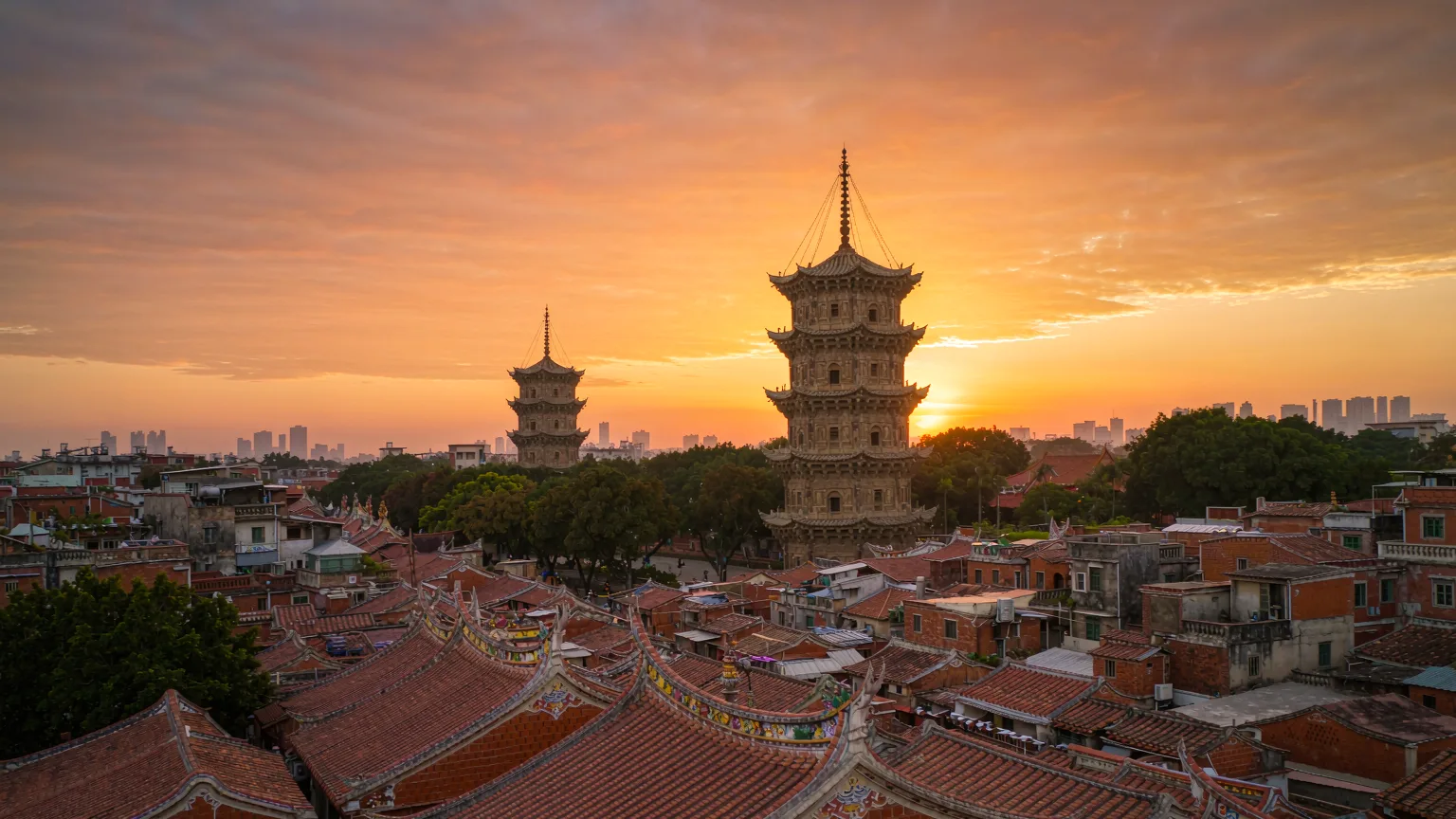
Kaiyuan Temple and the Twin Pagodas: Day One's Foundation
No suspense over day one's opener: Kaiyuan Temple, twin pagodas, Hindu columns, the Song hull, the city's family wealth in one pass. Enter at dawn, tower shadows raking the yard, and build the feel of the place first.
Lunch on West Street, more lanes in the afternoon, an evening hotel session setting the week's rhythm.
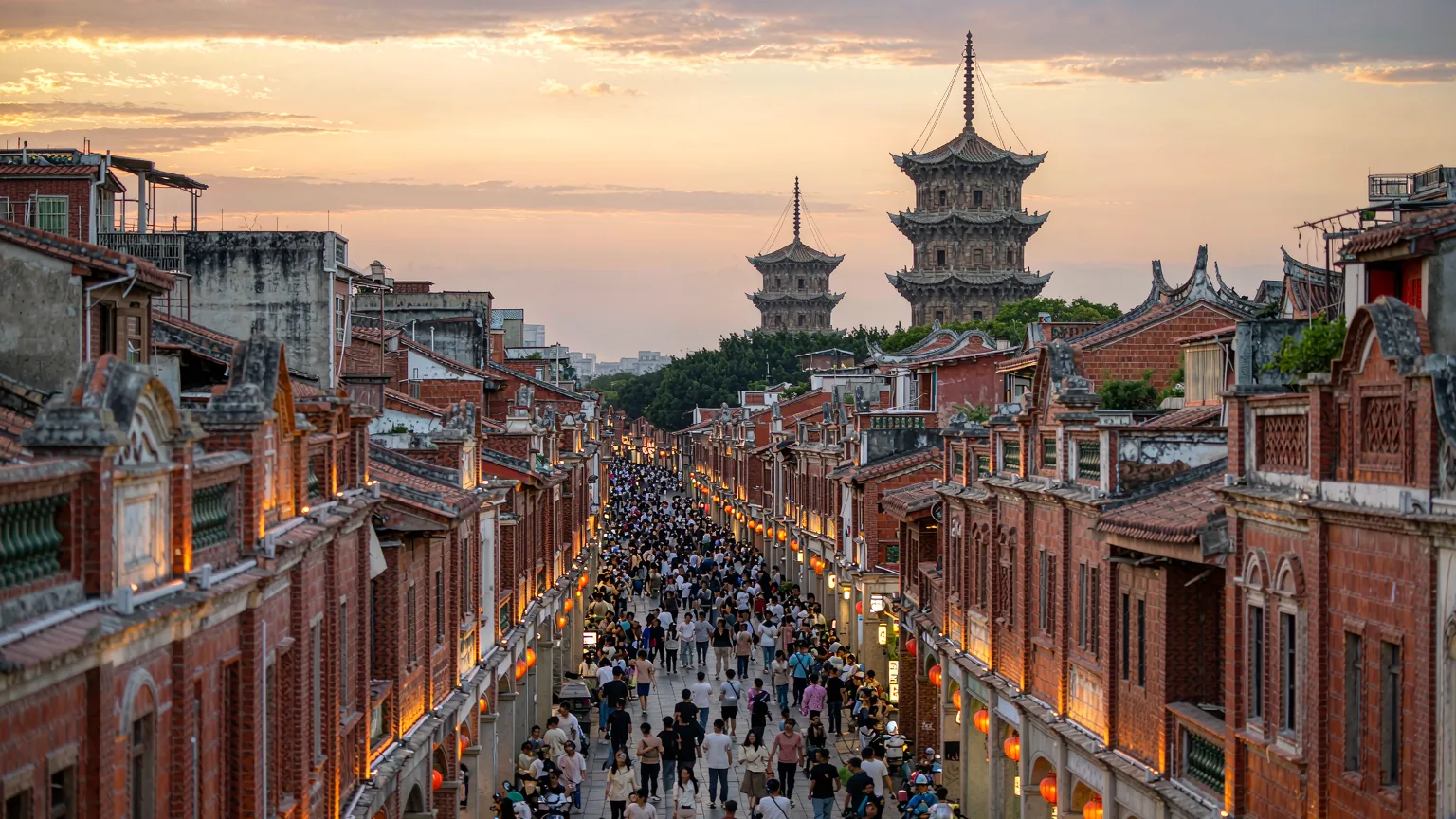
West Street and the Clock Tower: Lane Fabric 101
The afternoon walks West Street and its side lanes: Jinyu Lane, the old post lane, Taikui Alley, red-brick houses and old well platforms hiding behind the main drag. Seven days allow unhurried lanes, no rushing.
Watch the lights come on under the Clock Tower at dusk, eat close by, and keep day one free of night programs.
Qingjing Mosque: Day Two's Faith Line Begins
Day two walks Tumen Street: the mosque's Northern Song portal and prayer hall, physical record of a millennium of Arab settlement. Mid-morning quiet suits the stone shadows and Syrian-script carvings.
A few minutes east stands the Guanyue shrine, a roaring Guan Yu temple and a hushed mosque sharing one street.
The Guanyue Shrine and Confucian Temple: Two Halls, One Street
The shrine's worshippers set off the Confucian Temple's calm: Guan Yu governs loyalty and business, Confucius letters and careers, and Quanzhou wants both. The main hall's stone court photographs well, nanyin often on the square at dusk.
Lunch near the temple with crisp pork and salty rice; the afternoon runs south of town.
Tianhou Temple and Deji Gate: The Ritual of Sailing
The afternoon's finale pairs Mazu and the gate: carved gateway, dragon columns, and the Song-Yuan foundations across the street in the excavation pit. Out the gate, out to sea, plain from the boardwalk.
Follow with four-fruit jelly, and the Zhongshan Road arcades digest the walk home.
The Maritime Trade Office Site: Day Three's Governance Lesson
Day three opens on governance: the trade office site deep in Shuimen Lane, where the Song-Yuan customs hall stood. The courtyard is modest, its panels explaining the water gate, the office and the harbor as one system, read before moving.
Stay in the lane for noodle paste as brunch, the lane itself a living fossil of the old waterway node.
Zhongshan Road Arcades: Day Three's Commercial Spine
The late morning takes Zhongshan Road: Nanyang-style arcades running over a kilometer, veteran hardware, cloth and clock shops still trading, a living archive of modern Quanzhou commerce. Watch the plaster and old signboards as you go.
Arcade shade carries even noon; lunch in a side lane, then a hotel siesta.
Qingyuan Mountain and Laojun Rock: Day Four's Hill
Day four switches channels uphill: Laojun Rock mandatory, Nantai Rock's bay panorama for strong legs, three hours return. The week's effort peaks here, and the summit wind pays for it.
Lunch and rest on the descent; the afternoon's Shaolin temple runs light, a smooth handoff.
Quanzhou Shaolin Temple: The Southern Shaolin Afternoon
The afternoon watches martial shows at the Shaolin temple on Qingyuan's east foot: Five Ancestors fist and weapon sets, half an hour of adrenaline. The plain temple hides a rear path to Qingyuan, a bonus for hikers.
Taxi or bus back to the old town, day four's hill line done.
The Maritime Museum: Day Five's Archive Session
Day five returns indoors: the Maritime Museum's Song-Yuan charts and religious stone carving frame everything seen across four days. Visiting on day five deepens the reading completely.
Two hours inside, lunch downtown, the afternoon reserved for the bridge.
Quanzhou Puppet Theatre: Day Five's Night
The evening belongs to string puppets: writing, pouring, lion-dancing, the liveliest export of Quanzhou's heritage. Daytime archive plus night stage makes this the week's knowledge peak.
Bed early; the bridge tomorrow wants an early start.
Luoyang Bridge: Day Six's Sea-Crossing Works
Day six's morning goes to the bridge: eight hundred meters of Song stone, oyster-fixed foundations, mid-span steles and the Moon Bodhisattva pagoda. Low tide pulls egrets onto the flats, and morning light rides the deck best.
About an hour for the full crossing plus the shrine at the south end; back downtown for lunch.
Xunpu Village: Day Six's Fishing Dusk
Dusk at Xunpu: oyster-shell houses, flower crowns, boats home, the softest light of the day for photos. Do the crown experience now at an in-lane shop, RMB 40-100 by styling.
Stay for seafood stir-fries by the village mouth, then about twenty-five minutes by taxi back to the old town.
Chongwu Ancient City: Day Seven's Stone Fortress
The last day goes to Chongwu: the Ming anti-pirate stone city, sea views from the walls, Hui'an women and stone houses in the lanes. Two hours for walls and streets, seafood lunch in town.
On the return, optionally stop at the Hui'an women park for the costumes and harbor; if pressed, ride straight back.
Anping Bridge and Departure: Farewell on the Five-Li Bridge
The return detours to Anhai in Jinjiang for Anping Bridge: 2.5 kilometers of Southern Song sea-crossing stone, no bridge under heaven longer. A mid-span out-and-back of forty minutes gives the week its longest, quietest close.
From Anhai back downtown for luggage and the rail station, seven days of Quanzhou closing in the bridge's shadow.
| Getting around |
|
| Budget | Tickets about RMB 140, six nights RMB 700-1800, plus meals and transit; roughly RMB 2200-4000 pp overall. |
| Best time | Kindest Oct-Dec and Mar-Apr; dodge Monday closures, and keep the bridge and coast for clear days. |
FAQs
Can seven days hold up physically?
Yes, pacing decides: three moderate old-town days, the hill as day four's peak, museum and bridge days flat, the coast closing soft. Cap daily steps near fifteen thousand, keep the midday rest, and the week reads as enjoyment.
What is the least-hassle transit plan for the outlying days?
The three outlying days, Qingyuan-Shaolin, bridge-Xunpu, Chongwu-Anping, lean on taxis with buses as backup, RMB 20-60 a leg; check last buses for the Chongwu direction. Total transit lands around RMB 300, less than half a charter's cost.
How does the week flex for rain or typhoons?
The plan: rain swaps hill and coast for museum days, the Maritime Museum, Kinship Museum and puppet show chaining into one; the old-town line walks in light rain; under typhoon warning, cancel Chongwu and Anping outright. Seven days absorbs a day or two of bad weather.
What does the whole week cost?
RMB 2200-4000 pp covers most styles: tickets about RMB 140, transit including outlying taxis RMB 300-500, meals RMB 100-150 daily, six nights the most elastic line from West Street guesthouses to boutique hotels. The flower crown and shows add one to two hundred, and earlier room bookings save the most.