
One day in Shenyang has a clean skeleton: a palace, a marshal's mansion, an old commercial street and a royal tomb. The first three sit within one walking radius of the old town while the fourth needs a metro or drive, so the order is fixed: enter the palace at opening and finish the east and central axes before tour buses land; move to the Zhang Family Mansion after ten; lunch on Zhongjie; then ride out to Beiling in the afternoon and walk the Zhao Mausoleum's spirit way to the Hall of Grace.
Expect about fifteen thousand steps through bitter winters or fierce summer sun, so shoes, hat and water are kit. All four stops run guide systems, and at least one live-guided hour, palace or mansion, is essential; without the historical backdrop, the red walls and green tiles are merely pretty.
Itinerary at a glance
| 08:30 | Shenyang Imperial Palace: The First Hour at Opening |
| 11:00 | Zhang Family Mansion: Three Minutes from Qing Palace to Republican China |
| 13:00 | Zhongjie: A Four-Hundred-Year Street as Your Lunch Table |
| 15:00 | Beiling (Zhao Mausoleum): An Early-Qing Tomb at the End of the Spirit Way |
The route, stop by stop
Shenyang Imperial Palace: The First Hour at Opening
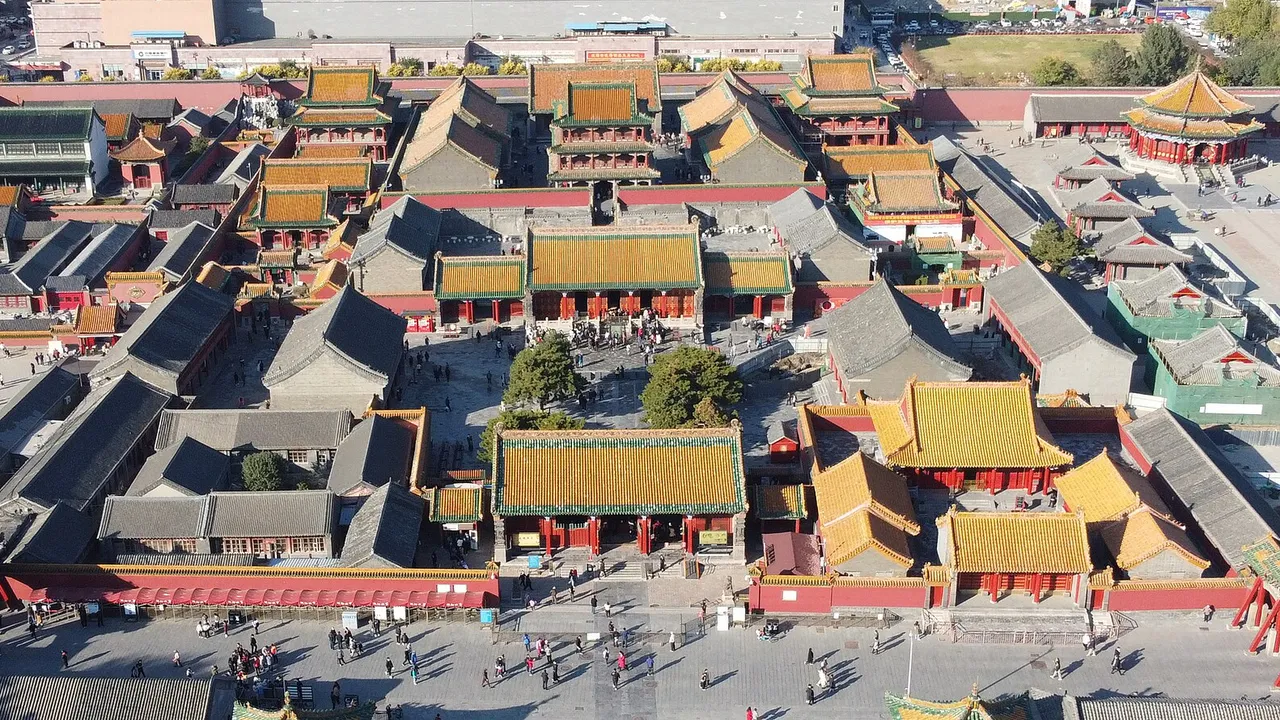
The Shenyang Imperial Palace was the Qing court's home before the conquest and ranks as one of China's two surviving complete imperial palace complexes, a fraction of Beijing's size, which is exactly why one morning can read it through. Enter at opening: the east axis first, the Dazheng Hall and Ten King Pavilions, then the central axis with Chongzheng Hall, the Phoenix Tower and Qingning Palace.
Its sightline differs from Beijing: the Dazheng Hall's octagonal double eaves monumentalize a khan's tent-court, and the Ten King Pavilions fan out in a chevron that projects the Eight Banners system onto the ground. Grasp that layout and you have read the power structure of the Later Jin.
Zhang Family Mansion: Three Minutes from Qing Palace to Republican China
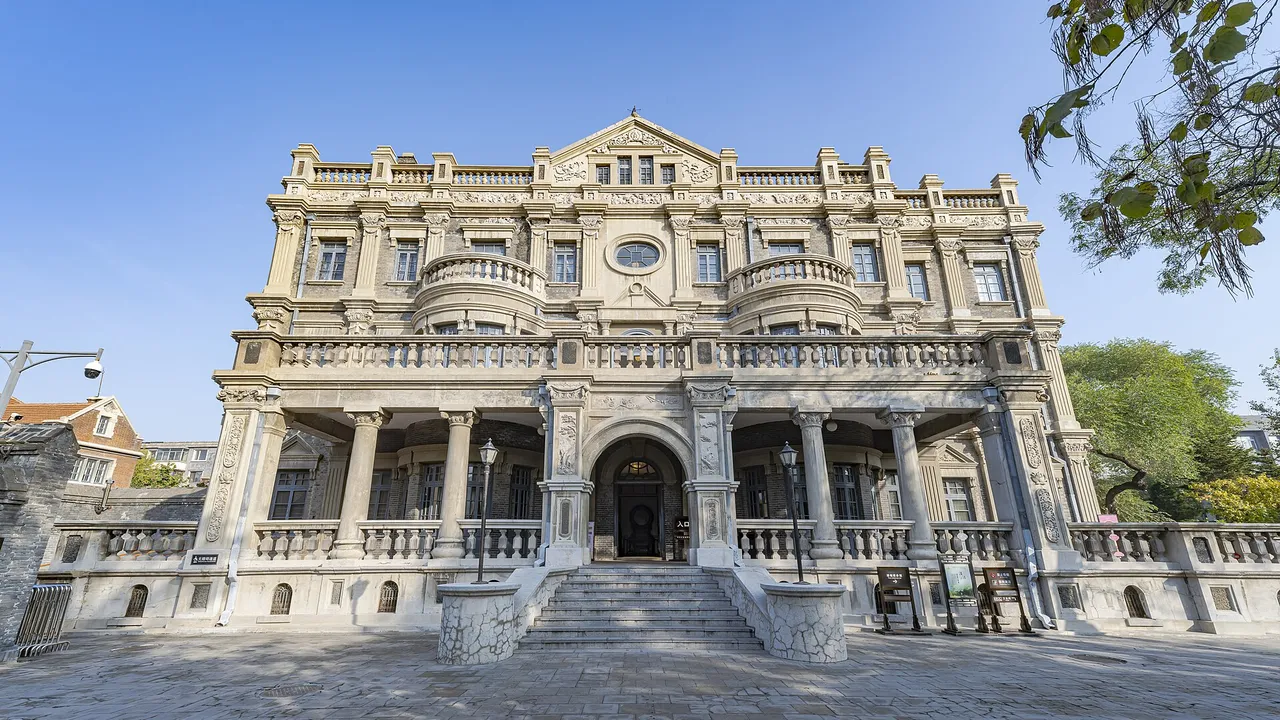
A few minutes' walk south of the palace lands you at the Zhang Family Mansion, jumping the narrative from early Qing straight to Republican China. Home and office to Zhang Zuolin and Zhang Xueliang, the compound assembles courtyard houses, the Great Qing Building, the Little Qing Building and, across the lane, the former residence of Zhao Yidi, with a finance museum inside the old Bianye Bank.
The Great Qing Building is the pivot: inside that Romanesque office block turned many a turning point of the modern northeast, and the name Tiger Hall is itself a story. The exhibits lay out the wars and the flag change of the northeast with unusual clarity.
Zhongjie: A Four-Hundred-Year Street as Your Lunch Table
Lunch is simple: walk to Zhongjie. Nearly the same age as the palace and billed among China's oldest commercial pedestrian streets, it mixes time-honored shops with new retail, the old Jishun department-store facade still standing at a corner.
The proper lunch is Laobian Dumplings, whose pre-fried filling is found nowhere else; in a hurry, pick any chicken-frame shop, since a smoked chicken frame with a staple is a perfectly Shenyang noon. Walk the street to its end and save the legs for the tomb district.
Beiling (Zhao Mausoleum): An Early-Qing Tomb at the End of the Spirit Way
In the afternoon, taxi or metro to Beiling Park. The Zhao Mausoleum, tomb of Emperor Taizong Hong Taiji and Empress Xiaoduan, counts among the three early-Qing tombs outside the pass and is Shenyang's largest tomb complex; the spirit way from the park gate is lined with stone statues and pines mostly over three hundred years old.
The Hall of Grace and the corner towers of the square city survive in full form, and from atop the walls the whole spirit way unrolls behind you. The point of this stop is hush: afternoon crowds are few and the pine wind out-sounds the visitors.
| Getting around |
|
| Budget | Tickets (palace, mansion, mausoleum) plus meals run about RMB 200-300 pp. |
| Best time | April-June and September-October are steadiest; snow paints the palace in winter but the cold bites and summer noon scorches, so a morning start is the constant answer. |
FAQs
Can one day really cover all four major stops?
Yes, at a pressed pace: two hours for the palace, ninety minutes for the mansion, lunch on Zhongjie, two hours at the tomb, all riding the clock. For breathing room, cut Zhongjie browsing to lunch only, or give the mausoleum the next morning.
How do tickets work for the palace and the mansion?
The palace runs about RMB 50 with online real-name booking advised in peak season; the mansion, Zhao Yidi's residence and the finance museum sell separately or as combos, so settle the package at the desk. Foreign passports book by passport number and enter with the original.
If choosing between the Shenyang and Beijing palaces, how should I think?
They are not substitutes: Beijing's palace shows the full Ming-Qing imperial paradigm, Shenyang's shows the pre-conquest Manchu polity, and the Dazheng Hall with Ten King Pavilions layout exists nowhere else. Short on time, Shenyang's reads through in half a day while Beijing's demands a full day minimum.
What should I watch for in winter?
Three things: warmth is equipment, not willpower, so full down, hat and gloves; phones drain fast outdoors, keep the power bank against your body; palace and tomb steps ice over, watch your footing. Winter days run short, light gone by 4 pm, so pull the schedule forward.