 TripMyChinaJOURNEYS THROUGH REAL CHINA✦ AI Trip✦ Plan My Trip
English
简体中文
繁體中文
日本語
한국어
ไทย
Tiếng Việt
Bahasa Indonesia
Italiano
Español
العربية
Русский
Deutsch
Français
Bahasa Malaysia
TripMyChinaJOURNEYS THROUGH REAL CHINA✦ AI Trip✦ Plan My TripSuzhou is China's garden capital, where Ming-era courtyards frame borrowed landscapes and canals hum beneath whitewashed bridges. Unesco-listed gardens, silk workshops, and pingtan ballads fit neatly into two relaxed days. A refined counterpoint for anyone pairing it with Shanghai.
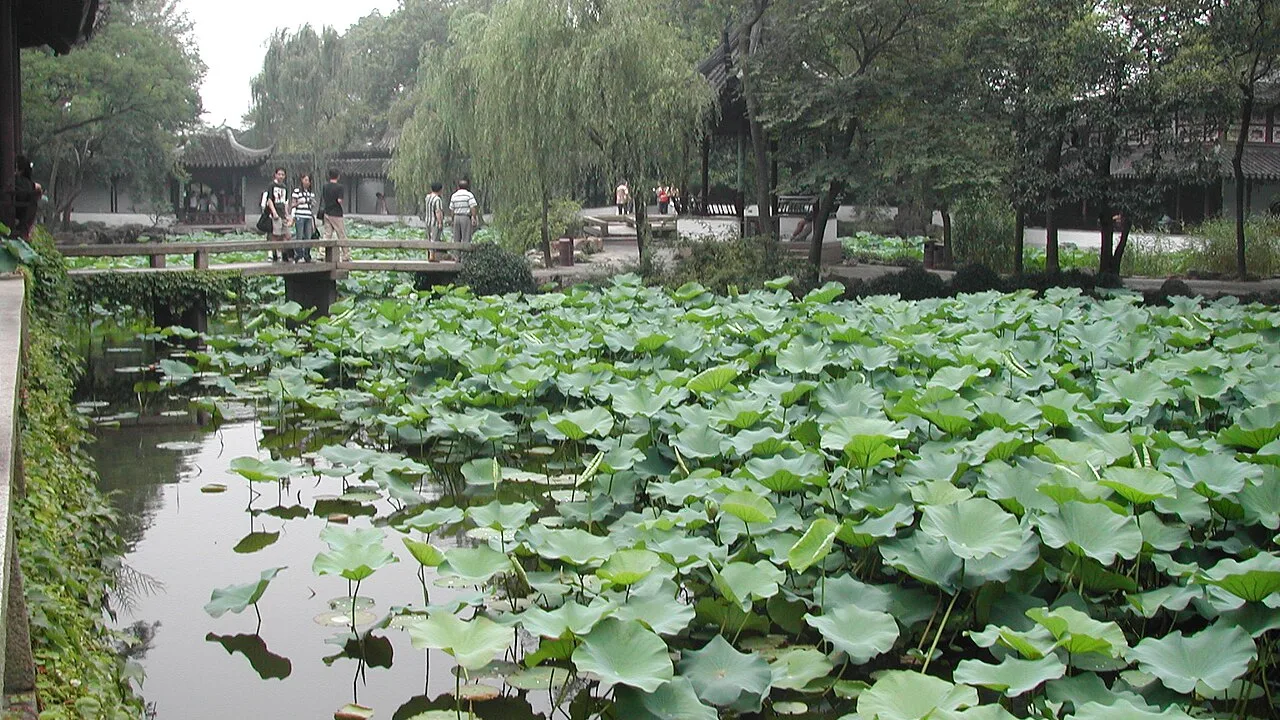
Suzhou, often called the 'Venice of the East,' is a city of canals, stone bridges, and classical gardens that has captivated travelers for over 2,500 years. Founded in 514 BC, it flourished as a prosperous trading hub along the Grand Canal and became a center of silk production, scholarship, and refined arts. Its historic core, Gusu District, preserves a labyrinth of waterways and whitewashed houses that evoke the elegance of the Ming and Qing dynasties. In 2024, Suzhou's classical gardens were inscribed as a UNESCO World Heritage Site, recognizing their harmonious blend of architecture, water, and nature.
The city is divided into several districts and county-level cities, each with its own character. Gusu District is the historic heart, home to the iconic Humble Administrator's Garden, Lingering Garden, and the charming Pingjiang Road. To the east, Suzhou Industrial Park (SIP) showcases modern skyscrapers and the futuristic Suzhou Museum by I.M. Pei. Wuzhong District offers scenic spots like Tiger Hill and the shores of Taihu Lake, while Xiangcheng and Wujiang districts are known for their vibrant local life and traditional water towns. The county-level cities of Kunshan, Changshu, Zhangjiagang, and Taicang add economic dynamism and cultural depth.
Visitors to Suzhou can immerse themselves in a world of tranquil gardens, silk shops, and canal-side teahouses. A stroll along Pingjiang Road reveals ancient stone bridges, calligraphy shops, and the melodic sounds of Kunqu opera. The city's cuisine, famed for its sweet and savory flavors, includes dishes like squirrel-shaped mandarin fish and Taihu Lake crab. Whether exploring the UNESCO-listed gardens, cruising the Grand Canal, or shopping for silk, Suzhou offers a perfect blend of history, culture, and modern comfort.
Suzhou covers an area of 8,657 km² and has a population of over 12.7 million. It administers 5 urban districts (Gusu, Xiangcheng, Wuzhong, Wujiang, and the industrial park area) and 4 county-level cities (Kunshan, Changshu, Zhangjiagang, Taicang). The city is renowned for its UNESCO-listed classical gardens and is a major economic powerhouse in the Yangtze River Delta.
World-class, national and global recognition earned over the decades.
Nine gardens inscribed in 1997 and 2000 — the Humble Administrator's Garden, Lingering Garden, Master of the Nets and more.
Suzhou's canal network and historic water gates form part of the 2014 Grand Canal listing.
Joined the Creative Cities Network in 2014, recognised for silk embroidery and fan-making.
Named in the first batch in 1982.
Su embroidery is prized for double-sided stitching that shows different images on each face.
Kunshan, within Suzhou, is where China's oldest living opera form began in the 14th century.
Suzhou has made silk, sandalwood and folding fans for over a thousand years.

The moments that shaped the city — and the stories its people still tell.
King Helü of Wu built a walled capital here — the grid of canals still follows its outline.
The Sui renamed the city Suzhou after Mount Gusu — the name has stayed for 1,400 years.
Suzhou produced a quarter of China's imperial exam graduates and its finest silk, gardens and crafts.
Much of the old city was damaged; the surviving gardens and lanes are what remain of the Qing city.
A China-Singapore joint venture transformed the city's east side into a modern industrial district.
UNESCO recognised Suzhou as a City of Crafts and Folk Art.
The swordsmith Gan Jiang and his wife Mo Ye forged a legendary pair of swords here; Mo Ye threw herself into the furnace so the metal would fuse — the blades were named after them.
The Ming painter Tang Yin, a Suzhou native, is remembered in folk tales for trading a painted fan for a boat ride home.
Three paces, one city — every route built from places we actually operate.
Weather, crowds and the best months for what you want to see.
Best season — garden flowers, mild air, and the canals at their most photogenic.
Osmanthus, clear light and fewer crowds than spring.
Hot and humid; gardens are best at 8am and after 4pm.
Cold but quiet — the gardens' rockeries read best without crowds.
What this city is known for — the things worth planning your day around.
The places worth building a day around.
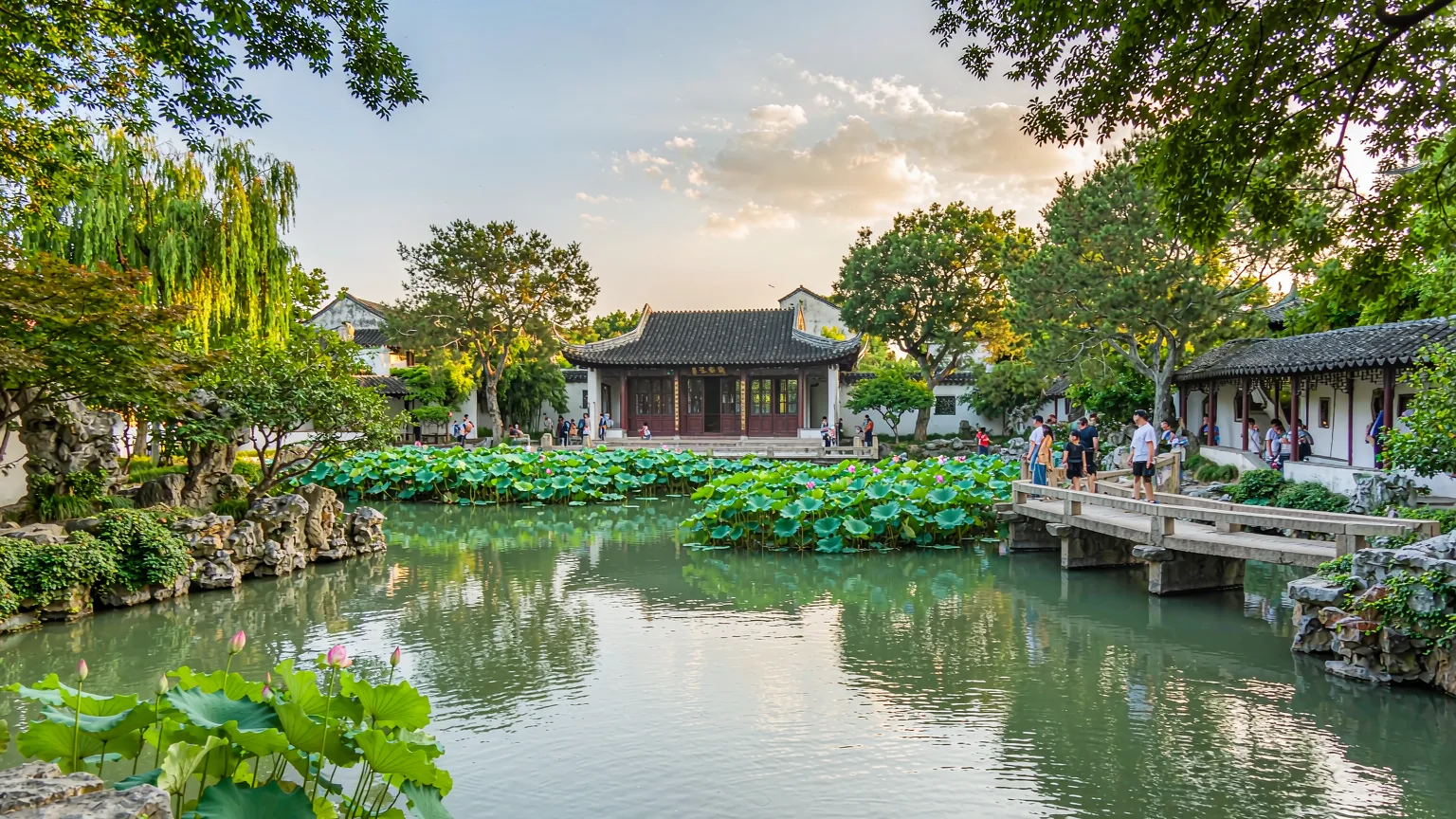
The Humble Administrator's Garden is 5.2 hectares of ponds, pavilions and borrowed scenery, laid out from 1509 by a retired official named Wang Xianch
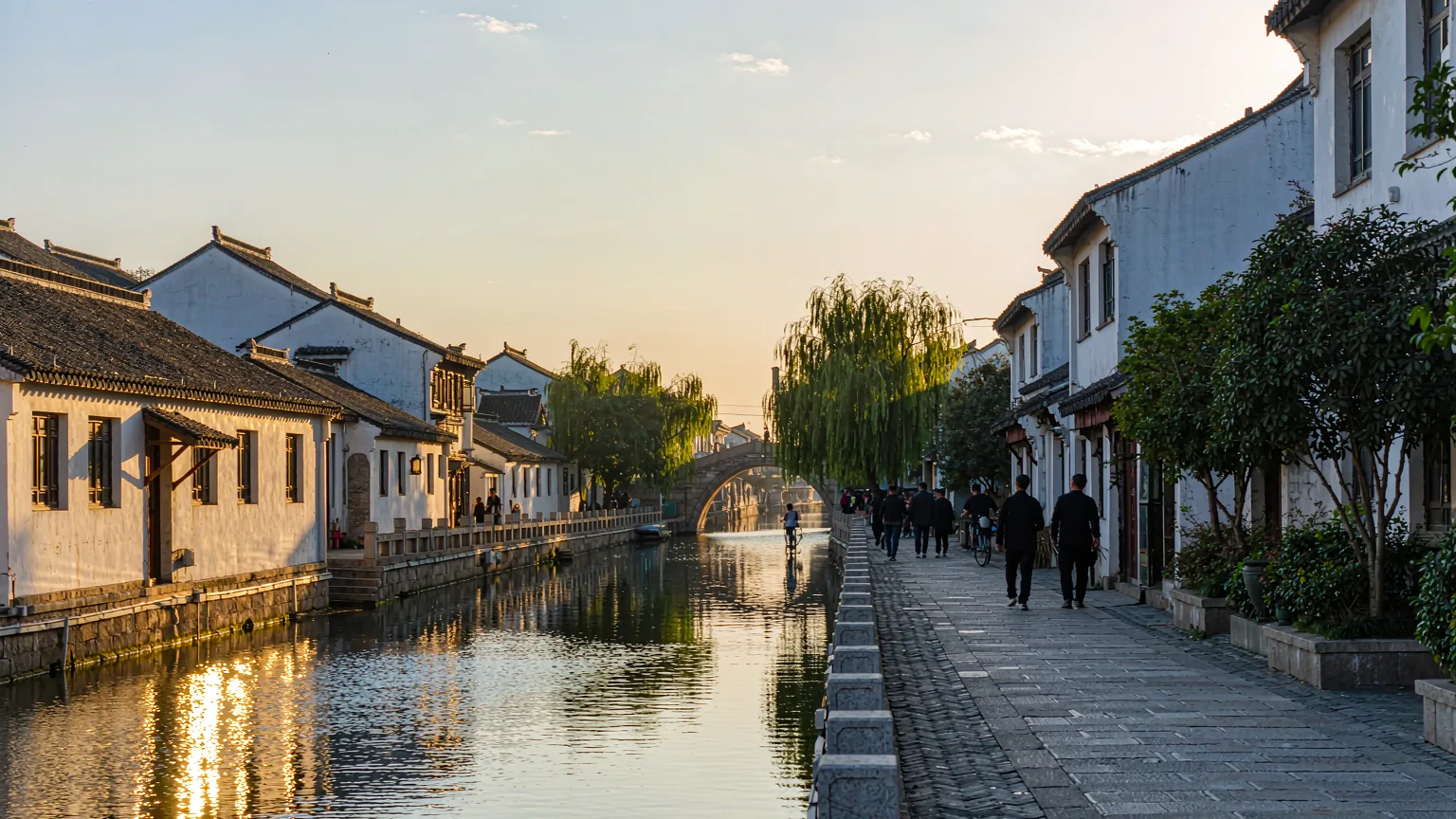
Pingjiang Road is 1.6 km of stone-paved lane along a canal, laid out in the Song dynasty and still following the street plan carved on the 1229 map of
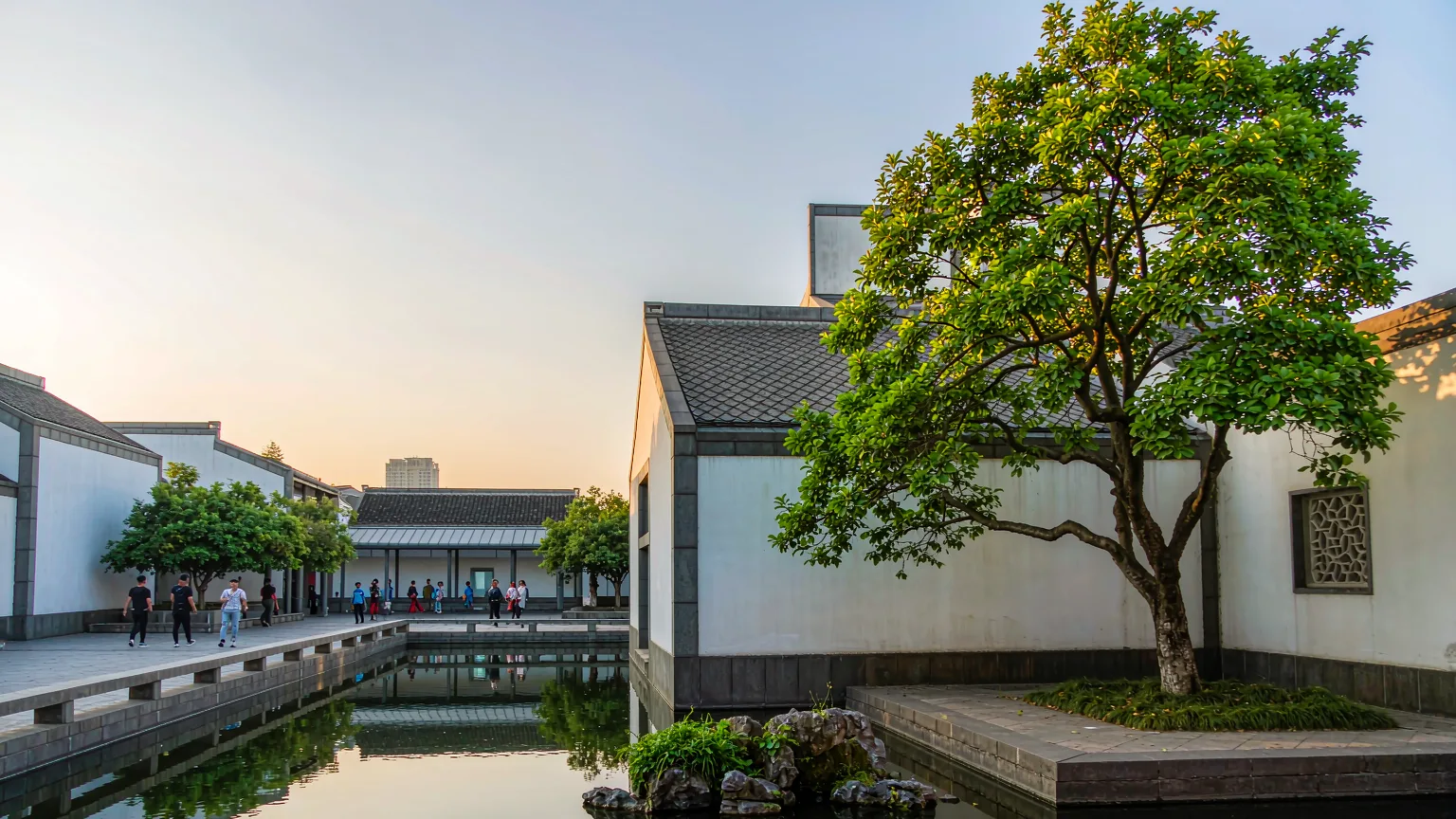
The Suzhou Museum was I. M. Pei's last building, finished in 2006 when he was 89, and it holds 30,000 objects from the Wu region. It is free, it is sm
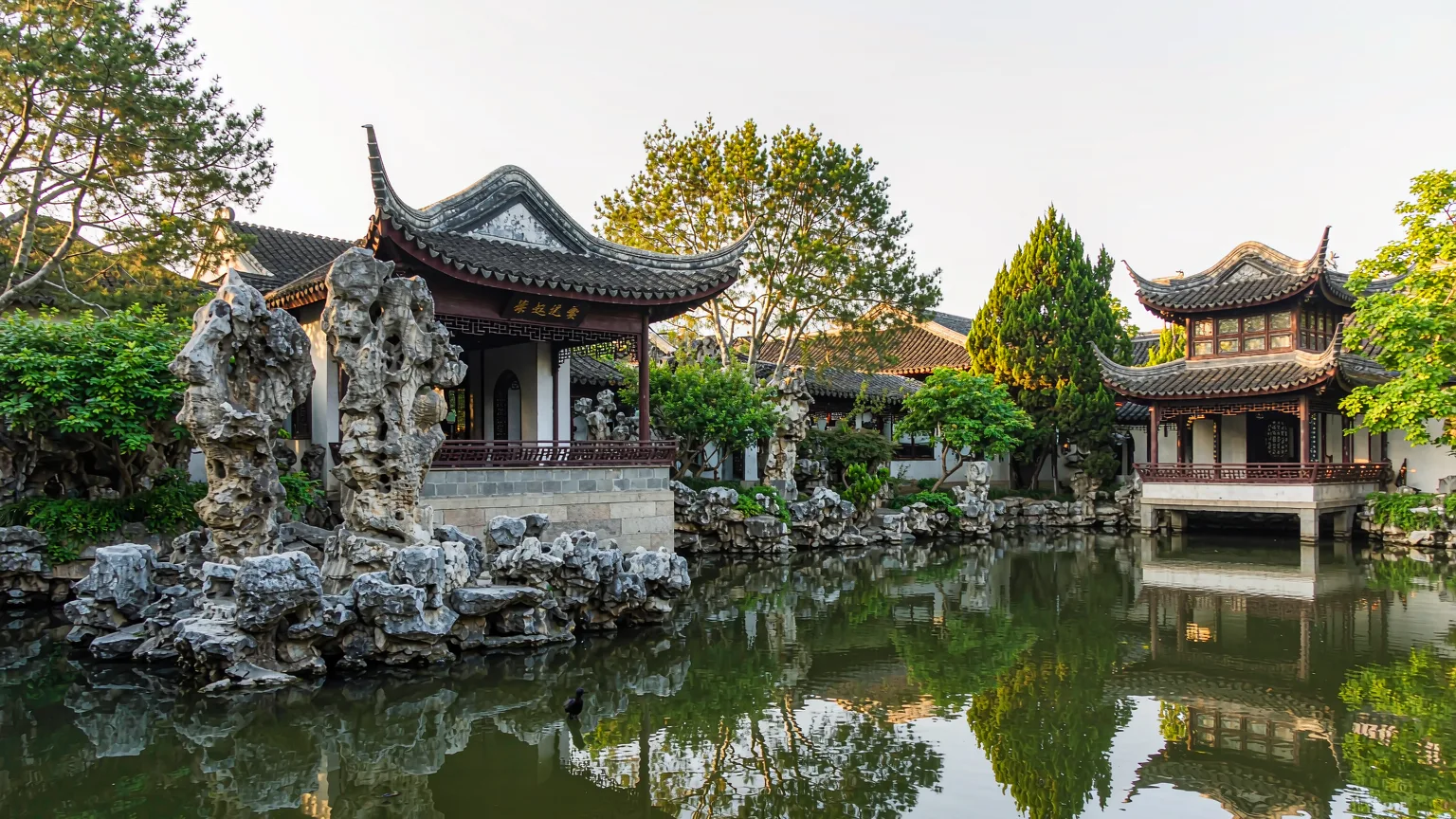
The Lingering Garden is 2.3 hectares, laid out from 1593, and it has the best-preserved rockery in Suzhou: a 6.5-metre limestone peak called the Cloud
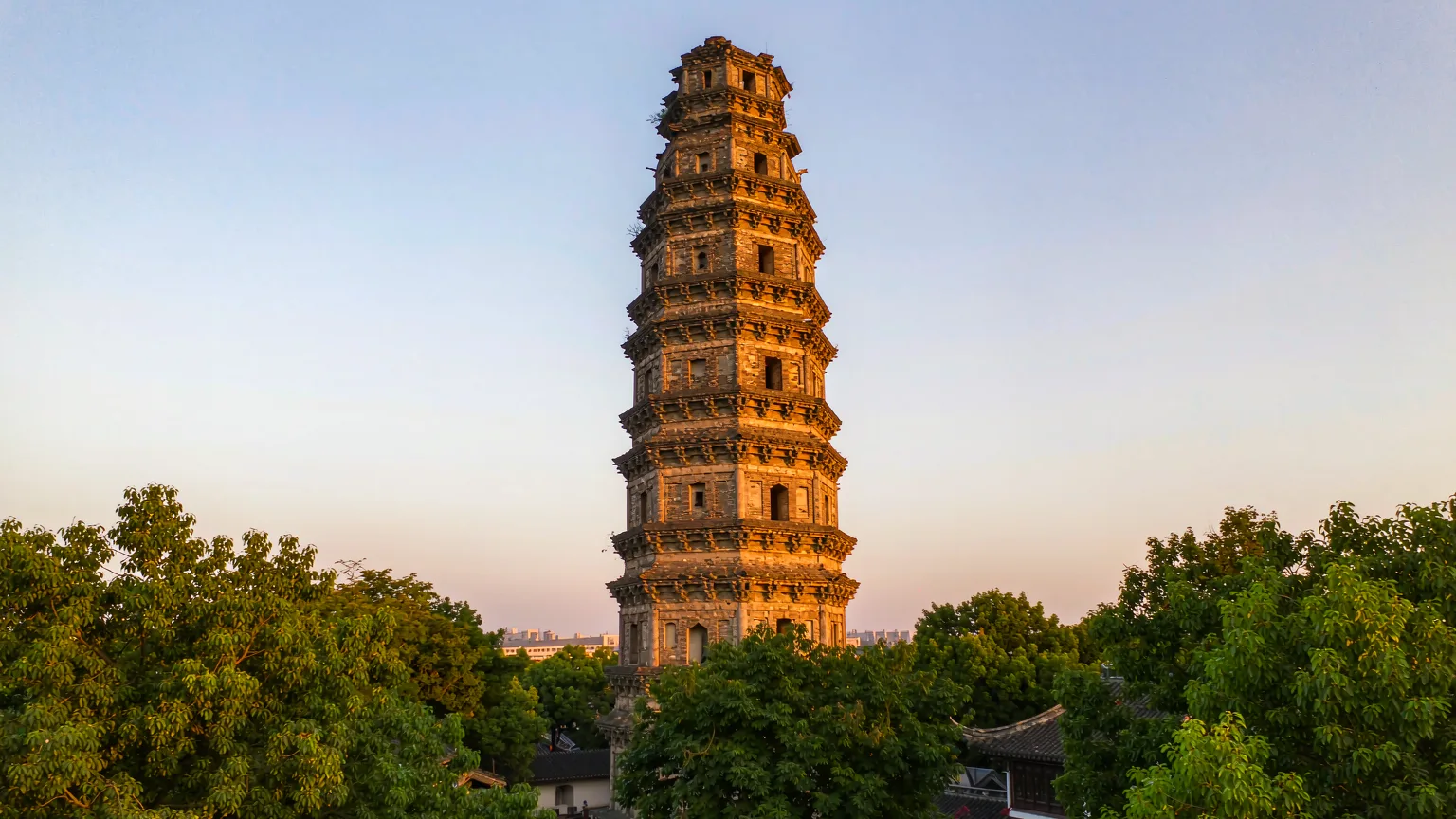
Tiger Hill is a 36-metre mound with a leaning pagoda on top, a sword pool where a king is said to be buried with 3,000 swords, and 2,500 years of lege
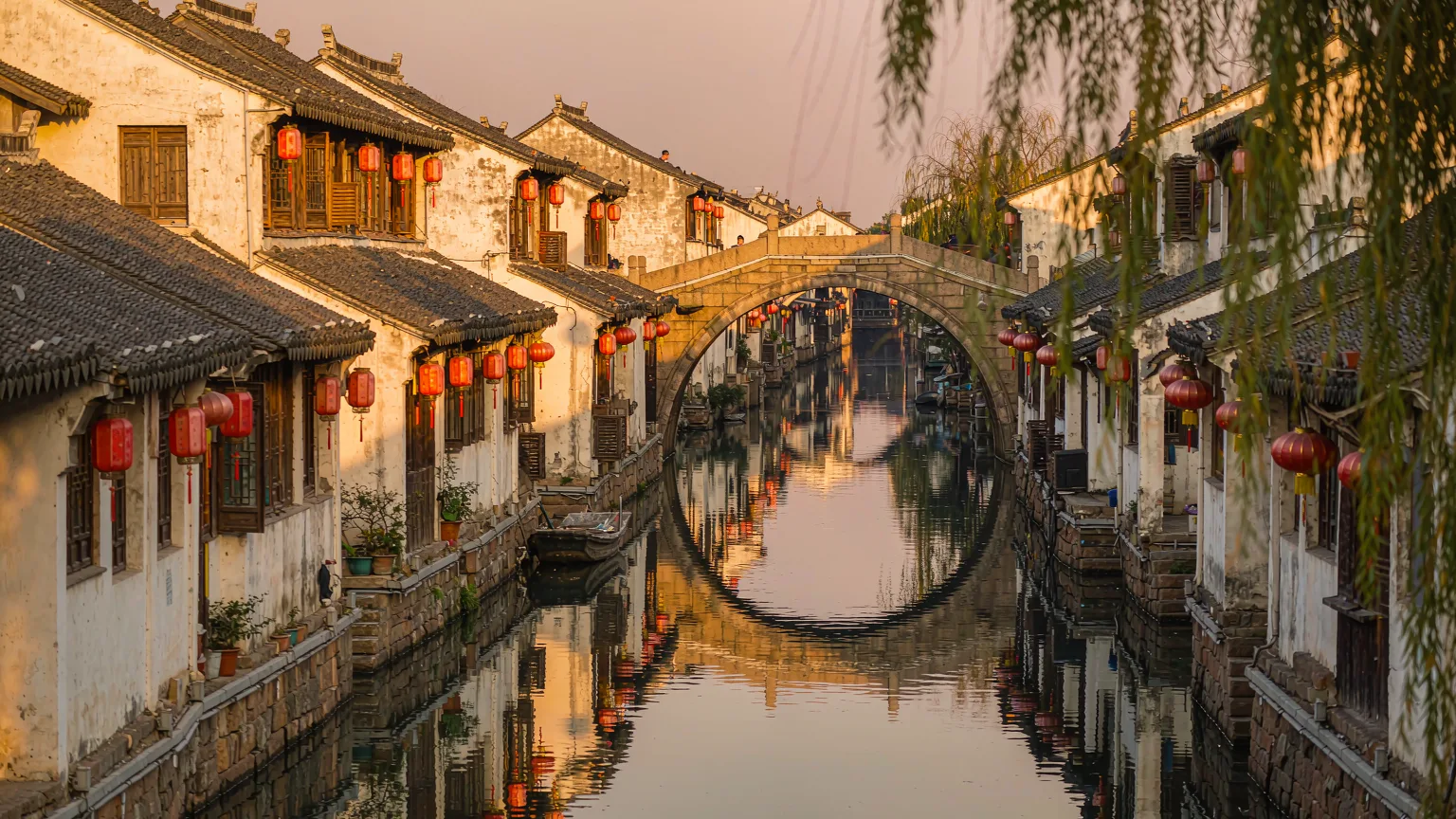
Shantang Street runs 3.6 km along a canal dug in 825, when Bai Juyi was governor of Suzhou. It was the commercial road between the city and Tiger Hill
A little further out, for a spare half-day.
A large music fountain on East Taihu Lake in Suzhou Bay, combining light, water screens and music on a grand…
A waterfront promenade on Jinji Lake, with European-style buildings, cafés, restaurants and bars against the…
A nighttime market along Pingjiang Road, where creative crafts, street food and lantern-lit night blend in…
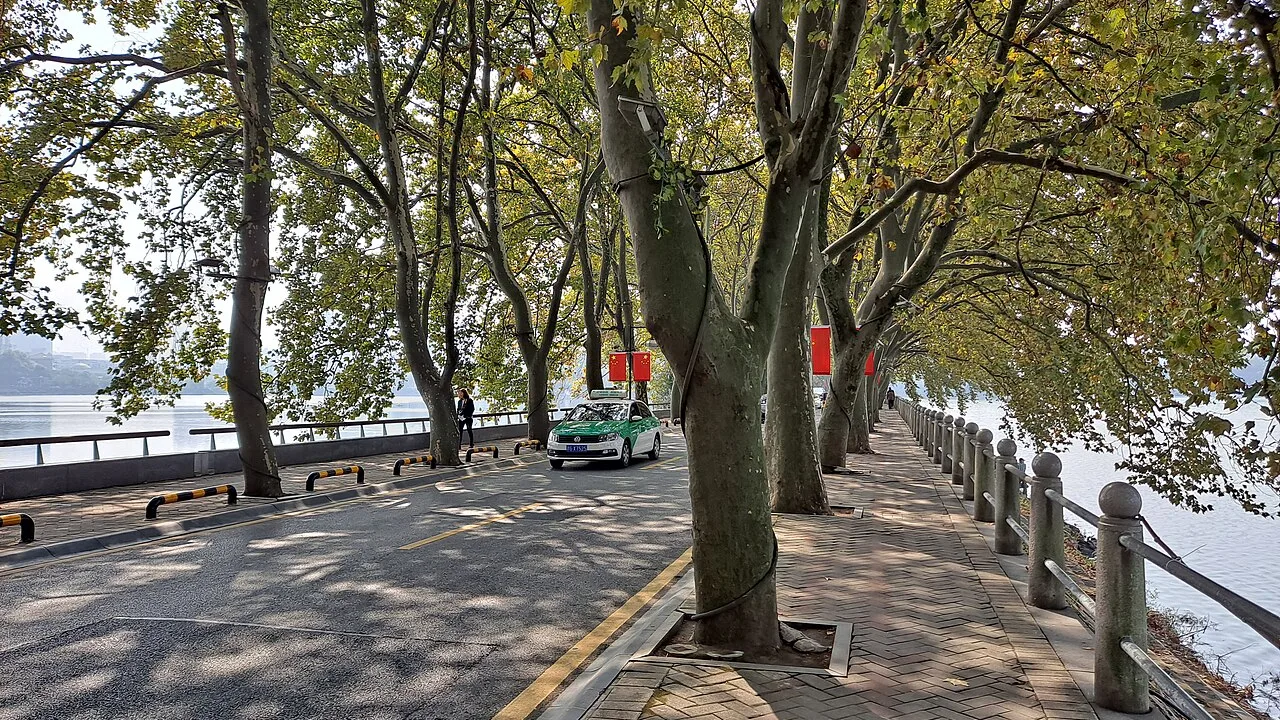
A scenic causeway across Jinji Lake, about 2.2 kilometers long, named for a Qing-dynasty water project. Lined…
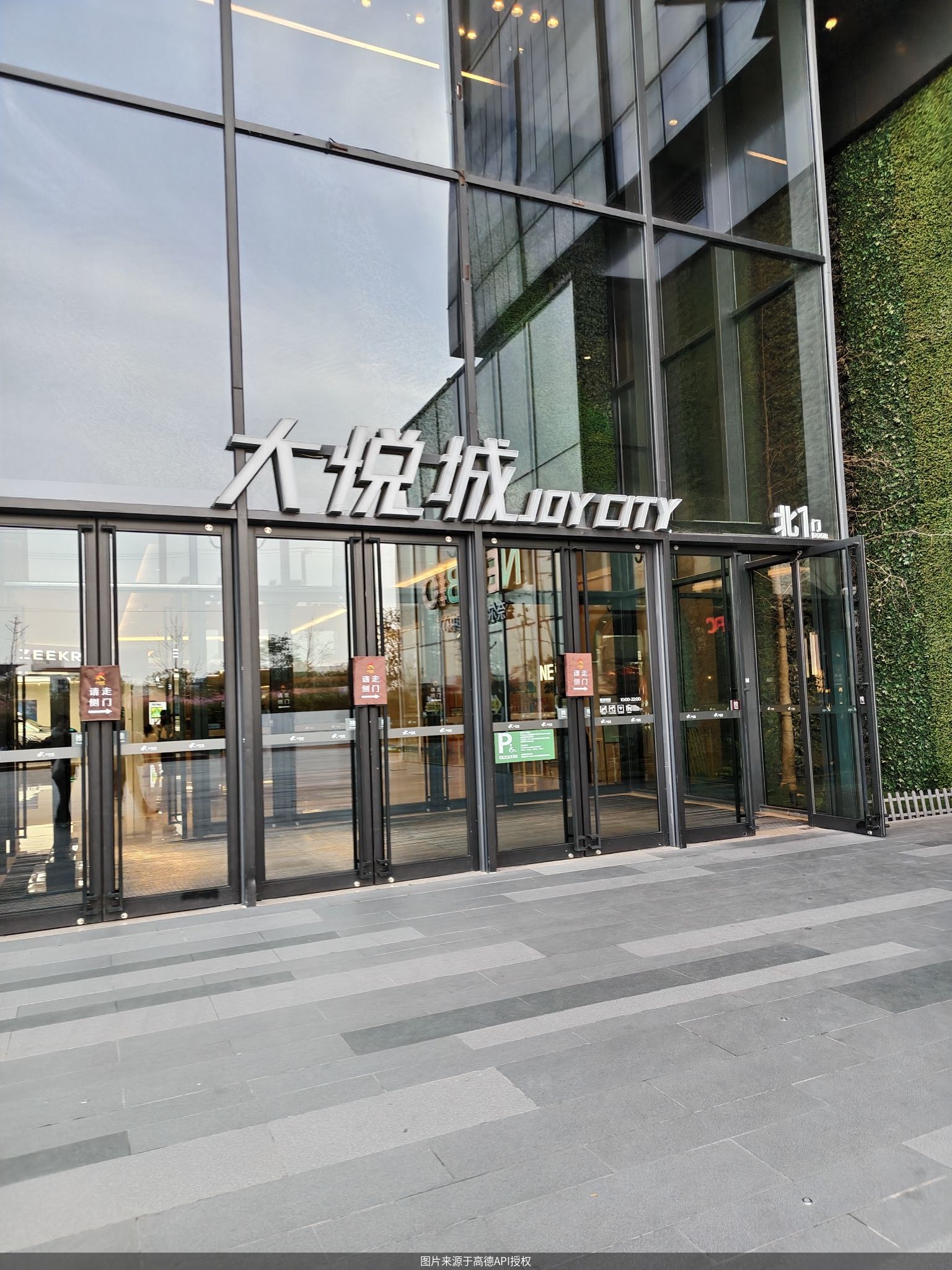
A large mall in Xiangcheng District, combining retail, dining, entertainment and family offerings with young…
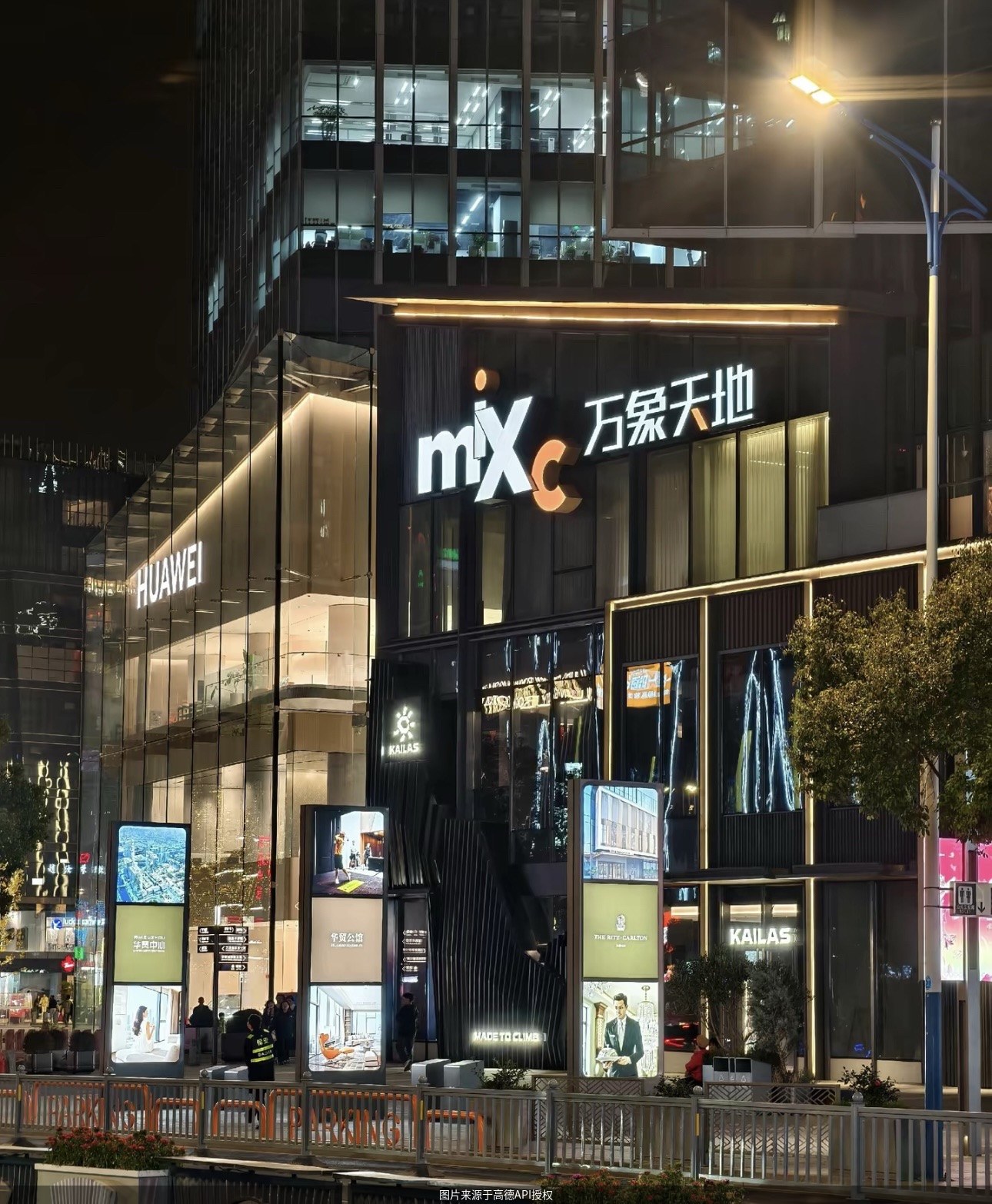
A large mixed-use complex on Fengqiao Road, combining a shopping mall, dining and leisure with diverse…
Museums, galleries and workshops still keeping old crafts alive.
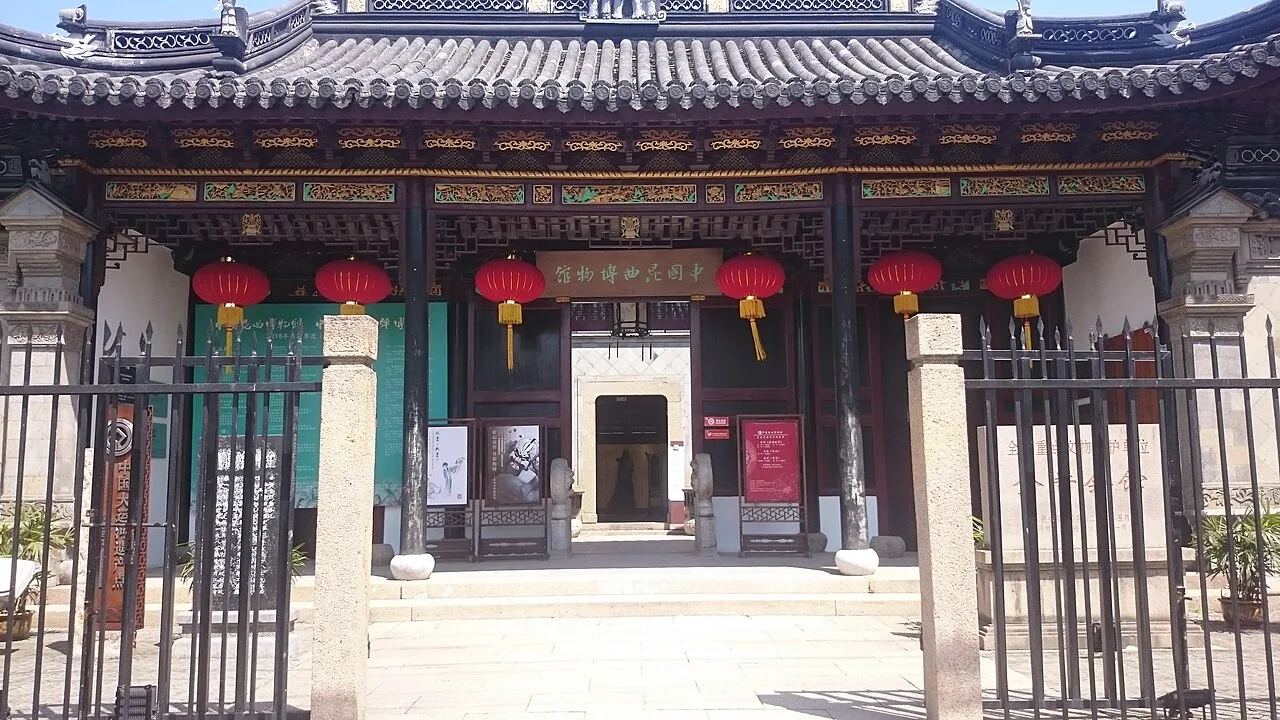
A museum in the historic Quanjin Guild Hall on Pingjiang Road, tracing Kunqu Opera's history, scores…
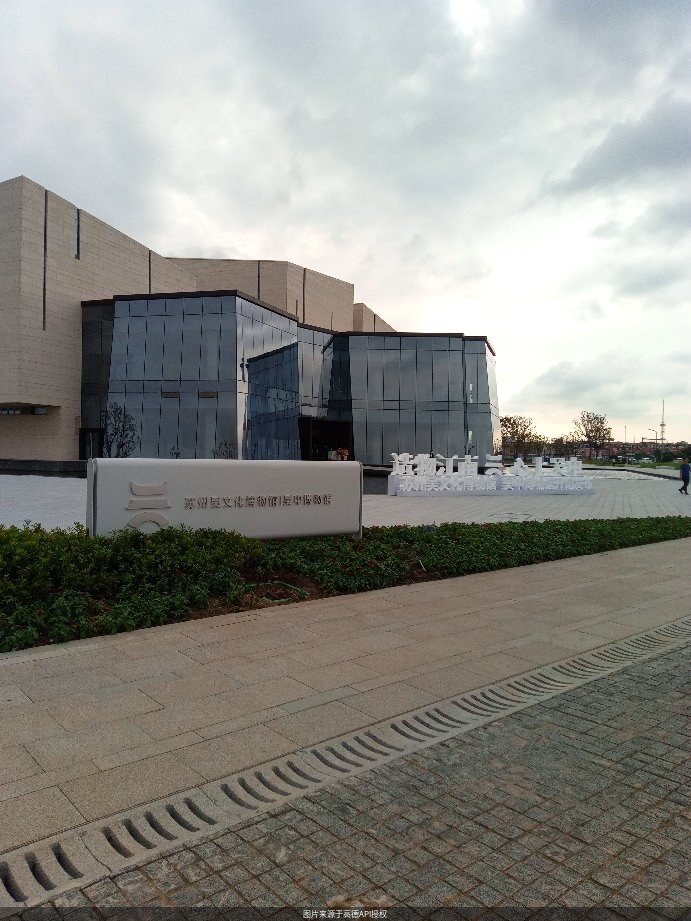
A museum devoted to Wu regional culture, with rich collections of Wu bronzes, ceramics, painting and…
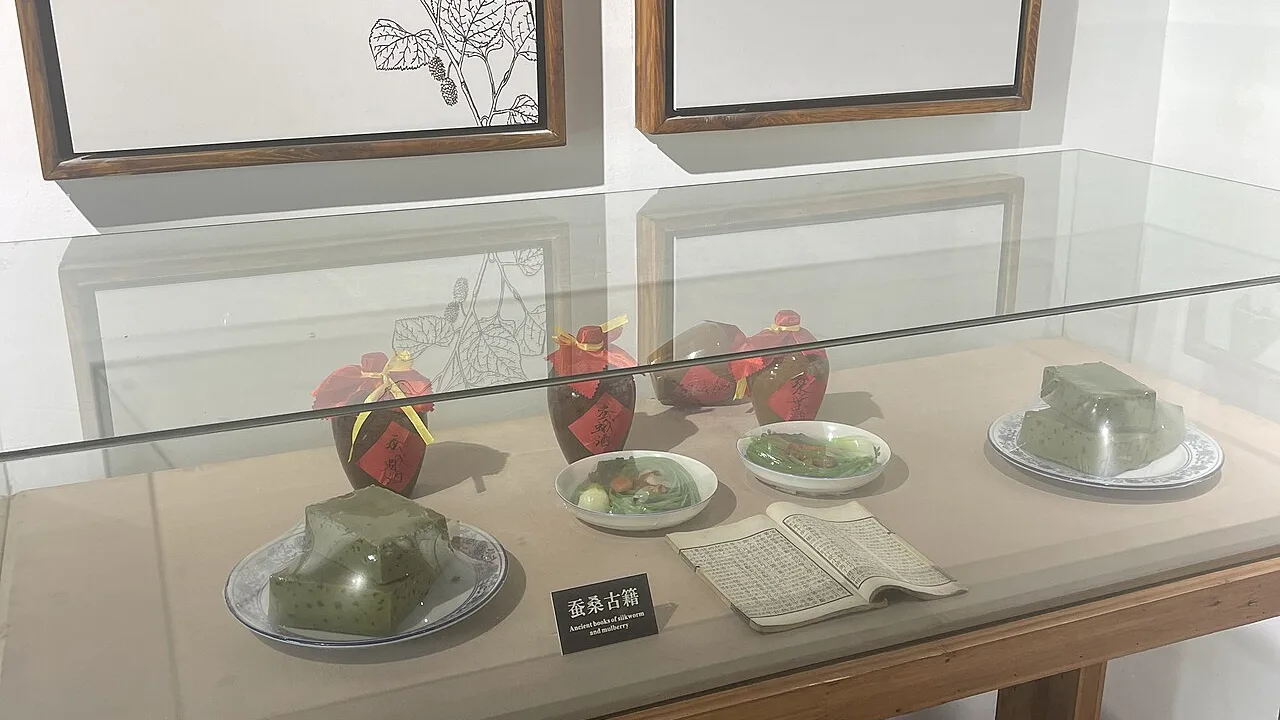
A museum devoted to the origins, weaving techniques and culture of Chinese silk, with traditional looms and…
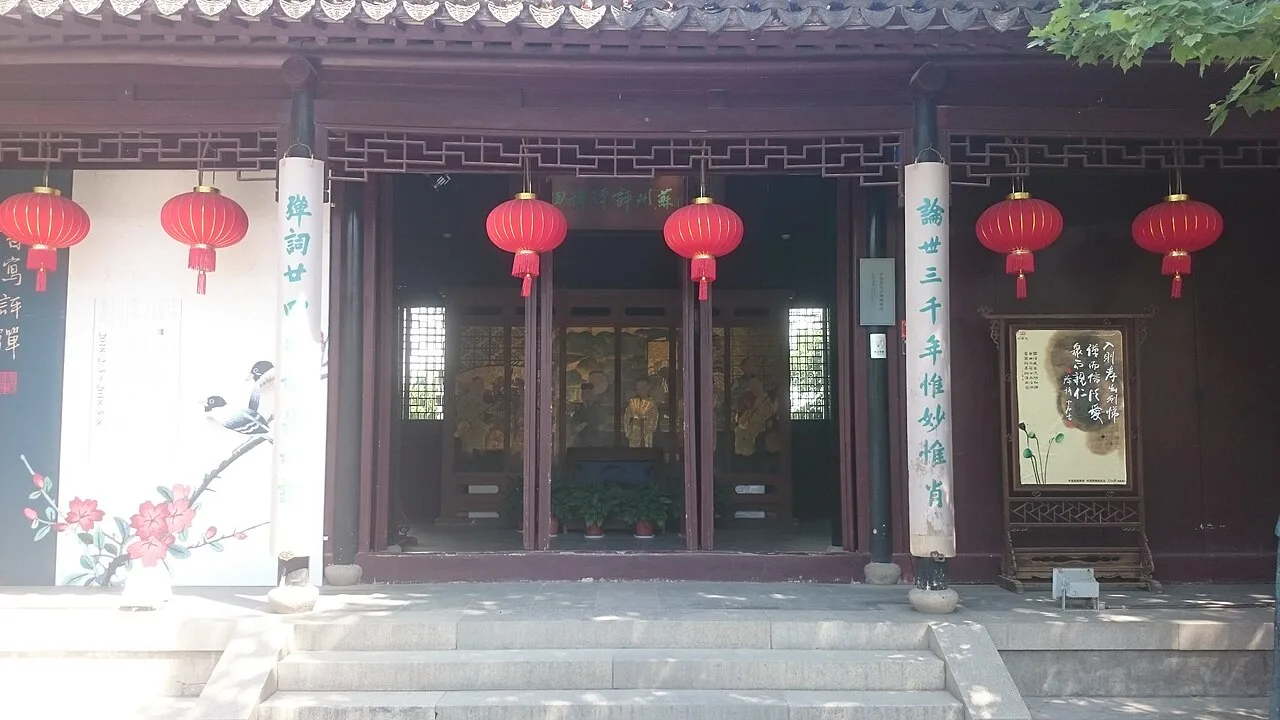
A museum on Pingjiang Road dedicated to Suzhou pingtan storytelling, a national intangible heritage, with…
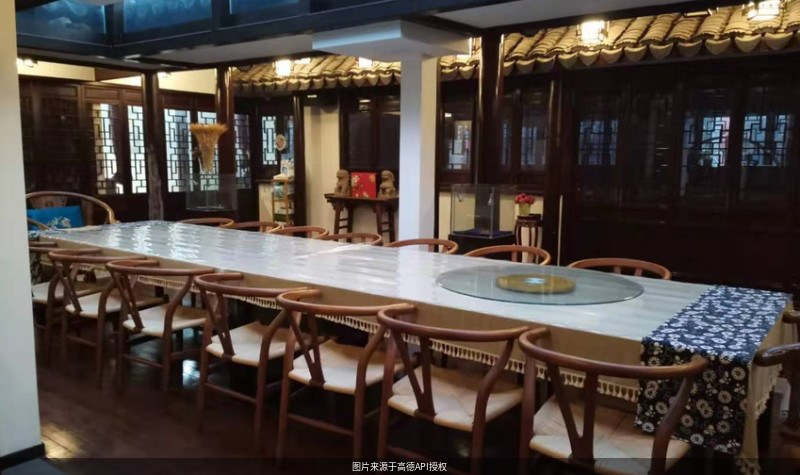
An ancient opera form born in Kunshan, Suzhou, hailed as the 'mother of Chinese opera' for its melodic…
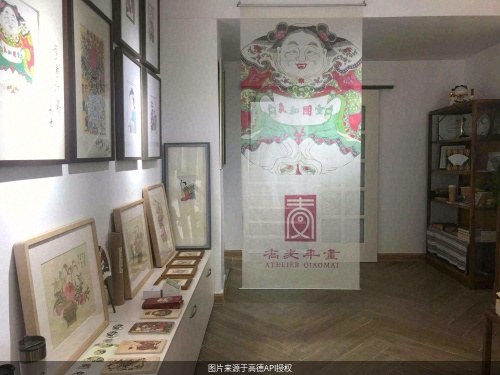
Traditional woodblock New Year prints from Suzhou's Taohuawu, known for full compositions, bright colors and…
Where the whole street eats — the city's most famous food streets, each with its own guide page.
A time-honored Suzhou-cuisine house founded in the Qianlong era, hailed as the 'first house of Suzhou…
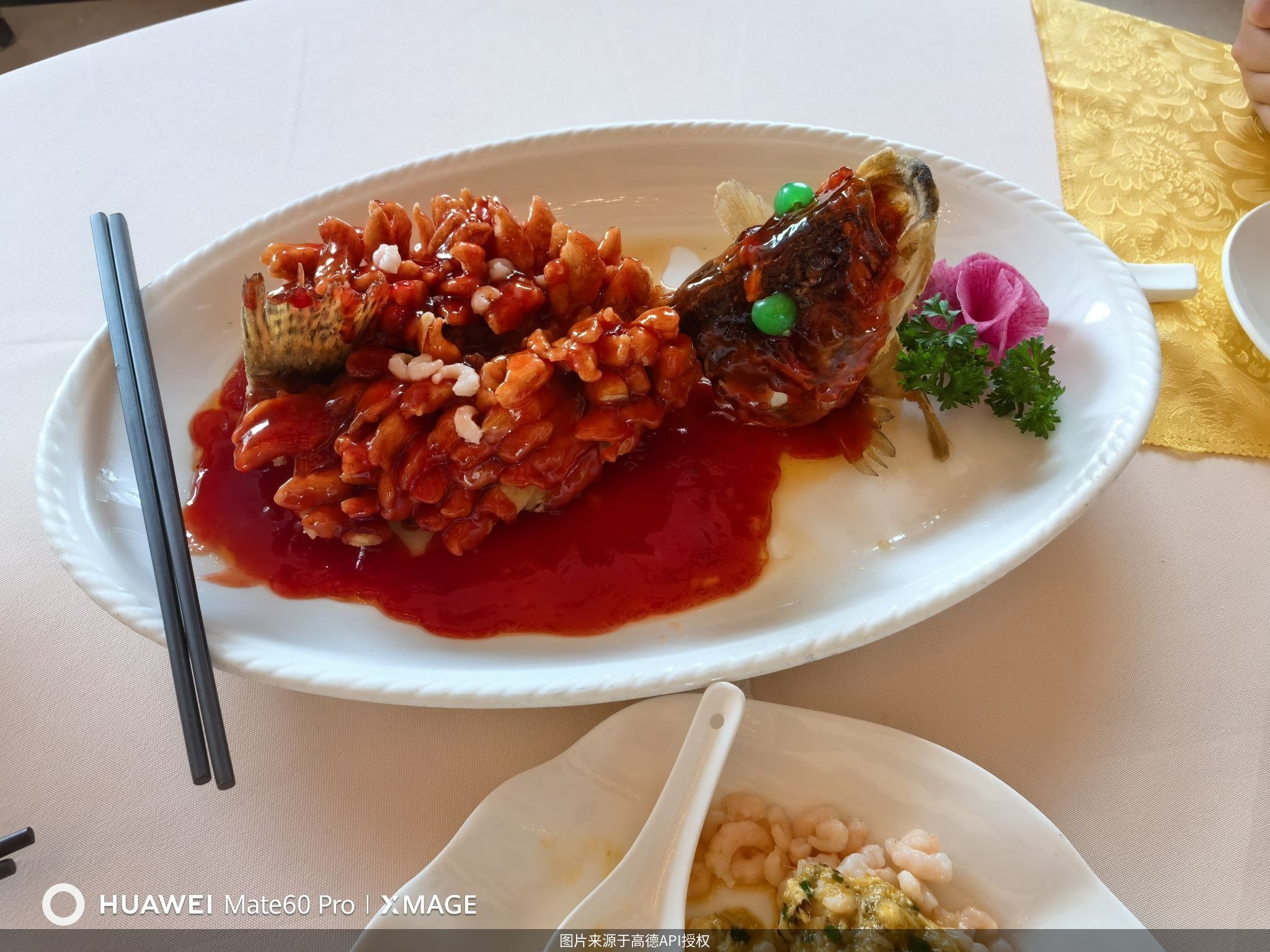
A century-old Suzhou-cuisine institution, famous alongside Songhelou for classics like squirrel fish and eel…
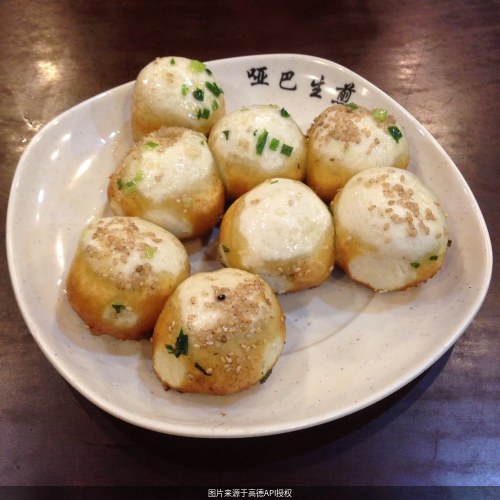
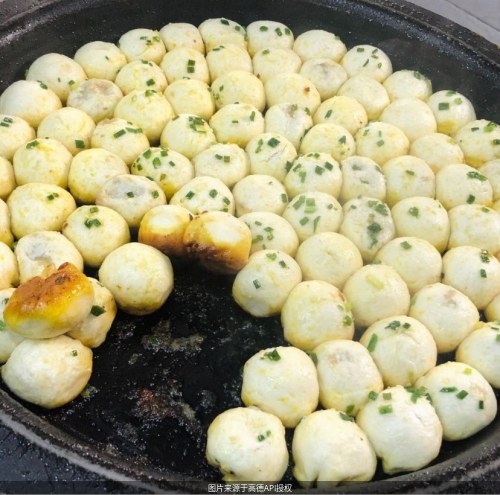
A legendary Shengjian (pan-fried bun) shop famed for thin skins, crisp bottoms and rich soup, devoted to this…
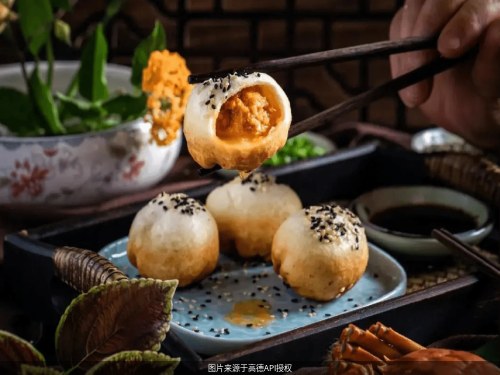
A popular Shengjian chain best known for its whole-shrimp buns with tender shrimp and rich broth, alongside…
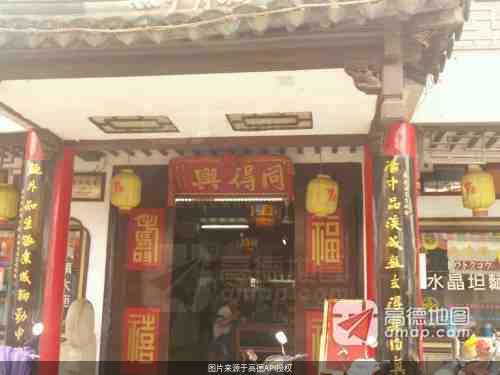
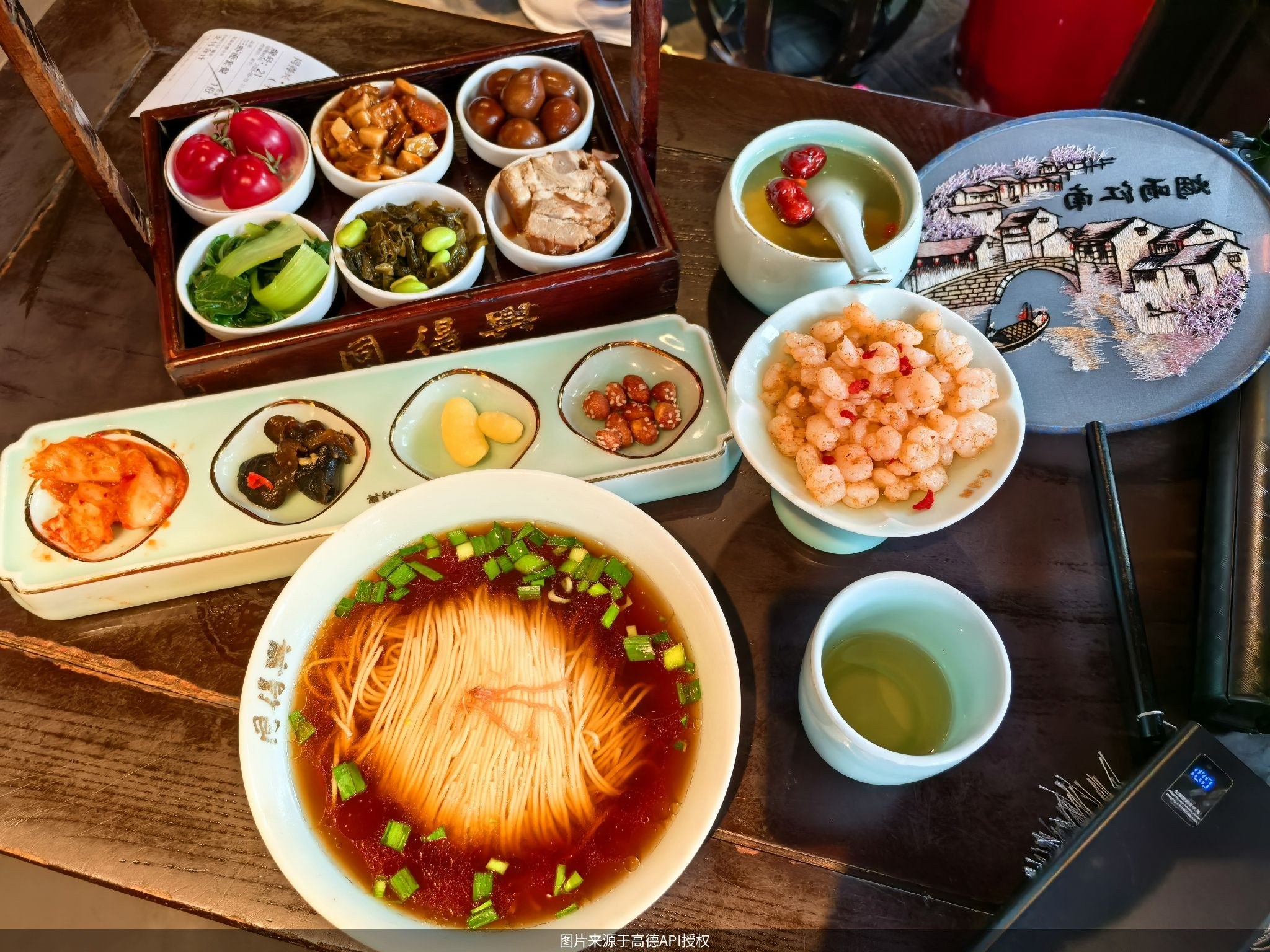
A well-known Suzhou noodle house famed for seasonal bowls like Fengzhen pork noodles, with springy noodles…
A time-honored noodle house on Shantang Street, known for braised-pork noodles, Aozhao noodles and classic…
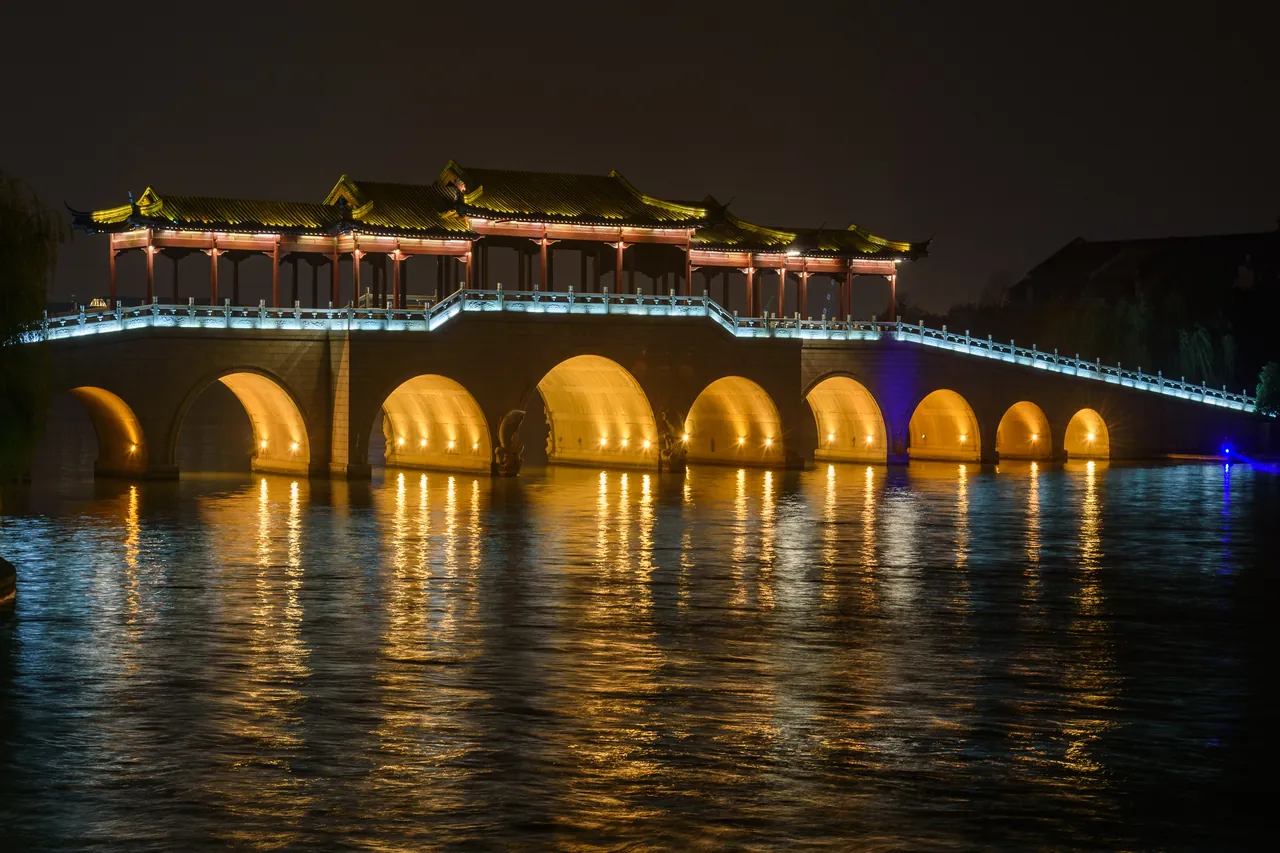
Eight short performances staged across a Ming garden after dark.
A lit canal street with hand-rowed boats until 9pm.
Quieter after 8pm, with teahouses and pingtan ballad venues.
A bowl of Suzhou-style noodles to close the day.
Suzhou's nights are canal-side and quiet — a night garden, a Kunqu scene, a bowl of noodles.
Listed sites and the crafts that made this city famous.
The largest classical garden in Suzhou (1509), built around a central pond with 30+ pavilions.
Famous for its rockery corridor and the 12-metre Cloud-Capped Peak stone.
The smallest and most refined of the listed gardens, best seen at night.
The city's water gates and canal walls are part of the 2014 listing.
China's oldest living opera form, with flute-led melody and codified gesture — UNESCO's first proclamation (2001).
Storytelling with pipa and sanxian in Suzhou dialect — a teahouse art.
Double-sided embroidery with silk threads split to a fraction of a hair.
Silk, sandalwood and folding fans, carved and painted by hand.
Senior licensed guides with 10+ years in the field and fluent English — deep on history, culture and local life.
Experienced licensed guides with clear English — solid on city highlights, food and day-to-day logistics.
Licensed guides with workable English — a good-value choice for city days, transfers and standard commentary.
Chauffeur-driven by the day, plus airport and intercity transfers.
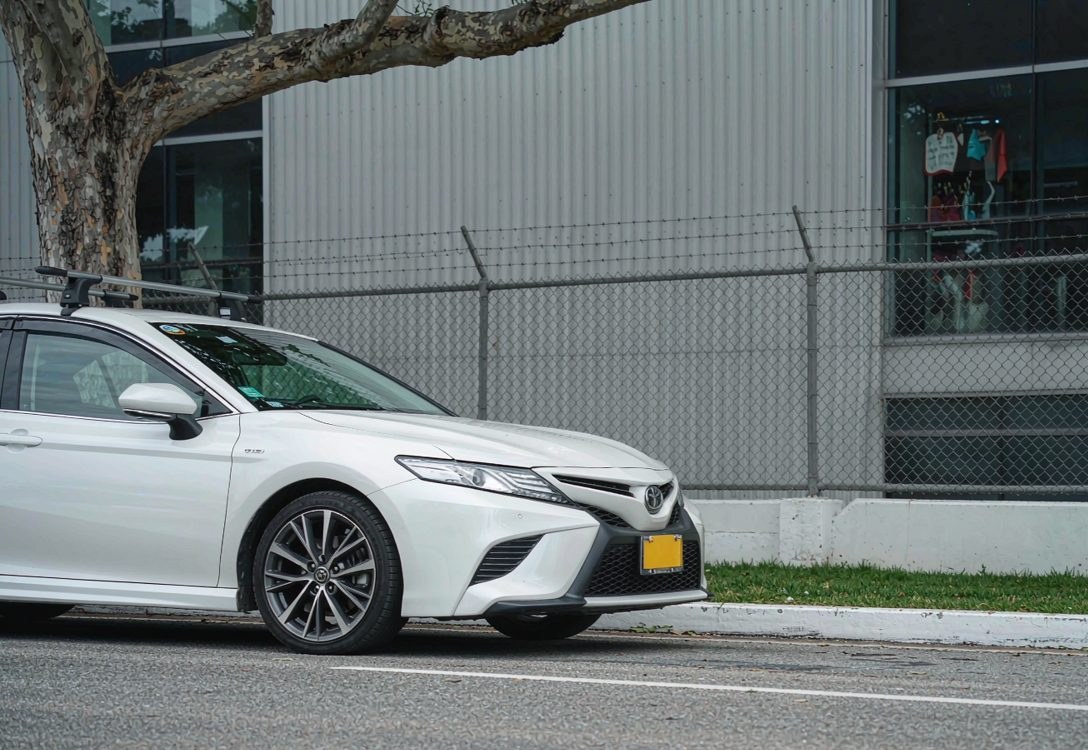

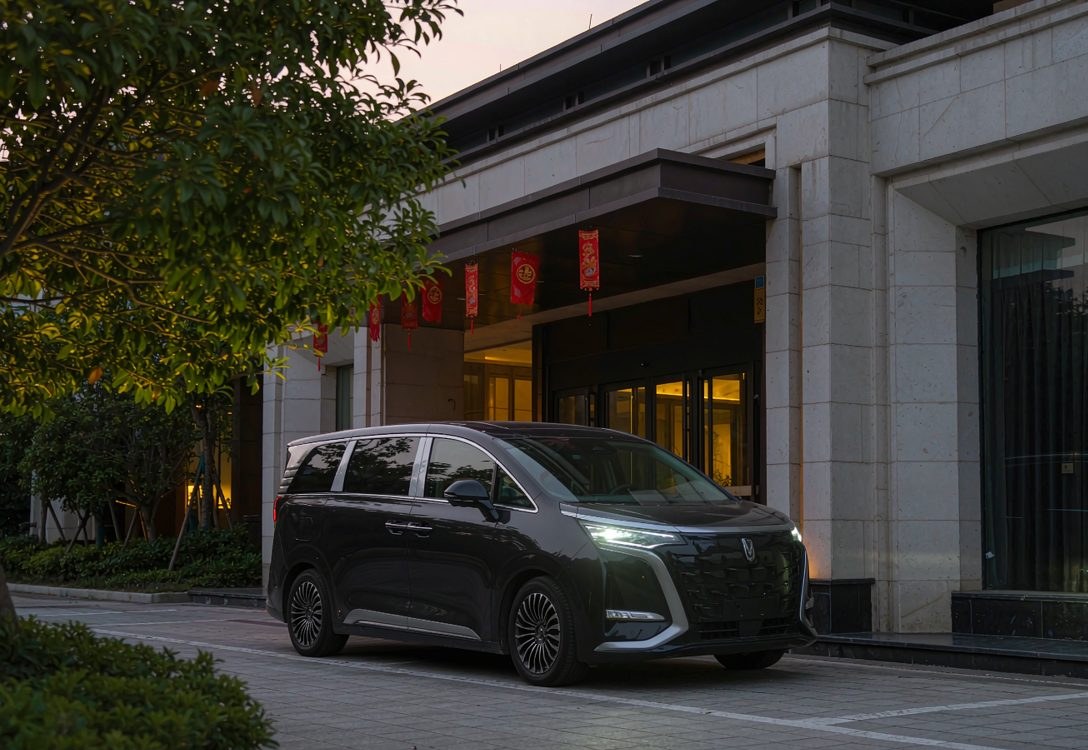
Private chauffeur-driven vehicles, priced per vehicle not per person. Airport transfer from $45; intercity transfer from $180.
A major port on the lower Yangtze and the core outlet of Suzhou to the sea, ranking among the top inland ports for container and bulk cargo. A vital waterway logistics hub.
A high-speed rail station in Fenhu, Wujiang, serving lines like the Nantong-Suzhou-Ningbo railway, linking southern Suzhou with the Yangtze Delta. A modern gateway to the city's south.
Kunshan's high-speed rail hub, where the Beijing-Shanghai and Shanghai-Nanjing lines meet, a key link between Shanghai and Suzhou. Its frequent services make it the main rail gateway for Kunshan.
A cruise wharf on Suzhou's ancient canal by Midu Bridge, the starting point for evening cruises around the old city moat. Painted boats glide past walls, bridges and lights, revealing the water town by night.
A large mall in Xiangcheng District, combining retail, dining, entertainment and family offerings with young, trendy brands. A key destination for shopping in northern Suzhou.
A large mixed-use complex on Fengqiao Road, combining a shopping mall, dining and leisure with diverse brands. A rising destination for urban shopping and leisure in Gusu District.
A large Japanese-style mall in the east of Suzhou Industrial Park, combining a supermarket, retail, dining and family entertainment. A favorite for family shopping and leisure in the area.

10 guides split by trip length: one-day city routes, three-day escapes and longer journeys, with stops, costs and transport in each.
Enter the Humble Administrator's Garden at opening, spend late morning in Suzhou Museum,
Three DaysThree Days of Suzhou Landscape: Gardens, Temples, Water Towns and Jinji LakeDay one for old-city gardens and temples, day two down to the water towns of Zhouzhuang
Multi-DayClassic Suzhou in Five Days: Gardens, Water Towns, Lakes and KunquTwo old-city days for gardens and lanes, day three at Zhouzhuang, day four at Jinji Lake
Real routes, real travellers — a sense of what a trip looks like.
5 days · Shanghai + Suzhou · "The night garden with eight performances — completely unexpected."
4 days · Suzhou gardens · "An embroidery studio where a double-sided piece takes eight months."
3 days · Suzhou + Tongli · "Kunqu in a Ming garden at night — the reason I came."
Most travellers spend 3 days here. Add a day for a side trip if you want a slower pace.
Spring and autumn are usually the most comfortable. Check the seasonal notes above before booking.
We arrange airport/rail transfers and private drivers. Tell us your arrival point and we plan the connection.
Send an enquiry and a human expert replies within 12 hours with a draft plan and real prices. Flexible rescheduling; clear cancellation terms in your quote.
2-day private itineraries in Suzhou start from $590 per person, two travelling together. Your proposal itemises hotels, tickets, guide and car — no hidden fees.
The Humble Administrator's Garden for scale, the Master of the Nets for intimacy (and the night programme), Lingering Garden for rockery.
Different cities: Suzhou is gardens and canals at walking pace; Hangzhou is a lake and tea hills. Both are 1.5 hours apart by train.
Yes — 25 minutes by high-speed rail. But the gardens are best before 9am, so an overnight stay is better.
Recent listed prices: Humble Administrator's Garden ¥80; Pingjiang Road free; Suzhou Museum free; Lingering Garden ¥45; Tiger Hill ¥60. Ticket prices change seasonally — we confirm them in your quote.