
Suzhou's landscape is made: gardens lift hills and waters inside walls, water towns lay daily life along canals, and lakes spread the modern city along their shores. Three days, three waters: the garden pools, stillest; the water-town canals, liveliest; Jinji Lake and Taihu, widest.
The routing puts the farthest in the middle: day two entirely among water towns, Zhouzhuang and Luzhi one west one east, tight but worth it; day three returns to modern Suzhou for an afternoon along the lakes, closing on a music fountain at night.
Itinerary at a glance
| D1 08:00 | The Humble Administrator's Garden: Landscape inside Walls |
| D1 11:00 | Lion Grove Garden: Landscape Hidden in Rockwork |
| D1 14:00 | Xiyuan Temple: Ancient Trees and the Release Pond |
| D1 17:00 | Shantang Street: Canal Dusk |
| D2 09:30 | Zhouzhuang: Twin Bridges and the Oared Boat |
| D2 14:30 | Luzhi: The Quieter Water Town |
| D3 10:00 | Ligongdi Causeway: Morning Light on the Lake Causeway |
| D3 14:00 | Moonlight Marina: An Afternoon by the Lakeside |
| D3 19:30 | The East Taihu Music Fountain: A Finale of Water and Light |
The route, stop by stop
The Humble Administrator's Garden: Landscape inside Walls
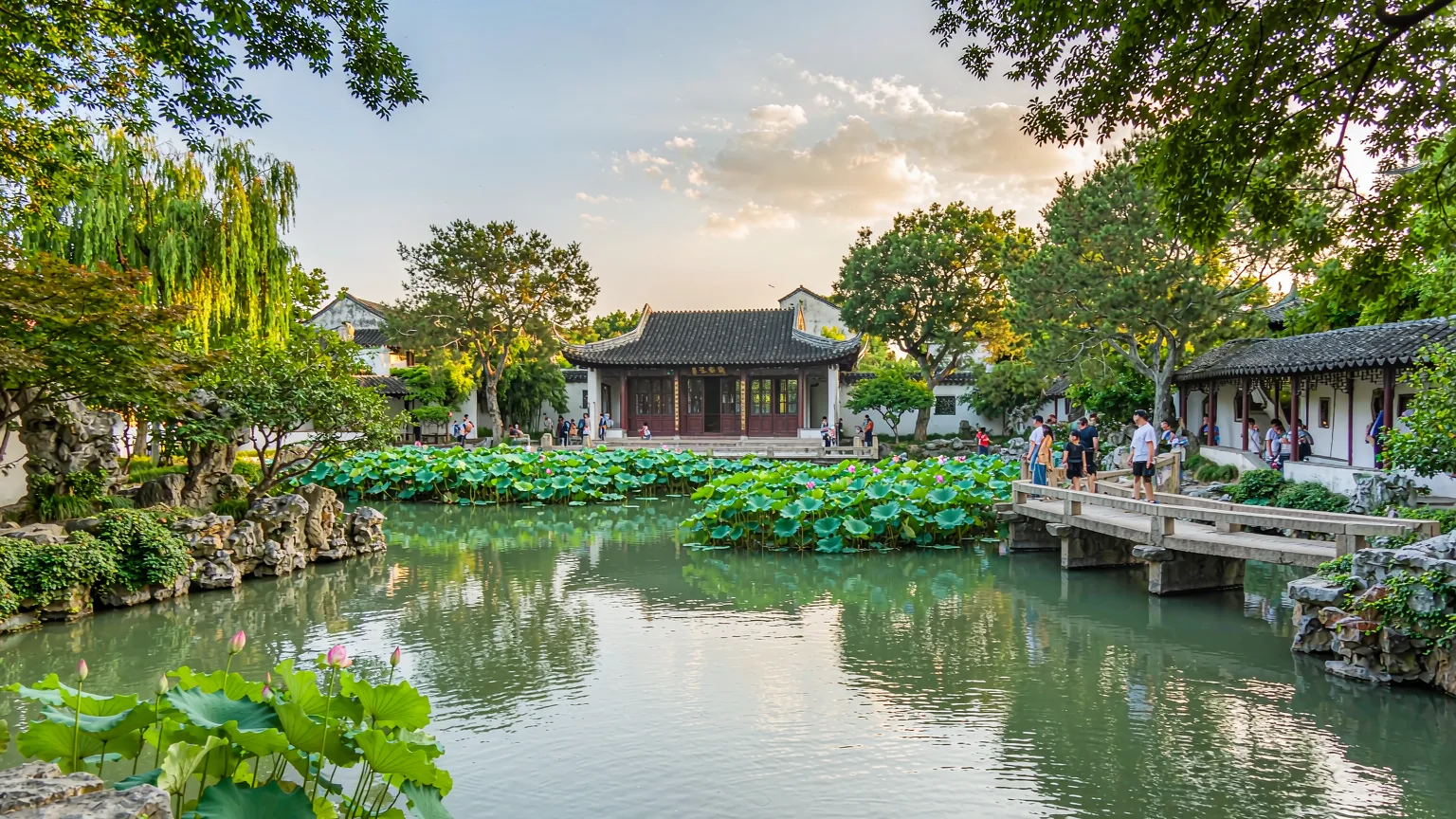
The nature line's first lesson is the garden itself. Water anchors the Humble Administrator's Garden, three-fifths of its area stringing every pavilion together, Yuanxiang Hall open on all sides, the ancients' complete answer to pulling landscape into a residence.
Enter at opening, when dawn leaves the water windless and reflections whole. Walk east to central to west; the central pool-and-hill complex is the garden's landscape skeleton and deserves twenty extra minutes.
Lion Grove Garden: Landscape Hidden in Rockwork
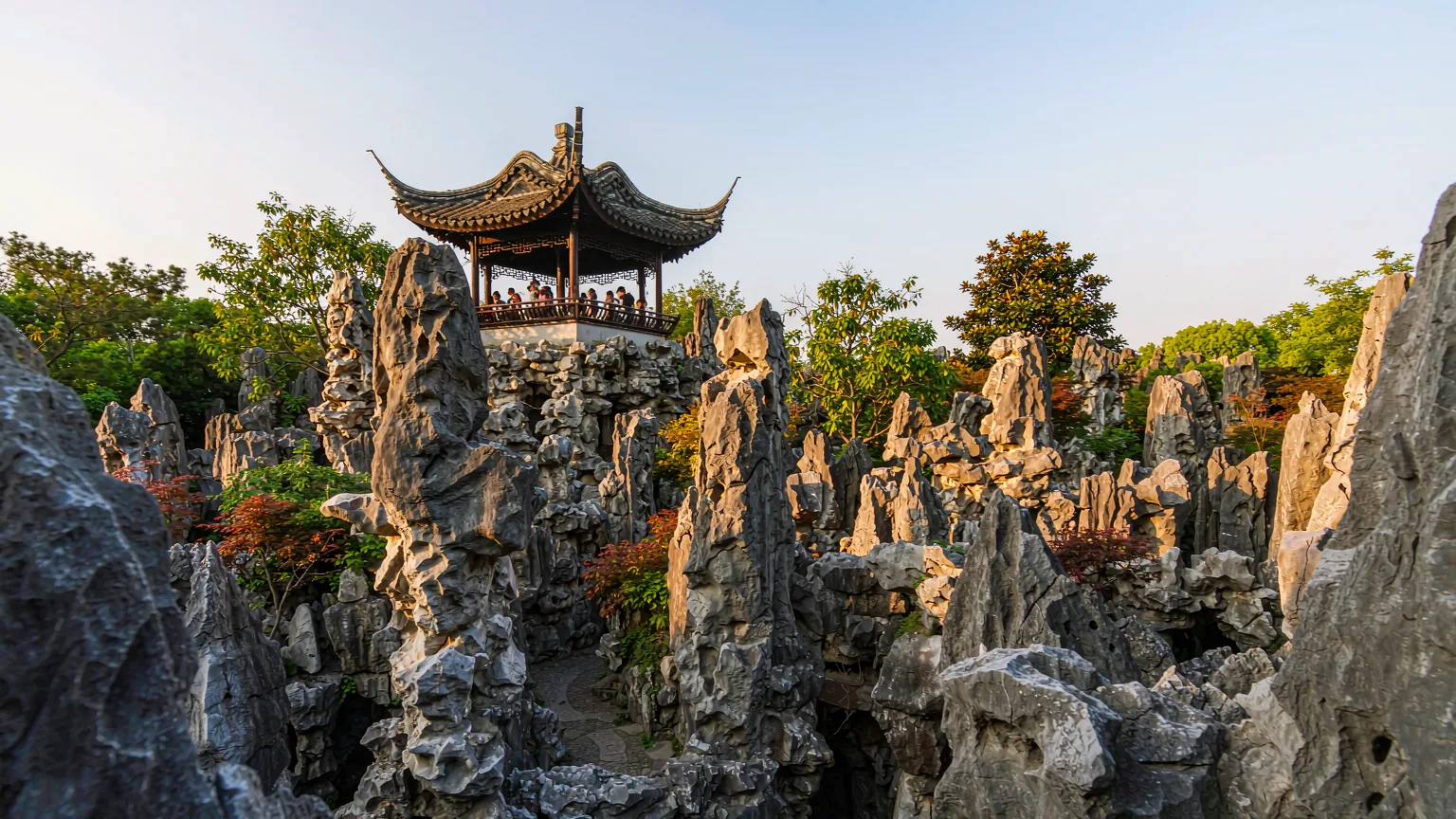
Walk from the Administrator's Garden to Lion Grove, where landscape takes another form: Taihu rock piled into a labyrinth spiraling through three levels, grottoes, stone bridges and steps composing a climbable mountain.
The rock maze is a must-do on a nature line: the stones were ground by Taihu's water, their veins signed by it. Exiting, sit ten minutes in the corridor and watch others lose themselves inside.
Xiyuan Temple: Ancient Trees and the Release Pond
The afternoon reaches Xiyuan Temple in the city's west. Ancient trees tower over the courtyards and the release pond spreads wide, where the pond's old giant softshell turtle surfaces now and then, a topic the temple has kept for years.
The five hundred arhat statues in the hall each wear a different expression; finding the ones that resemble you is a bonus game. The temple's vegetarian noodles are a Suzhou sight themselves, one bowl stitching the garden line to the temple line.
Shantang Street: Canal Dusk
By evening, back to Shantang Street and hand day one's close to the canal. The seven-li street strings along the water, stone bridges and lantern light half arrived in the dusk, the other half waiting for dark.
Walk the canal to Tonggui Bridge and turn for the full water-lane panorama. Dinner happens here among riverside noodle shops and snack stalls, with the lanterns rising as you finish.
Zhouzhuang: Twin Bridges and the Oared Boat
Day two belongs to the water towns. Zhouzhuang is the genre's calling card, its Twin Bridges pairing an arch and a beam into the shape of a key, made famous abroad by Chen Yifei's paintings; canals, stone streets and deep courtyard houses survive intact.
Enter in the morning and do lanes before sights: Shen's mansion and Zhang's sedan hall each reward a look, and ride the oared boat before midday when the water runs calmest, the boatwoman's songs the town's soundtrack.
Luzhi: The Quieter Water Town
The afternoon transfers to Luzhi. Against Zhouzhuang's commercial density, Luzhi keeps the water town's everyday register: the Tang-dynasty painted-wall arhats of Baosheng Temple hold the town's treasure, and old teahouses by the canal fill with local elders.
Luzhi bristles with bridges, dozens of stone spans packed into a square kilometer; passing under any of them by boat frames a view straight off a postcard. Return to Suzhou by evening, saving the lakeside night for day three.
Ligongdi Causeway: Morning Light on the Lake Causeway
Day three returns the tempo to city and lake. Ligongdi Causeway runs into Jinji Lake, cafes and galleries lining the water, the morning lake glassy, the embankment path the locals' morning-exercise route.
Walk the causeway out and back, watching modern Suzhou's skyline rise across the water. Built in the late Qing, this is the lake's only old causeway, old stone bridges sharing frames with new glass towers.
Moonlight Marina: An Afternoon by the Lakeside
The afternoon follows the shore to Moonlight Marina, Jinji Lake's viewing core: the cruise pier, lakeside promenade and the Gate of the Orient across the water in one frame, afternoon light turning the lake pale blue.
A Jinji Lake cruise is this stop's proper move, the city skyline read from the water as modern Suzhou's density first appears whole. Dining clusters near the pier, so dinner can come early.
The East Taihu Music Fountain: A Finale of Water and Light
The three days end beside Taihu. The East Taihu fountain plays to a schedule, water columns rising with the music while lasers stretch the surface into a screen against the Suzhou Bay skyline.
After the show, walk the lakeshore path, Taihu's wind wilder than Jinji's. From the still pools of gardens to the broad lake, Suzhou's water has grown all trip, and this finale opens the scale exactly right.
| Getting around |
|
| Budget | With garden and water-town tickets plus lodging throughout, about RMB 1000-1800 pp, excluding long-haul fares. |
| Best time | March-May and September-November run steadiest; rain lends the water towns another layer of mood, so just carry an umbrella, while lakefronts scorch at summer noon. |
FAQs
Are two water towns too many for one day?
Tight but feasible: Zhouzhuang in the morning, Luzhi after lunch, about forty minutes between. The key is expectation: Zhouzhuang shows the water town at its fullest, Luzhi its everyday quiet, and the same-day contrast flatters both. For depth in one, choose Zhouzhuang and overnight.
Do garden and water-town tickets need reservations?
The Administrator's Garden and Lion Grove use real-name reservations, booked one or two days ahead in season via official channels; Xiyuan sells on site. Zhouzhuang and Luzhi sell at the gate, though online platforms often carry small discounts, and the overnight free-re-entry policy needs confirming with your inn first.
Which day suits elderly travelers best?
Day three is easiest: flat walking at Ligongdi and Moonlight Marina, a seated cruise, a standing fountain, no stair burden all day. Day one's gardens bring stone paths and bridges, and day two's flagstones are hardest on the legs, so scale down to a single town if needed.
What if I miss the fountain show?
The East Taihu shoreline at night repays the drive alone: post-show quiet and dimmed lamps suit a walk. If schedules clash, move Jinji Lake's night view up to day three's evening and take East Taihu by day, the water's sense of scale unchanged and the itinerary intact.