
Suzhou's millennium stacks in three layers: scholar-built gardens, monk-kept temples, and the waterways merchants ran. Three days, three layers: day one exhausts the old city's northeast with two great gardens and the museum; day two reads two ancient temples and a Tang-dynasty canal street to the west; day three drops into a water town and returns at night to a story house for heritage that still performs.
The route's hidden spine is sound: birdsong in gardens, temple bells, oar creaks, the sanxian in the story house. Open your ears and Suzhou's heritage stops being architecture history and becomes a background track still playing.
Itinerary at a glance
| D1 08:00 | The Humble Administrator's Garden: A Scholar's View of Landscape |
| D1 10:30 | Suzhou Museum: A Dialogue across Two Eras |
| D1 13:30 | Lion Grove Garden: Zen Hidden in the Rockwork |
| D1 16:00 | Pingjiang Road: The Song Canal's Living Skeleton |
| D2 09:00 | Hanshan Temple: A Poem's Thousand-Year Echo |
| D2 11:00 | Xiyuan Temple: Five Hundred Faces in the Arhat Hall |
| D2 14:30 | Shantang Street: A Tang Street on the Bai Causeway |
| D3 09:30 | Zhouzhuang: Old Ledgers of Shen's Hall and the Twin Bridges |
| D3 16:00 | The Suzhou Pingtan Museum: Living Heritage in the Story House |
The route, stop by stop
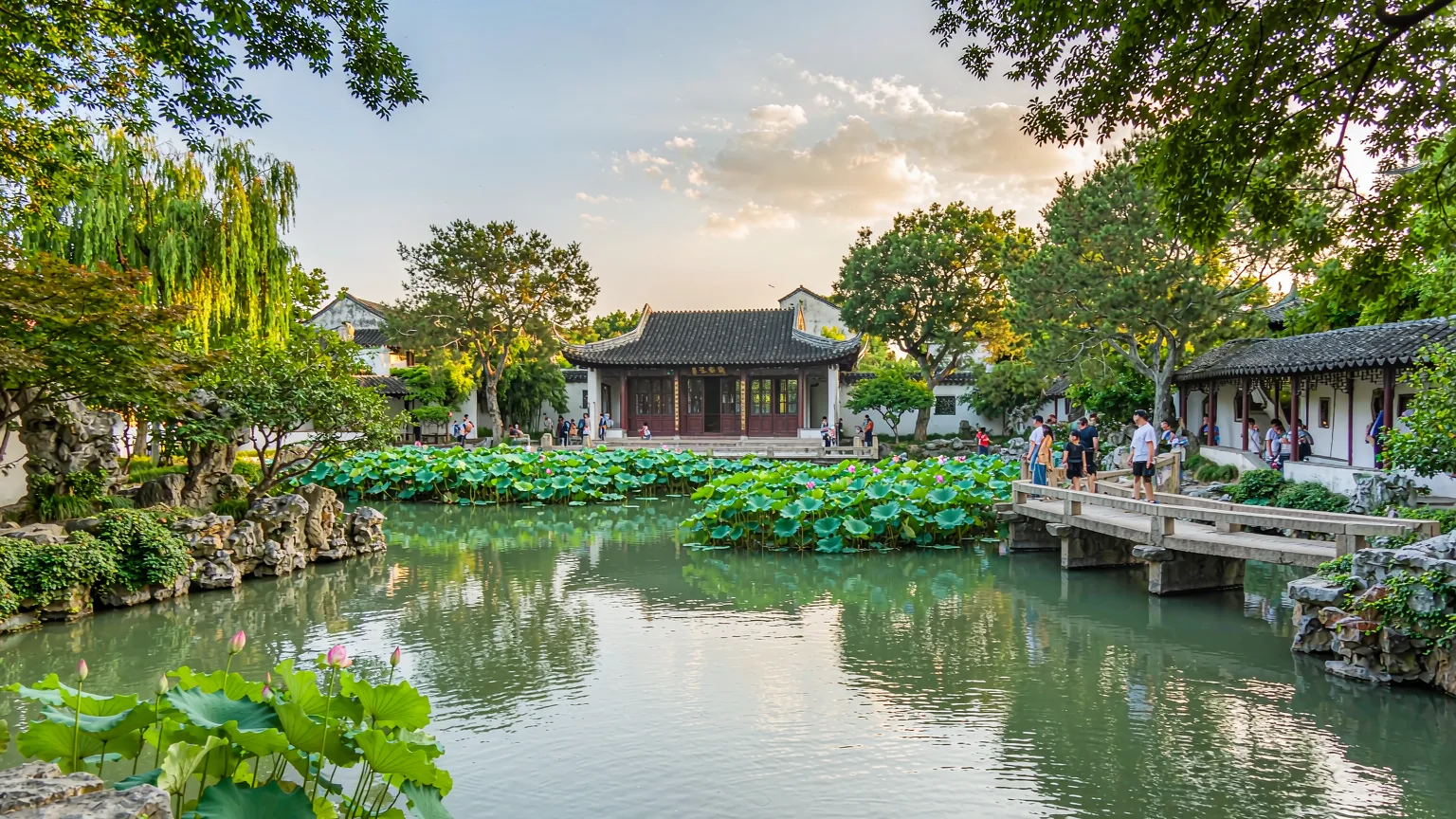
The Humble Administrator's Garden: A Scholar's View of Landscape
Heritage opens at the Humble Administrator's Garden, home to Suzhou's core question: how to fold nature into a courtyard. The Ming founder quit office and wrote his retreat into every plaque; the fragrance of Yuanxiang Hall and the solitude of the Sit-in-Without-Company Pavilion interlock words with landscape.
Enter at opening and give the garden a full two and a half hours. The plaques and couplets are the garden's instruction manual; read them and the garden truly opens its gate.
Suzhou Museum: A Dialogue across Two Eras
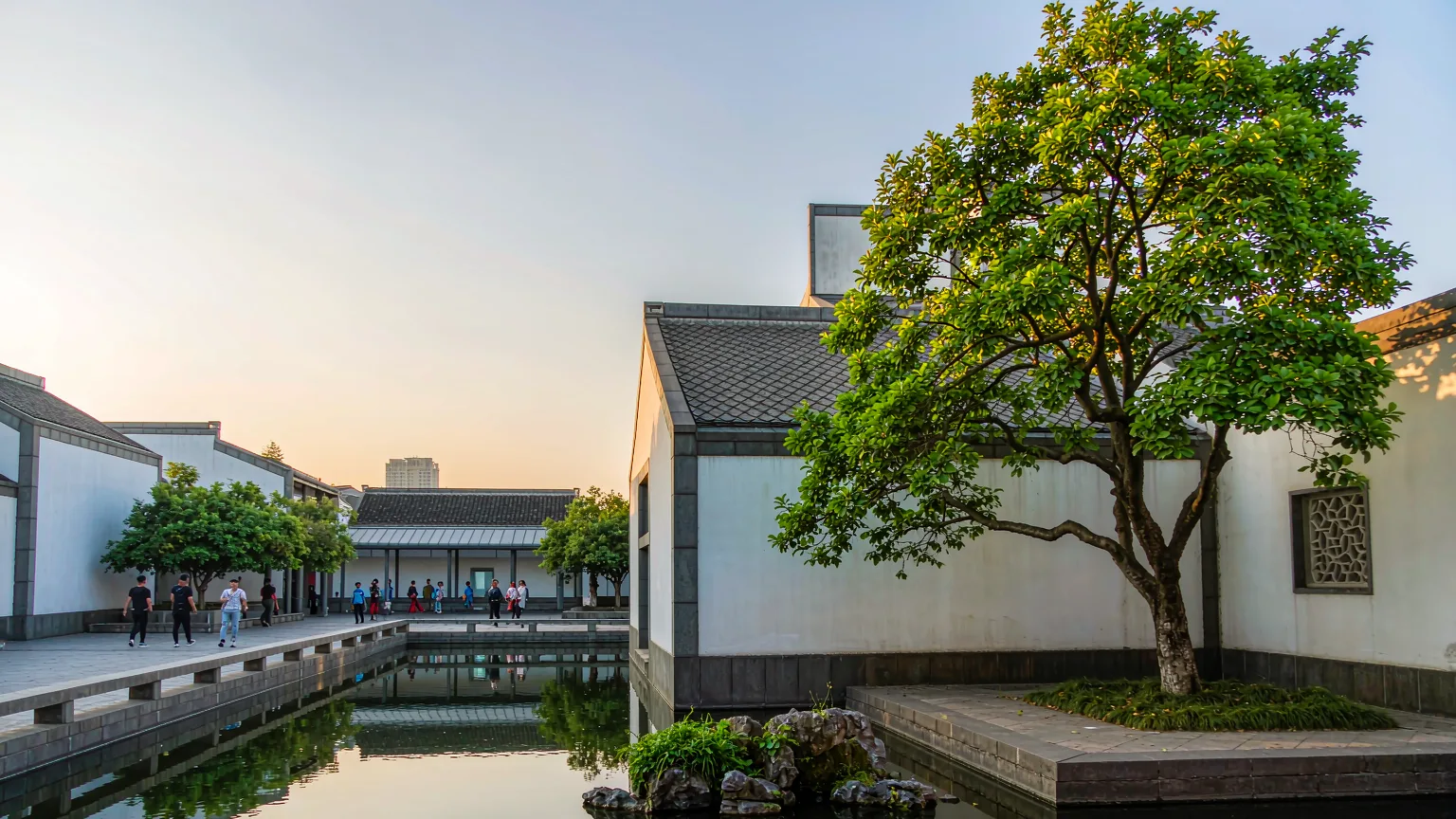
The museum shares the garden's wall, I. M. Pei rewriting whitewashed walls and dark tiles in modern materials, gazing across at the five-century-old neighbor. The collection runs from Liangzhu jades to Ming-Qing painting, the celadon lotus bowl and pearl sharira shrine anchoring it.
After the galleries, pass through the Loyal Prince's Mansion, where the Taiping residence hands off to Pei's new halls in one courtyard. Day one asks how Suzhou treats its own past, and this building is the answer.
Lion Grove Garden: Zen Hidden in the Rockwork
Afternoon at Lion Grove returns the line to the Yuan dynasty. This temple garden's rockery is not scenery but a koan: paths spiral inside the stone belly, and once in, you must find your own way out, asking for the exit and asking for enlightenment being the same act.
Give the rocks a full twenty minutes, then rest before the Listening-to-Rain pavilion. The four classical virtues of Taihu stone, thinness, wrinkling, perforation, transparency, all appear here at once.
Pingjiang Road: The Song Canal's Living Skeleton
By dusk, walk a stretch of Pingjiang Road. This canal lane, as old as the city itself, already appears on Song-dynasty maps, its parallel water-and-road pattern with bridging stones unchanged in eight centuries, a living specimen of the old city's layout.
Duck from the main street into a branch lane and look back: lamps and tourists on one side, laundry drying over the canal on the other. Suzhou's daily life and its scenery sit one lane apart, day one's closing note.
Hanshan Temple: A Poem's Thousand-Year Echo
Day two heads west, starting at Hanshan Temple. One Tang poem, Zhang Ji's Mooring by Maple Bridge, sent this temple's bell farther than any in Chinese culture, and half the scene of setting moon, crow and frost still lingers in the Maple Bridge and canal outside the walls.
The stele corridor lines up generations of carved Mooring poems, Yu Yue's calligraphy the most famous. Ringing the bell costs a small separate fee, three strikes, taken for the ritual itself.
Xiyuan Temple: Five Hundred Faces in the Arhat Hall
Late morning reaches Xiyuan Temple, whose pride is the arhat hall: five hundred statues, each with its own bearing, the eccentric Ji Gong and the thousand-armed Guanyin hidden among them for sharp eyes to find. The release pond's old softshell turtle is the temple's living legend.
Old trees and incense slow the courtyards' clock, and the temple's vegetarian noodles are Suzhou daily life itself, one bowl of vegetarian umami that out-tests any meat broth.
Shantang Street: A Tang Street on the Bai Causeway
The afternoon reads Suzhou's commercial history at Shantang Street. The seven-li street was cut under Bai Juyi, canal and street born together, a millennium of barges, guild halls and shops lined along the water; guild-hall remnants and time-honored signboards form the street's artifact layer.
Walk slowly from the street's quiet western end eastward, gathering liveliness until the Tonggui Bridge block. Read it quiet-to-loud, Tang skeleton and Ming-Qing street noise joined on one canal.
Zhouzhuang: Old Ledgers of Shen's Hall and the Twin Bridges
Day three reads Ming-Qing wealth in a water town. Zhouzhuang grew rich on water; Shen's hall, mansion of the descendants of the merchant Shen Wansan, measures fortune in the depth of its seven courtyards, while the Twin Bridges were art's ticket in, Chen Yifei's paintings carrying the town abroad.
Enter in the morning in the order of Shen's hall, Zhang's hall, the Twin Bridges, and ride the oared boat before noon to see bridge arches and horse-head gables from the water. The town's commercial density thins the moment you duck into side lanes.
The Suzhou Pingtan Museum: Living Heritage in the Story House
By evening, hurry back to the old city and give heritage's close to the ears. The pingtan museum's story house hosts a storyteller nightly, a few yuan of tea buying a session of soft Wu-dialect narrative, entertainment centuries old and still alive.
Not knowing Suzhou dialect is fine, the sanxian and pipa translate for you. House custom lets tea-seat holders stay unhurried, so hear out a full session before leaving, and the three heritage days truly close.
| Getting around |
|
| Budget | With garden and water-town tickets plus lodging throughout, about RMB 900-1600 pp, excluding long-haul fares. |
| Best time | March-May and September-November run steadiest; gardens double in crowds over Spring Festival and holidays, while temple incense days bring caps. |
FAQs
Will three days of gardens and temples fatigue the eye?
The line deliberately interleaves: gardens take only day one, temples and street markets day two, water town and story house day three, with different materials and tempos. Genuinely fatigued, compress Lion Grove to half an hour and spend an hour in a Pingjiang teahouse, which restores faster than one more garden.
Is Hanshan Temple worth a dedicated trip?
It depends on your feeling for the poem. The temple itself is mid-sized, its bell and steles making the poem's cultural meaning physical, a must for anyone who has read Mooring by Maple Bridge, while the indifferent can settle for Maple Bridge and the canal in half an hour. Bundling it with Xiyuan Temple into a half day yields the best value.
Does the story house run a schedule, and do shows end late?
Story houses mostly run afternoon and evening sessions, long-form titles playing in serial installments, so a daytime visit catches one episode. Evening shows end around nine, with metro and taxis easy in the old city, and old-city hotels within walking distance, so the time cost is low.
Does the heritage line suit children?
Yes, with trims: Lion Grove's rock maze is a children's paradise, Xiyuan's noodles and release pond amuse, while the story house runs quiet for kids, so shorten it to twenty minutes. In gardens, set a plaque-hunting game instead of lectures, and the water town's oared boat works for nearly every child.