
A no-backtracking classic: Beijing, Xi’an and Chengdu in 10 days
Beijing, Xi'an and Chengdu sit on a natural southwest axis linked by high-speed rail, so you never retrace your steps. Beijing is imperial China, Xi'an is ancient China, and Chengdu is slow, food-and-pandas China. Arrive into Beijing and depart from Chengdu on open-jaw tickets, or reverse the direction if fares work better.
| Days | City | How to spend them |
|---|---|---|
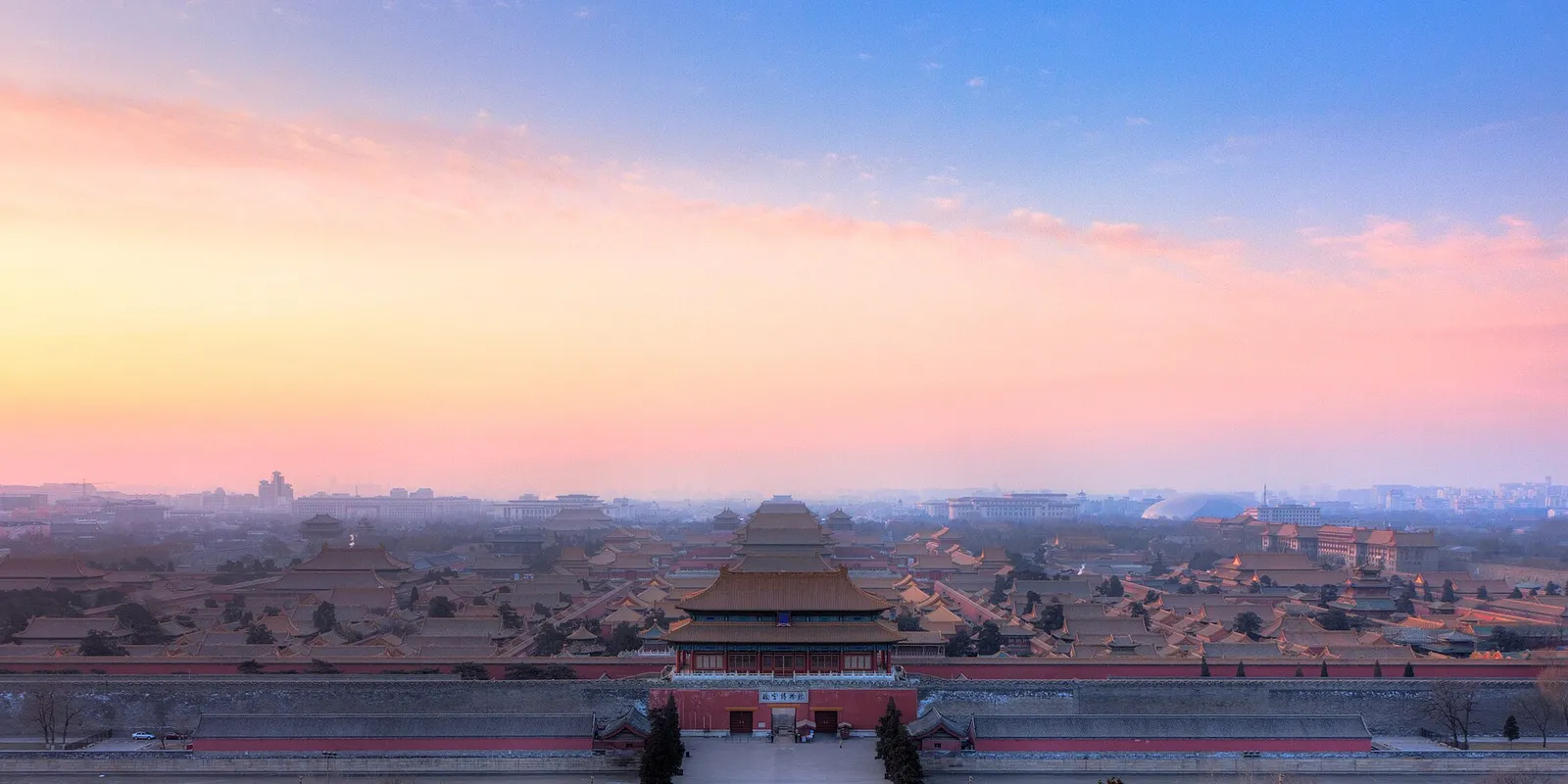
| Days 1 to 4 | Beijing | Arrive with a gentle hutong walk; Forbidden City plus Jingshan sunset; Great Wall at Mutianyu (quieter than Badaling, cable car up, toboggan down) with Peking duck at night; Temple of Heaven at opening, then the Summer Palace or 798 |
| Days 5 to 6 | Xi'an | High-speed rail about 4.5 hours; Muslim Quarter street food and the city wall at dusk; Terracotta Army early the next morning, Huaqing Palace or the Small Wild Goose Pagoda after |
| Days 7 to 10 | Chengdu | Rail about 3 to 4 hours into the Sichuan basin; evening food streets; pandas at opening plus Kuanzhai Alleys and face-changing; a Leshan or Dujiangyan and Qingcheng day trip; a People’s Park teahouse farewell |
Ten days for three cities is a humane pace. More time adds Shanghai, Guilin or Tibet; less time should cut a city, not the breathing room in each one. Take trains over planes on this axis: at 4.5 and 3.5 hours, city-centre-to-city-centre rail beats flying once airports are counted.
How many days per city: quick table
| City | Minimum | Comfortable | Generous | The extra day buys |
|---|---|---|---|---|
| Beijing | 3 days | 4 days | 5 days | A Summer Palace half-day, or a quieter wall section like Jinshanling |
| Xi'an | 2 days | 3 days | 4 days | A proper food day, or Mount Hua as a full-day trip |
| Shanghai | 2 days | 3 days | 4 days | A museum morning and dumpling crawl, then Suzhou or Hangzhou |
| Chengdu | 3 days | 4 days | 5 days | A family buffer day, or both day trips plus Sanxingdui |
Key judgments: Beijing's sights are large and spread out and the Great Wall alone eats most of a day, so two days frustrate and four reward. Xi'an is compact, cheap and walkable, and its food justifies a third day. Shanghai is the easiest big city to enjoy quickly, two days to see it, three to get it. Chengdu rewards slowness; see our city guide for the full logic.
City match-ups
Beijing or Shanghai
Beijing is the postcard: the Great Wall, Forbidden City, Temple of Heaven and Summer Palace, with an older, more formal rhythm. Shanghai is the mood: the Bund at night, plane-tree lanes of the former French Concession, Yu Garden and a fast, international, first-timer-friendly energy. Food styles could not differ more: hearty duck and zhajiang noodles versus refined xiaolongbao and shengjianbao. For iconic sights choose Beijing; for a soft landing and city energy choose Shanghai; with a week or more, do both, about 4.5 hours apart by rail.
Xi'an or Beijing
Beijing was the capital of the last two dynasties; Xi'an anchored many of the first and started the Silk Road. On single-sight impact, the Terracotta Army may be the most astonishing thing in the country, and the intact 14-kilometre city wall is the best of its kind. Beijing wins on landmark depth, duck and museums; Xi'an wins on value, walkability and bolder, cheaper food: biangbiang noodles, roujiamo and yangrou paomo, with the Muslim Quarter as a destination in itself. Most first-timers pick Beijing, but a China trip feels incomplete without the Terracotta Army, and the rail link makes doing both easy.
Guilin or Zhangjiajie
Guilin is a watercolour: the Li River winding through green karst peaks, bamboo rafts, cycling in Yangshuo and the Longji rice terraces, serene and easy to self-drive or explore independently. Zhangjiajie is a fantasy film: thousands of sandstone pillars said to have inspired Avatar's floating mountains, plus the glass bridge, Tianmen Mountain cableway and Bailong elevator, more adrenaline, more shuttle buses and queues, and far more weather-dependent, since mist can hide the pillars entirely. Choose the mood, serenity or spectacle; they sit far apart and neither substitutes for the other.
Where the money goes
| Tier | Per person per day | What it means |
|---|---|---|
| Budget self-guided | About RMB 650 to 900 | Hostels or budget hotels, public transport, occasional day tours |
| Comfortable private tour | About RMB 1,500 to 2,500 | Four-star hotels, intercity rail, tickets and guides included |
| Tier-one premium | 15 to 25 percent more | Shanghai and Beijing run above Chengdu and Xi’an |
A worked example: eight days across Chengdu, Xi'an and Beijing in May at comfort level, four-star hotels, a private guide on six days, high-speed rail, all tickets and transfers, lands around USD 2,400 to 3,200 per person excluding international flights; the same route backpacker-style runs near USD 900 to 1,200 at the cost of logistics time. International flights are always the biggest line, and flying into Chengdu or via a Gulf hub is often cheaper than direct to Beijing. Hotels come next: a good four-star in Chengdu runs USD 60 to 110 a night, from USD 90 to 140 in Shanghai. Attractions are moderate at USD 8 to 15 for headline entries, and food is the pleasant surprise: excellent Sichuan meals at USD 5 to 15, a hotpot feast rarely over USD 25. Prices move with season; check at booking.
Private guides: cost and value
| Service | Reference rate (USD) | Notes |
|---|---|---|
| Licensed guide only | 80 to 150 per day | Eight to nine hours, English-speaking, major cities |
| Guide plus car and driver | 120 to 220 per day | Fuel and parking included; the right setup for Leshan or Mutianyu |
| Other-language premium | 10 to 30 percent more | Spanish, Russian, Italian, Thai guides are scarcer; book early |
| Multi-day discount | About 10 to 20 percent from day 3 | Standard practice, longer bookings pay less per day |
A good guide does far more than translate: queue strategy and ticket booking (the difference between a 10-minute and a 2-hour entry to the Forbidden City), ordering food you will love in a no-English-menu restaurant, negotiating with drivers and vendors, and re-planning in real time when weather or energy shifts. The rule of thumb: guides earn their fee in the first two days of each city and on logistics-heavy day trips; shopping days can go self-guided. Book through a big platform (choice, uneven quality), directly with a guide (best price, no backup) or a vetted local team (slightly more, but a contract, a written quote and a replacement if illness strikes). Before paying anyone, ask four things: national licence (ask for a photo of the card), exactly what is included, who to contact on the day, and the cancellation policy in writing. Tipping is not customary; for exceptional multi-day hosting, a small gift from home is warmly received.
FAQs
Is 10 days enough for China?
Yes, for three cities at a humane pace. More time adds Shanghai, Guilin or Tibet; with less time, cut a city rather than the pacing.
Train or plane between cities?
On this axis, trains: 4.5 and 3.5 hours city-centre to city-centre beat flying once airports are counted, and they are simpler.
Do I need a visa?
Many nationalities can use the 240-hour visa-free transit or other entry options; rules change, so verify current requirements before booking.
When should I do this route?
April to May and September to October give the best weather across all three cities; avoid the early-October Golden Week for crowds and price.
Can the budget go lower?
Yes. Switch to budget self-guided at roughly RMB 650 to 900 per day, fly into Chengdu rather than Beijing, and travel in the second week of October or late May.
Do I really need a guide?
Not everywhere. The first two days per city and complex day trips are where guides earn their fee; afterwards, light days work fine self-guided.