
Why Medical Travelers Put China on the List
First, the visa facts: by early 2026, unilateral and mutual visa exemptions covered around 86 countries, with medical treatment explicitly recognized as a visa-free purpose; the 240-hour transit exemption spans 55 to 57 nationalities through 65 ports; and Hainan's Boao Lecheng pilot zone offers 30-day visa-free entry for 61+ nationalities. In practice, most checkup and dental visits fit within visa-free entry - no separate medical visa required.
On infrastructure, more than 850 medical institutions across 57 cities now run international patient services. This is not an experimental market but a mature pathway: remote pre-arrival review, entry, diagnosis, treatment and recovery each have standard playbooks.
China's Honest Positioning
China is not selling Thai-style wellness or Korean-style cosmetics. The official strategy is deliberate differentiation: complex and severe care at speed and scale, spanning oncology, neurosurgery, cardiac surgery, organ transplantation, plus the world's deepest traditional Chinese medicine system. The pull factors, in the order patients actually cite them:
- Price: surgery at one third to one half of US costs, imaging at about a tenth, and domestically manufactured biologics and targeted drugs far below Western list prices
- Speed: tertiary hospital outpatient waits average under 30 minutes and emergency response under 5 minutes, while over 60 percent of patients in some OECD countries wait more than a month for a specialist
- Access: some therapies are approved in China first, including the world's first solid-tumor CAR-T cell therapy approved in June 2026
- The new three essentials: dental work, health screening and TCM have become the standard visitor care package, affordable enough to fit a tourism budget
International Cost Comparison: Two Prices for the Same Operation
Published quotes and patient bills converge on the ranges below. Actual costs vary with condition, materials and length of stay; always defer to the hospital's current quoted prices. The exchange rate is estimated at roughly 7 yuan per US dollar.
| Item | China (typical) | US (typical) | Notes |
|---|---|---|---|
| Coronary bypass surgery | about 40,000 USD | 130,000 to 200,000 USD | Evaluation and surgery usually in one admission in China |
| MRI scan | under 100 USD | about 7,000 USD | Reports usually within 24 hours in China |
| Single dental implant | 900 to 2,200 USD | 4,000 to 8,000+ USD | Fixture, abutment and crown included |
| Wisdom tooth extraction | about 100 USD | about 1,000 USD in Australia | Complex impactions cost more |
| Gastroscopy pathway with consult | about 400 USD | 3,000+ USD | Same-day options common in China |
| Laparoscopic gallbladder removal | about 1,700 USD (reported case) | one reported quote of 310,000 USD | Emergency scenario |
| Psoriasis, annual management | about 1,500 USD per year | about 25,000 USD per quarter | Long-term chronic therapy |
On timing: most checkup programs finish the same or next day, with reports typically issued within 1-2 days; procedures that need bowel preparation (like gastroscopy) need one morning set aside. Confirm appointment availability before booking flights - that is the lowest-friction sequence.
Comparing options across countries
Some travellers compare Korea, Japan and China for medical care: Korea has the most mature international-patient pipeline at higher prices; Japan is known for thorough diagnostics at the highest prices; China's public teaching hospitals offer strong clinical depth at comparatively lower prices, with more coordination required on your side. Wherever you go, treatment decisions belong to the treating physician - this guide covers only the travel-planning side.
Where Patients Go: The Multi-Polar Map
- Beijing: national reference centers such as Fu Wai (cardiac), Tiantan (neurosurgery) and the CAMS Cancer Hospital
- Shanghai: oncology depth led by the Fudan Cancer Center, plus the densest insurance direct-billing network
- Guangzhou and the Greater Bay Area: the drug-access corridor with Hong Kong and Macau, strong cardiology
- Chengdu: major teaching hospitals with international departments, established dental and Sichuan TCM services - an easy city to pair checkups with sightseeing
- Hainan (Boao Lecheng): the regulatory pilot zone where globally new drugs arrive before national registration; 30-day visa-free entry for 61+ nationalities
- Border corridors: Heihe, Suifenhe and Hunchun serve Russian-speaking patients with TCM rehabilitation; Yunnan and Guangxi serve Southeast Asia
Chengdu: Healthcare and Recovery in One City
Chengdu has one of the densest healthcare resources in western China: the Sichuan University West China Hospital system covers complex care (main hospital), dental care (the Stomatology Hospital) and obstetrics, gynecology and pediatrics (the Second Hospital), each with a foreign-patient service pathway. The city's university-affiliated hospitals also deliver standardized acupuncture, tuina and herbal medicine. For travellers, Chengdu's advantage is fitting care and sightseeing into one schedule - a morning checkup, then the panda base or People's Park in the afternoon.
Chengdu is also part of the national digital-services pilot, which for foreign patients means English-friendly kiosks and mini-programs, multilingual wayfinding and international card acceptance at major hospitals - everyday care is reasonably visitor-friendly. Routine outpatient and emergency visits need no special preparation; just bring your passport.
A realistic ten-day shape: days 1 to 2 arrive, rest and complete pre-admission testing, with an evening tea at Jinli or People's Park; days 3 to 5 consultations, imaging and treatment or the first procedure phase; days 6 to 8 gentle recovery, the Panda Base (flat, shaded, wheelchair-friendly paths), the Wide and Narrow Alleys and a Sichuan opera show; days 9 to 10, once cleared, a day trip to Dujiangyan or Mount Qingcheng, a final review and the flight home with a bilingual discharge summary. Dental patients are especially lucky: the first phase of a two-stage implant often fits inside a 240-hour transit window.
Step One Before You Fly: The Remote Second Opinion
Every serious medical trip should start with one question: is the trip worth taking? Remote consultation answers it with evidence instead of hope. The standard workflow has five steps:
- Collect records: original imaging data on disc or upload, pathology reports, lab trends and a one-page history. Ask your home hospital for originals, not summaries
- Choose a channel: the hospital's international office directly (cheapest), a coordinating platform (adds translation and logistics), or a formal review initiated by your home physician
- Submit and pay the review fee: typically 50 to 300 US dollars depending on depth; credible services quote it upfront
- Attend the video consult: 20 to 40 minutes with translation if needed, bringing your question list and a family member
- Receive the written plan: diagnosis summary, proposed treatment, itemized estimate and admission window. This document drives your decision, and if you proceed, anchors your S2 medical visa application
The limits are equally clear: remote review is not diagnosis, and in-person examination can change the plan, so treat it as a routing and planning tool. Chinese physicians can advise but cannot prescribe across borders or replace your home physician. The best documented outcomes treat both doctors as collaborators.
Visa Routes: Choosing Among Four Paths
| Route | Who it fits | Typical use | Watch |
|---|---|---|---|
| 30-day visa-free entry | holders of around 86 exempted passports | consults, screening, dental, TCM, minor procedures | stay limit is fixed; longer plans need an S2 |
| 240-hour visa-free transit | 55 to 57 eligible nationalities with an onward ticket to a third country | implant phase one, checkups, eye work, minor surgery | third-country routing and permitted areas apply |
| S2 medical visa | anyone whose plan exceeds visa-free windows, plus family | major surgery with recovery, multi-stage courses, follow-ups | hospital invitation letter needed; processing 1 to 2 weeks |
| Hainan pilot arrangements | patients needing pilot-zone therapies | treatments available only in the pilot zone | 30-day visa-free for 61+ nationalities |
Ask three questions in order. How long is the written treatment plan? Under 30 days, visa-free; under 10 days with third-country routing, transit; longer, the S2. Is your nationality on the exemption lists? If not, a standard tourist visa with a medical itinerary works, or the S2 offers a cleaner label. Is the therapy pilot-zone-only? If so, Hainan's arrangements often simplify everything else. On any route, carry the hospital's bilingual admission confirmation or treatment plan, proof of funds and onward tickets, and insurance documents or a payment plan. One principle rules them all: your entry purpose and actual activities must match. Defer to the latest official announcements.
Payment and Insurance: How the Money Flows
- Before flying, set up Alipay or WeChat Pay with your passport and an international card; carry at least two cards on different networks and a small cash reserve of 2,000 to 5,000 yuan for the few cash-only windows
- Inpatient admission takes a deposit against your estimate, settled at discharge against itemized charges; overpayment refunds to the original method. Keep every printed receipt
- Insurance runs two ways: direct billing (your insurer's network plus a pre-arranged guarantee letter; Shanghai's international clinics are densest) or reimbursement (you pay, then claim with original receipts and bilingual reports)
- Travel insurance covers emergencies only, not planned surgery; for drugs, ask for domestically manufactured equivalents, often 60 to 70 percent cheaper
One rule caps them all: no written itemized estimate, no deposit. Paying against a verbal quote is the most avoidable mistake in medical travel. Note also that departure tax refunds apply to retail goods, not medical services, and for large bank transfers keep your billing correspondence handy in case the bank asks about the source of funds.
Recovery Travel: Turning Recovery Weeks into a Highlight
High-value medical travelers now stay over 16 days on average, and the recovery window is part of the value. The design principle is pacing, not sightseeing: build a trip your surgeon would endorse, with movement without strain and stimulation without exhaustion.
- Intensity ladders: days 1 to 3 after discharge, flat walks within the hotel radius, no lifting; days 4 to 7, one gentle seated activity per day; week two onward, normal tourism at 70 percent pace
- Get three hard constraints at discharge: when you can fly, how far you can walk, whether stairs are allowed. Bilingual discharge summaries usually state them
- One anchor per day: a morning activity, an afternoon rest, an evening stroll. China's teahouse and park culture exists for exactly this rhythm
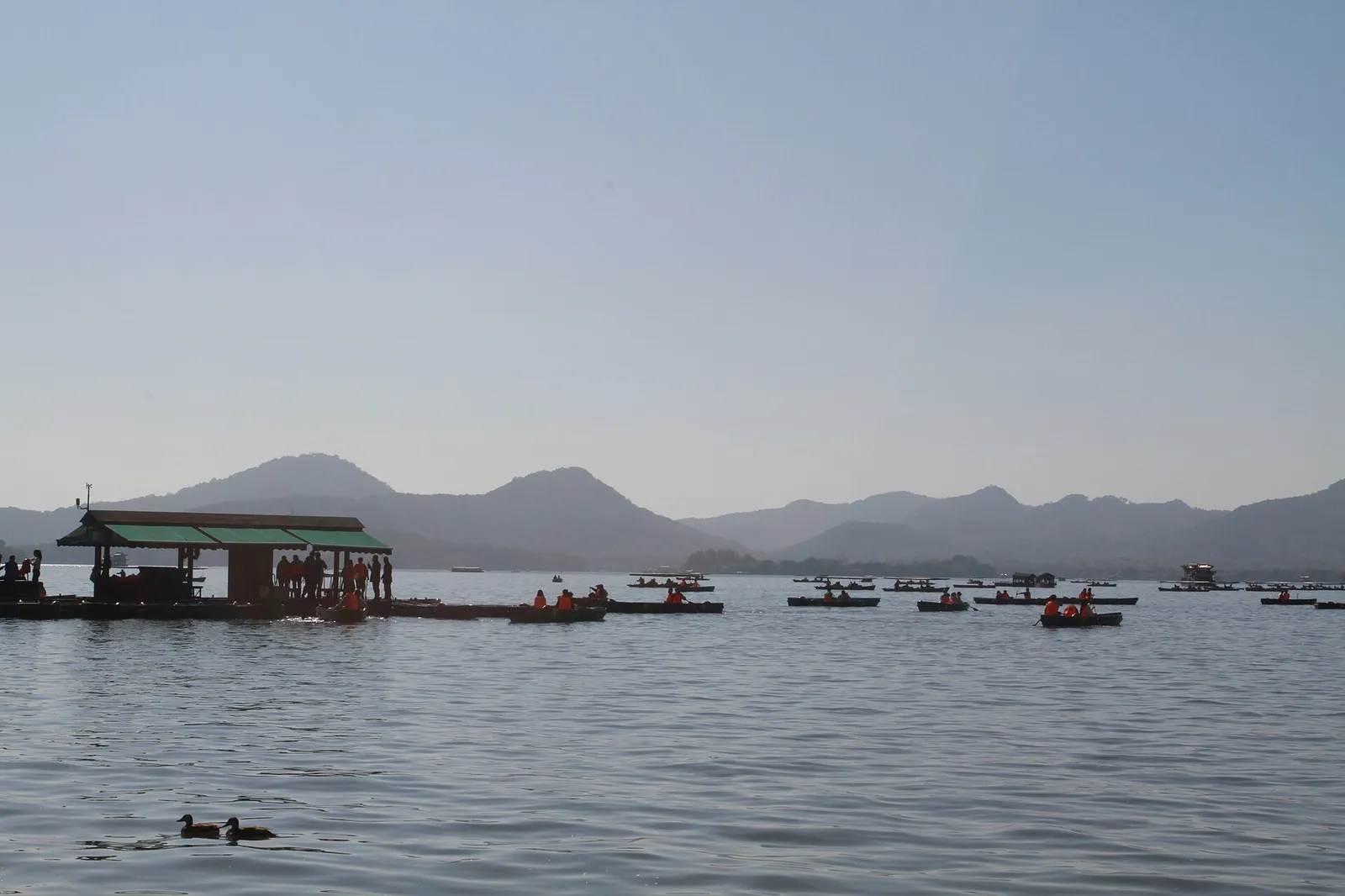
- Stay near the hospital for week one, then relocate: Chengdu's Panda Base and Mount Qingcheng, Hangzhou's flat West Lake loop and Sanya's resort recovery are classic pairings
The safety boundaries deserve repeating: no commercial flying before your surgeon clears it (typically at least 1 to 2 weeks post-surgery, longer for some procedures); no high-altitude destinations, Lhasa is not a recovery city; scuba, hot springs and massage depend on your procedure and need clearance; and travel insurance bought after diagnosis will not cover complications, so sort coverage before admission. When in doubt, ask your treating team one specific question: what would make you say no to this activity? Their answer is your itinerary.
The Honest Other Side: Where China Is Not the Answer
- Continuity care: follow-ups can run remotely, but your home physician should stay in the loop with full bilingual records
- Ultra-subspecialized rare cases: for some rare diagnoses a specific Western center may genuinely fit better; China competes on common-complex, not on every rare disease
- Well-insured domestic care: if your insurance covers treatment at home with low out-of-pocket cost, the arithmetic changes entirely
- Legal recourse expectations: malpractice frameworks differ; understand the difference before, not after
- Language: English service is strong in international departments, thinner in general clinics; budget for an interpreter

FAQs
What visa does a foreigner need for medical treatment in China?
Around 86 nationalities can enter visa-free for up to 30 days with treatment as a recognized purpose; 55 to 57 nationalities can use the 240-hour transit exemption for short procedures; longer treatment plans fit the S2 medical visa, which needs a hospital invitation letter. Policies change often, so defer to the latest official announcements.
Is healthcare in China really cheaper, and are there hidden fees?
International departments publish itemized price schedules, provide written pre-estimates before admission, and settle deposits against itemized bills with refunds for overpayment. Your best protection is a written quote: no estimate, no deposit.
I speak no Chinese. How do consultations work?
Use the international department pathway, where medical interpreters or bilingual coordinators are standard. On a tight budget, a half-day medical interpreter covers most outpatient needs. Pilot cities like Chengdu also run English-language kiosks and apps.
Are treatment outcomes guaranteed?
No legitimate institution guarantees a cure. The rational approach: get a written treatment plan and candidacy assessment before flying, keep your home physician involved, be wary of anyone promising guaranteed results, and let the treating physician's in-person evaluation decide.
How does follow-up work after I fly home?
Bilingual discharge summaries and follow-up plans are standard. Many teams hold video reviews with your doctor at home, implanted devices support remote programming, and repeat prescriptions can ship internationally with customs documentation.