
Anshun holds three cultural cards: the Tunpu, Ming garrison descendants living Jianghuai heritage in central Guizhou for six centuries; batik, with Anshun a famous home of the craft, its blue-and-white patterns from Miao and Buyi women's hands; and Nuo masks, the wooden faces worn by Dixi opera actors, every chisel cut telling a war story. The day flips each card once.
The plan reads in the morning and does in the afternoon: two museums to frame the knowledge, then the batik studio and the mask museum for hands-on work. Classes teach small groups and want booking a day or two ahead in season; most venues close Mondays, so line up the calendar first.
Itinerary at a glance
| 09:00 | Anshun Museum: Coordinates before Departure |
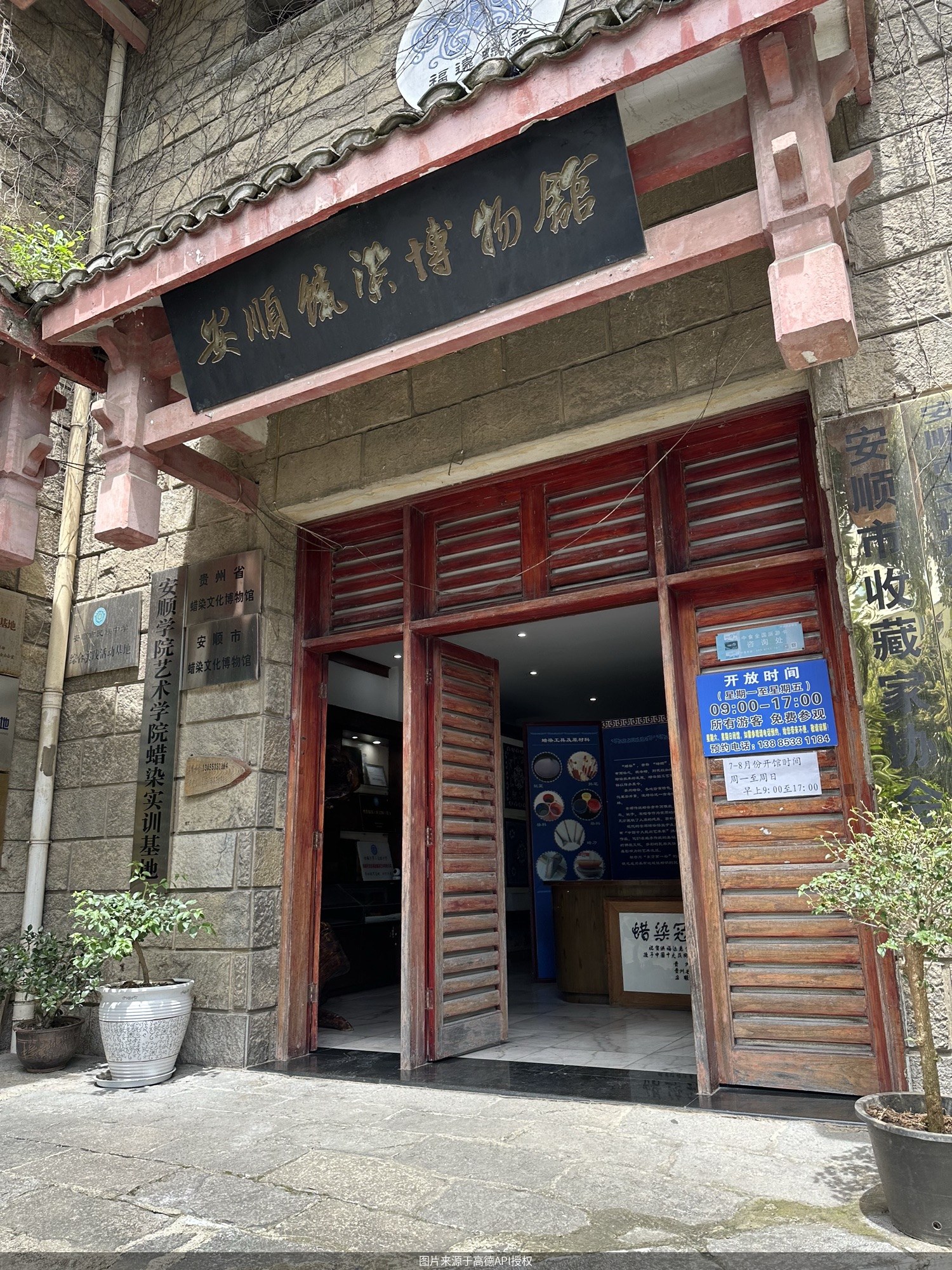
| 11:00 | Guizhou Batik Culture Museum: A Pattern History in Blue and White |
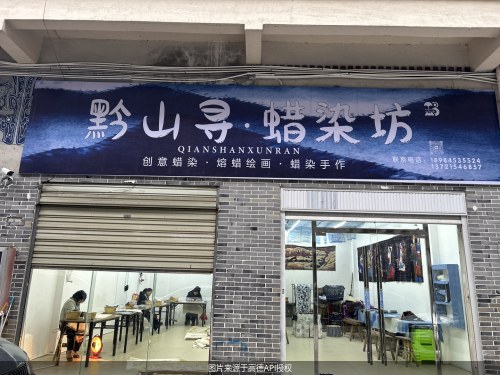
| 14:00 | Qianshanxun Batik Workshop: Drawing Your Own Blue |
| 16:30 | Qin Fazhong Tunpu Nuo Mask Carving Museum: War History Cut by Chisel |
The route, stop by stop
Anshun Museum: Coordinates before Departure
Open at the city museum, one hour threading Anshun's historical line: Yelang-era finds, the Ming garrison story of armies moving north-to-south, and the stone wisdom of Tunpu building. The batik and Nuo carving ahead all grow from this trunk.
The Tunpu gallery is the heavyweight: Dixi masks, Tunpu women's Fengyang dress, models of stone stockades; once these register, the afternoon and the days ahead all gain references. Free entry and a compact space invite an unhurried pace.
Guizhou Batik Culture Museum: A Pattern History in Blue and White
The second morning stop traces batik's lineage. Anshun carries the title of a home of Chinese batik, and the museum runs from wax knife and indigo vat to finished cloth: spirals on Miao pleated skirts, bronze-drum motifs on Buyi bed sheets, with crackle veins the craft's own texture that machine printing cannot fake.
Hold two keywords while you look: resist and oxidation. Beeswax seals the cloth, indigo fills the open lines, and the blue only appears when the cloth meets air on leaving the vat; understanding this gives meaning to every step you take yourself in the afternoon. Old pieces run deeper in color than new, a patina raised by years of use and washing.
Qianshanxun Batik Workshop: Drawing Your Own Blue
The afternoon class runs about two hours: the teacher demonstrates grip and line angle first, then hands out white cloth and pattern drafts. Steady wrists matter, wax too cool bleeds the line, wax too thick cracks, and those very accidents become signature crackle veins on the finished piece.
Only after dipping, oxidizing and melting the wax off does your pattern truly appear, and the reveal is the trip's most addictive moment. Beginners pick simplified motifs while the ambitious can design on the spot. The dried, mounted piece is Anshun's most honest souvenir.
Qin Fazhong Tunpu Nuo Mask Carving Museum: War History Cut by Chisel
The final stop reads Nuo carving. Dixi opera belongs uniquely to the Tunpu, and the carved wooden masks, locally called faces, depict the warring figures of the Xue and Yang family sagas and the Three Kingdoms. Qin Fazhong stands as a leading inheritor of the carving craft, with the museum showing the full flow from timber selection through roughing, fine carving and coloring.
Mask colors speak: red for loyalty and valor, black for uprightness, white for treachery, so reading the palette guesses the character's camp. With luck you catch an artisan chiseling live, a flying-shaving stroke moving more than any cased product. After this visit, a real Dixi performance reads completely differently.
| Getting around |
|
| Budget | Museums are mostly free; hands-on classes run RMB 80-200 pp, so about RMB 250 covers the day. |
| Best time | Year-round; most venues close Mondays, so plan around it, with workshops booked ahead. |
FAQs
What is the smoothest transit order for the four stops?
Both morning museums sit downtown, chained by bus or flag-fare taxi; finish the workshop first, then taxi to the mask museum, booking the return car ahead. The day's taxi budget runs thirty to forty yuan, cheaper than a charter and free of parking hunts.
Do the workshops need art background, and can children join?
Zero background is fine, with pattern drafts for tracing and teachers guiding hand over hand. Kids over six finish simple batik alone, while the Nuo session centers on watching and painting colors, with carving done by the artisan. Parents supervise children throughout the hot wax pot and the knives.
Is a full museum day boring?
No, since hands-on work claims half the day, batik being a complete creation from brush to finished cloth and the mask house running live demonstrations. The two morning museums total three hours at garden pace. If museums strain your interest, compress the city museum to forty minutes and shift time to the workshop.
What should I know about buying batik and mask souvenirs?
For batik, trust hand crackle and natural indigo variation, since prints look uniformly flat; ask washing rules, cold hand-wash and shade-dry. For masks, look for knife marks and wood grain against machine-smooth pieces, with large works carrying material notes. Keep receipts for both, and for pricey pieces a craft note, since provenance is what makes a gift presentable.