
In the Hongwu era, hundreds of thousands of troops moved north-to-south and settled in place, Jianghuai soldiers and families transposing their speech, opera, dress and stone building into the Guizhou mountains unchanged for six centuries, the Tunpu, China's most complete living specimen of Ming-era Han migration. Three days walk it in three acts: city heritage, Tunpu heartland, old-town close.
Day one stays downtown: temple, residence, city museum plus an evening show; day two enters the Tunpu heartland, Tianlong for Dixi and stone stockades, the mask museum after; day three closes at Jiuzhou old town with the heritage experience hall, returning for the batik museum. All drives run short, so take the pace gently.
Itinerary at a glance
| Day 1 · 09:00 | Anshun Confucian Temple: The City before the Garrison Era |
| Day 1 · 10:30 | Wang Ruofei's Former Residence: A Footnote of Modern Anshun |
| Day 1 · 14:00 | Anshun Museum: The Garrison History in One Pass |
| Day 1 · 19:30 | Shenjun Grand Theatre: An Evening Overature |
| Day 2 · 09:00 | Tianlong Tunpu: Walking into Six-Century-Old Jianghuai |
| Day 2 · 14:00 | The Fanhua Dixi Stage: Opera in Its Village Habitat |
| Day 2 · 16:30 | Qin Fazhong Nuo Mask Museum: The Workshop and Family Tree of Faces |
| Day 3 · 09:00 | Jiuzhou Ancient Town: A Garrison Port's Last Morning |
| Day 3 · 11:00 | Jiuzhou Intangible Heritage Experience Hall: Finishing with Your Hands |
| Day 3 · 14:30 | Guizhou Batik Culture Museum: The Last Piece Back in Town |
The route, stop by stop
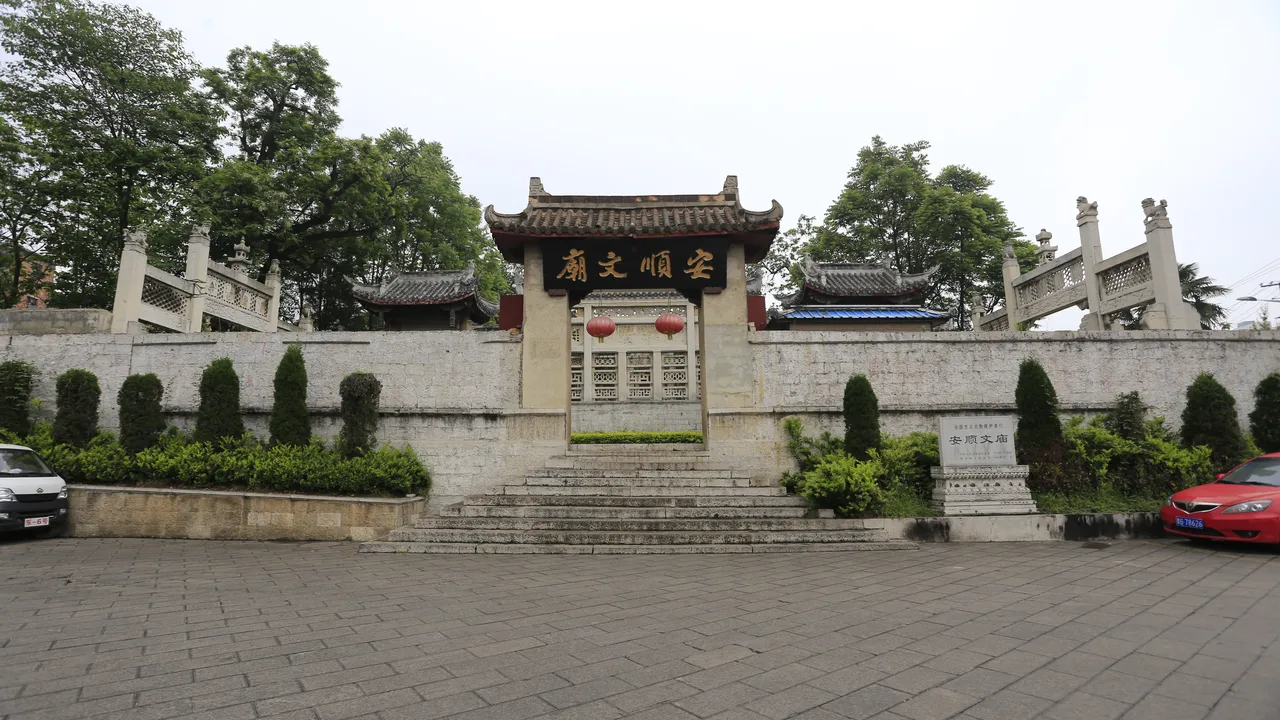
Anshun Confucian Temple: The City before the Garrison Era
Opening the three days at the Ming temple fits, standing here since the city's founding. The pierced columns before the Dacheng Hall, dragons carved openwork from single blocks, prove Anshun's title as a palace of stone carving; before the columns, read the whole layout, the lattice star gate, pan pond and gateway advancing in sequence, ritual spatial order itself an exhibit.
The exhibits clarify the city's founding: military establishment first, schooling planted after, with the Tunpu and the walled town as two faces of one historical movement. Once seen here, tomorrow's stone stockades and Dixi opera all gain their origins.
Wang Ruofei's Former Residence: A Footnote of Modern Anshun
A dozen-odd minutes on foot from the temple stands the residence, a Qing courtyard open free of charge where the revolutionary, lost in the 1946 crash, spent his boyhood. The rooms stay plain and the exhibits short, forty minutes that also let the temple's information settle between stops.
The lane around it slices daily life in old Anshun, grey tiles, timber walls, elders playing chess at doorways. Lunch in the old street after, changwang noodles and fried egg cakes the local trades here.
Anshun Museum: The Garrison History in One Pass
The afternoon museum is the three days' knowledge core: the full story of the armies moved north-to-south, the Tunpu's Jianghuai origins, the building logic of stone construction, and the mask system of Dixi opera, all told in one pass, the hour here the best preview before entering villages tomorrow.
Watch three things closely: actual Tunpu women's dress, the long blue robes and three-tuft hairstyle; the displayed Dixi masks; and the sand-table model of a Tunpu village. Photograph what puzzles you and match it against the real thing in the field tomorrow.
Shenjun Grand Theatre: An Evening Overature
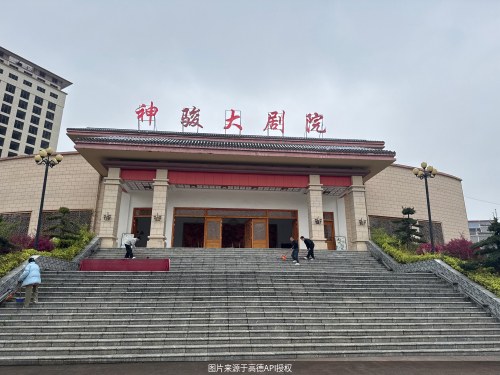
The evening show sets the key for three days. The Shenjun Grand Theatre is downtown Anshun's main stage, ethnic song-and-dance and themed productions in rotation, condensing Guizhou and Tunpu visual symbols into one program. Seeing it before real Dixi gives the mask-dancing a staged reference first.
The show runs about ninety minutes at tiered prices, schedules per the theatre's daily notice. Late supper nearby after, duoduofen and grilled intestine in season.
Tianlong Tunpu: Walking into Six-Century-Old Jianghuai
Day two's centerpiece is Tianlong Tunpu, about an hour from downtown. Every lane of this Ming garrison village is stone, walls, roof tiles, watchtowers, with alleys narrow enough for two to squeeze past and sentry holes at the corners. Tunpu women wear royal-blue robes with white headwraps, living fossils of Jianghuai dress six centuries old.
The village's training hall stages Dixi performances daily, actors in carved wooden masks with war banners, one gong and one drum accompanying, singing campaigns like Xue Rengui's eastern conquest and the Yang family generals in a raw, high voice. The words matter less than the subtitles and guides supplying the plot; what you watch is six hundred years of soldier spirit that never dispersed.
The Fanhua Dixi Stage: Opera in Its Village Habitat
The afternoon stage at Fanhua sits closer to Dixi's raw habitat than any scenic-area show: the stage inside the village, the audience local elders and children. Dixi concentrates at festivals and slack farming seasons, so catching a full performance takes luck, but the stage, the mask lineages and the villagers' daily life are exhibits themselves.
A few words with villagers often yield surprises: which surname performs which saga, how many generations a mask has passed through, who paints the faces for the rite. Tunpu culture is a living culture, carried by exactly these ordinary people willing to talk.
Qin Fazhong Nuo Mask Museum: The Workshop and Family Tree of Faces
By late afternoon the mask museum sits in a village between Tianlong and Jiuzhou, built by inheritor Qin Fazhong at his own home. The ground floor is the workshop, blanks and chisels spread on the bench; upstairs hang hundreds of faces, from fanged vanguards to white-faced foreign generals, color and expression the character key.
If yesterday's museum visit was reading characters from a chart, today is watching them written by hand. Master Qin often guides in person, and hearing one face-consecration story from him beats any display panel. Small mask purchases can carry his signature on the base.
Jiuzhou Ancient Town: A Garrison Port's Last Morning
Day three's morning enters Jiuzhou old town, the seat of the Ming Anshun prefecture, carrying more merchant flavor than Tianlong: shopfronts along the old street once housed salt firms and horse inns, flagstones grooved by hooves on West Street. At dawn the town belongs to locals, elders passing with vegetable baskets, stove smoke threading the tiles.
The old church and the teahouse deserve sits: long tiles and lidded bowls are the teahouse standard, twenty minutes teaching what Tunpu slowness means. Breakfast on the old street, fried egg cakes and buckwheat jelly the home trades.
Jiuzhou Intangible Heritage Experience Hall: Finishing with Your Hands
The heritage hall inside the town converts three days of knowledge into hands-on rounds: batik, Tunpu silver, and mask painting opening in rotation. The buildup pays off here, since you already read the motifs and the masks' camps, knowing what every stroke means.
Sessions run one to one-and-a-half hours, a fitting closer. The finished piece travels home as physical evidence of the garrison story, with lunch in town before heading back landing the timing perfectly.
Guizhou Batik Culture Museum: The Last Piece Back in Town
Before departing, return downtown for the batik museum, placing the blue-and-white patterns you made and saw into the craft's full historical frame: resist principles, branch pattern distribution, dating marks of old pieces. Your reading depth now differs completely from day one.
The three-day line closes its loop: temple and museums gave the framework, Tianlong and Jiuzhou the living scenes, mask carving and batik the handwork. On the rail car or coach home, the signed little mask in your luggage keeps whispering that the stone stockade's six centuries remain unfinished.
| Getting around |
|
| Budget | Tunpu-area tickets run RMB 100-200 pp; three days total RMB 700-1400 pp with lodging, meals and transit. |
| Best time | Year-round; Tunpu villages breathe deepest at spring planting and autumn harvest, and some venues close Mondays. |
FAQs
Should the three days use a chartered car?
Day two strongly merits a charter: buses toward Tianlong, the mask museum and Jiuzhou run scarce and scattered, and one car saves two to three hours. Downtown on day one and the Jiuzhou run on day three work by taxi. Splitting among two or more costs tens of yuan each per day, clear value.
When is the best time to watch Dixi opera?
The scenic training hall runs fixed daily shows, stable quality for first viewing; village performances cluster around the Spring Festival rites and slack-season festivals, most authentic but never guaranteed. If your dates miss the festivals, take the scenic shows plus the mask museum's explanations, understanding complete enough.
Is this line manageable with seniors and kids?
Overall easy: village walking stays gentle, museums and halls seat visitors, and Dixi stands offer chairs. Watch village flagstones slick in rain, grippy shoes for kids; the gongs run loud, so seat toddlers rear or step out with one adult. Two or three stops a day keeps seniors comfortable.
Do the cultural sights repeat across three days?
No, each stop plays a distinct role: the temple shows the city, the museums the history, Tianlong the stockade and opera, the mask house the craft, Jiuzhou the daily life, batik the patterns. One culture through six cross-sections builds a solid image; repetition comes from rushing, never from the plan itself.