
Five days split Anshun into two lines: two days of water, the three Huangguoshu sections plus Longgong, counting karst's expressions for water; two days of stone, Tianlong Tunpu and Jiuzhou old town, watching six centuries carry Jiangnan into the mountains; one downtown day between for temple, residence and lakeside culture. Day five runs far to the Getu River or stays flexible.
Lodging favors two nights at Huangguoshu town or Zhenning and three downtown, bags moved once. Scenic drives mostly stay under an hour, so five days loop without doubling back or rushing, and both the high-water season and the rapeseed bloom give this line a peak version.
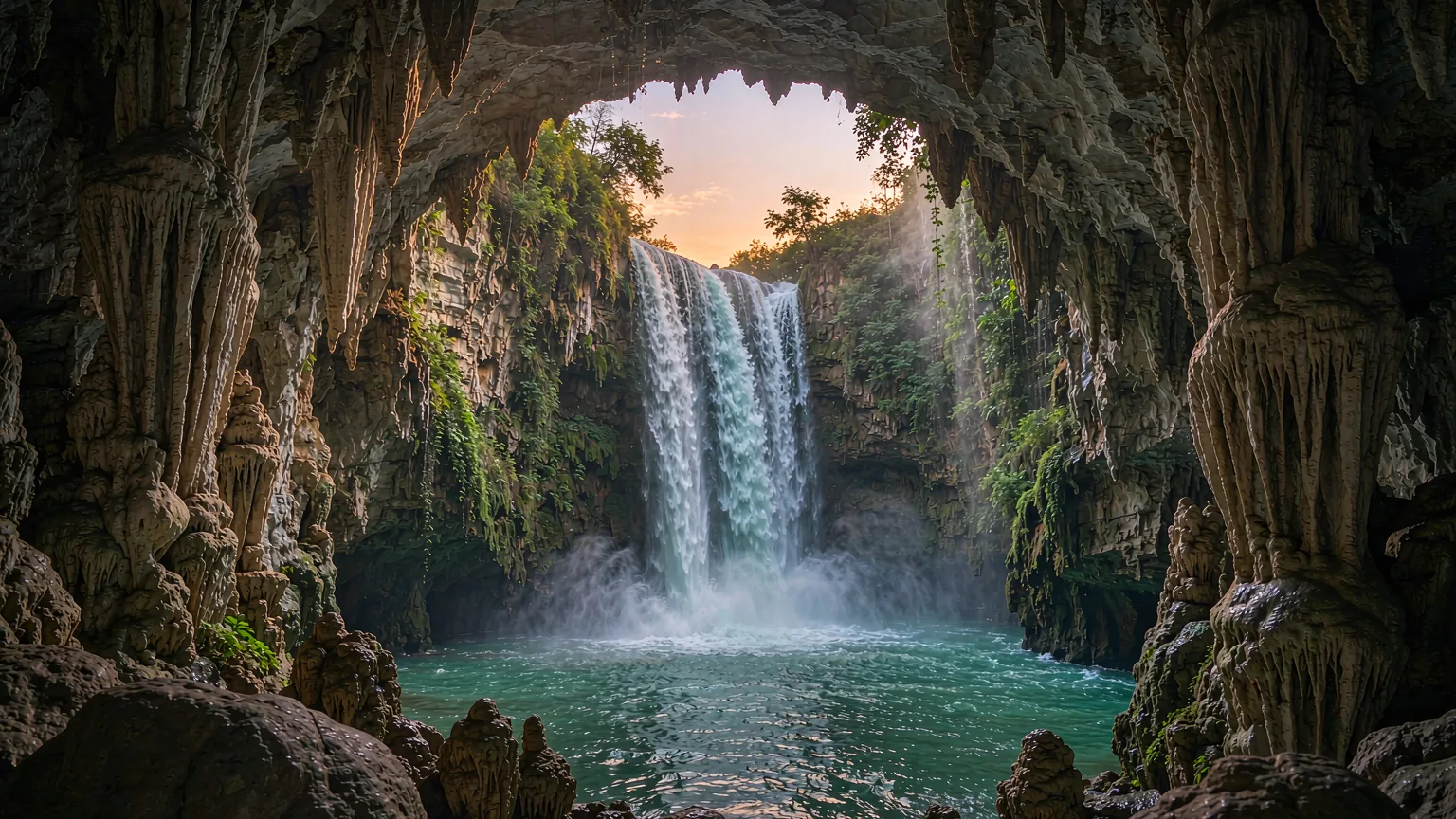
Itinerary at a glance
| Day 1 · 08:30 | The Great Waterfall: The Five Days' Opening Thunder |
| Day 1 · 14:00 | Tianxingqiao: The Afternoon's Stone Forest on Water |
| Day 2 · 09:00 | Doupotang: A Day That Starts Gentle |
| Day 2 · 11:00 | Longgong: Two Passages of Cave Boating |
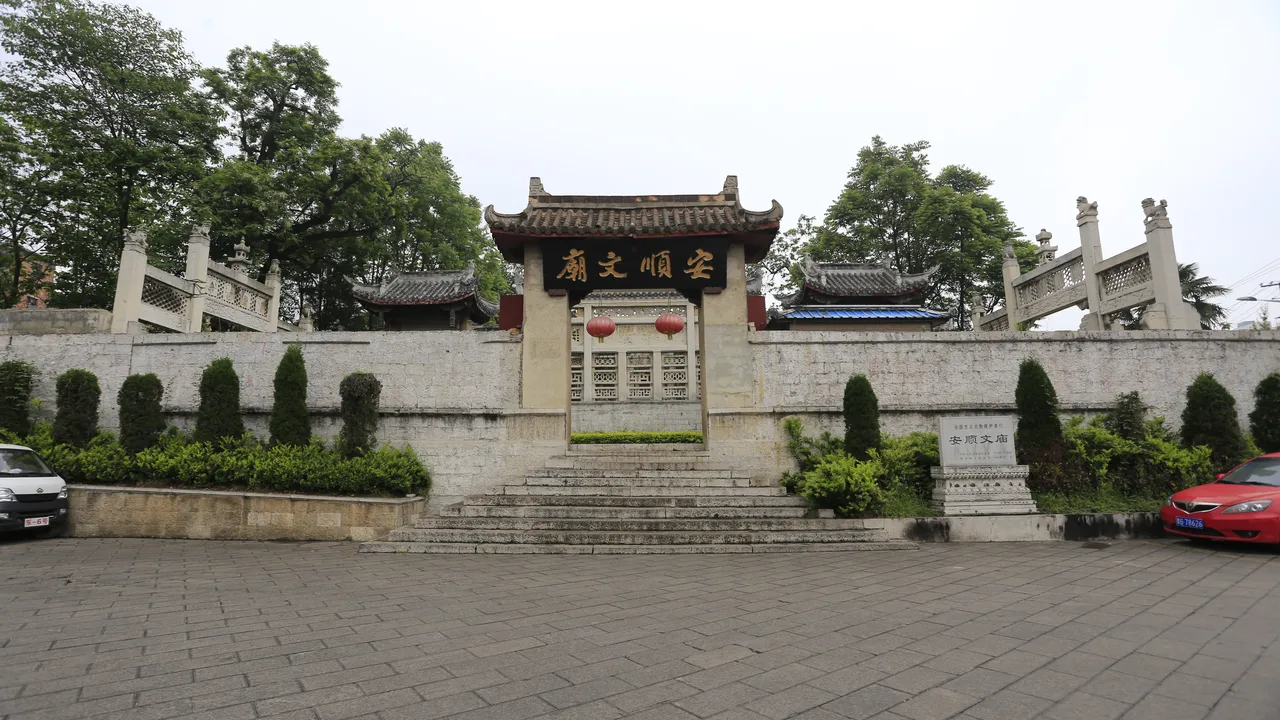
| Day 3 · 09:00 | Anshun Confucian Temple: The Stone Line's Overture |
| Day 3 · 10:30 | Wang Ruofei's Former Residence: Modern History in a Lane |
| Day 3 · 15:00 | Hongshan Lake Park: Dusk in the Citizens' Parlor |
| Day 3 · 18:00 | Gufu Street Food City: Downtown's Supper Home Ground |
| Day 4 · 09:00 | Tianlong Tunpu: Entering a Ming Military Stockade |
| Day 4 · 14:00 | Jiuzhou Ancient Town: A Garrison Port's Afternoon |
| Day 5 · 08:30 | The Getu River: The Finale's Swallow Gorge |
The route, stop by stop
The Great Waterfall: The Five Days' Opening Thunder
Enter at opening straight for the great falls. In high water the wall of water plus the rainbow repays the whole trip at first sight, and the Water Curtain Cave threads the fall's waist, its rock-hollow roar the loudest soundtrack of five days. After half past nine the groups flood in, leaving just over one golden hour.
Finish falls and cave thoroughly by noon, eat at the scenic area, and give the afternoon to Tianxingqiao. Reach Huangguoshu by the direct shuttle from Anshun West or lodge at Huangguoshu town the night before, either beat a rushed same-day dash.
Tianxingqiao: The Afternoon's Stone Forest on Water
By afternoon Tianxingqiao thins out, the right hour for the full walk. Step the counting-stones on your own birthday, watch the Silver Chain comb rapids into beads, and find Star Gorge Falls below nearly empty. The walk runs about two hours, exiting by the lower gate for the bus back.
Lodge at Huangguoshu town for the night, honest food prices with sour soup and wild vegetables leading. Sleep early, since tomorrow's Longgong points the other way.
Doupotang: A Day That Starts Gentle
Day two opens at Doupotang, Huangguoshu's widest fall spreading level, its fame doubled by the classic Monkey King opening shot, the bar's water sheet silk-textured in morning light. The area runs small, an hour, a warm-up in rhythm.
From there transfer to Longgong about an hour out, arriving before noon to dodge the afternoon groups and place the cave boating in its quietest window.
Longgong: Two Passages of Cave Boating
Longgong's main course is the boat through two water caves: the Dragon Gate Fall stuns at the mouth first, then the boat glides into the underground river, stalactites flickering between lamplight and cave daylight. The cave stays cool year-round, natural air conditioning in summer.
Outside, rapeseed fields ring the hills, wildly photogenic in spring gold. The visit runs about two hours, with afternoon tea near the area before returning downtown to close the two water days.
Anshun Confucian Temple: The Stone Line's Overture
Day three turns from water to stone, the downtown day opening at the temple. The pierced columns carved openwork from single blocks mark Ming stone carving's summit and preface the Tunpu stone building ahead, Anshun's mastery of stone running from temple to farmhouse.
An hour covers the temple, lunch following in the old streets. The afternoon holds the residence and the lake at a gentle pace, repaying the first two days' hard walking.
Wang Ruofei's Former Residence: Modern History in a Lane
A dozen-odd minutes on foot from the temple, the Qing courtyard opens free with forty minutes enough. The exhibits plainly draw the revolutionary who left Anshun back to this ground, the quietest stretch of the downtown day.
Browse the surrounding lanes after, grey-tiled timber houses surviving in numbers, lunch on the old street where changwang noodles and fried egg cakes are the home trades.
Hongshan Lake Park: Dusk in the Citizens' Parlor
The afternoon lake belongs to Anshun itself, the ring boardwalk an hour around with egrets skimming the water. Sit at the viewing platform for sunset, hills across the water sharing one frame with the sky, downtown's best free vantage.
The lakeside wind picks up at dusk, so carry a layer, and the walk from the lake reaches Gufu Street, where tonight's real meal waits.
Gufu Street Food City: Downtown's Supper Home Ground
Gufu Street starts smoking at six. Duoduofen, grilled intestine, cold rice noodles and steamed cakes line the block as young locals stream in after work. The set: duoduofen as staple, intestine with chili powder, ice slush to close.
Gufu links to Xiaoshizi and Haochi Street on foot for a multi-block graze. Close day three on a solid supper, since day four's Tunpu villages want a good appetite.
Tianlong Tunpu: Entering a Ming Military Stockade
Day four enters the Tunpu line. Tianlong's lanes are all stone, its women in royal-blue robes, its sentry holes and training-hall opera turning the phrase armies moved north-to-south into something walked, seen and heard.
Dixi stages several shows daily, masked actors with war banners singing to the clouds. Beyond the main street, note the old post road and its tea custom, a free bowl at the village gate continuing six centuries of hospitality.
Jiuzhou Ancient Town: A Garrison Port's Afternoon
The afternoon reaches Jiuzhou, carrying more street and merchant flavor than Tianlong: West Street's shops once salt firms and horse inns, the teahouse running long tiles and lidded bowls as standard. The town opens free, old buildings coexisting with daily life.
Local-goods shops source fine souvenirs, Tunpu cloth shoes, hand chili sauce, bamboo weaving, sellers usually the makers. Dinner in town before returning, or lodging there, both work well.
The Getu River: The Finale's Swallow Gorge
Day five pushes to the Getu River in Ziyun county, over two hours by road, the trip's only long run. The Swallow Cave's mouth could swallow a hillside, tens of thousands of swallows commuting at dawn and dusk; the light shafts are photographer classics; and the Dahe Miao village's barehand climbers are a cultural sight found nowhere else.
Boat, village and climbing show fill the day precisely. Chasing an afternoon flight or train means swapping Getu for downtown museums and the food street, since long runs and tight clocks are natural enemies.
| Getting around |
|
| Budget | Tickets total RMB 350-550 pp; five days run RMB 1400-2400 pp including lodging, meals and transit. |
| Best time | June-Oct peaks the water while Mar-Apr blooms rapeseed across the Tunpu; dodging Golden Week doubles the experience at every stop. |
FAQs
How should five days split between water and stone lines?
Two water days, two stone days, one downtown day is the balance: heavy water first, gentle stone after, downtown in the middle for recovery. Nature lovers can swap Jiuzhou for the Baling River Bridge and the Guanling fossil park, keeping the structure intact.
What is the smartest lodging plan across five days?
Two nights at Huangguoshu town or Zhenning, three downtown, bags moved once. Town lodging runs plain but unbeatable in position; downtown offers choice plus markets and night food. Book a week ahead in peak and bloom seasons, when prices swing visibly.
How does a tight budget cut the plan?
Protect the two irreplaceable tickets, the Huangguoshu through fare and Longgong; save on the Getu charter (substitute downtown sights) and the springs. The temple runs cheap, the residence and lake free, so five days of free content already carries the culture line.
What experience gets most overlooked in five days?
The teahouse sit and the market stroll. Most travelers bet everything on ticketed sights, but Anshun's base color lives in daily life: twenty minutes over a lidded bowl, chatting with stall keepers, unpaid time that outlasts paid sights in memory. Leave slack in the plan to make room for them.