
Anshun reads as a karst textbook: the area packs Asia's largest waterfall cluster, a boatable water cave, marine fossils over two hundred million years old, and the Getu River where Miao climbers scale sheer cliffs barehanded for swallows' nests. Three days flip the encyclopedia from falls to fossils to human page.
The design: day one for the three Huangguoshu sections plus the Baling River Bridge, overnight at Huangguoshu town or Zhenning; day two for the Guanling fossil park and Longgong, back downtown for hot springs at dusk; day three chartering far to the Getu River, a full day in Ziyun's valleys. Only the Getu run goes long; the rest lives within an hour's radius.
Itinerary at a glance
| Day 1 · 08:30 | The Great Waterfall: High Water's First Roar |
| Day 1 · 11:00 | Tianxingqiao: Two Halves of Stone Forest on Water |
| Day 1 · 14:00 | Doupotang: The Classic TV Opening's Filming Spot |
| Day 1 · 16:30 | Baling River Bridge: Standing above the Gorge |
| Day 2 · 09:30 | Guanling Fossil National Geopark: A Seabed from Two Hundred Million Years Ago |
| Day 2 · 14:00 | Longgong: The Afternoon's Cave Boating |
| Day 2 · 19:00 | Bailing Hot Spring: Closing Two Days of Landscape |
| Day 3 · 08:30 | The Getu River: The Long Push into Ziyun's Swallow Gorge |
| Day 3 · 17:00 | The Return: From Valley back to the World |
The route, stop by stop
The Great Waterfall: High Water's First Roar
The opening act deserves full time. Enter at opening straight to the great falls, where June-Oct volume turns the seventy-seven-meter drop into a water wall, spray reaching the deck and a rainbow straddling at first sun. After half past nine the groups land and front positions queue, making the first hour golden.
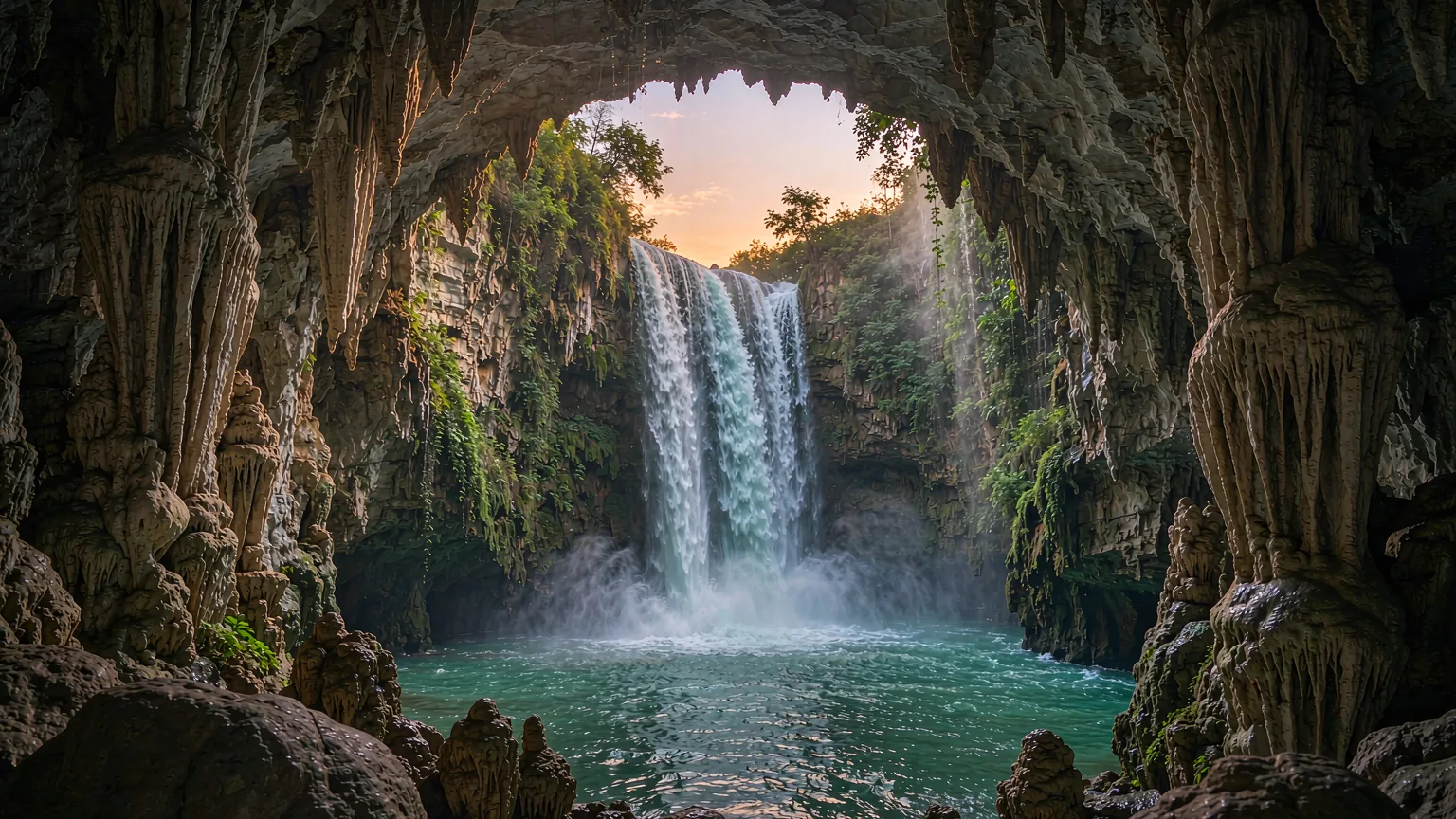
The Water Curtain Cave threads the fall's waist, the roar swelling inside the rock hollow, a rare national chance to watch a waterfall from behind. Morning legs are freshest, so finish falls and cave thoroughly, lunch at the scenic restaurants, and only then start the afternoon's march.
Tianxingqiao: Two Halves of Stone Forest on Water
An eco-bus drops you at Tianxingqiao, the upper half for the counting-steps and stone scenery, the lower half for the Silver Chain Falls Pool. The upper runs as the groups' main arena, dense with people; the deep route completing both halves and exiting below pockets the quiet stretch around Star Gorge Falls.
The Silver Chain is Huangguoshu's most delicate water: a funnel of stone basins combing rapids into silver beads, spiraling circle by circle into the deep pool. The full walk takes about two hours, forest insects thick, so trousers and repellent outrank looks.
Doupotang: The Classic TV Opening's Filming Spot
By early afternoon reach Doupotang, the falls where the 1986 Monkey King series filmed the pilgrims leading their horse across. The widest of the Huangguoshu cluster, it spreads level rather than plunging, generous and calm instead of oppressive, made for a slow afternoon look.
The area runs small, an hour sufficing. Its signature is the travertine bar on the crest, water sliding down in one broad sheet, silk-textured in good afternoon light. Afterward rest at the hotel or head straight for the Baling River Bridge.
Baling River Bridge: Standing above the Gorge
The evening's bonus is the Baling River Bridge, a suspension span of over a kilometer crossing its gorge more than three hundred meters above water. A bridge science museum and sightseeing passages let you climb inside the structure and onto the top deck, watching sunset from mid-air, the finest footnote to Guizhou's name as a bridge museum.
International BASE-jumping challenges often stage here, so with luck you catch athletes leaping from the deck. Sightseeing needs tickets and booking, slots per the area's notices. Overnight at Huangguoshu town or Zhenning, with tomorrow morning pointing into Guanling.
Guanling Fossil National Geopark: A Seabed from Two Hundred Million Years Ago
Day two opens with the sharpest contrast: from waterfall to an ocean two hundred million years gone. The Guanling fossil beds hold Triassic marine reptiles and crinoids, ichthyosaurs, Keichousaurus and placodonts lying in excavation posture inside the in-situ halls, the rock overhead their epitaph.
The in-situ protection hall startles most: fossils undisturbed, a hall built straight over the excavation face, one whole wall of rock carpeted with crinoid stems and dragon skeletons. Understanding that wall is understanding the full weight of the sentence, Guizhou was once ocean.
Longgong: The Afternoon's Cave Boating
The afternoon transfers to Longgong, about an hour by road. The Dragon Gate Fall greets you at the gate, a cave-mouth drop of fifty-odd meters filling the valley with sound, before the main course: a boat through two chambers of water cave, stalactites flickering between lamplight and cave daylight. The cave holds around fifteen degrees year-round, a thin layer exactly right.
The visit runs about two hours, complementing Huangguoshu: one shows water's power, the other water's depth, opening onto rapeseed fields ringed by hills, wildly photogenic in spring gold. Return downtown by dusk for a hot-spring recovery.
Bailing Hot Spring: Closing Two Days of Landscape
Hand the downtown evening to Bailing Hot Spring. Two days of climbed steps, soaked spray and sunbaked bars dissolve pool by pool, rotating at fifteen to twenty minutes, sampling the hottest shallowly, rehydrating with fruit in the lounge between.
Observe the rules: soak on neither empty nor full stomach, never after alcohol, caution with cardiovascular conditions. Finish with hot ginger tea and sleep early, since day three's Getu run is the trip's longest drive and wants full battery.
The Getu River: The Long Push into Ziyun's Swallow Gorge
Day three is the trip's finale, chartering to the Getu River in Ziyun county, over two hours by road. The Swallow Cave shocks first: a colossal tunnel mouth housing tens of thousands of swallows, the flocks entering and leaving at dawn and dusk like storm clouds. The light shafts through the cave arch are a photographer's classic, dust motes dancing in the morning beams.
The Dahe Miao village lines the river, and the barehand climbing show of the Miao «spider men» is the area's signature: locals ascending hundred-meter cliffs with no gear, a craft rooted in ancestors gathering nests and hanging coffins. Boat, village and climbing show string into one full day precisely.
The Return: From Valley back to the World
After the Getu visit retrace the road to downtown Anshun, about two and a half hours, arriving near seven in the evening. Chasing a same-night train or flight means leaving earlier still, since mountain-road time stretches far more than the plains.
The three days open on a waterfall and close on swallows, crossing a two-hundred-million-year seabed in between. You will carry home many photos, but the true gain is a coordinate: in karst country, every face of water deserves a full day of its own.
| Getting around |
|
| Budget | Tickets and boat rides total RMB 400-600 pp; three days run RMB 1000-1800 pp with lodging, meals and transit. |
| Best time | The June-Oct high-water season peaks the water scenery while Apr-May and Sep-Oct wear the kindest climate; summer nets both rafting and falls. |
FAQs
Which day runs hardest, and how do I ease the pace?
Day one is hardest, three sections plus a bridge. Ease it by cutting Doupotang to forty minutes or dropping the bridge to return evening rest; walking only Tianxingqiao's lower half is another common call. Days two and three run gentle, so front-loading the effort fits.
Does the Getu River deserve its own full day?
Yes, provided the human half interests you: the swallow cave and light shafts are natural wonders while the spider-men climb is a one-of-a-kind cultural sight, together forming Getu's full value. Pure waterfall fans can swap the day for a deeper Huangguoshu rerun or Longgong plus a Tunpu village.
How do I buy tickets most economically?
The Huangguoshu standard is through ticket plus eco-bus fare, cheaper than piecemeal, with online official bundles worth comparing before departure. Longgong usually packages entry with boat; Getu sells boat-inclusive sets on official channels. Carry ID for all real-name tickets and use student or senior discounts where they apply.
What should the rainy season traveler watch on this line?
Three things: high-water season drenches the decks, so a rain shell and camera cover are mandatory; thunderstorms can close bridge visits and boat rides, leaving swap room in the plan; and mountain roads may post rockfall warnings after rain, following signage and driver judgment, never pushing into the night.