
Seven days mean not more sights but deeper ones: a full day per slope to wait out clouds on the rim, half days for wild forest and working forest farms where squirrels and resin show only to the slow, a dedicated folkways day, and three proper soaks. This is the edition for return visitors and the time-rich.
The build changes bases three times: three days in Erdaobaihe, day four on the west side, day five in a spring village, day six back in town for folkways, day seven shopping and exit. The lake wager gets two full windows, every bad-weather day carries its substitute, and not one day runs empty.
Itinerary at a glance
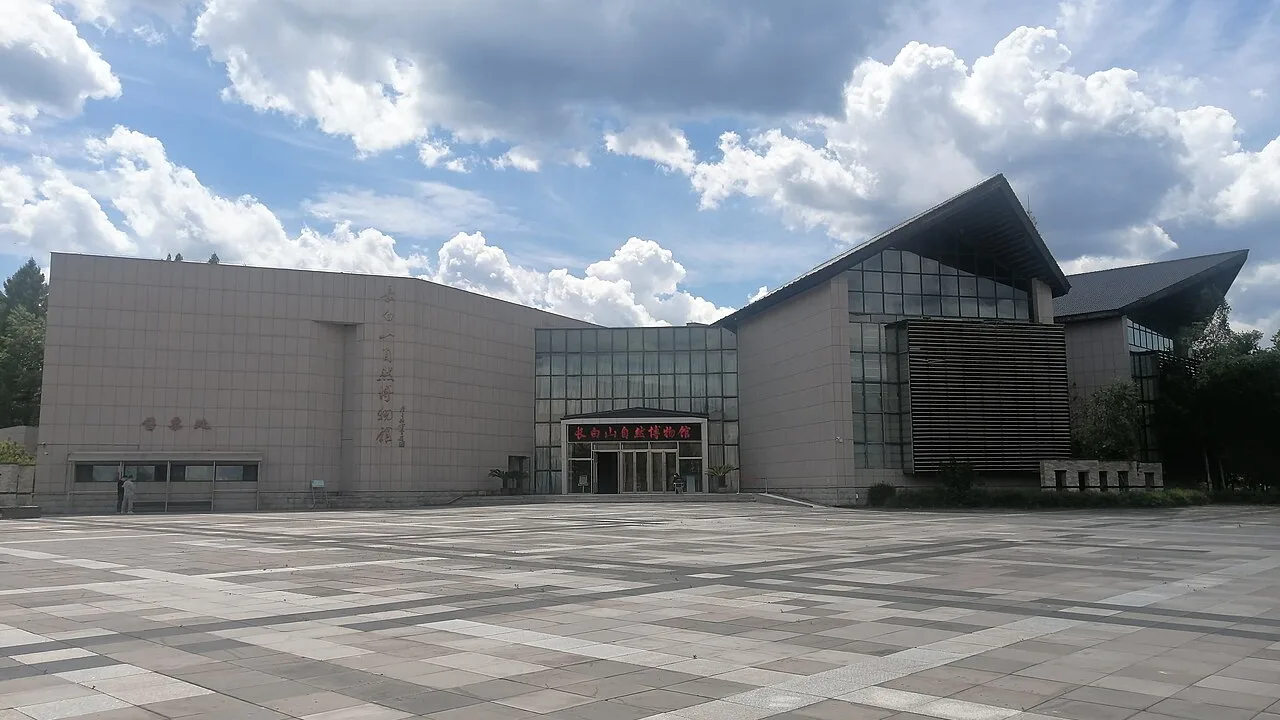
| 15:00 | Changbaishan Natural History Museum: Arrival Day's First Lesson |
| 17:30 | Erdaobaihe Famous Town Scenic Area: Home Base for Seven Days |
| 08:30 | Heaven Lake from the North Slope: The First Lake Wager |
| 12:00 | Changbai Waterfall: The North Slope's Heart |
| 14:30 | Julong Hot Springs: Afternoon Tea in the Vapor |
| 06:00 | The Mojie Scenic Area: Day Three's Magic Half Hour |
| 10:00 | The Underground Forest: A Valley Visible Only at Slow Speed |
| 15:00 | The Manchu Culture Museum: Turning from Nature to People |
| 09:00 | Heaven Lake from the West Slope: The Second Lake Wager on Steps |
| 13:30 | Jinjiang Grand Canyon: The Loose Stretch after the Steps |
| 17:30 | Wanda Changbaishan International Resort: The West-Side Night |
| 09:30 | Lushuihe National Forest Park: A Day of the Forest Farm |
| 16:00 | Xianrenqiao Hot Spring Resort: A Night in the Spring Village |
| 09:30 | The Primitive Shaman Tribe: Folkways Day's Main Course |
| 19:00 | Heaven and Earth of Changbaishan: The Seven-Day Curtain Call |
The route, stop by stop
Changbaishan Natural History Museum: Arrival Day's First Lesson
Arrival day skips the gate and reads the mountain first, two hours across eruption history, vegetation bands, wildlife and spring formation, an atlas for the six days ahead where every later boardwalk finds its footnote.
Arrived by morning? Check in, lunch, and take the museum after lunch. Collect a free hand-drawn town map at the desk, better suited to this town than any phone app.
Erdaobaihe Famous Town Scenic Area: Home Base for Seven Days
Spend the evening learning the base: the grove paths, the greenway's main nodes, the town center's eating map, all on foot. Seven days mean passing these repeatedly; one reconnaissance evening saves six days of decisions.
Dinner in the center, first meal Korean soup rice: light, hot, cheap, the correct opening move for a long trip.
Heaven Lake from the North Slope: The First Lake Wager
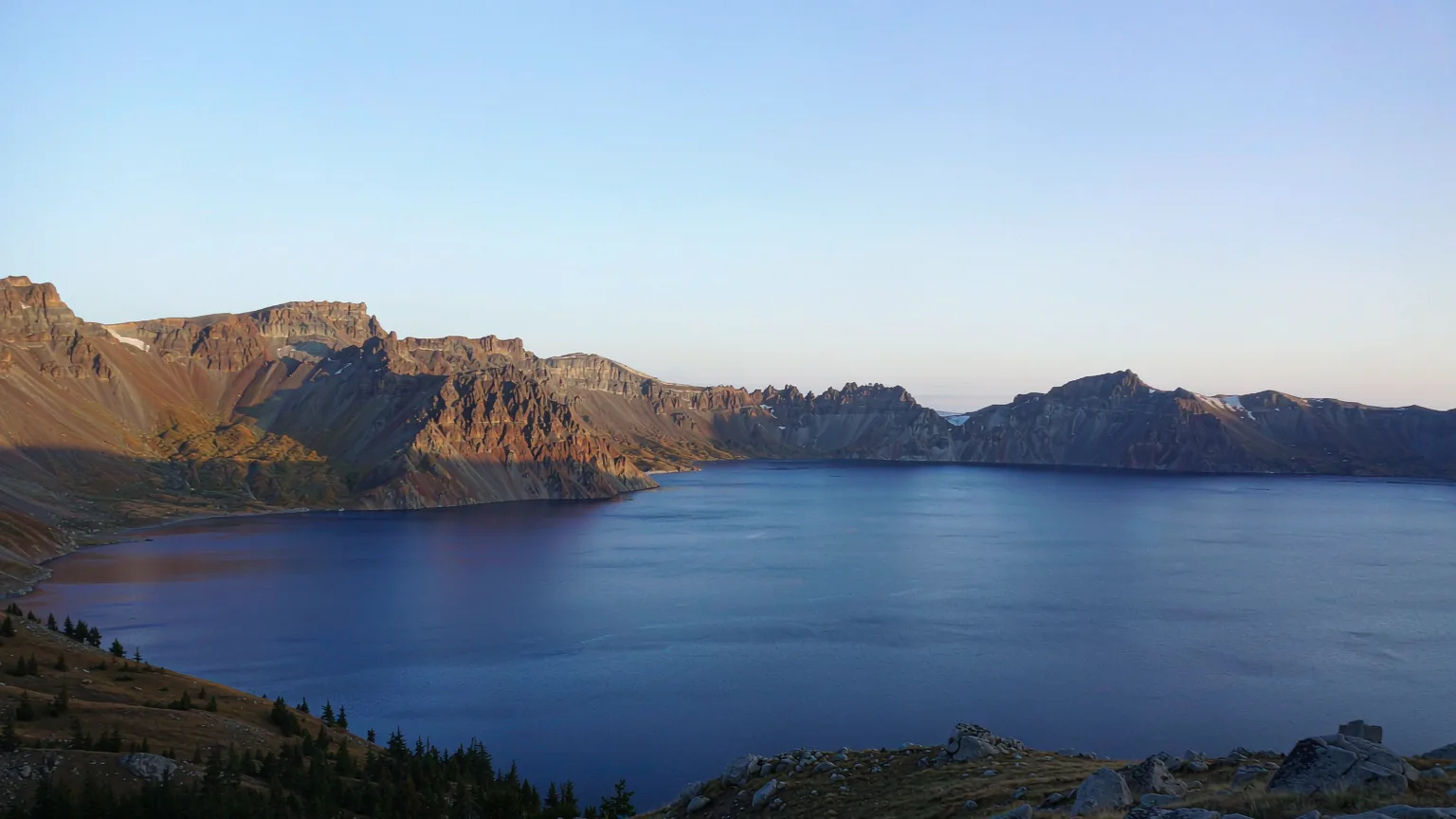
Day two belongs to the north slope, entering at opening for the rim. After the jeep's twenty-some switchbacks the lake and sixteen peaks unfold; today is only the first attempt, with another to come, so the platform affords patience.
Descend onto the waterfall line and slow the afternoon: the day does three things only, the lake, the falls, a bag of spring eggs.
Changbai Waterfall: The North Slope's Heart
Seven days can afford time here: first the frontal deck, then the side terrace for the panorama, twenty minutes each. At high water the roar wraps you in spray and drowns the crowds completely.
Lunch at the rest point near the falls and give the afternoon wholly to the springs and the exit. Deep travel's secret is half an hour extra at every stop.
Julong Hot Springs: Afternoon Tea in the Vapor
The springs work best as each day's last station: steam a bag of eggs and an ear of corn, sit on the boardwalk, watch the vents bubble. Dozens of vents differ in heat, color and mineral crust, and slow looking reveals the layers.
After exiting, soak in a town hotel spring and compare it with the wild vents, a luxury only seven days afford. Sleep early; day three starts before dawn.
The Mojie Scenic Area: Day Three's Magic Half Hour
Reach Mojie before sunrise; the river-mist and rime window is short but punctual. Summer threads light through the woods, winter silvers whole trees, and in every season this half hour is the most dawn-worthy view at the mountain's foot. One loop of boardwalk, forty minutes.
Then breakfast and an hour or two of recovery before re-entering the north slope at ten for the sunken forest, a rhythm of tension and rest done right.
The Underground Forest: A Valley Visible Only at Slow Speed
Ninety minutes round trip, but the seven-day way is to reach the rim and skip the descent, walking the viewing line slowly, watching squirrels, listening for woodpeckers, reading the canopy's layers. Read the collapsed-strata panel, look up, and the understanding completes itself.
Exit for lunch in town, then the Manchu culture museum at two, joining the natural memory of two days to the human thread.
The Manchu Culture Museum: Turning from Nature to People
This museum is the itinerary's hinge: two and a half days of mountain, water and woods end here, and the human story begins. Manchu origins, banner life, mountain-digging culture and shaman objects unfold hall by hall, laying ground for day six's village.
Study the ginseng section and memorize the argot and rules, which return on day six in the village and day seven on the goods street. The knowledge line of seven days climbs exactly like this.
Heaven Lake from the West Slope: The Second Lake Wager on Steps
Day four charters west at dawn and hands the freshest hours to over fourteen hundred steps. No jeep on this side, the steps the only way, and the summit pays in panorama: boundary stone and sixteen peaks in one frame, the complement of the north angle.
Lake already banked? Today is gravy. Fogged out on the north? This is the second chance, and for many deep travelers the true first meeting. Two hours up and down combined, within your limits.
Jinjiang Grand Canyon: The Loose Stretch after the Steps
Off the steps, straight into the canyon's loop of just over an hour, gentle and climb-free, recovery built into sightseeing. Volcanic rock sculptures and the deep gorge line sharpen in afternoon light, the least effortful formal sight of seven days.
Afterward dinner toward Songjianghe and a night on the west side; in winter, glance at the floodlit slopes before sleep.
Wanda Changbaishan International Resort: The West-Side Night
Night four sleeps in the resort village: ski or swim in winter, walk mountain paths in summer, or just eat and browse the mall and watch the village night. Seven days treat this as a recovery station, not a sight, and the flat mindset enjoys it best.
Budget allowing, pick a hotel bundling spring rights and soak the steps' aches away here.
Lushuihe National Forest Park: A Day of the Forest Farm
Day five runs north to Lushuihe: mother pines, ranger trails and farm relics composing a half day, plus the summer float on the Biquan River. No artificial lookouts here, the value is old-growth scale, trees counted in centuries with humans as guests.
Two to three hours in the woods, lunch at a farm family near the station, then move toward Xianrenqiao with evening's soak in mind.
Xianrenqiao Hot Spring Resort: A Night in the Spring Village
Xianrenqiao is a village where springs and town have coexisted for decades, its radon-spring sanatorium tradition running from the last century to now. Sleep here on night five, soak at dusk and again at dawn, with a home-style northeastern dinner between.
The village keeps a slow beat, quiet enough at night to hear mountain wind. This soak is not itinerary but living, and that displacement is deep travel's essence.
The Primitive Shaman Tribe: Folkways Day's Main Course
Back in town on day six, straight to the shaman village, returning the museum's robes and objects to drumbeat and dance. Totem poles, spirit trees and log houses scatter through the woods; watch a full ritual performance, then give the forest half an hour to digest it.
Rest in town after lunch, walking the greenway to shake days of driving from the legs. The evening show then recaps all seven days' threads one last time.
Heaven and Earth of Changbaishan: The Seven-Day Curtain Call
The volcano, the lake, the forest sea, the springs and the shamans of seven days get rearranged in one production. Watch it with the full memory loaded and you catch the most details at the lowest threshold of resistance, which is why the show sits on the penultimate night.
After the curtain, a farewell dinner in town and a shopping list on the phone: for whom, what, how much. Decide before sleep and tomorrow holds no debates.
| Getting around |
|
| Budget | Both slopes' tickets plus summit jeeps about RMB 380, six nights from RMB 300-1,000 a night, five chartered legs and meals, seven days total roughly RMB 3,500-6,000 pp. |
| Best time | June to September with both slopes open is the fullest version; winter runs a deep-snow edition, rim by luck, closures absorbed by museums and springs, skeleton unchanged. |
FAQs
Do seven days feel repetitive?
The design fights repetition deliberately: two slopes see differently, two forests differ in kind, three soaks carry different scenes, folkways and nature alternate. Only meals risk repetition, solved by rotating Korean tables, iron pots and mountain vegetables, seven days without a repeat.
Which days flex most freely?
Days four and five flex most: the west side and spring village can swap wholesale or merge, with no downstream damage. Days one to three lay knowledge and legs in sequence, best kept in order; day seven stays blank as the buffer it was designed to be.
How does the winter edition swap content?
Skeleton unchanged, modules swapped: the float becomes snowy forest walks, the canyon and steps yield to a double north run if the west closes, Mojie's dawn rises to trip highlight, and soaks multiply. Lushuihe shortens in winter with warmth breaks; fine-tune against that year's closure notices.
How do I control a seven-day budget?
Lodging takes about forty percent and swings fivefold from guesthouse to spring hotel; five chartered legs run RMB 1,500-2,500, diluted by headcount; tickets and shows are fixed. Save correctly on rooms and meals, never on cars or insurance, since on ice and snow the vehicle and driver are the safety itself.