
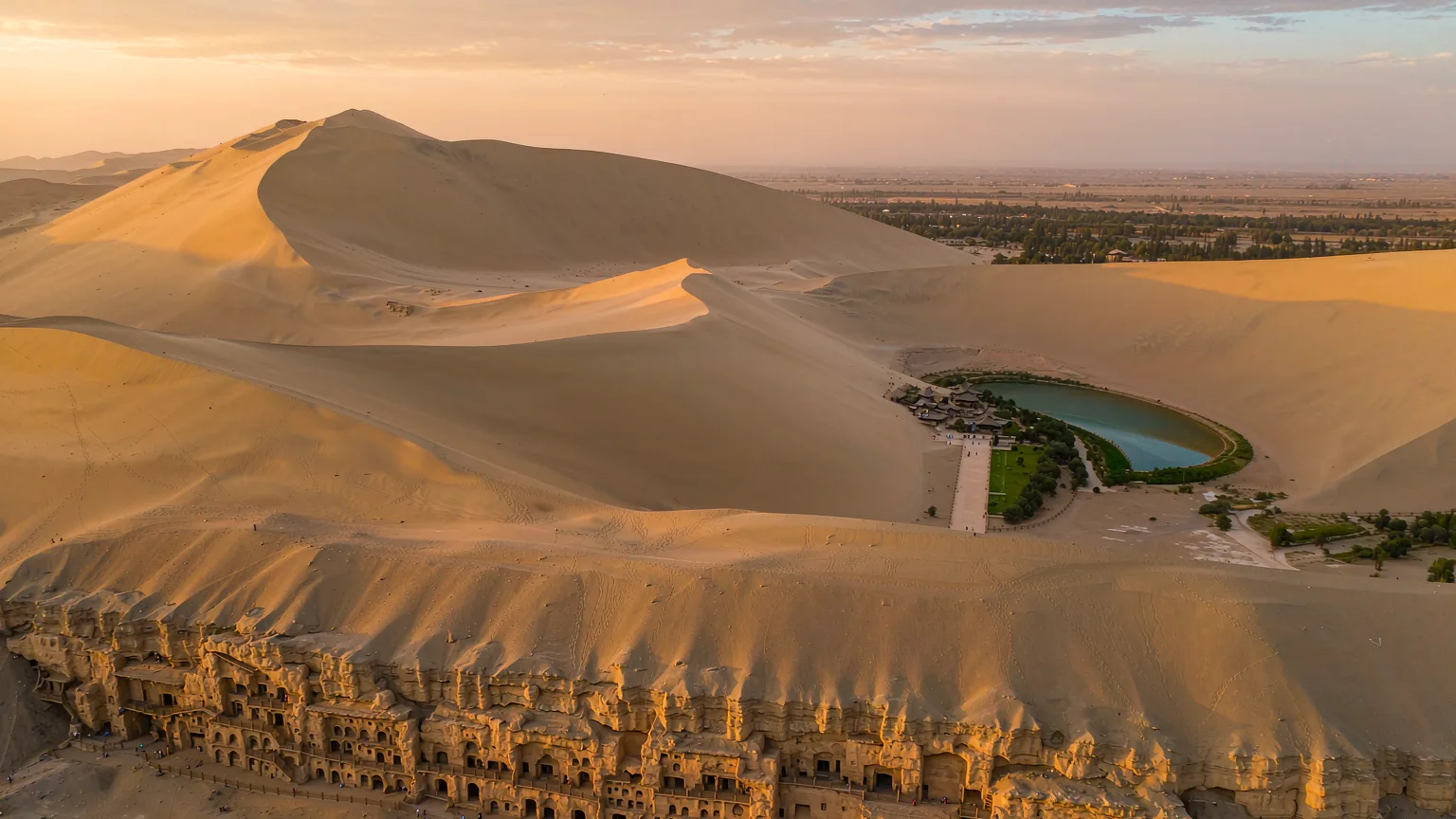
If Dunhuang is a once-in-a-lifetime trip and you genuinely want to understand Mogao, how you sequence the day matters more than where you go. The Type A ticket anchors the morning: two dome films lay out a thousand years of context, eight real caves deliver the close-up impact, and before you leave, the conservation center beside the caves offers replica caves and artifacts you can study at length, filling in every detail you could not see inside.
In the afternoon, return to town and let your eyes rest at the Dunhuang bookstore and art academy, flipping through mural albums and watching how contemporary painters copy the originals. Finish with an evening show that turns the flying apsaras and musical scenes you saw into moving pictures. By nightfall you will understand Dunhuang better than most visitors, without feeling drained, because the rhythm runs see, then read, then feel.
Itinerary at a glance
| 08:30 | Mogao Visitor Center: The Best Primer Is a Dome Film |
| 10:40 | The Real Caves: A Good Guide Changes Everything |
| 12:40 | Conservation Center: Replica Caves for the Fine Print |
| 15:30 | Bookstore and Art Academy: Digesting the Morning |
| 19:00 | Evening Show: Which One Suits You |
The route, stop by stop
Mogao Visitor Center: The Best Primer Is a Dome Film
Treat the visitor center as the day's first gallery. The first film traces the story from monk Le Zun cutting the first cave through centuries of construction to the discovery of the Library Cave. The dome film then projects murals from closed caves at full scale across the ceiling, and the moment an apsara sweeps overhead, many people finally grasp why some visitors keep returning a dozen times.
There is a lot of information in those 50 minutes, so put the phone away, especially for the second film: many caves on screen will never open to the public. Afterward the shuttle takes about 20 minutes to the cave area; use the ride to replay the timeline in your head.
The Real Caves: A Good Guide Changes Everything
Type A guides are officially assigned and generally excellent, but the questions from your group shape the depth. Stand diagonally ahead of the guide, and ask about iconography, pigment sources and patronage rather than which cave photographs best. In the eight caves, watch for three things: Northern Wei shading technique, Sui dynasty apsara styling, and Tang composition in sutra illustration scenes.
Photography inside is strictly banned and hands must never touch murals or statues. Guides repeat this for good reason: carbon dioxide and humidity genuinely damage the art. The tour runs 75 to 90 minutes; afterward cool off in the shade below the cliff before entering the exhibition center.
Conservation Center: Replica Caves for the Fine Print
Beside the cave area stands the free conservation center, the most skipped treasure in Dunhuang. Its full-scale replica caves let you get close and study details under good light, a completely different experience from being briskly marched through the originals. Compare the composition and color of the famous replica caves with the mineral pigment samples in the display cases, and you will understand why these colors have not faded in a thousand years.
Exhibits on mural copying techniques and restoration workflows are equally revealing; after seeing them, you will make peace with the no-photos rule, because the art really is that fragile. A proper visit takes over an hour; if short on time, head straight for the replica caves.
Bookstore and Art Academy: Digesting the Morning
Back in town, skip shopping and the night market for now and spend an hour at the Dunhuang bookstore. Flip through line-drawing albums of the murals next to your memories of the caves, and compositions that did not register in the morning suddenly click. The store stocks Dunhuang-themed stationery and postcards worth writing back at the hotel.
The Dunhuang Art Academy downtown hosts periodic exhibitions of painters copying the murals stroke by stroke. If an exhibition is on, thirty minutes inside teaches you what copying as creation really means. Check on-site notices for current opening arrangements.
Evening Show: Which One Suits You
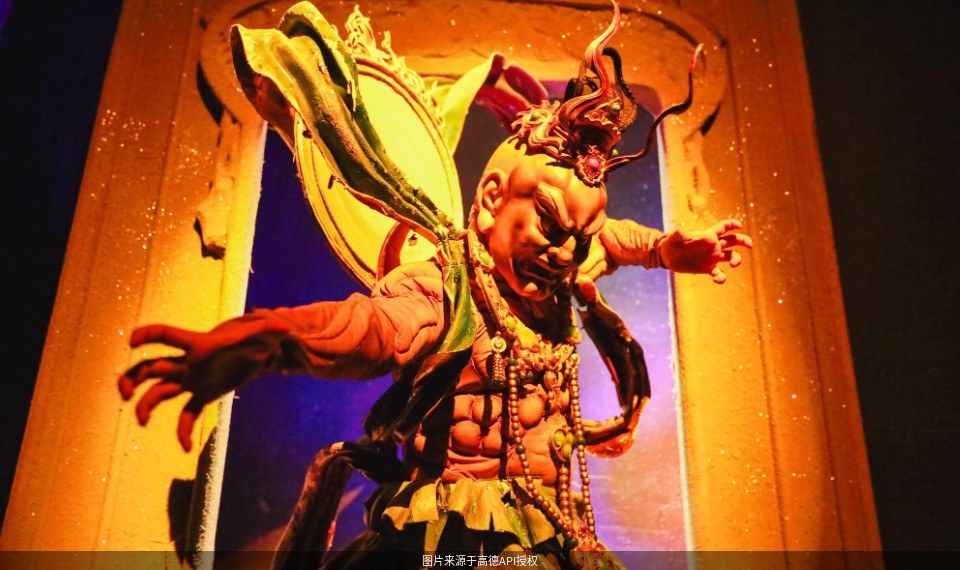
Dunhuang's two main shows have distinct personalities. Again Dunhuang, around 298 RMB, is a walking-format production: the audience moves through several spaces with the story, building to a final twenty minutes that reduce many viewers to tears. It suits anyone who wants to be shaken. Music of Dunhuang centers on music and dance, lifting instruments and poses from the murals onto the stage with a lighter touch, ideal if you spent the morning in the caves and do not want another emotional hammering.
Both theaters sit in or near town, and getting back to your hotel afterward is easy by taxi. Tickets tighten in high season, so book a day ahead through official or reputable platforms; for the walking show, choose seats near the front of your entry group.
| Getting around |
|
| Budget | About 600 to 700 RMB per person: the 238 RMB Type A Mogao ticket, dinner around 60 RMB, a show ticket of 200 to 300 RMB, and about 50 RMB for local transport. |
| Best time | May to October. Book the Type A ticket 15 to 30 days ahead; weekend slots vanish fastest in high season. |
FAQs
How different are Type A and Type B tickets? Is Type A worth waiting for?
Type A, at 238 RMB, means eight caves, an official guide and two dome films; Type B, about 100 RMB, is four caves with simplified guiding and films. If Dunhuang is the point of your trip, wait for Type A returns. If you are just passing through, Type B plus the free replica caves is a perfectly fair deal.
Do the replica caves look very different from the real ones?
Replicas are copied at full scale with original techniques, and their colors are often closer to how the caves first looked than the oxidized originals. What replicas cannot give you is presence: the real space, the traces of age, the light. They complement each other, and real caves first, replicas second, gets you the most.
Can I handle caves plus a show in one day?
Cave walking is moderate; with the exhibition center expect about 15,000 steps. Rest properly at lunch, and the bookstore hour in the afternoon is deliberately seated recovery. Skip the night market on this day and your energy holds up fine.
Are show tickets cheaper at the door?
Official prices are uniform, and last-minute door purchases usually mean the worst seats or none at all. Scalper tickets are hit and miss, not worth the risk. For savings, watch for off-season promotions or student and senior discounts on official channels.