
Once you have seen Mogao, a second visit to Dunhuang calls for a different plan. The eastern approaches and the town's edges hide a string of low-traffic, high-density sights: Western Thousand Buddha Caves in the Dang River valley, an older grotto legacy where guides will actually chat with you; the Dunhuang old town, a film-set town of mud-brick streets with built-in cinematic light; Leiying Temple, a quiet monastery by the city; and farther out, the Han dynasty Xuanquan relay station, physical evidence of how Silk Road post worked.
The logic here is subtraction: skip the headliners and read cave history and frontier history in finer print. It suits two groups perfectly: returning visitors on a second pass, and slow travelers saving Mogao for another day who want a quiet complement. Xuanquan's opening status shifts often, so the plan includes a fallback and never dead-ends.
Itinerary at a glance
| DAY1 09:00 | Western Thousand Buddha Caves: An Earlier Story in the River Valley |
| DAY2 09:00 | Old Town Film Set and Leiying Temple |
| DAY3 09:00 | Xuanquan Site or a Deep Town Day, Depending on Access |
The route, stop by stop
Western Thousand Buddha Caves: An Earlier Story in the River Valley
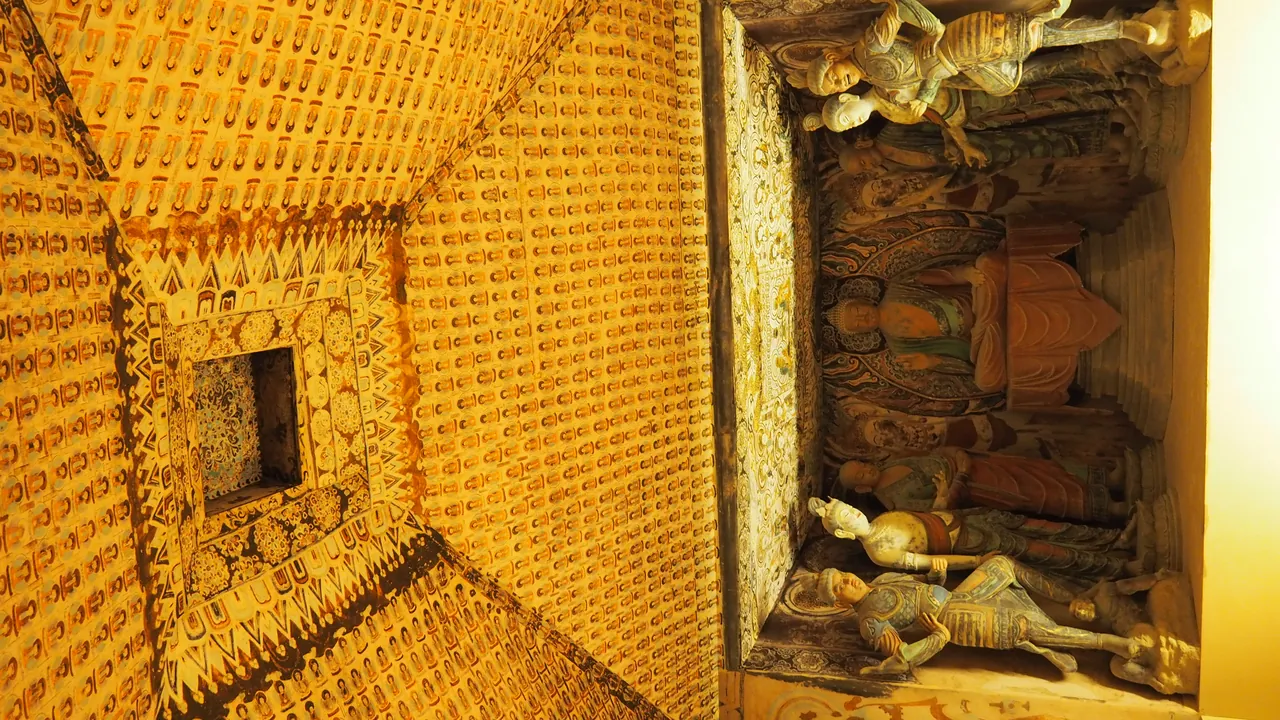
Western Thousand Buddha Caves occupy a cliff above the Dang River about 30 kilometers southwest of town, with construction predating some of the Mogao caves. A dozen-plus caves survive but only a few open to visitors, for a modest ticket. The small scale is the luxury: guides have time to unpack every mural, from Northern Wei's slender figures to Western Wei's palette, in finer detail than any headline cave allows.
The valley itself is the co-star: cliff walls, poplars and river in a single frame, an utterly different character from Mogao's gobi cliff. The visit plus the drive fills half a day; back in town by afternoon, continue at the bookstore or art academy and cross-check the period styles you just saw, which doubles the payoff.
A historical footnote: the earliest caves here are generally dated to the early Northern Wei, and some argue parts may even predate sections of Mogao, a dating question still debated and one guides usually enjoy unpacking. The valley's sedimentary cliffs match Mogao's geology; watch for traces of the river's old courses below the walkway, and you can read centuries of the Dang River's wandering.
Old Town Film Set and Leiying Temple
Spend the morning at the Dunhuang old town, a Song-style frontier set built for filming, its mud-brick walls, banners and stables kept in working order and used by generations of westerns including the classic New Dragon Gate Inn, entry for a few dozen yuan. Off-peak, the whole street holds only you and a horseman; every casual stance becomes a film still. Staff sometimes play along in character, more fun than facts.
In the afternoon, head back toward town for Leiying Temple, its name tied by legend to the monastery in Journey to the West. The current buildings are modern but the incense is real, visitors are few, and the back courtyard looks out over the oasis. Entry is free and modest dress is expected. Finish at the Dang River for sunset and let two days of information settle.
On-the-ground notes: between nine and ten the morning sun rakes the mud-brick lanes, prime photo light, while tour groups flood in after half past ten, so come early for empty frames. Leiying Temple's name is tied by legend to the story of Xuanzang's journey west; the halls are modern rebuilds, but the murals inside come from local painters working in the Dunhuang lineage, worth a second look.
Xuanquan Site or a Deep Town Day, Depending on Access
The first choice for day three is the Xuanquan relay station on the gobi between Dunhuang and Guazhou, the most complete surviving site of the Han imperial post system, where more than twenty thousand Han wooden slips were unearthed and which joined the World Heritage list in 2014. Access shifts often, possibly requiring reservations or fixed guided sessions, so confirm by phone the night before. If it works out, the wall foundations and fort outlines with a guide make the hardest-core lesson in Silk Road logistics.
If Xuanquan closes unexpectedly, switch to the fallback: a morning at the viewing platform by the Buddhist temple bay tomb area or another round of the museum's special exhibitions, two hours in the bookstore after lunch, and a riverside walk at dusk. This three-day plan is not about counting sights but about reading each chapter thoroughly; slow is the point.
A little context: the site takes its name from a spring beside the hill, and the unearthed wooden slips include the station's own working records, from mail delivery to delegations received, the most direct firsthand material on Silk Road logistics. The site is open and shadeless; summer ground heats fast, so cap the visit around forty minutes and keep a hat on throughout.
| Getting around |
|
| Budget | About 700 to 1,000 RMB per person: modest entry for Western Thousand Buddha Caves and the old town, free Leiying Temple, roughly 200 RMB for local transport and short charters, plus food and lodging. |
| Best time | May to October. Access to niche sites like Xuanquan changes often, so confirm by phone before setting out. |
FAQs
Will Western Thousand Buddha Caves feel like a repeat of Mogao?
Not at all. It is older, smaller, and guided at a completely different pace, with a higher density of visible detail. Do Mogao first, then come here with your questions about pigments and dating, which get far more patient answers in this intimate setting.
Can I actually visit Xuanquan?
Access genuinely fluctuates for protection and capacity reasons. The play: call the heritage authorities or confirm via a licensed agency a week ahead, and only slot it in once confirmed. Otherwise treat it as a floating option with the deep town day as backup. Do not gamble on luck; Dunhuang deserves a second trip anyway.
Does this route suit first-time visitors?
Not really. First visits should still center on Mogao and Mingsha; this route is designed for second-timers or those with late-session Mogao bookings. If you must mix, take just the half day at Western Thousand Buddha Caves and keep the rest classic.
Where should I stay for this route?
One hotel in downtown Dunhuang for all three nights is simplest. Every stop on this route starts and ends in town, so you keep your room, leave each morning and return each evening, with better choice and stable prices than staying near the sights.