
Dunhuang has another mode: instead of maxing out three big sights, blend caves, shows, hot springs and the night market in relaxed proportions. Day one takes in Mogao and pushes the emotion to its peak with Again Dunhuang at night. Day two starts with sleeping in, returns to Mingsha only for sunset, then switches to the lighter Music of Dunhuang in the evening. Day three soaks in a hot spring, browses the bookstore and works the night market, a full day to digest everything into something of your own.
The hidden value is resilience. If the Mogao booking fails, a dust storm rolls in or your legs give out, every link has a soft landing: shows are indoors, springs are indoors, the market runs at night, and only half a day at Mingsha depends on open sky. With parents or kids in tow, this is the friendliest plan in the book.
Itinerary at a glance
| DAY1 09:00 | Mogao by Day, Again Dunhuang by Night |
| DAY2 12:00 | A Slow Half Day at Mingsha: Sunset Only |
| DAY3 10:00 | Hot Springs and Slow Town Time |
The route, stop by stop
Mogao by Day, Again Dunhuang by Night
Run the standard Mogao flow in the morning: dome films, shuttle, eight caves, then a noodle lunch and a two-hour nap in town. At night, Again Dunhuang, around 298 RMB, moves the audience through several spaces with the story; the Library Cave segment hushes the room so completely you can hear breathing.
The caves you saw by day are given story and sound by night, an interlocking design unique to Dunhuang. The show runs about 90 minutes; afterward a hot noodle soup within ten minutes of the theater is the perfect way to land all that emotion with a little carbohydrate.
Sequencing tip: lock the Mogao session first, then the show, leaving at least three hours between for lunch and a nap. The walking format keeps you on your feet the whole time, so comfortable shoes beat stylish ones. In high season the evening show lets out after 22:00 and taxi lines form, so budget patience for the ride home. And if you know the Library Cave story even roughly beforehand, the final twenty minutes hit twice as hard.
A Slow Half Day at Mingsha: Sunset Only
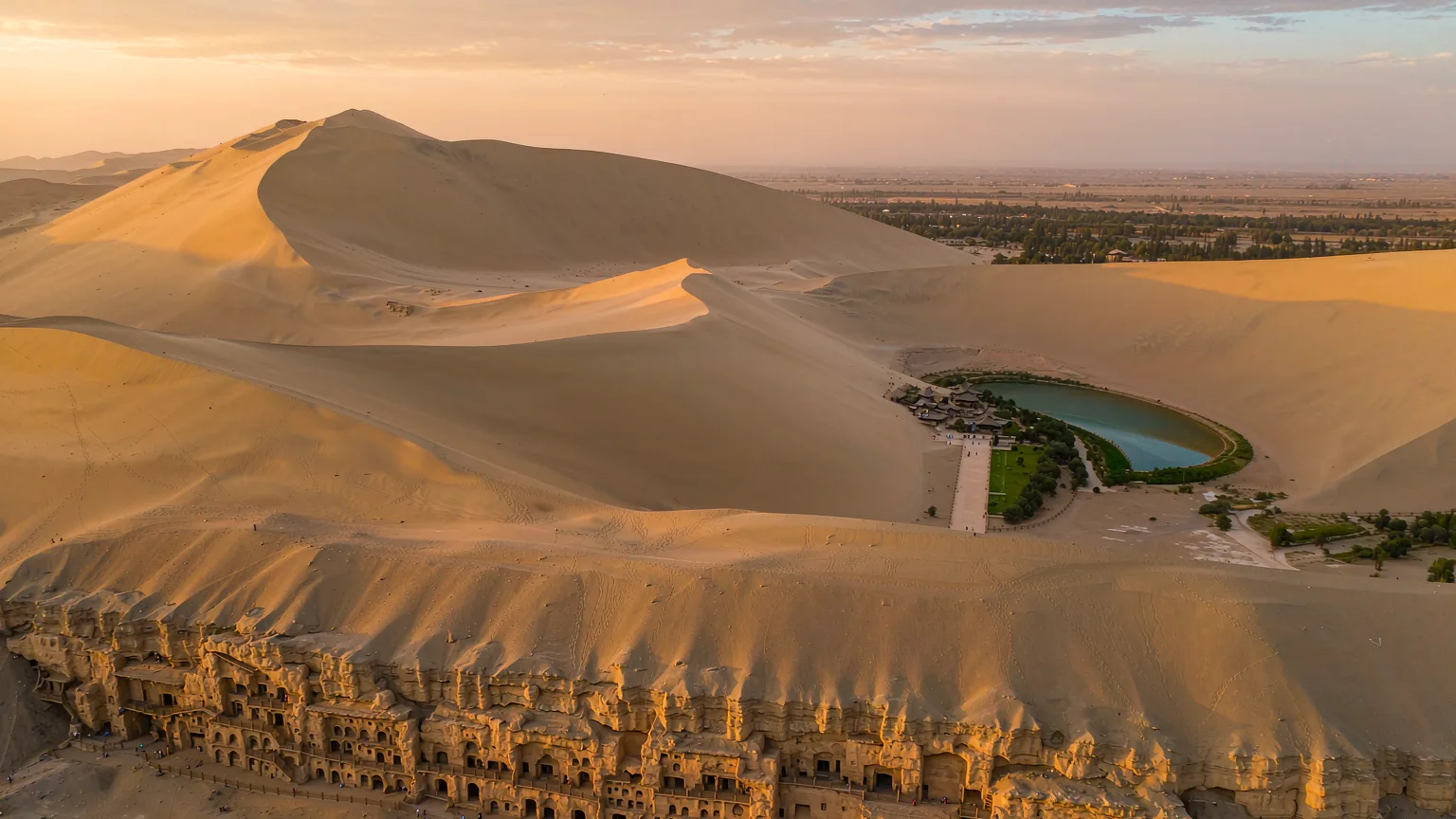
Day two fully relaxes: wake without an alarm, a braised-lamb lunch in town, and into Mingsha before 15:00. No rush today; the camel is optional. The point is climbing the dune south of Crescent Spring by late afternoon, claiming a spot, and watching a complete sunset. The re-entry policy makes a return trip purely for sunset cost nothing extra.
Stay after sundown: the sand-field night sky is Dunhuang's hidden second show, with almost no light pollution and the Milky Way overhead. Then take in Music of Dunhuang, a touch over 200 RMB, letting mural music and dance close the day lightly, a perfect counterweight to the previous night's weight.
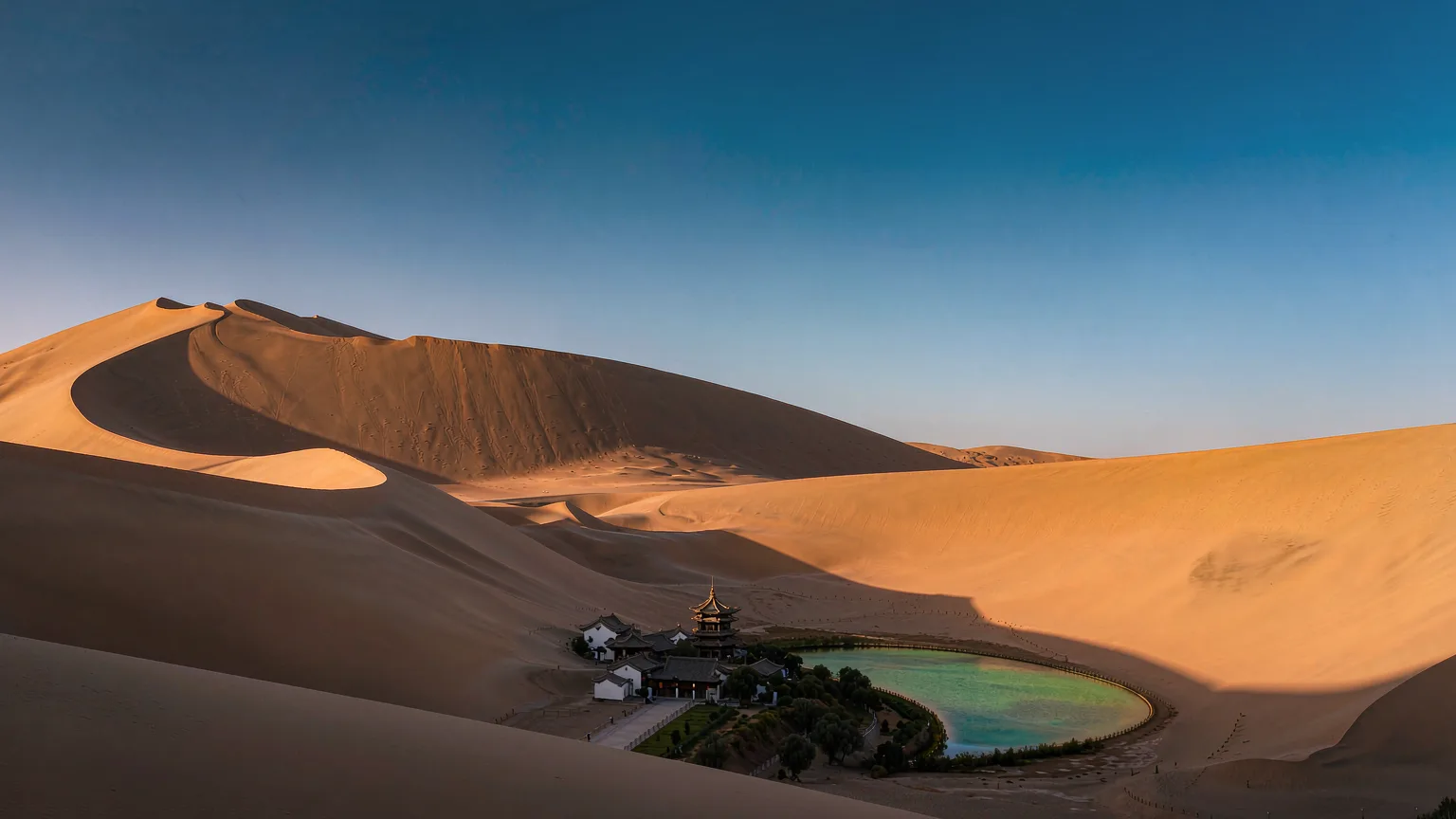
A little geography: Crescent Spring survives inside the dune bowl thanks to what is usually explained as a wind effect, where air curling over the ridge lifts falling sand back up, so the spring is never buried. The ladder up splits into separate lanes for climbing and descending; mixing lanes causes jams mid-slope. After sunset the descent crowds surge, so waiting ten minutes before joining clears the way.
Hot Springs and Slow Town Time
Start the last day downtown, choosing between the museum and the bookstore to backfill whatever the previous two days left fuzzy. Check out at noon and store your bags, then head to a hot-spring resort in the afternoon; several operate around Dunhuang, with daytime soak tickets around two to three hundred yuan or packages with lodging. Soaking at the gobi's edge while looking at dunes is not an everyday experience elsewhere.
After the soak, return downtown by evening for a final night-market round of shopping and a farewell dinner. The essence of these three days is turning Dunhuang from a checklist into a slice of life: what stays with you may not be a cave number but sunset on the hot-spring water and a phrase of local dialect at a food stall.
A caution: hot-spring hotels around Dunhuang vary widely, so check before booking whether the pools use genuine spring water or heated wells; prices differ little but the soak differs. Day tickets usually cover a two-to-three-hour slot with hourly charges beyond. Stay out of strong air conditioning and wind for half an hour after soaking; with the gobi's evening temperature swings, this matters more here than in the south.
| Getting around |
|
| Budget | About 1,200 to 1,500 RMB per person: the 238 RMB Type A ticket, Again Dunhuang around 298 RMB, Music of Dunhuang just over 200 RMB, 300 to 500 RMB each at a hot-spring hotel, 110 RMB for Mingsha, plus meals. |
| Best time | May to October. Show tickets tighten in high season; hot springs feel best in autumn and winter, so tune the season to taste. |
FAQs
If I only watch one show, which one?
For impact and strong emotion, Again Dunhuang. For an easy song-and-dance night after an exhausting day, Music of Dunhuang. Families with kids or elders usually report the latter is friendlier. Seeing both is the best answer, ideally Music first and Again second, so the emotional curve ascends.
Is it worth staying overnight at a hot-spring hotel, or just a daytime soak?
It depends on budget and season. In autumn and winter, an overnight soak plus stay is good value, with the gobi night sky as the signature. In summer, a daytime soak suffices and returning downtown for the night market is thriftier. Before booking, ask whether pools are outdoor or indoor and whether night hours cost extra.
No western line in this plan, any regrets?
The western line is a different kind of spectacular but clashes with this plan's pace: seven-plus hours round trip would crowd out both the springs and the shows. For the Yardang sunset, add one dedicated day to Dunhuang and get the best of both.
Does this route suit a five-year-old?
Very much so; this is the most toddler-friendly of the plans. The only quiet-required block is the half day at Mogao, everything else is sand play, water play and night-market snacks. Pick a hot-spring hotel with a kids' pool, and if the child startles at loud effects, swap Again Dunhuang for Music.