
Three days is the standard answer for Dunhuang: day one for Mogao, day two for Mingsha Mountain and Crescent Spring, day three for the western line, taking in Yumen Pass, the Han Great Wall and the Yardang landforms, with a sunset at the end of the gobi. The structure runs tight, then loose, then tight again: a fixed process on day one, free play on day two, and a long haul rewarded by sunset on day three.
Two facts worth knowing. The 110 RMB Mingsha ticket allows re-entry for three days, so return at dusk if day two feels unfinished; it is effectively two visits for one price. And the western line runs over 90 kilometers one way with no public transport, so your options are a chartered car, a shared ride or a day tour, typically 180 to 250 RMB per person in high season. The Type A Mogao ticket still requires booking 15 to 30 days ahead; that remains priority one.
Itinerary at a glance
| DAY1 09:00 | Mogao All Day: Films, Eight Caves and the Replica Center |
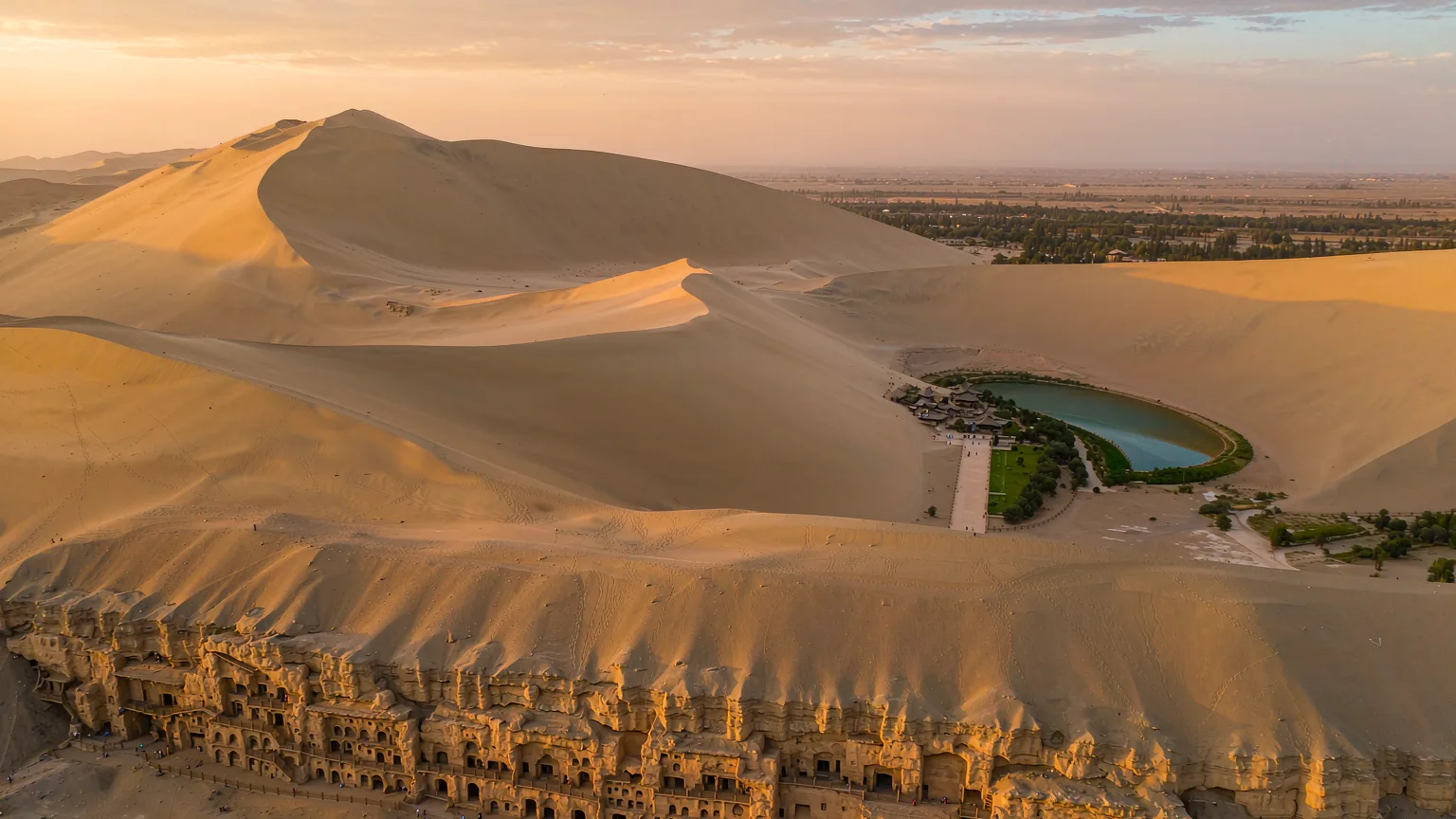
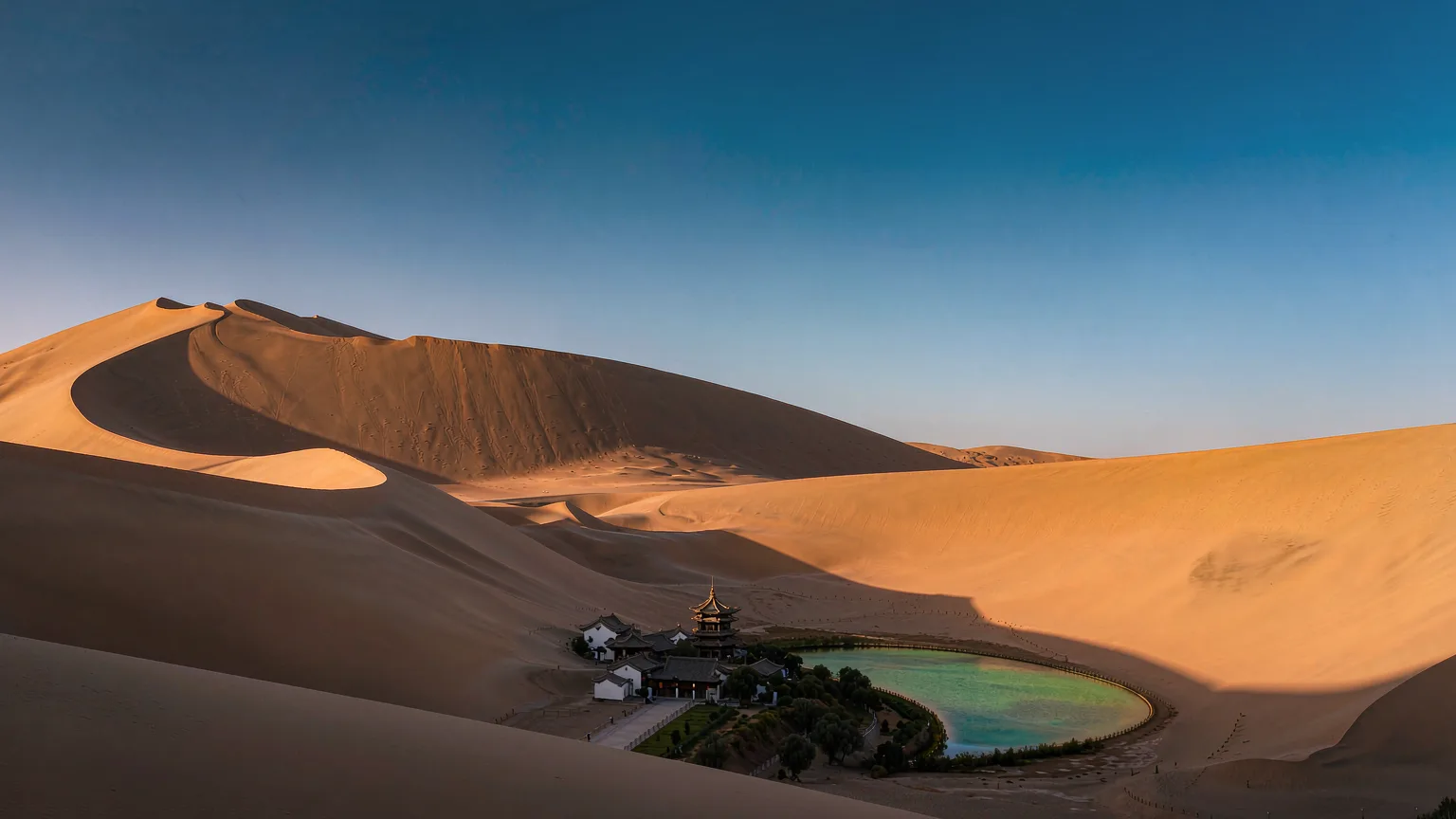
| DAY2 09:00 | Mingsha and Crescent Spring: Camels, Sandboards and Sunset |
| DAY3 09:00 | The Western Line: Yumen Pass, Han Walls and Yardang Sunset |
The route, stop by stop
Mogao All Day: Films, Eight Caves and the Replica Center
Give the whole first day to Mogao in three stages: morning films at the visitor center, then the shuttle to the caves for eight originals with a guide, about two and a half hours total; a noodle lunch and a nap back in town; and if you are still hungry for more, a slow afternoon pass through the free conservation center beside the caves, studying replica caves and pigment samples.
Few travelers realize Type A sessions concentrate in the morning, which turns the afternoon into a bonus round. After two hours at the center, walk off the day along the Dang River and sleep early, because tomorrow is desert day. Mogao rewards a clear head; giving it your sharpest hours is the single best decision of this itinerary.
A bit of background helps: the cliff here is soft conglomerate, poor for stone carving, so the ancients worked in murals and painted clay rather than cut rock, which is why Dunhuang means painting where Yungang and Longmen mean statuary. Type A tickets cost about 238 RMB and often need booking weeks ahead; if you only land an afternoon session, move the conservation center to the morning and flip the order without losing anything.
Mingsha and Crescent Spring: Camels, Sandboards and Sunset
Sleep in, enter before noon, and use the re-entry rule to split the day: camels and sandboarding first, done by late afternoon. The camel loop runs about four kilometers and takes around an hour at roughly 100 RMB. Then retreat to your hotel through the hottest, most tiring stretch.
Re-enter around 18:30 and head straight for the dune south of Crescent Spring, climbing the wooden ladder for sunset. In summer the sun sets near 21:00, and the light shifts from gold to orange-red to violet over nearly two hours, the most photogenic window in Dunhuang. Dinner at the night market, a hot shower, and rest your legs: day three is a long fight.
Timing matters: midday sand surface can become extremely hot, so finish camels and sandboarding before four. Sunscreen burns off fast on sand; reapplying every two hours is standard practice. Bottled water prices climb with the temperature, and carrying two bottles in from town is nothing to be embarrassed about. Overnight guests nearby can also catch the star show after nine.
The Western Line: Yumen Pass, Han Walls and Yardang Sunset
Rise early for the western line. First stop is Yumen Pass, about 40 RMB: the small square fort stands alone on the gobi, the very pass that spring winds never crossed in the old poem, a 40-minute stop. Next come the Han Great Wall remnants, where two-thousand-year-old layers of reeds and gravel still hold shape, and the frontier history becomes tangible.
Keep lunch light or bring food, then reach the Yardang landforms after midday, entry about 50 RMB plus a 70 RMB shuttle. The bus threads through wind-carved formations named for lions, sphinxes and fleets at sea, like driving into an alien city. You return to Dunhuang near midnight, paying for the day in fatigue and earning the trip's most stunning image: wind-carved rock turning gold-black silhouette at sundown, the gobi empty at every edge and somehow full.
Geography note: the western line crosses largely uninhabited gobi where phone signal comes and goes, so download offline maps and tell your hotel the plan. The Yardang area is said to moan like ghosts at night, which earned it the devil-city nickname, though daytime visits feel perfectly benign. The shuttle stops on a schedule; note the driver's regrouping time at each viewpoint, since getting stranded means a long wait.
| Getting around |
|
| Budget | About 1,100 to 1,400 RMB per person: 238 RMB Type A ticket, 110 RMB Mingsha, roughly 180 to 250 RMB each for the westline car share, about 120 RMB for Yardang entry and shuttle, 40 RMB for Yumen Pass, plus food and lodging. |
| Best time | May to October. The westline sunset is the trip's peak; book Yardang sunset tours a day ahead in high season. |
FAQs
Is sharing a car on the western line safe, and will they drag us to shopping stops?
Car shares and day tours booked through proper platforms rarely include shopping; the route is just the three stops. Roadside touts may quote less but offer no contract, insurance or sunset guarantee. Before booking, confirm whether the Yardang shuttle and sunset session are included, and ask what time you get back.
Are three days enough, or should I plan four?
Three days fits the classics without slack or rush. Serious cave lovers should add a fourth day for Yulin Caves in Guazhou or the bookstore and art academy in town; pure sightseers can finish in three. The standard four-day version adds an eastern line or Guazhou day.
If I must choose, Yardang sunset or Crescent Spring sunset?
Choose Yardang. Crescent Spring's sunset is lovely but watchable from the city edge; Yardang sits deep in the gobi where wind-carved rock meets sunset in a scene you cannot replicate, and the 90-kilometer detour exists precisely for it. With spare time, do both; they do not conflict.
Is the western line exhausting, and is it feasible with older parents?
The strain is in the driving, seven hours or more round trip, while walking at each stop is short and flat. Seniors can ride the shuttle and minimize walking; with sun protection, water and a cushion, and by trimming the Han Wall stop, the day stays manageable. The real question is the near-midnight return and whether their routine can take it.