
Five days is the comfortable version of Dunhuang: the first three cover Mogao, Mingsha and the western line, day four heads northeast to Guazhou for the Yulin Caves and Suoyang City line, and day five winds down downtown. The two extra days are not about stacking sights but about widening each day's effective sightseeing from six hours to eight, with naps still on the table.
Day five offers two directions depending on taste. Cave lovers choose Yulin Caves in Guazhou, the sister complex of Mogao, whose Western Xia murals rival or beat Mogao in certain caves, about two hours each way from Dunhuang. Frontier-military fans choose Jiayuguan, the First and Greatest Pass under Heaven, four hours each way: a hard but feasible day trip. Neither line involves a booking war, which alone lowers the trip's blood pressure.
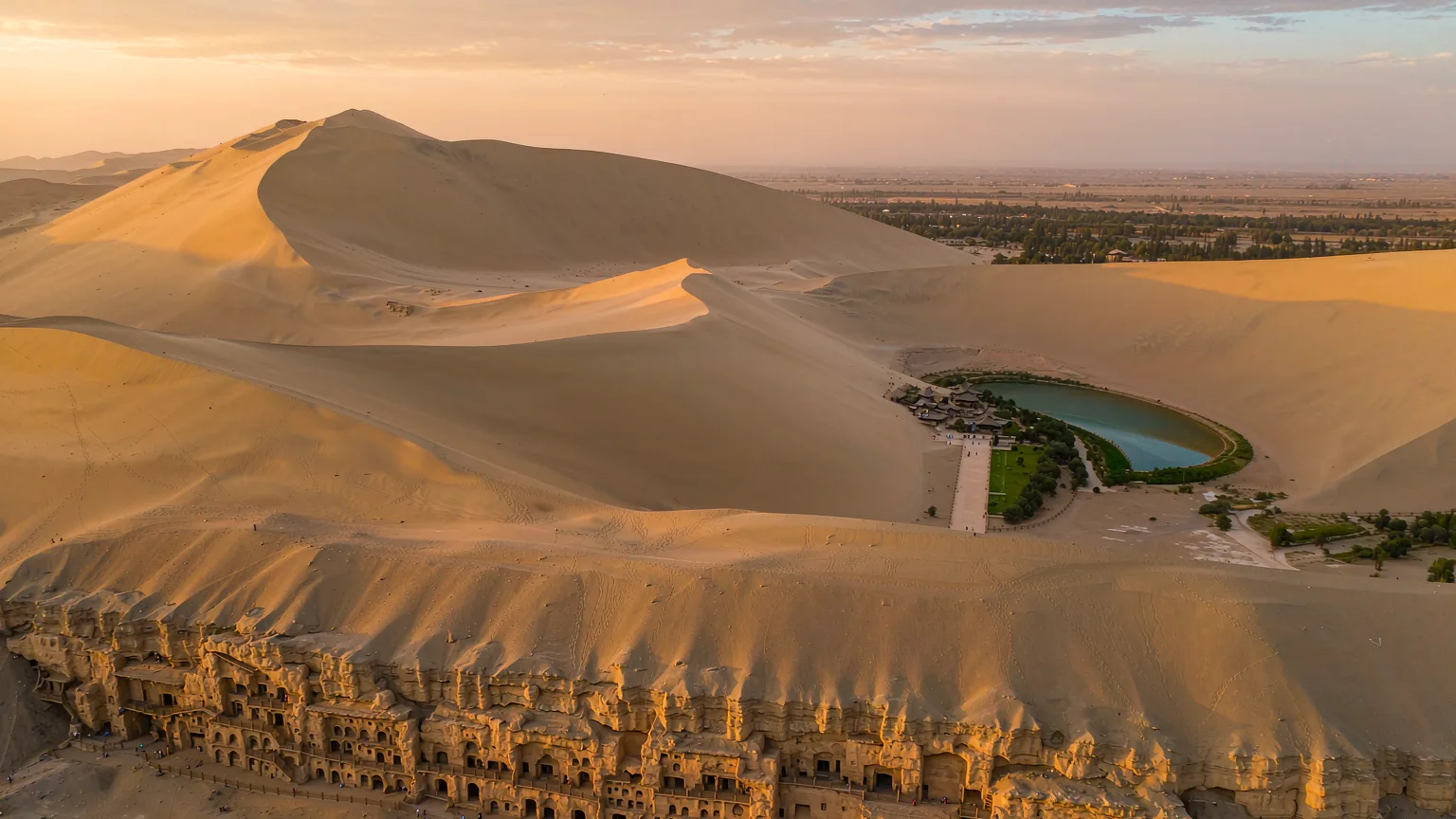
Itinerary at a glance
| DAY1 09:00 | Mogao All Day: The Sharpest Day for the Main Event |
| DAY2 09:00 | Mingsha All Day, Plus an Evening Show |
| DAY3 09:00 | The Western Line: Pass, Walls and Yardang at Sunset |
| DAY4 09:00 | A Guazhou Day: Yulin Caves and Suoyang City |
| DAY5 10:00 | A Downtown Farewell Day |
The route, stop by stop
Mogao All Day: The Sharpest Day for the Main Event
The first day belongs to Mogao: films, shuttle, eight caves, then the replica caves at the conservation center. The five-day version's luxury is the afternoon: no rushing after the center, linger for exterior shots, and still have bookstore time in town to flip through albums against what you saw.
Keep the evening to a riverside walk and an early night; save the market for later. Day one builds your coordinates: the chronological order and stylistic shifts from the Sixteen Kingdoms through Northern Wei, Sui and Tang, after which every cave in the next four days reads easier.
Mingsha All Day, Plus an Evening Show
Start late, do camels and sandboarding by mid-afternoon, climb for the Crescent Spring sunset: the flow detailed in the three-day plan. The five-day advantage is tonight: no rush after sunset, shower at the hotel, a proper unhurried dinner, then a show, either Again Dunhuang or Music of Dunhuang.
Booking the show a day ahead is enough; seat choice and energy management follow the earlier advice. You will be back by half past ten, and day three starts early, so lights out by eleven is the floor.
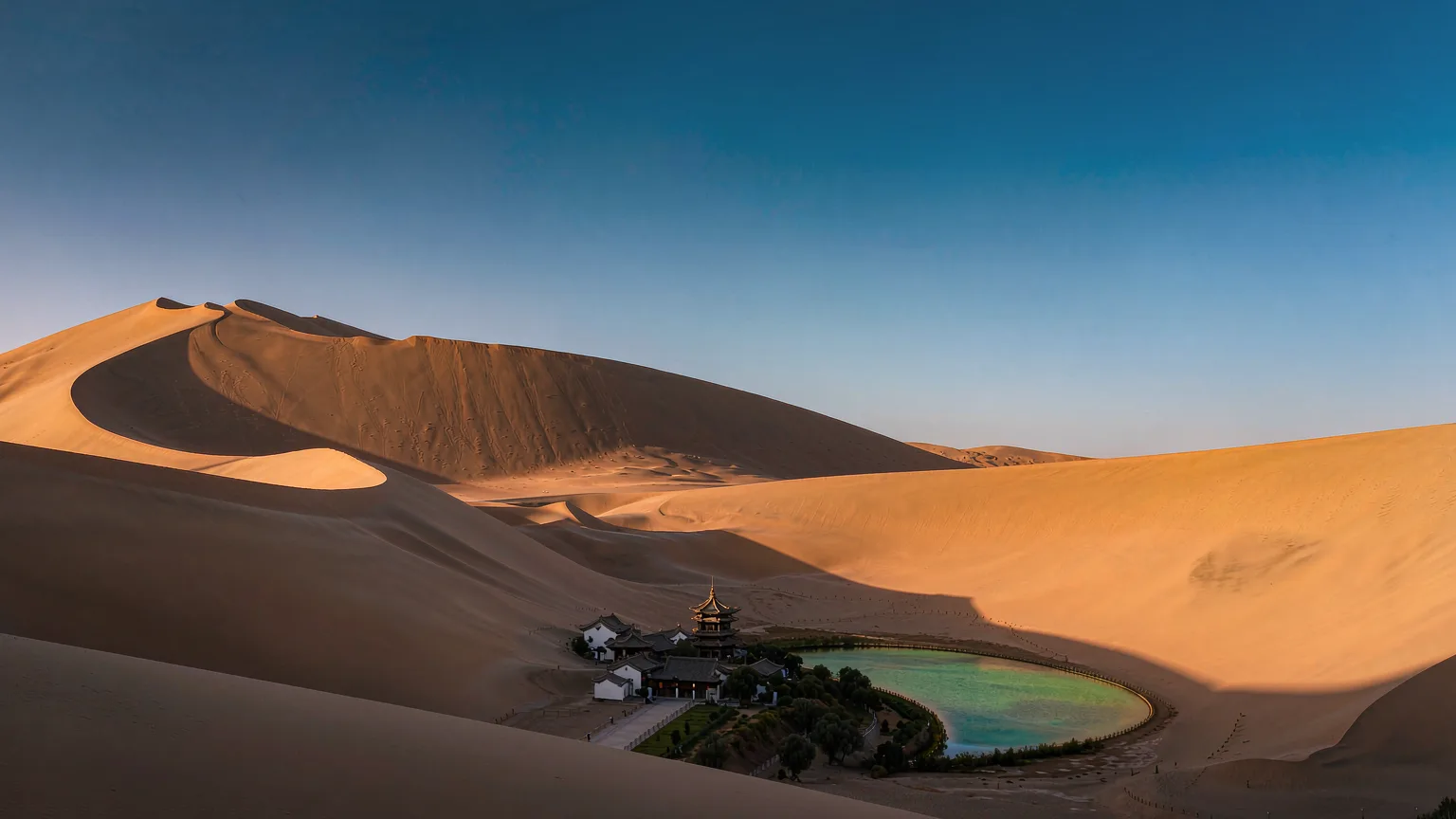
The Western Line: Pass, Walls and Yardang at Sunset
Day three runs the western gauntlet: Yumen Pass, the Han walls and the Yardang landforms, back near midnight after sunset. It is the most physically expensive day of the trip and the one with the deepest visual memory; pacing and cautions are in the three-day plan's western section.
The five-day adjustment that matters: do not schedule an early start on day four. Sleep in after the western line, take a long brunch downtown, and only then head for Guazhou or simply recover. Trip endurance depends on this high-low pairing.
A Guazhou Day: Yulin Caves and Suoyang City
Day four runs to Guazhou, headliner Yulin Caves: caves along a river valley, forty-plus surviving, a limited number open but dense with substance. The Western Xia murals and caisson ceilings are the crown jewels, and Cave 25's sutra tableau is often called one of the aesthetic peaks of Dunhuang art. Tickets and special-cave fees follow current published rates, with guide sessions relaxed enough that no ticket war is needed.
If time and legs allow, add the Suoyang City ruins, the astonishingly preserved outline of Tang dynasty Guazhou, next to the Ta'er Temple site. The whole loop takes about ten hours; reward yourself with a good dinner back in Dunhuang. This day is the soul of the five-day plan: after Yulin, your mental map upgrades from Mogao-centered to basin-wide.
A Downtown Farewell Day
The last day has no hard agenda: bookstore or museum to backfill, a serious donkey-noodle lunch, and an afternoon shaped by your flight or train time. Today is packing day for anything fragile, vacuum-sealing the dried fruit, and finishing those postcards.
Save an hour at dusk for the Dang River waterfront and replay five days in your head. Dunhuang is best ended on a walk; the city's character never lived in its loud attractions but in the river, the sunset and slowed-down time.
| Getting around |
|
| Budget | About 1,600 to 2,000 RMB per person: roughly 1,100 for the classic three days, 300 to 400 for the Guazhou or Jiayuguan day including car share and tickets, and 100 to 200 of flexible food money downtown. |
| Best time | May to October. Yulin Caves carry far less booking pressure than Mogao in high season, making it the best substitute if Type A tickets sell out. |
FAQs
Must I choose between Yulin Caves and Mogao?
The five-day plan should include both; they complement rather than replace. The only real conflict is a sold-out Type A: substitute Yulin, add the Type B ticket, and your cave experience loses almost nothing. Yulin's special caves also allow more unhurried viewing, and many hardcore cave fans end up preferring it.
Is a Jiayuguan day trip realistic?
Feasible but punishing: 1.5 to 2 hours by rail each way plus transfers, so travel and sightseeing split roughly half and half. If you want sunset shots and the First Beacon Tower, make Jiayuguan your next overnight stop instead; staying one night doubles the experience.
Will two of the five days feel empty?
Not if you accept that slow is part of the itinerary. Day five and the afternoon of day four are deliberately open, but the open time holds the bookstore, the river, hot springs and the market. The right mindset for five days is switching from checklist to holiday; those who feel bored are usually still sprinting between sights.
How different is Dunhuang in May versus September?
September wins: cooling temperatures, new-crop raisins and dates after apricot season, and about twenty percent fewer crowds than July and August. May brings more wind and occasional dust but the year's lowest prices. For photographers, September's golden poplars and low-angle light shoot better.