
The plateau table runs on its own logic: high calorie density against the cold, dairy heavy from pastoral roots, and simple cooking, since water boils at barely eighty-plus degrees near 3,000 meters and elaborate technique loses its tools. Flavor therefore revolves around yak, lamb, barley and milk: direct, solid, unadorned.
The eating day advances by upgrades: sweet tea with steamed buns is level one, hand-pulled lamb at noon is level two, Qinghai's earthen hot pot at dinner is level three, with yogurt and tsampa as between-meal fuel. All of it happens in Qiabuqia town, and 200 CNY per person eats deeply well. The eateries cluster along the main streets of town, all within walking distance from morning to night, a convenience you rarely find in a high-altitude city.
Itinerary at a glance
| 08:00 | Breakfast: Opening at the Sweet-Tea House |
| 10:30 | Mid-Morning: The Ritual of a Bowl of Yak Yogurt |
| 12:30 | Lunch: The Primitive Joy of Hand-Pulled Lamb |
| 15:30 | Afternoon Break: First Encounter with Tsampa |
| 18:30 | Dinner: Qinghai's Earthen Hot Pot, the Highland Finale |
The route, stop by stop
Breakfast: Opening at the Sweet-Tea House
The plateau morning starts at the sweet-tea house. Doors open at eight as locals arrive with thermoses, and sweet tea in glass runs pale coffee-brown, milk and black tea in balance. Pair it with steamed buns or fried dough and a soft-boiled egg, breakfast done for a bit over ten CNY.
First-timers are surprised by how close it sits to Hong Kong-style milk tea, a living sample of the plateau's culinary exchange with the outside. The stove burns hot in the teahouse; sit a while, warm through, and beat the morning chill.
Mid-Morning: The Ritual of a Bowl of Yak Yogurt
The mid-morning slot belongs to yogurt. Gonghe's yak yogurt arrives in a ceramic bowl with a thick yellow cream skin set on top, texture between solid and liquid, acidity sharp. Dust it with white sugar or honey to balance, and one spoonful runs cool from tongue to stomach.
In Tibetan food culture, yogurt symbolizes auspiciousness and appears at every festival. Practically, morning is smart: probiotics soothe a gut adjusting to altitude, gentler than any medicine.
Lunch: The Primitive Joy of Hand-Pulled Lamb
Lunch belongs to hand-pulled lamb. The meat's confidence comes from pasture: Gonghe sheep graze on grasslands where caterpillar fungus and fritillary grow, giving firm flesh with almost no gaminess. Boiled in plain water and served straight to hand, dipped in pepper salt or garlic vinegar, the lamb's true flavor fully exposed.
Price by the jin at 60 to 90 CNY per person with steamed rolls or tsampa. The rules are hot, hands-on and no ceremony, the happiest meal on the plateau table.
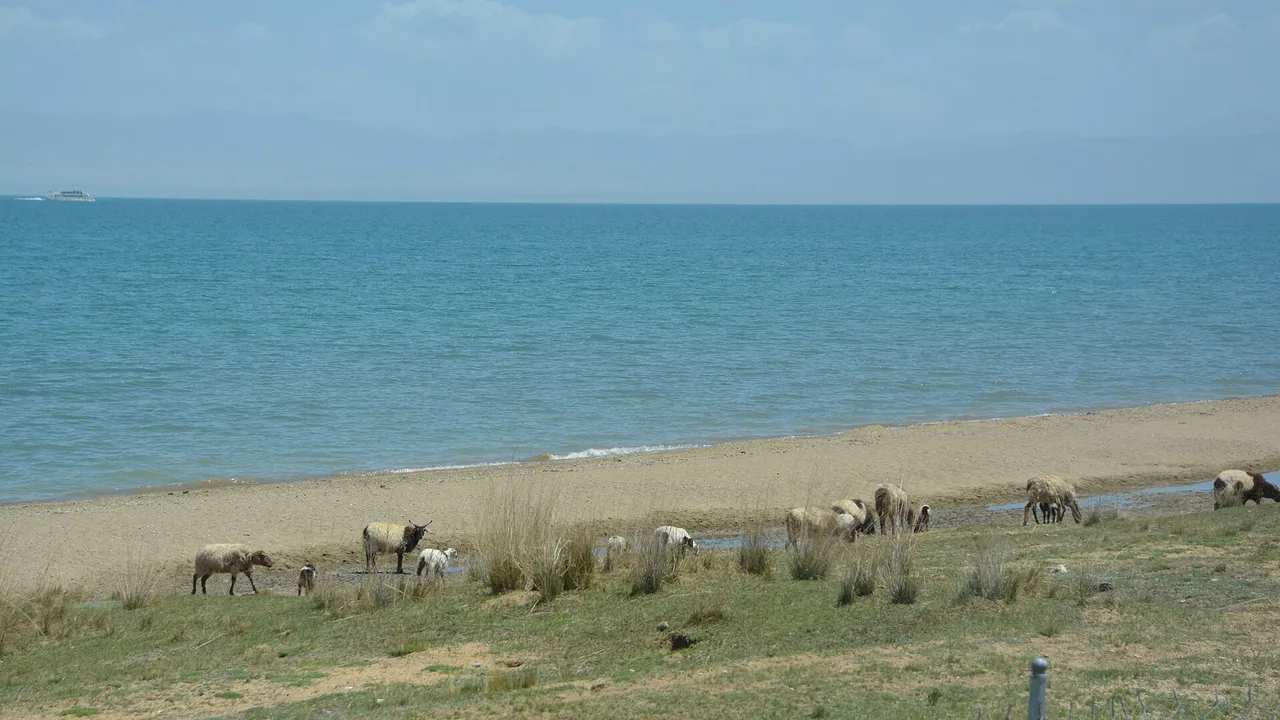
The quality of Gonghe lamb traces back to the herders' seasonal migrations. Families move between pastures with the seasons, taking the flocks up to mountain grasslands in summer and back to the valleys in winter. Herders say the rotation lets the grass recover and firms up the meat, so every bite on your plate is the harvest of an old system of moving with the land.
Afternoon Break: First Encounter with Tsampa
The afternoon makes up the tsampa lesson at a teahouse or Tibetan restaurant. Into the bowl go tsampa flour, butter, cheese curds and a little sugar, over which pours butter tea, kneaded with fingers along the rim and finally balled, the plateau's own afternoon tea snack.
First attempts fail spectacularly, which is the fun: tsampa is not food served to you but food you make. Success brings real pride; failure just means drinking it as a meal shake.
Dinner: Qinghai's Earthen Hot Pot, the Highland Finale
Dinner is the Qinghai earthen hot pot. Copper or clay pots simmer over charcoal: cabbage and glass noodles at the base, then neat layers of yak meatballs, lamb, hairtail, tofu and hair moss, in a broth clear yet full, a totally different system from Sichuan's mala. Qinghai hot pot prizes the arranged design, so admire it before the first boil.
One pot feeds four to six at 60 to 90 CNY per person. Plateau nights cool fast, and charcoal hot pot warms from stomach to fingertips, ending the eating day on its warmest note.
The hotpot quietly obeys plateau physics. Up here water boils at just over eighty degrees Celsius, and no flame can make it roll the way it does at lower elevations. So the kitchen's answer, refined over generations, is steady charcoal heat and slow tenderizing, a different path entirely from the fierce quick fire of the lowlands.
| Getting around |
|
| Budget | About 100 to 200 CNY per person excluding lodging, all meals and tea houses covered, hot pot feasts 60 to 90 per person |
| Best time | Year-round works; hot pot suits autumn and winter, yogurt peaks in summer |
FAQs
Butter tea or sweet tea?
Try both: sweet tea welcomes everyone while butter tea is the plateau's true voice; sweet at breakfast, one butter tea in the afternoon, no need to choose.
Is hand-pulled lamb too rich?
Plateau lamb runs moderate in fat with minimal gaminess, cut by garlic vinegar and pepper salt; order by the jin to control portions, leftovers pack fine.
How does the earthen hot pot differ from regular hot pot?
The earthen pot pre-arranges cooked ingredients for immediate eating rather than cooking-as-you-go Sichuan style; the broth is clear and fresh with the dip carrying the seasoning.
Does overeating feel worse at altitude?
Yes, digestion drops noticeably at altitude, so seventy-percent-full applies all day; a ten-minute walk after eating beats lying down immediately.