
Seven days is the serious reading of Guangzhou. The city's historical depth and street density both take time: the old-town axis and Xiguan's lanes each merit a full day, the modern history across the river a full daylight, the Pearl River waterfront stretching from the new town to the estuary. One cross-section per day, and the understanding holds.
Split it three days old town, one new town, one mountain-and-garden, one across the river, one waterfront, riding metro plus two ferry legs with zero charter need. Process bookings a week out: hall tickets, museum and opera-museum reservations, the academy slot and cruise tickets.
Itinerary at a glance
| Day 1 09:00 | Yuexiu Park: The Two-Thousand-Year Starting Point |
| Day 1 14:00 | Beijing Road: An Afternoon atop the Millennium Surface |
| Day 2 09:00 | The Chen Clan Ancestral Hall: A Whole Morning for Craft |
| Day 2 14:00 | Lychee Bay and Yongqing Fang: A Whole Xiguan Afternoon |
| Day 3 09:30 | Shamian Island: A Whole Morning in the Concession |
| Day 3 14:00 | The Sacred Heart Cathedral: A Far Eastern Gothic Afternoon |
| Day 4 09:30 | The Guangdong Museum: The Trading Capital's Vault |
| Day 4 19:00 | Canton Tower: Riding Up after the Square Lights |
| Day 5 08:30 | Baiyun Mountain: Day Five's City Overlook |
| Day 5 14:30 | The South China Botanical Garden: The Mountain Day's Afternoon |
| Day 6 09:30 | The Whampoa Military Academy Site: Reading Modern History across the River |
| Day 6 14:30 | The Nanhai God Temple and Shenjing Village: Two Chapters in One Day |
| Day 7 10:00 | Taikoo Wharf: Opening the Waterfront Day |
| Day 7 16:00 | Party Pier and the Night Cruise: The Week's Last Stretch of River |
The route, stop by stop
Yuexiu Park: The Two-Thousand-Year Starting Point
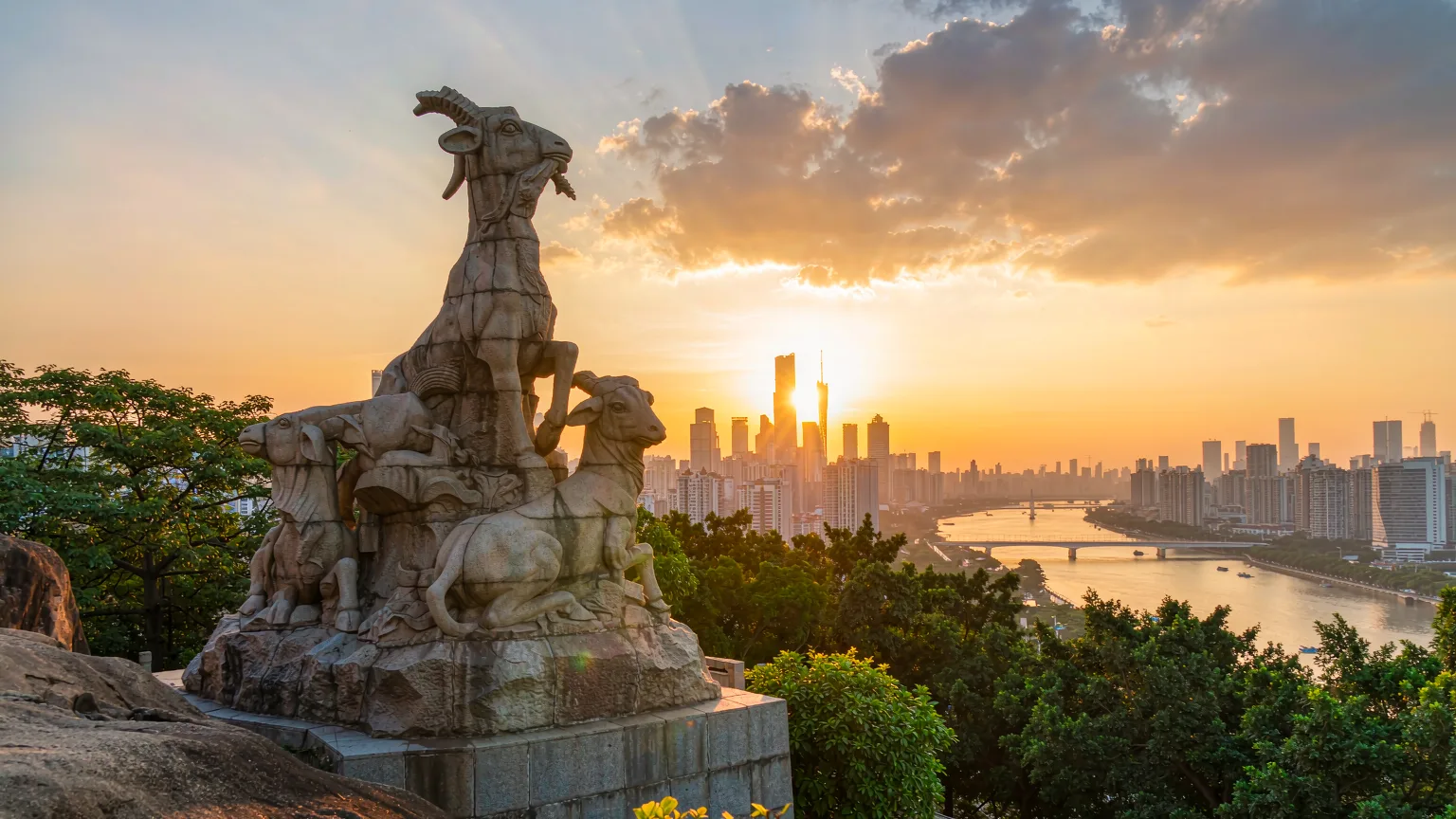
Deep travel opens at Yuexiu: the Five Rams as the Goat City's totem, Zhenhai Tower reading Ming-Qing Guangzhou's urban order from the top, Ming wall remnants below, the old-town axis running south from here.
Walk the morning slowly, taking in the layering of hill and wall; the coordinates built here run through all seven days, the city's old and new unfolding from this origin.
Beijing Road: An Afternoon atop the Millennium Surface
The afternoon takes Beijing Road, the glassed layered road site proving this commercial street has never moved in two thousand years, arcade facades and old brands lighting up by dusk; stock pastry and tea souvenirs in passing.
Settle dinner in the snack heartland of Wenming and Huifu East roads, stews and beef offal the local answers, day one closing on the old town's most central commercial street.
The Chen Clan Ancestral Hall: A Whole Morning for Craft
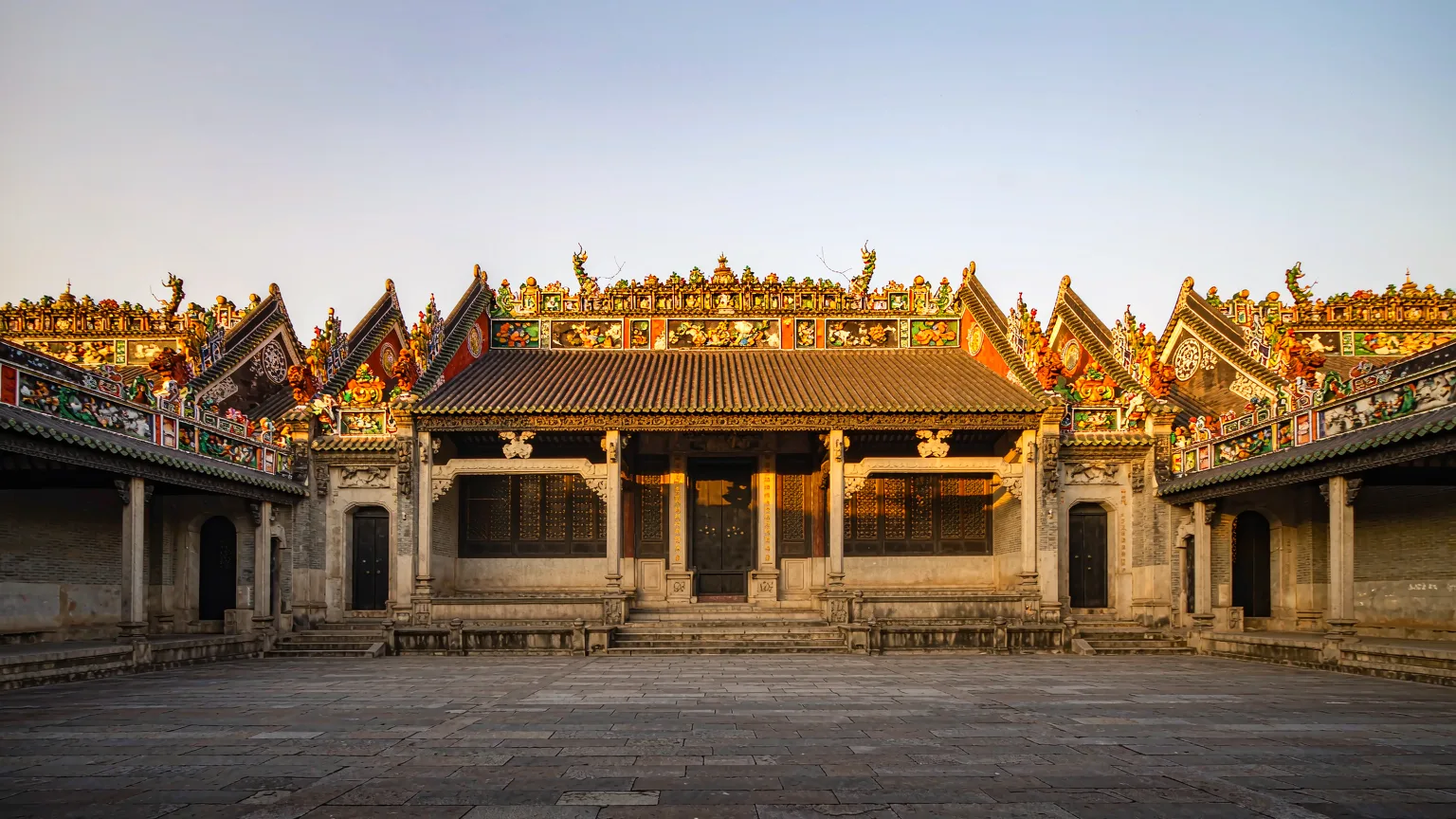
Day two's morning goes slow at the ancestral hall, reading roof ceramics, eave brickwork, beam carving and lime plaster item by item; the deep-travel way is pausing in every courtyard until the craft's layers are whole.
Two slow hours beat six rushed ones; morning light slants deepest into the courtyards, brick relief at its sharpest, so shoot then.
Lychee Bay and Yongqing Fang: A Whole Xiguan Afternoon
The afternoon enters Xiguan's heart: first the Lychee Bay loop, pagoda and stone bridges digesting the morning's load, then Yongqing Fang's side lanes with the free-booked opera museum and Bruce Lee's home in passing.
Dinner under the Shangxiajiu arcades, Chen Tianji fish skin plus Baohua wonton noodles the standard combo; a Xiguan day only completes on street food.
Shamian Island: A Whole Morning in the Concession
Day three reads the concession and church architecture: 150-plus western buildings along Shamian's streets, the Notre-Dame chapel and old bank blocks the anchors, and a close read of the plaques amounts to a full seminar in modern architectural history.
Mornings run thin in good light; two loops along the main street, then an hour in a riverside cafe seat. The pace here should run slower than yesterday's.
The Sacred Heart Cathedral: A Far Eastern Gothic Afternoon
Afternoon rides metro to Yide Road for the Sacred Heart Cathedral, an all-granite twin-spired Gothic, and the hour when afternoon light falls through the rose window into the nave is the building at its best.
Visit quietly, tourists paused during mass; exiting along Yide Road toward Haizhu Square and the river, the old town's seam with the water suits a digesting walk.
The Guangdong Museum: The Trading Capital's Vault
Day four turns to the new town. The museum's Maritime Silk Road export porcelain, Canton famille rose and Duan inkstones are the house treasures; the deep version gives three hours, general history first, then the full export-art suite.
Free with real-name booking, closed Mondays, special shows ticketed; the sweeping historical galleries tell two millennia of port history in one pass.
Canton Tower: Riding Up after the Square Lights
Watch dusk fall over Flower City Square and the riverbank first, then ride up Canton Tower after sunset, the base ticket covering main decks with both skylines and river cruises below.
The open-air top and ferris wheel sit in higher tiers; a deep traveler upgrades at least once to the open deck. Descend and walk the river wind back to the hotel.
Baiyun Mountain: Day Five's City Overlook
Day five climbs Baiyun, cableway up to save the legs, Moxing Ridge re-reading everything the week has walked: old town, new axis and the river's course in one frame.
Walk down through the branch trails, the Nengxiao pavilion and Mingchun valley loop the worthiest; unwind at Yuntai Garden below and return downtown for lunch.
The South China Botanical Garden: The Mountain Day's Afternoon
The afternoon reaches the South China National Botanical Garden, four climate zones of the glasshouse cluster in one pass, the in-park car sweeping the grounds before a focused slow walk; Guangzhou winter stays summer in here, dodging cold and rain alike.
The grounds run vast; the deep version gives three hours across glasshouses, the magnolia section and the aquatic garden, evening metro returning on a day balanced between half climb and half stroll.
The Whampoa Military Academy Site: Reading Modern History across the River
Day six crosses the river: ferry from Yuzhu pier to Changzhou island, where the Whampoa site stands restored to original form with direct displays, the causality between one academy and an era of history clearest here.
The site is free-booked, closed Mondays, about ninety minutes; the island's river wind and naval air carry a character downtown sights lack.
The Nanhai God Temple and Shenjing Village: Two Chapters in One Day
The afternoon first reaches the Nanhai God Temple, the Sui-founded sea shrine and its stelae field explaining two thousand years of the city's bond with the sea, then evening returns to Shenjing village on Changzhou, granite lanes and goose shops closing the river day.
Dinner on goose in the village, ferry back after; temple and village both sit on the line-13 plus ferry routing, smoother than it sounds.
Taikoo Wharf: Opening the Waterfront Day
The last day gathers along the Pearl River: morning at Taikoo Wharf, the red-brick sheds' riverfront belt quiet and thin, yacht berths and riverside cafes right for sorting a week of photographs.
Walk a stretch of embankment watching freighters and yachts cross; lunch unhurried at a riverside restaurant before the afternoon unrolls downstream.
Party Pier and the Night Cruise: The Week's Last Stretch of River
At dusk reach Party Pier, the old brewery's riverside bistro belt, take a river-view seat and watch Pazhou and Canton Tower light across the water; after sunset board the night cruise, seventy minutes threading the week's river into one line.
Book cruise tickets one to three days ahead on licensed channels, the open deck best-viewed, a coat against the river wind; when the boat docks, seven days of Guangzhou stand in the lights behind you.
| Getting around |
|
| Budget | RMB 2500-4200 pp: seven nights dominate, entries about RMB 150, meals around RMB 150 a day, with island and long-distance transport extra. |
| Best time | October to March gives the clearest skies; keep one flexible half-day inside the week to hedge rain against closure days. |
FAQs
Should the seven days add Conghua springs or Chimelong?
Depends on the trade: Conghua springs take a full day best overnighted, Chimelong one or two, either squeezing the urban cross-sections. Swap one into day six or seven and keep at least five days for the city and river; families take Chimelong first, leisure takes Conghua.
What exactly is the seven-day booking checklist?
Five: real-name tickets at the ancestral hall, free booking at the Guangdong Museum, free booking at the opera museum, the Whampoa site reservation, and cruise tickets. All through official channels, batched a week out and noted into the day plan, so nothing at the field burns time on tickets.
How do the seven days handle closure days?
Closures cluster on Monday: the provincial museum, opera museum and academy all affected. Reserve Monday as the flex day, assigning closures-proof cross-sections like Baiyun, Beijing Road or shopping; check each venue's opening calendar before booking and never seat a museum on Monday.
What should be deliberately left for next time after seven days?
Leave two on purpose: the spring routes (Conghua or Zengcheng), which deserve their own two days, and the unfinished old brands, since Guangzhou's eating scene churns fast enough that every visit queues new shops beside old ones. Deep travel is not clearing a checklist but knowing where to walk next time.