
Guizhou's history lives in two places: museums, from the fossil wall of ancient marine reptiles to the gold and silver of Bozhou chieftain tombs, and living scenes, elders fishing below Jiaxiu Tower, moss on Qingyan's wall, the blue rising from an indigo vat. Three days walk both, letting archive and site confirm each other.
The rhythm spreads as city, then intangible heritage, then old town, with low trek intensity suiting slow travel. Two hard constraints come first: most museums close Mondays, and the Qianju Theatre does not perform every night, so check schedules before booking. Sleep the first two nights downtown, the third in Qingyan.
Itinerary at a glance
| Day 1 · 09:00 | Jiaxiu Tower: Page One of Guiyang's Story |
| Day 1 · 11:00 | Wenchang Pavilion and the Old East Gate: The Nine-Cornered Tower on the Wall |
| Day 1 · 14:00 | Guizhou Provincial Museum: Chieftain Gold and the Fossil Wall |
| Day 1 · 19:30 | Guizhou Qian Opera Theatre: An Evening of Sung Guizhou Dialect |
| Day 2 · 09:00 | Guizhou Provincial Ethnic Museum: Reading the Regalia Closely |
| Day 2 · 13:30 | Oudonghua Ethnic Costume Museum: The Branch Codes inside a Garment |
| Day 2 · 15:30 | Lanyubai Batik Studio: From Understanding to Doing |
| Day 2 · 19:00 | Colorful Guizhou City: A Heritage Night and Dinner |
| Day 3 · 09:00 | Guizhou Intangible Heritage Museum: Completing the Panorama |
| Day 3 · 13:00 | Qingyan Ancient Town: Walking the Thread to a Ming Wall |
The route, stop by stop
Jiaxiu Tower: Page One of Guiyang's Story
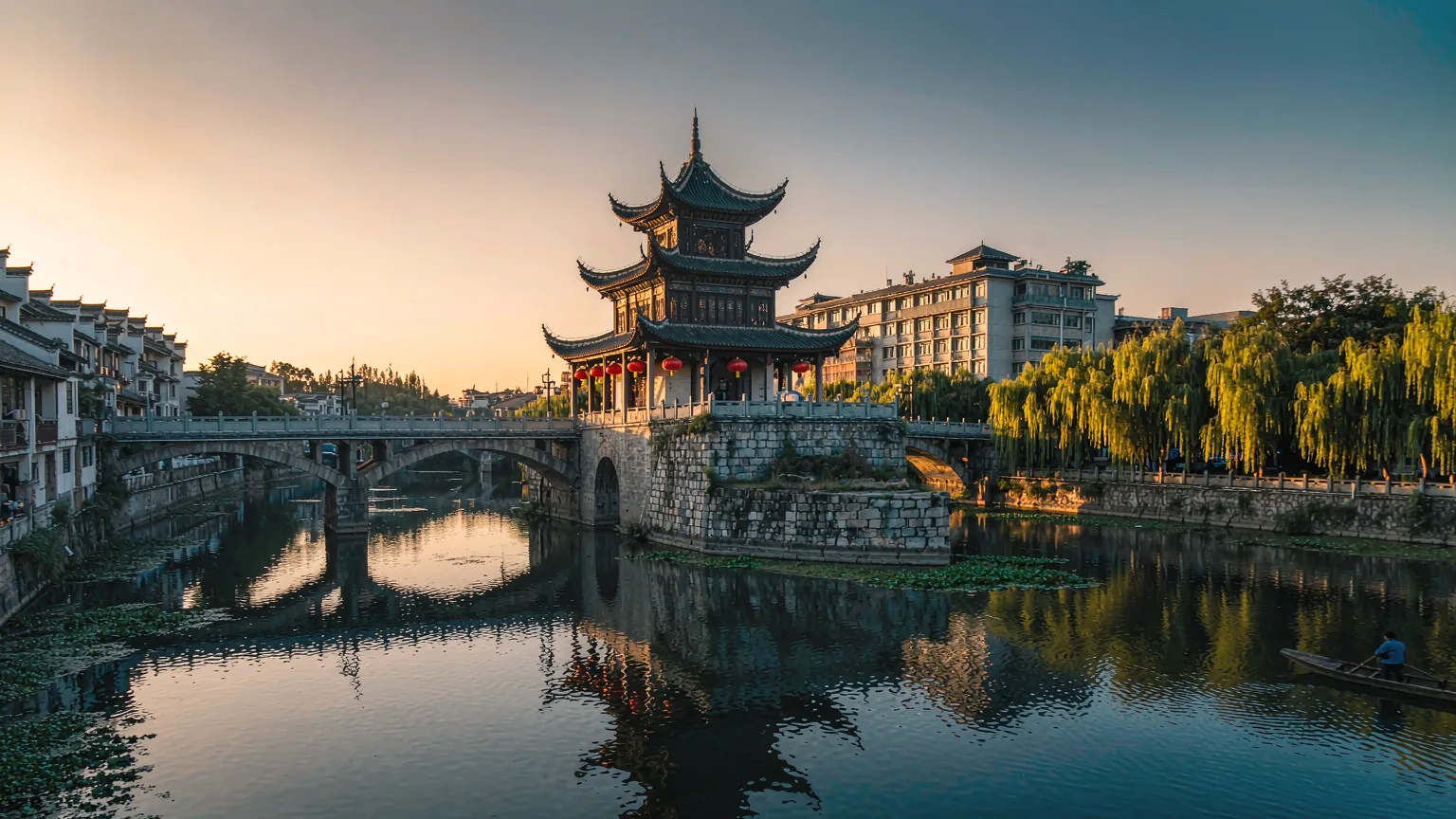
The heritage route rightly opens at Jiaxiu Tower. Built in the Ming to favor fengshui and foster learning, it watched the city produce scholars ever after, hence the name meaning finest of the tall. By day, study the bridge as much as the tower: the nine-arch Floating Jade Bridge was once the town's pride, and the pavilion on Aoji Rock, repeatedly ruined and rebuilt across four centuries, is itself a local chronicle.
The morning riverside stays quiet, ideal for walking both banks of the Nanming: across the water, the Ming-era Gongnan Pavilion inside Cuiwei Garden once served as temple, garden and academy, identities layered in one compound. Starting day one at this riverine origin point, the thread will follow you through museums and the old town alike.
Wenchang Pavilion and the Old East Gate: The Nine-Cornered Tower on the Wall
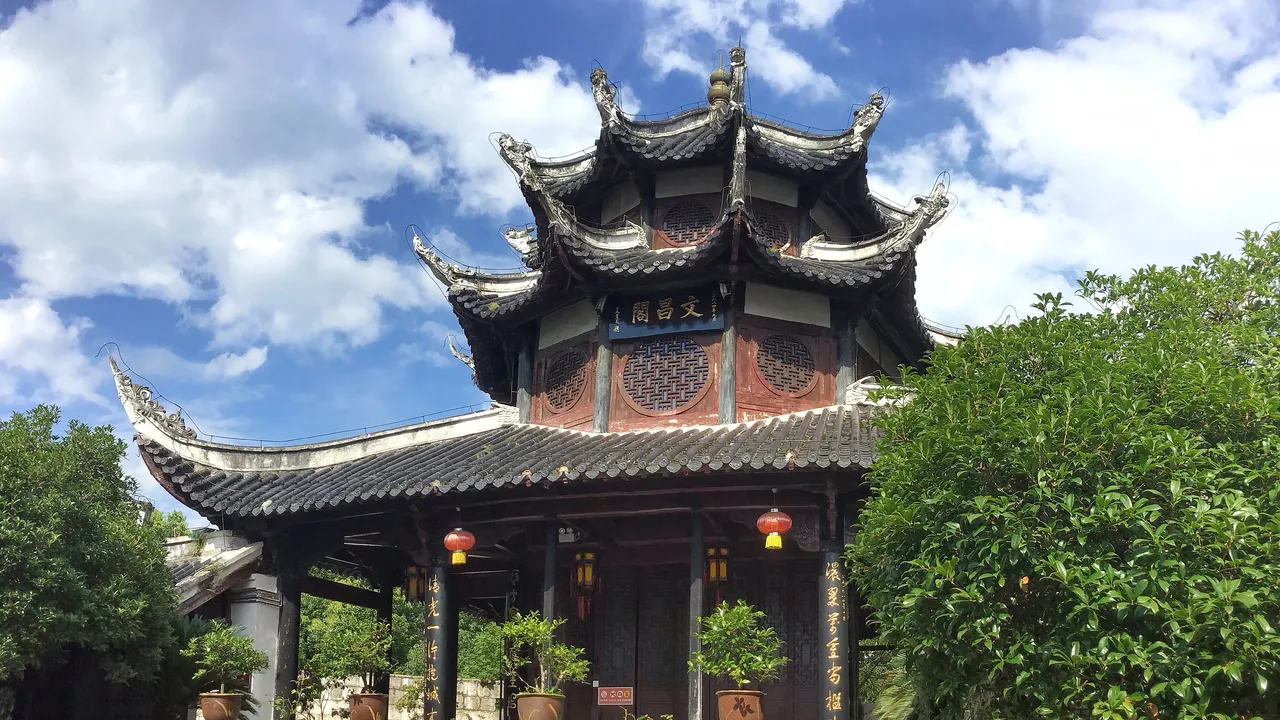
Walk north from Jiaxiu to the old east gate, where Wenchang Pavilion rides the wall of the Wusheng Gate barbican, first raised in the Wanli era. Its structure is the draw: a three-story, unequal nine-cornered pyramid roof unique in China, its framing a named topic among ancient-architecture circles. Stand below and check the nine flying corners, each tier's angles never repeating.
The wall beneath takes a short walk, the gate's stone base still in situ, bricks patched across centuries in mismatched batches and shades. Linger here, run the city-founding exhibition inside, then lunch around nearby Minsheng Road.
Guizhou Provincial Museum: Chieftain Gold and the Fossil Wall
The afternoon's centerpiece is the provincial museum. The marine-reptile fossil wall of the prehistory unit opens with the building's greatest shock, a two-hundred-million-year-old ocean pressed into stone. On the historical line, the gold, silver, glazed pottery and processional figures from Bozhou chieftain excavations form the brightest recent collection, physical evidence of the chieftain system you can actually see.
The ethnic and costume galleries set up your next two days: sweep them quickly to build impressions and flag patterns and forms that interest you, so the physical pieces at the ethnic museum and workshops later land harder. The full run takes about three hours.
Guizhou Qian Opera Theatre: An Evening of Sung Guizhou Dialect
Hand the evening to Qianju opera. Evolved from Guizhou yangqin storytelling and also called wenqin opera, it sings in Guizhou dialect with a gentle voice over yangqin and silk-bamboo accompaniment. For visitors without the dialect, librettos and subtitles are available at the door, and the stories draw on local figures and legend.
The provincial theatre stages public and subsidized shows at friendly prices, tens of yuan buying a good seat. After the curtain, finish day one like a local with a late bowl in nearby lanes. With no show that night, swap in the street-market night at Qingyun Road and catch up on museum work early the next day.
Guizhou Provincial Ethnic Museum: Reading the Regalia Closely
Day two's theme is ethnic heritage, opening with a thorough pass of the ethnic museum. Here read more than you count: pick three to five pieces and finish their labels, why the feather motifs on a Miao hundred-bird coat encode migration memory, or how Dong shiny cloth earns its coppery sheen through repeated pounding and egg-white coating.
The silver gallery deserves its own half hour: one complete regalia set can weigh over a dozen catties, from horn-shaped crowns to silver buttons on the panels, spanning forging, wire-drawing and chasing. Patterns glimpsed yesterday at the provincial museum will meet you again, and questions carried in double what you take out.
Oudonghua Ethnic Costume Museum: The Branch Codes inside a Garment
After lunch move to the Oudonghua museum, a collection focused wholly on ethnic dress. The Miao, Dong and Buyi branch into many subgroups, where skirt length, motif and stitch mark the branch, dressing called the history book worn on the body; this museum's displays exist to decode exactly that.
Against the grand museums' chronology, the specialized house wins on density and purity of theme, an hour or two untangling the whole costume lineage. Compare collar and cuff panels as you go, with variants of one motif across counties showing decades of a collector's accumulation.
Lanyubai Batik Studio: From Understanding to Doing
After two museums, put your hands in. Lanyubai's class grounds the morning's knowledge: wax knife lines, beeswax resist, indigo immersion, then the blue blooming as the cloth oxidizes, the whole flow about two hours. Drawing the Butterfly Mother motif once by hand teaches what those museum lines demanded in control.
The teachers tune pattern difficulty to your feel, so zero experience still yields a piece. Roll the dried work for travel, and companions who only watch have seats in the studio. This half day is the quietest and most souvenir-rich stretch of the three.
Colorful Guizhou City: A Heritage Night and Dinner
Head to Colorful Guizhou City for dusk, a culture-tourism block condensing Guizhou's regions to walkable scale, with drum towers and wind-rain-bridge scenery lighting up photogenically at night. Dining concentrates here, sour-soup fish, silk-baby wraps and griddle hotpot all at hand, dinner doubling as a provincial tasting.
Ethnic song-and-dance events often play in the evening, timings per the day's schedule. Afterward walk to the metro or taxi point for a downtown bed, since tomorrow morning holds a museum before the run south to Qingyan.
Guizhou Intangible Heritage Museum: Completing the Panorama
Day three morning returns to Colorful Guizhou City to complete the panorama in the heritage museum. Having drawn wax and studied regalia, the Miao embroidery, silver forging, Nuo masks and papermaking on display now map onto real craft, and with the right order of understanding, exhibit-reading efficiency changes completely.
The master-artisan demonstration area deserves extra dwell time, hands at work moving more than finished pieces in cases. In the sales area buy by the rule of what you now understand: motifs and crafts you can name make gifts whose stories you can tell.
Qingyan Ancient Town: Walking the Thread to a Ming Wall
The heritage journey closes at Qingyan. This Hongwu-era garrison town keeps its wall, temples, the scholar's residence and stone back lanes intact, turning the garrison-and-chiefdom history you read in museums into something underfoot. From the Dingguang Gate tower, stone houses run with the ridge to the horizon.
Placing the town last is deliberate: after silver and batik, the old craft shops read completely differently. Climb the wall at sunset, eat imperial trotters for dinner, and as the stone lanes quiet down, three days of Guizhou converge right here.
| Getting around |
|
| Budget | Museums are mostly free with booking; workshops and shows bill separately, so RMB 600-1200 pp covers three days with lodging and meals. |
| Best time | Year-round; most museums close Mondays, so keep it off the plan and check Qianju show schedules in advance. |
FAQs
Which stops need advance booking across the three days?
The provincial and ethnic museums need real-name booking and both close Mondays; the Lanyubai class and Qianju show need advance seats; the heritage museum follows daily notices. Once those are locked, Jiaxiu, Wenchang Pavilion, Colorful Guizhou City and Qingyan stay flexible, enterable anytime.
Is the Qianju Theatre worth it for non-opera fans?
Try it once. Qianju sings in the tones of Guizhou dialect, flavorful even without the words, subtitles carry the plot, and one show runs just over an hour at tens of yuan, very cheap as cultural tuition. If truly unmoved, leaving mid-show carries no stigma at the relaxed subsidized sessions.
Is half a day enough for Qingyan, or should I stay overnight?
Half a day covers the wall, sights and main lanes, but one night earns the town's quiet bookends: the stone streets return to locals after dark and back lanes mist at dawn. In-town lodging is plentiful; book two or three days ahead in season, with time next morning for a final loop before leaving.
What etiquette applies in museums and workshops?
No flash indoors and never interrupt guides or artisans; in classes follow teacher guidance on hot wax and dyes with children watched throughout; ask before photographing people, especially minority artisans. For souvenirs, rely on heritage certification and receipts, protecting yourself and honoring the makers.