
The city's culture stacks in three layers: the Qing-era Confucian teaching of the temple, the old customs of Wula, cradle of the Manchu, and the modern scientific wonder of the Jilin meteorite. Three layers, three sites, one full day.
The friction is Wula's distance, about thirty-five kilometers north along the Songhua, an afternoon out with evening return, easiest by chartered car. The first three sites chain by bus downtown. History lovers give temple and museum two hours each; one hour each serves everyone else.
Itinerary at a glance
| 08:30 | The Jilin Confucian Temple: A Specimen of Northern Ritual Order |
| 10:30 | Jilin City Museum: The Full Evidence of a Meteorite Shower |
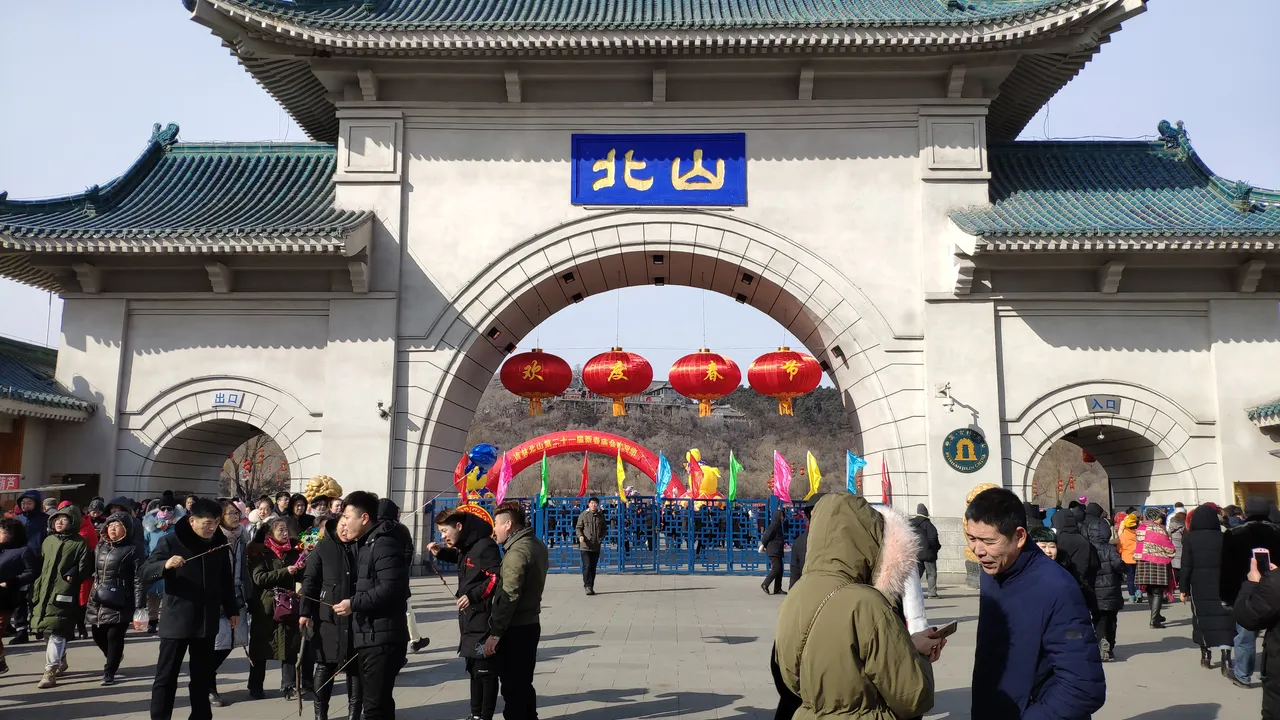
| 14:00 | Beishan Park Temples: Folk Faith in Three Dimensions |
| 16:00 | Wula Manchu Town: A Manchu Homeland at Dusk |
The route, stop by stop
The Jilin Confucian Temple: A Specimen of Northern Ritual Order
Built in the Qing era, the Jilin Confucian Temple is among the Northeast's most complete temple compounds, often ranked with Qufu, Beijing and Nanjing in the four great sequence. The double-eaved hipped roof of Dacheng Hall is rare grade for Northeastern timber buildings, and the axis from Lingxing Gate to Dacheng Gate survives whole.
Read it by ritual rank: roof-figure counts, bracket sets and the Pan Pool's form all carry meaning, and the galleries explain the ritual vessels and dance of Confucian ceremony. Morning brings thin crowds, and Dacheng Hall in cedar shade is the day's best frame.
Jilin City Museum: The Full Evidence of a Meteorite Shower
The Jilin meteorite shower of March 8, 1976 ranks among the largest stone showers on record, strewn across hundreds of square kilometers with over a hundred masses collected. Jilin No.1, about 1,770 kilograms and the world's largest stony meteorite, anchors the central hall.
The exhibition's virtue is completeness: the night's timeline, the strewn-field map, farmers' and scientists' collection records, and results of slice studies, laid out layer by layer. Beyond the meteorite, the river-basin archaeology and city-history galleries merit a pass; two hours all told.
Beishan Park Temples: Folk Faith in Three Dimensions
On Beishan's slope, the Guandi and Yaowang temples, Yuhuang Pavilion and Kanli Palace stack Confucian, Buddhist, Taoist and guild faiths together: Yaowang honors the medicine patriarch Sun Simiao, patron of the old drug trades, while Yuhuang Pavilion's terraced courtyards form the hill's largest complex.
On a culture pass, read the steles and couplets: Qing-era and later renovation records give the full repair history of the cluster. Forty minutes up, an hour around the temples, with the river-view summit on the way.
Wula Manchu Town: A Manchu Homeland at Dusk
Wula is a cradle of the Manchu: the Ming-era Wula state's capital stood here, and the Qing court's Butcher-Ula administration ran tribute procurement from the town. The old quarters keep Qing-dynasty housing patterns with Manchu descendants resident, and the old Sa and Kui mansions are representative courtyards.
Arrive toward evening: see the old houses and lanes first, then sit to a Manchu-flavor dinner, since Wula hotpot was born here, the copper pot with sour cabbage, boiled pork and blood sausage the canonical answer. Back to town about an hour after dinner.
| Getting around |
|
| Budget | About RMB 150-250 pp including the Wula round trip by car and the hotpot dinner; most museums are free or cheap. |
| Best time | Year-round; the temple and museum are fully indoor, and the Wula run can pair with riverbank rime in winter. |
FAQs
Is four stops in one day too rushed?
Pace is manageable: an hour or two each at temple and museum, two at Beishan, and the only real time sink is the Wula drive. With half a day, drop Wula and keep the three city sites; Wula deserves its own half day plus dinner, so travelers with slack should split it into two days.
Does Wula still have much to see, or is it over-commercialized?
Wula is a living town, not a scenic zone: old houses mostly private, commerce light, the sight being real Manchu community life and Qing-era street fabric. Set expectations on people and ways of life rather than polished exhibits; the town's hotpot and snacks are the genuine article and justify the trip alone.
Does the meteorite hall suit children?
Very much so: the shower story is cinematic, and touchable samples and video suit children; translate the 1,770 kilograms into the weight of the family car and the wonder turns concrete. Across a two-hour visit, kids linger longest in the meteorite hall.
If choosing between the Confucian Temple and the Beishan temples?
By taste: ritual order and the examination world pick the temple, quiet and information-dense; folk faith, incense and human warmth pick Beishan, livelier up its slopes. With time, do both, opposite in temperament, the two faces of the city's culture.